
Tinted Mineral Sunscreen: From Dermatologist Duty to Something You Want to Wear
Tinted mineral sunscreen is a facial sun protection product that uses mineral UV filters like zinc oxide or titanium dioxide and added pigment to deliver broad-spectrum UV protection while evening skin tone, avoiding the white cast and heavy feel of traditional mineral formulas that often discouraged consistent daily use. The biggest barrier to daily facial sunscreen has never been awareness; it has been wearability. People know they should wear SPF, but they hate thick textures, flashback in photos, and the greasy film that ruins makeup. So when mineral formulations started getting a reputation for being chalky and suffocating on the skin, many consumers quietly opted out of mineral SPF altogether, despite their concerns about chemical filters. The new generation of tinted mineral sunscreen is an explicit rebuttal to that problem: it is built to feel like a complexion product first and a shield against UV second, so reaching for it each morning becomes habit rather than homework.
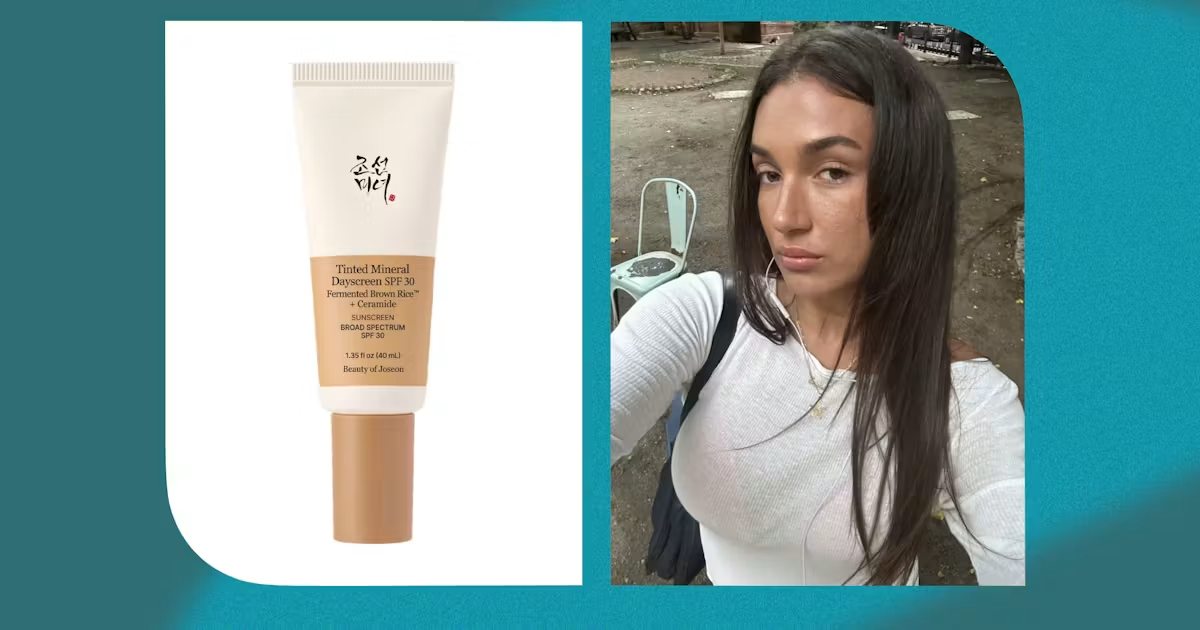
That shift is not theoretical. One reviewer admitted she had “never really been much of a sunscreen wearer” until a bad sunburn forced her to rethink her routine and go sunscreen shopping immediately. What converted her was not another stern warning about skin cancer; it was a tinted mineral formula that behaved like her makeup, pulling double duty as a complexion product instead of adding another step to her morning ritual. This is the real breakthrough: make mineral SPF cosmetically elegant enough and people who have avoided sunscreen for years will start to see it as an upgrade, not a sacrifice. In other words, the path to better skin health runs straight through the vanity mirror.
Pigment, Texture, and the End of the White-Cast Era
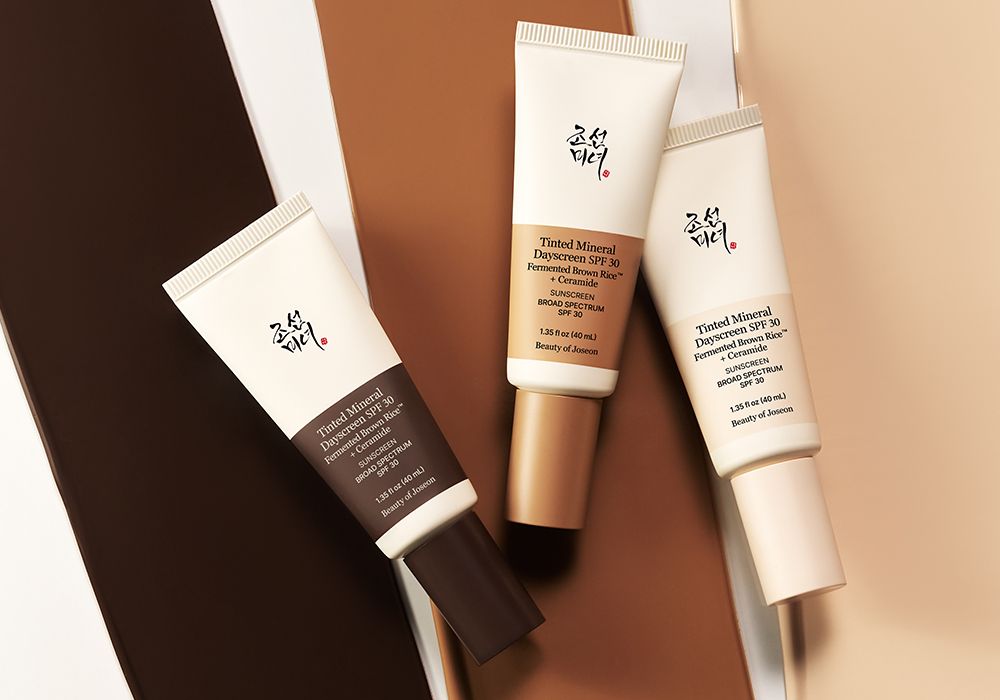
Traditional mineral SPF has long suffered from a deservedly bad reputation: formulas that “look chalky, cling to dry patches or leave skin looking one-dimensional” have made compliance a losing battle. The new wave of tinted mineral sunscreen attacks these pain points head-on. Beauty of Joseon’s Tinted Mineral Dayscreen, for example, uses zinc oxide for UV protection but offsets the usual white cast with added pigment, so the category’s typical chalky finish never appears. Instead of the mask-like look many people associate with mineral SPF, users get light-to-medium coverage that evens redness, softens the look of pores, and lets natural skin show through.
Equally important is how these formulas feel over a full day. Many tinted mineral SPFs grow heavy or greasy by lunchtime, which is when people start quietly skipping them. The Tinted Mineral Dayscreen is explicitly designed to avoid that fate: reviewers note that it leaves a soft-matte finish while still feeling lightweight, providing a welcome alternative for oilier skin types who are tired of looking like a “glazed donut” by noon. Its texture sits somewhere between sunscreen, skin tint, and everyday complexion enhancer, which makes it easy to streamline a morning routine rather than complicate it. When mineral SPF becomes indistinguishable from a favorite base product, the excuse that it “doesn’t look good under makeup” disappears.
Shade Range and Formulation: Mineral SPF That Works for More Faces
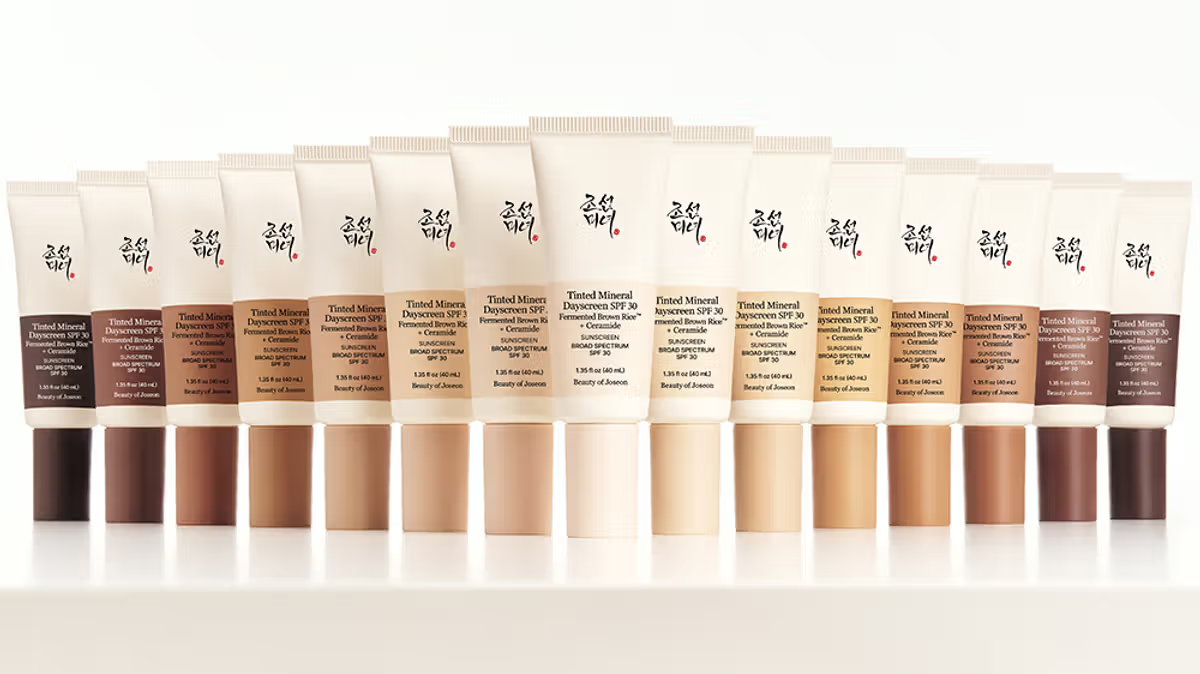
One of the quiet scandals of mineral sunscreen has been how poorly it serves anyone beyond the lightest complexions. A translucent white paste was never going to work on deeper skin, and many brands behaved as if that were an acceptable trade-off. Beauty of Joseon’s latest launch is a direct challenge to that history. Its Tinted Mineral Dayscreen is available in 15 shades spanning fair to deep skin tones, with cool, warm, neutral, and olive undertones. Another review notes that these are “15 flexible shades,” with the writer finding a match in shade 29N. This is not window dressing; it is proof that mineral SPF can be inclusive if brands treat it like a true complexion category instead of an afterthought.
Under the pigment, the formula leans on non-nano zinc oxide as its UV filter, delivering broad-spectrum protection against UVA and UVB rays and even blue or visible light. For consumers wary of chemical filters, that matters: mineral filters sit on the skin’s surface and reflect or scatter rays instead of absorbing them, which feels safer to many and is often better tolerated by sensitive skin. In fact, the product was clinically tested on sensitive skin, reinforcing its appeal for those who break out or develop redness with other sunscreens. When you pair that safety profile with skin-care ingredients like fermented brown rice, ceramides, adenosine, and vitamin E—added to hydrate, support the barrier, and smooth texture—you get a mineral SPF that does not ask users to choose between protection and skin quality.
From Luxury Add‑On to Daily Habit: Price, Finish, and Real-Life Use
There is a practical reason many people reserve “nice” sunscreen for holidays: it is too expensive to treat as an everyday workhorse. Mineral formulas with elegant textures have often been priced like prestige makeup. By contrast, Beauty of Joseon positioned its Tinted Mineral Dayscreen at USD 20 (approx. ₱1,120). At that price, it can sit in the same mental category as a mid-range foundation, not a special-occasion splurge. One reviewer rated it 4 out of 5 and described it as best for an everyday sunscreen with a matte finish and medium coverage. If a product looks good enough to replace base makeup and costs about as much as a mid-tier skin tint, using it daily feels less like a financial commitment and more like common sense.
Wearability, though, is where this formula makes its strongest case. Users report that it layers smoothly over moisturizer, behaves well under cream products, and avoids the telltale sunscreen smell. Another review notes that, unlike many tinted mineral SPFs, it stays comfortable all day and even layers under SPF face mists for easier reapplication outdoors. The trade-off is that, like any base product with coverage, it expects well-prepped skin: on flakier areas, more moisturizer is needed to avoid cling. But that is the point. This is mineral SPF that plays in the same league as makeup in terms of finish and performance. As one reviewer summed it up, “If you’ve ever skipped SPF because you didn’t want to add another step to your routine, this sunscreen actually earns its place in your makeup bag, not just your skincare shelf”.
The Bigger Picture: Mineral Sunscreen Is Becoming Desirable, Not Defensive
The timing of this shift is not accidental. Many consumers are uneasy about chemical filters, and some newer UV filters used in other markets are not approved everywhere, pushing brands to rethink how to deliver high-performing SPF within tighter regulatory frameworks. In that context, mineral formulas powered by zinc oxide gain fresh relevance: they provide reliable broad-spectrum UV protection, sidestep the chemical filter debate, and can be marketed confidently to sensitive skin. Until recently, the catch was cosmetic: no one wanted to look worse in the name of being safer. Tinted mineral sunscreens change that equation by aligning health, aesthetics, and convenience.
This is why the new generation of mineral SPF matters more than any single launch. When a product behaves like a medium-coverage base, comes in 15 inclusive shades, provides broad-spectrum UV and visible-light defense, and costs about USD 20 (approx. ₱1,120), wearing sunscreen daily stops feeling like a medical directive and starts feeling like self-expression. The success of products like Tinted Mineral Dayscreen shows that people were never opposed to mineral SPF; they were opposed to bad mineral SPF. If brands treat sunscreen as part of the makeup wardrobe—matching undertones, refining textures, and respecting different skin types—daily protection becomes the default. The wearability problem is not fully solved, but for the first time, mineral sunscreen is competing on the one dimension that has always mattered most: how it looks and feels on real faces, every day.