
Stop Letting Algorithms Build Your Skincare Routine
Professional skin consultation is the practice of having a licensed skin expert evaluate your skin in person, discuss your concerns and goals, and then design a targeted plan before you spend money experimenting with over-the-counter products or prescription treatments on your own.
If your current skincare strategy is “see it on social media, add to cart,” your skin is doing the job a professional should be doing. Keke Palmer, who has been famous since she was eleven and has spent more than two decades having her face lit, made up, and photographed, does the opposite: her number-one tip is to see a dermatologist first. She could buy any serum on the planet, yet she chooses expert care over endless product trials. That is not a cute anecdote; it is a blueprint. When you put a professional at the start of your routine instead of the end, you skip the cycle of confusion, irritation, and disappointment that comes from treating your face like a testing lab.

Trends Are Expensive; Misused Actives Are Dangerous
The modern skincare market rewards noise, not nuance. Potent actives like the prescription retinoid tretinoin—“the gold standard” for acne and hyperpigmentation—have become social-media obsessions with tens of thousands of posts teaching each other how to use them. That crowdsourced education is failing. One New York dermatologist describes the viral method—slathering tretinoin on like night cream—as flat-out wrong and dangerous, because this drug can result in significant irritation, redness, peeling, and inflammation when misused.
Professional dermatologist skincare advice looks almost boring by comparison, and that is exactly why it works. The correct routine for tretinoin is counterintuitive: moisturizer first, then medicine, then more moisturizer, starting every other night or even twice a week and increasing slowly as your skin tolerates it. That kind of guidance is not going to trend—but it protects your barrier, and on deeper skin tones it helps avoid the very dark marks many people are desperate to erase.
Your Wallet Will Thank a Dermatologist Before Any Influencer
You are already paying for skincare education; you are just paying for it in the most inefficient way possible. Months spent cycling through the wrong products—some of which damage the skin barrier or deepen pigmentation—often cost more than a dermatology appointment would in both money and setbacks. The irony is brutal: the people most frantically searching for a hyperpigmentation fix are also the ones most at risk of overdoing harsh actives and worsening the problem.
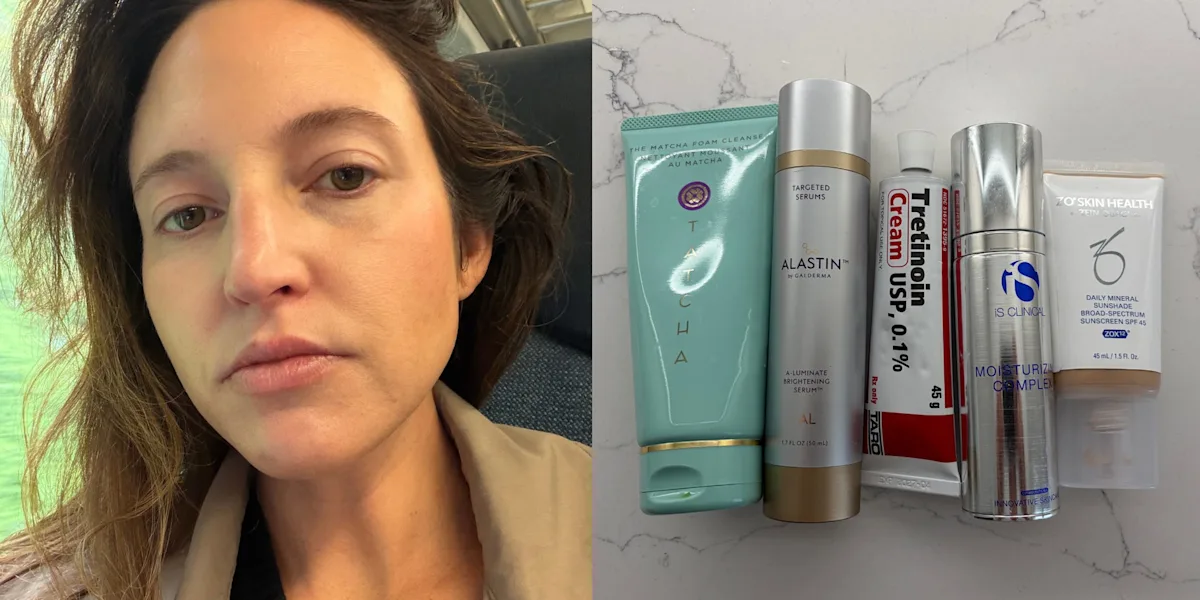
A seasoned beauty editor who has tested everything admits her 35-year-old routine looks nothing like the trend-heavy one she followed in her 20s; today it is stripped back to well-researched staples after 13 years in the industry. Her experience mirrors what dermatologists keep saying: consistency with proven ingredients beats any viral quick fix. Even with prescription-level retinoids, she emphasizes that the hard part is not buying the tube; it is using it consistently while managing the drying and irritating side effects. That is exactly where expert skincare recommendations save you from wasting products, time, and patience.
Why Expert Advice Matters Even More in Your 30s (and Beyond)
By your 30s, your skin is juggling fine lines, dark spots, and possibly hormonal acne at the same time. One editor argues that at this stage you need two specific face serums: vitamin C in the morning and retinol at night, because they are backed by decades of testing and handle multiple concerns at once. If you have acne, she considers these a must. But layering actives with no expert plan is exactly how irritation spirals into damage.
According to dermatologists, retinoids are among the most misused products they see, so they start patients on low strengths, often 0.025 percent, and only increase months later if the skin tolerates it. They do this because moving too fast, especially on deeper skin tones, can trigger new dark marks—the opposite of what people want. That kind of cautious, tailored pacing is invisible in routines built from strangers’ videos, but it is central to a personalized skincare routine that your face can tolerate long term.
See the Expert First, Not Last
Most people treat dermatologists like emergency rooms: they show up only after DIY fixes fail. Keke Palmer is deliberately reversing that order, urging people to see a dermatologist first because you might need topical or oral medication, and there is no shame in that. One clear example of the payoff: a prescription tretinoin cream at 0.01 strength can cost around USD 10 (approx. ₱560) a tube and last two months, making it cheaper than some over-the-counter retinol creams with weaker results.
“Don’t be afraid to take that step and help yourself,” Palmer says, and the help she means requires an appointment, a diagnosis, and the humility to be guided. This is what dermatologists exist to prevent: the invisible damage and wasted money that come from piecing together routines from trends. You can keep letting algorithms experiment on your skin—or you can let an expert see your face before your shopping cart sees your credit card.