

Bottom-Line Verdict: A Helpful Plumper, Not A Filler
Volufiline is a trademarked cosmetic plumping ingredient made from a plant-derived compound called sarsasapogenin, used in moisturising formulas to promote subtle fullness, improve hydration, and soften fine lines, but it does not replace professional injectable fillers for meaningful volume loss.
My verdict: volufiline earns a place in a thoughtful routine, especially for early fine lines and mild under-eye hollowness, but it is not “filler in a bottle.” The volufiline plumping ingredient is designed to give modest volume by encouraging lipid accumulation in fat cells, leading to a slightly fuller look in treated areas. In practice, that translates to smoother texture, better hydration, and a softer, more rested eye area—not new cheeks or erased deep tear troughs. At this point, independent dermatologists are clear that you should not cancel a filler consultation based on volufiline alone, as topicals cannot reach the deeper fat planes where injectable hyaluronic acid fillers work.
Pros
- Subtle plumping and smoother texture with consistent use, especially for fine lines and mild hollowness.
- Improves skin hydration and gives a generally plumper appearance when included in a well-formulated product.
- Fits easily into existing routines and pairs well with peptides, ceramides, hyaluronic acid, and other barrier-supporting ingredients.
Cons
- Does not provide dramatic facial volume enhancement or replace injectable fillers for significant hollows.
- Evidence for meaningful increases in facial fat or restored volume is limited and based largely on manufacturer data.
- Results depend heavily on the overall formulation; benefits may stem more from hydrating co-ingredients than volufiline itself.
How Volufiline Works On Under-Eye Hollowness In Real Life
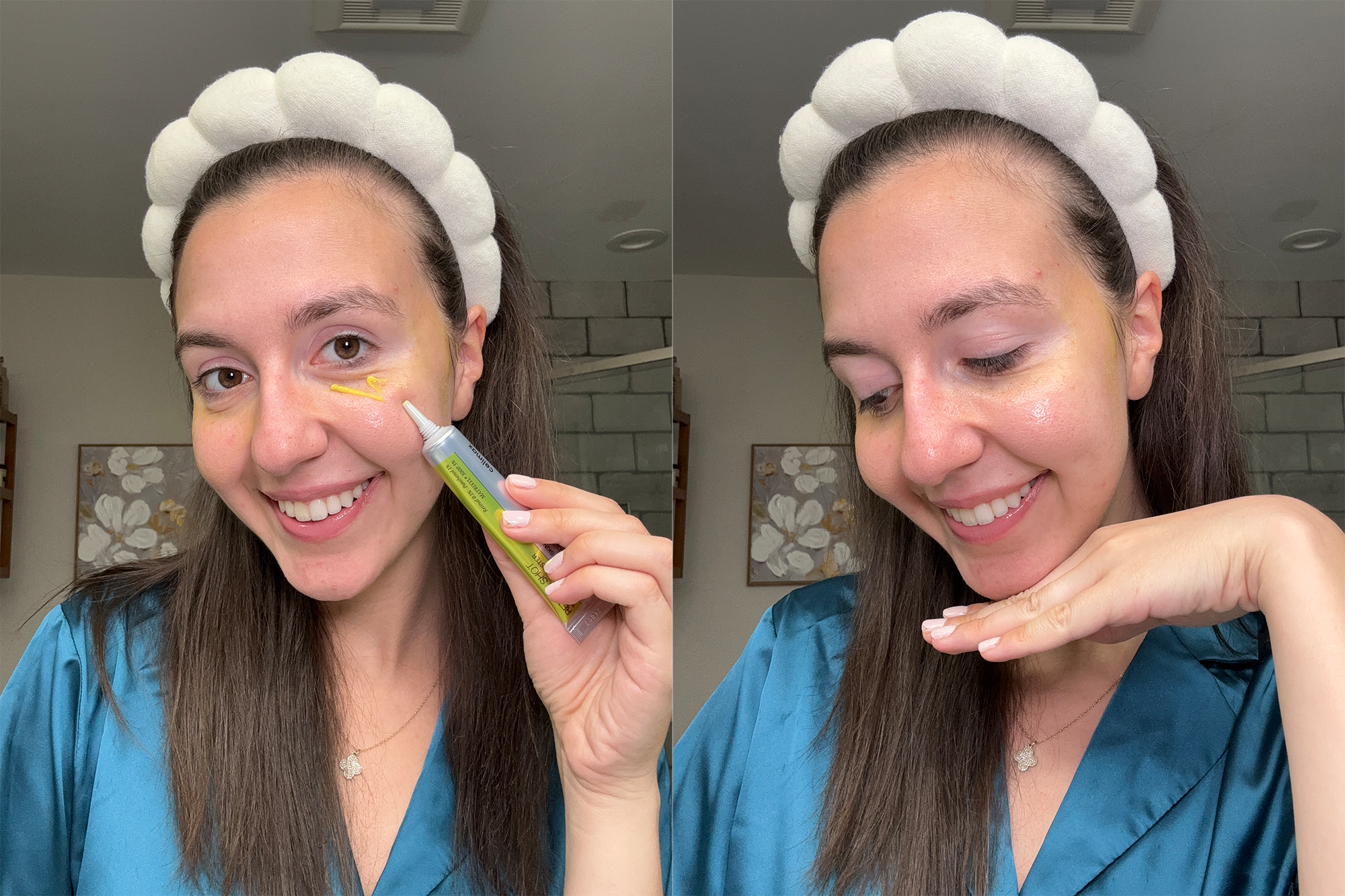
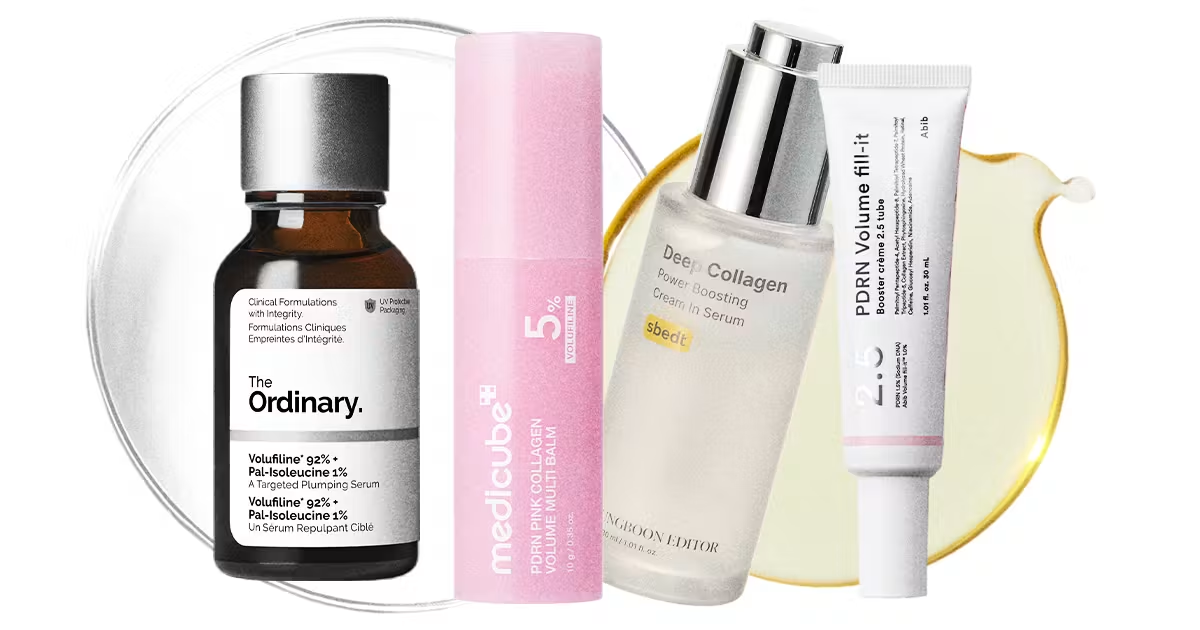
Volufiline is marketed online as an under-eye hollowness treatment and “filler in a bottle,” prominently featured in serums and balm sticks that promise quick plumping in viral clips. In testing, the ingredient shows its strengths when you focus on early, dehydration-driven changes rather than severe volume loss. One injector explains that volufiline is intended to provide subtle skin-plumping effects, not act as a true filler replacement, with fuller fat cells creating a slight increase in the treated tissue’s appearance. A registered nurse notes it is best suited for mild crepiness, fine lines, and subtle dehydration-related hollowing rather than pronounced hollows or true dark circles. Used twice daily over weeks, I saw more hydrated, smoother under-eyes and less noticeable shallow grooves before work, but deeper structural hollows remained.
From a user perspective, the biggest shift is in how the skin reflects light and holds moisture. Under-eye makeup sits better, fine lines look softened, and the area appears fresher, but the underlying anatomy does not change. Dermatologists emphasise that topicals can only reach superficial layers, while fillers target deeper subcutaneous fat planes. That limitation explains why volufiline vs fillers is not a direct contest: volufiline improves the surface look; fillers change contours. If you expect volufiline to rebuild lost volume beneath the eyes, you will be disappointed; if you aim for incremental plumping and smoother texture, you may consider the results worthwhile.
Volufiline vs Fillers: Intensity, Longevity, And Expectations
Comparing volufiline vs fillers highlights the trade-off between intensity and subtlety. Hyaluronic acid fillers gained popularity for their ability to smooth wrinkles, plump hollower facial areas like under the eyes, and deliver long-lasting structural volume changes. Volufiline, by contrast, is a cosmetic plumping ingredient made from sarsasapogenin in a moisturising base, marketed as a topical alternative by claiming to promote fat-cell differentiation and lipid storage for a fuller look. In daily use, volufiline provides cosmetic improvements in hydration, smoothness, and a generally plumper appearance but lacks filler-level longevity and impact. According to one dermatologist, “we simply don’t have robust independent clinical studies showing that topical Volufiline can meaningfully restore facial volume,” underscoring that its effects are modest and surface-level.
Volufiline’s practical advantage is that it carries far fewer barriers to entry: no needles, no office visits, and less risk of overdone volume. Its drawback is that any plumping you see is subtle and depends on consistent application and the surrounding formulation, which often includes humectants, emollients, and barrier-supporting ingredients such as squalane, ceramides, hyaluronic acid, peptides, niacinamide, and growth factors. Dermatologists suggest treating volufiline as a skin-plumping agent within a broader routine rather than a standalone fix for mature volume loss. For significant under-eye hollows, temples, or age-related facial volume changes, expectations must stay realistic: volufiline will not match the intensity or durability of a tailored filler plan.
Where Volufiline Fits Among Other Volumizing Ingredients
To set realistic expectations, it helps to compare volufiline with other volumizing and smoothing ingredients. Before volufiline rose as the active du jour, many people with under-eye hollowness had already rotated through peptides, retinoids (and alternatives like bakuchiol), hyaluronic acid, vitamin C, and various devices. Dermatologists advise that skincare fundamentals such as sunscreen, retinoids, antioxidants, and barrier-supporting ingredients have stronger evidence for improving skin quality over time than volufiline alone. Volufiline’s sweet spot is as one part of a hydrating, barrier-friendly formula that may offer additional plumping potential on top of those established actives. Someone who enjoys skincare, has mild dehydration or early fine lines, and understands that results are likely to be subtle may find volufiline worthwhile.
In my experience, volufiline-enhanced products performed best when paired with humectants and lipids that visibly improve texture and resilience. Dermatologists suspect that much of the perceived softness and plumpness after use comes from those co-ingredients—squalane, emollients, and other barrier-supporting compounds—rather than from volufiline independently. That does not negate its potential, but it reframes it: volufiline is a supporting actor in a well-formulated cream or serum, not the sole star. For mature skin, the ingredient can help refine the look of fine lines and mild crepiness, yet cannot reverse marked laxity or deep hollows. If you build your routine around proven actives and let volufiline add incremental plumping, the results align far more closely with what science and user testing suggest.
Buy if / Skip if
- Buy the volufiline product if you have mild under-eye hollowness, early fine lines, or dehydration-related crepiness and want a subtle plumping boost.
- Skip the volufiline product if you are seeking a true alternative to dermal fillers for pronounced tear troughs, temples, or age-related facial volume loss.
- Buy the volufiline product if you enjoy skincare experimentation and plan to pair it with sunscreen, retinoids, antioxidants, and hydrating co-ingredients like hyaluronic acid and ceramides.
- Skip the volufiline product if you expect dramatic, filler-like structural changes or long-lasting results comparable to injected hyaluronic acid fillers.
- Buy the volufiline product if you want a non-invasive way to slightly soften fine lines and improve makeup laydown around the eyes with consistent use.
- Skip the volufiline product if you have oily or acne-prone skin and tend to react poorly to heavier, more occlusive formulas often used to deliver this ingredient.