
A 13‑Year Low That Strengthened the Biggest Brands
The smartphone market decline 2026 refers to a sharp drop in global shipments to their lowest level since 2013, driven by a memory chip shortage that raised component costs, weakened demand for budget devices, and widened the gap between dominant premium brands and struggling mass‑market vendors. Global shipments fell 4% year over year in the second quarter as the memory crisis disrupted supply chains and pushed up costs for every manufacturer. Another data set describes an 11% year‑over‑year drop, underscoring the severity of the downturn and confirming this was the weakest smartphone quarter in more than a decade. This is not a normal cyclical dip; it is a structural shock that punished vendors without pricing power while rewarding those that could hold the line on prices and protect their brand image.
Apple and Samsung: Winning by Standing Still on Price
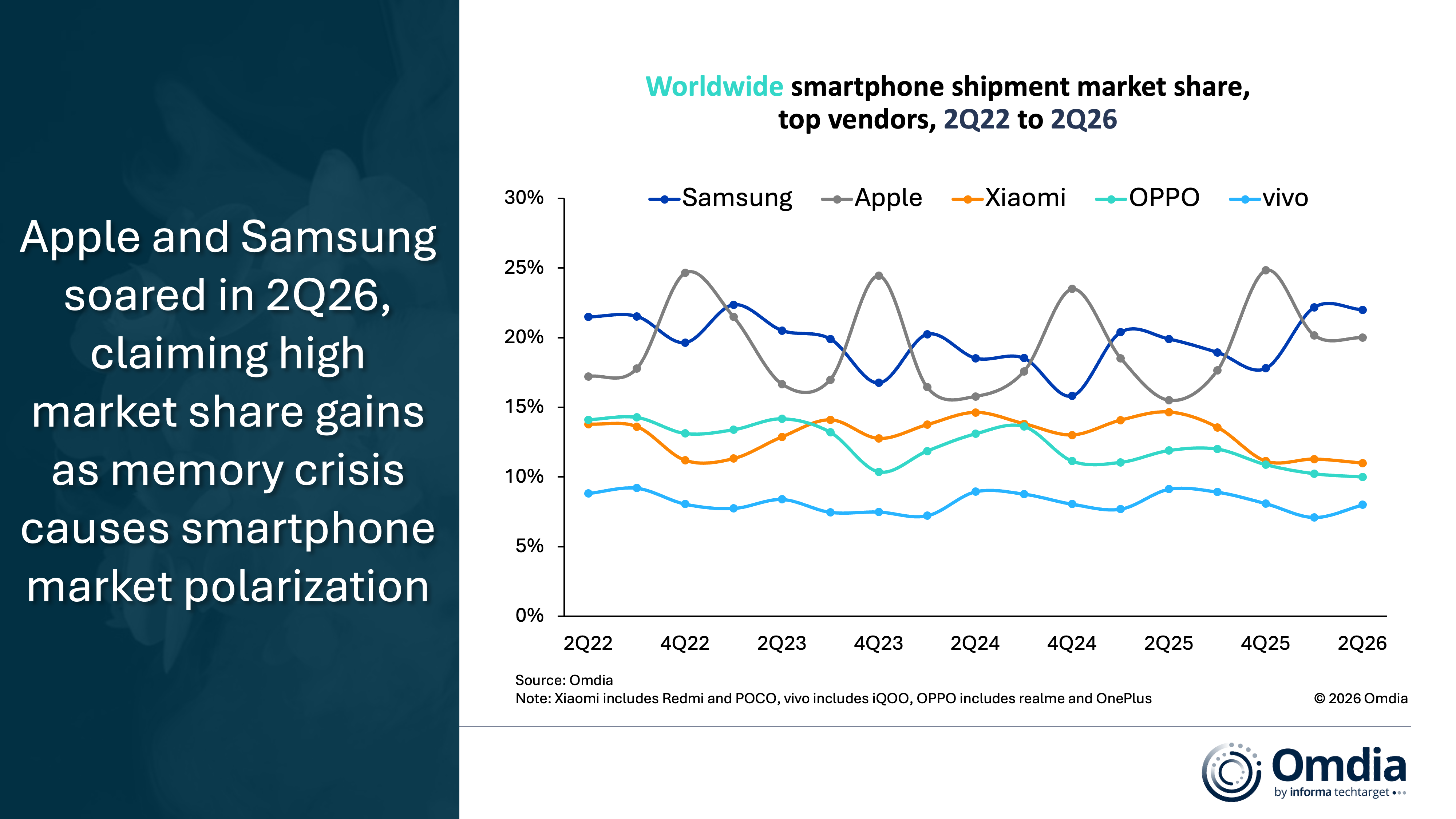
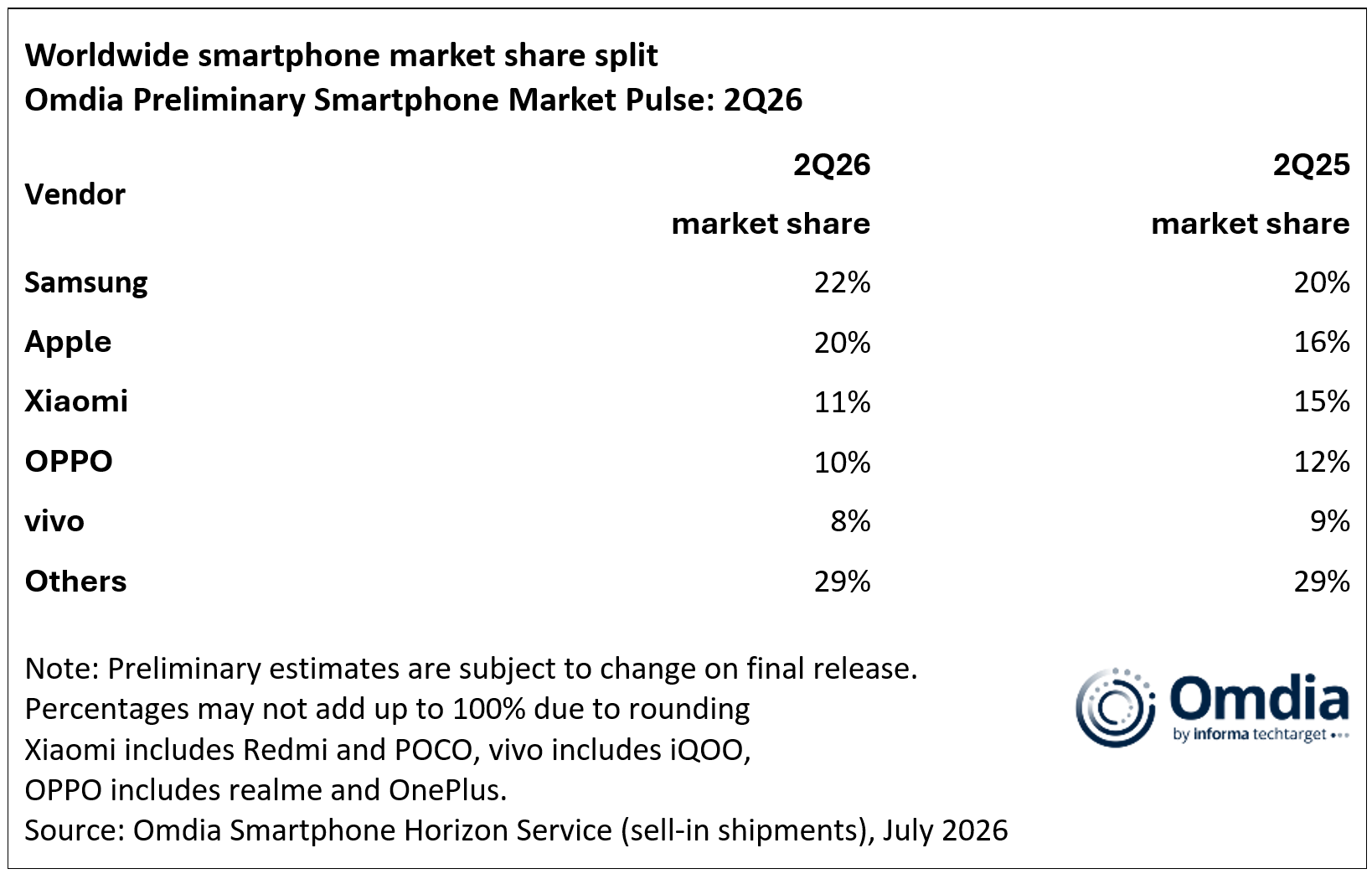
In the middle of this slump, Apple and Samsung did something deceptively simple: they kept their smartphone prices steady while rivals passed on memory costs to consumers. Samsung remained the largest vendor, holding 22% of the global market in the second quarter, with shipments and share both rising despite the broader decline. Another report shows Samsung climbing to 24% market share, a four‑percentage‑point increase on the year. Apple delivered its best second‑quarter ever, capturing a record 20% share and growing shipments by double digits. Together, their Apple Samsung market share gains amount to premium phone consolidation: when everyone else raised prices, buyers treated premium brands less as a luxury and more as the safest bet in a confusing, inflationary market.

Memory Chip Shortage: Why the Mid‑Tier Got Squeezed Hardest
The memory chip shortage impact is not just a supply story; it is a profitability story. Global smartphone shipments fell as an ongoing memory crisis made DRAM and NAND four to five times more expensive than a year earlier for some vendors. Memory and storage now account for more than 60% of the bill of materials in budget devices and over 30% even in high‑end models. When rising AI demand for memory collides with thin mid‑range margins, something has to give, and that something was volume. The steepest drops hit phones under $400, where supply is tightest and price sensitivity highest. Budget and mid‑range manufacturers had no cushion: they either raised prices or cut shipments. In contrast, premium vendors could absorb more of the shock, stretching their margins instead of their customers.
Polarization and Fragmentation: The New Smartphone Hierarchy
What we are seeing is a brutal reshaping of the vendor hierarchy. In the global market, only Samsung and Apple managed year‑over‑year shipment growth among the top five, while Xiaomi, OPPO and vivo recorded declines of 26.3%, 17.5% and 19.4% respectively. Another data set echoes this pressure, noting mass‑market segment declines squeezing players beyond the top two. As memory prices spiked, several vendors deliberately shifted from chasing volume toward protecting value, trimming product lines and increasing prices to survive. The consequence is industry fragmentation: a narrow band of flagship brands with real pricing power, and a crowded, vulnerable mid‑to‑low tier that now competes on ever‑thinner differentiation. Those who raised prices lost share that will be hard to reclaim, because smartphone replacement cycles stretch to almost four years and longer cycles strengthen brand loyalty.
What This Downturn Means for Ordinary Buyers
For everyday users, the smartphone market decline 2026 means fewer cheap choices and more pressure to pay premium prices, or to wait. Analysts expect vendors to lean further into higher price segments to protect margins while offering fewer options to budget‑constrained buyers. Many mass‑market customers will delay purchases, downgrade expectations, rely on financing, or turn to refurbished devices as memory costs and retail prices stay elevated. Consumers have already shown sharper price sensitivity than vendors assumed: when faced with brands that hiked prices versus those that kept them stable, most chose the latter, even if the starting price was higher. The uncomfortable truth is that the real test is still ahead. Memory prices are not expected to start easing until at least the second half of 2027, and component constraints are likely to keep the industry under pressure for the rest of this year.