
Apple’s Record Share in a Shrinking Smartphone Market
Apple’s record 20% share of global smartphone shipments during a period of market decline is best understood as the result of market consolidation, supply-chain pressure, and consumers trading up to trusted premium brands while the low end is squeezed by rising component costs and fewer budget-friendly choices.
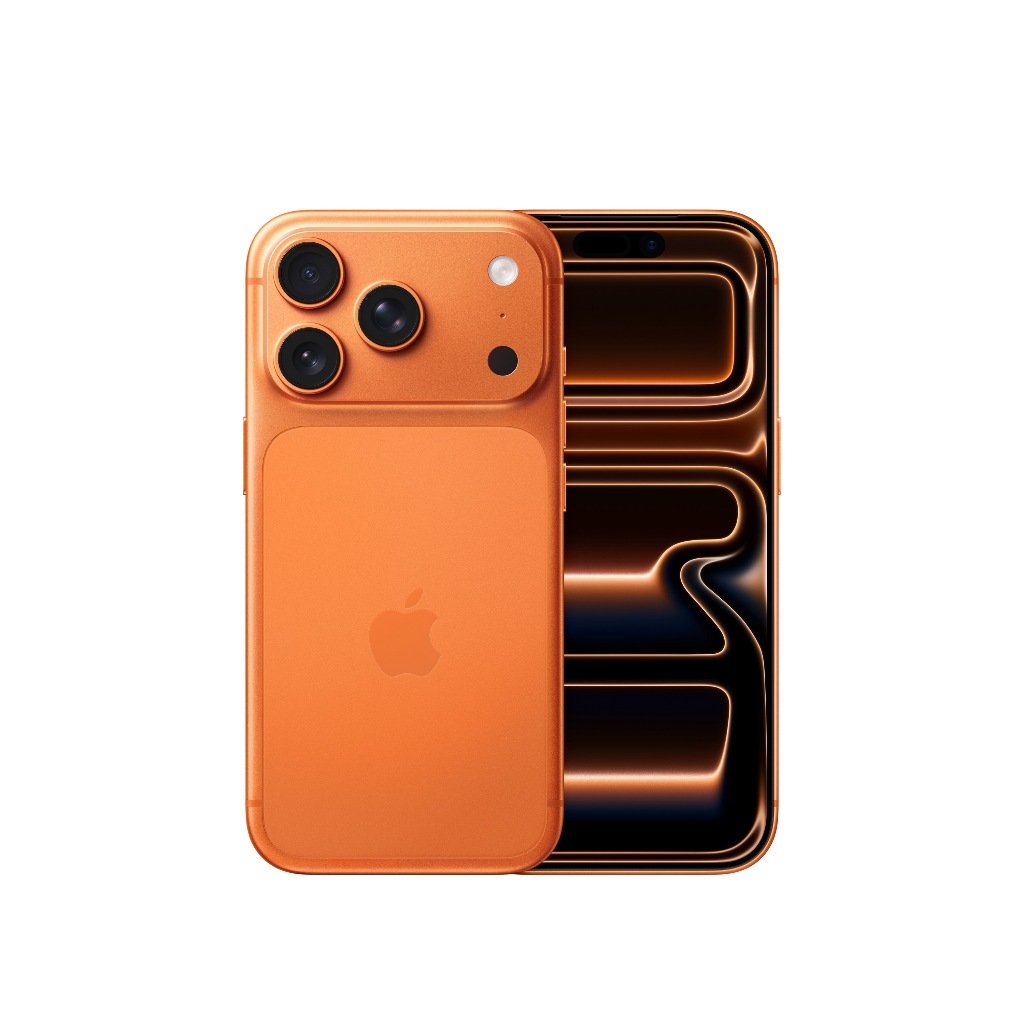
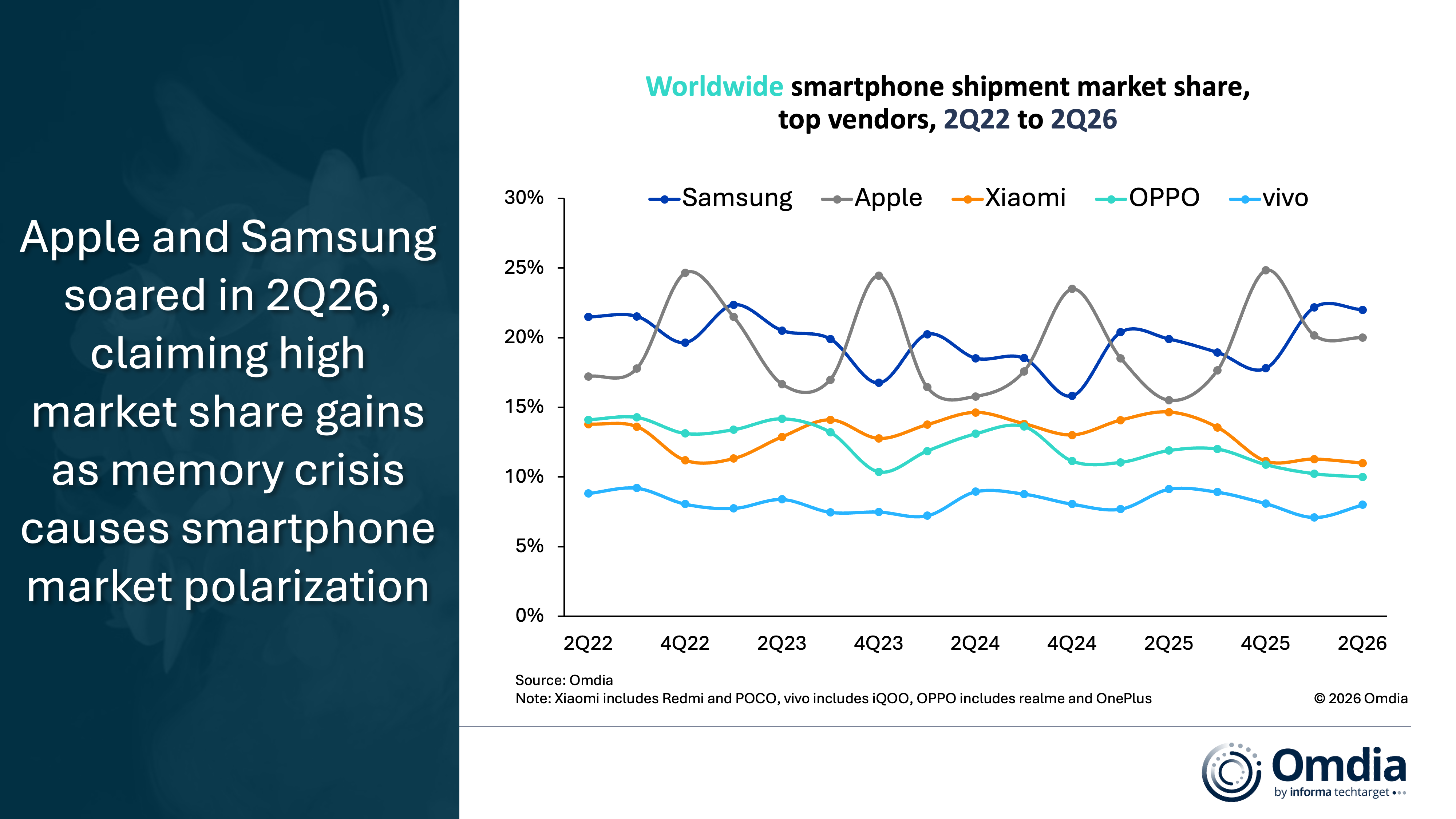
The headline number is stark: global smartphone shipments fell 4% year-on-year in the second quarter as a memory shortage disrupted supply and pushed up component costs. Yet Apple grew iPhone shipments 3% in the same period and captured a record 20% share of global smartphone shipments despite the industry-wide downturn. In other words, Apple increased both its slice of the pie and the absolute number of iPhones sold while the overall pie shrank—an outcome that contradicts the idea that a ‘mature’ smartphone market must treat all vendors equally badly. This is not an accident of timing; it is the logical result of a market tilting toward players with the scale, pricing power, and brand loyalty to endure higher costs without losing their core audience.
How the Memory Crisis Reshaped Competition
The mobile industry contraction is not a demand story alone; it is a component-cost story first. Global smartphone shipments fell 4% year-on-year as an ongoing memory crisis disrupted supply and increased costs. Some vendors are paying four to five times more for memory than a year ago, and memory and storage now make up over 60% of the bill of materials for budget devices and more than 30% for high-end models. That cost shock hits cheapest phones hardest, where margins were already thin and buyers are most price-sensitive.
The result is brutal polarization. The steepest volume drops have hit the sub-$400 mass-market segment, where supply is tightest and profit margins slimmest. To defend profitability, vendors are shifting from volume to value, cutting product lines, lifting retail prices, and reoptimizing storage configurations instead of chasing every last sale. For smaller brands built on low-end volume, this is existential. For Apple, which lives at the upper end, the same crisis plays out as a competitive advantage: it can keep flagships attractive while rivals are forced into price hikes that make their offerings easier to skip or delay.

Why Apple and Samsung Pulled Away from the Pack
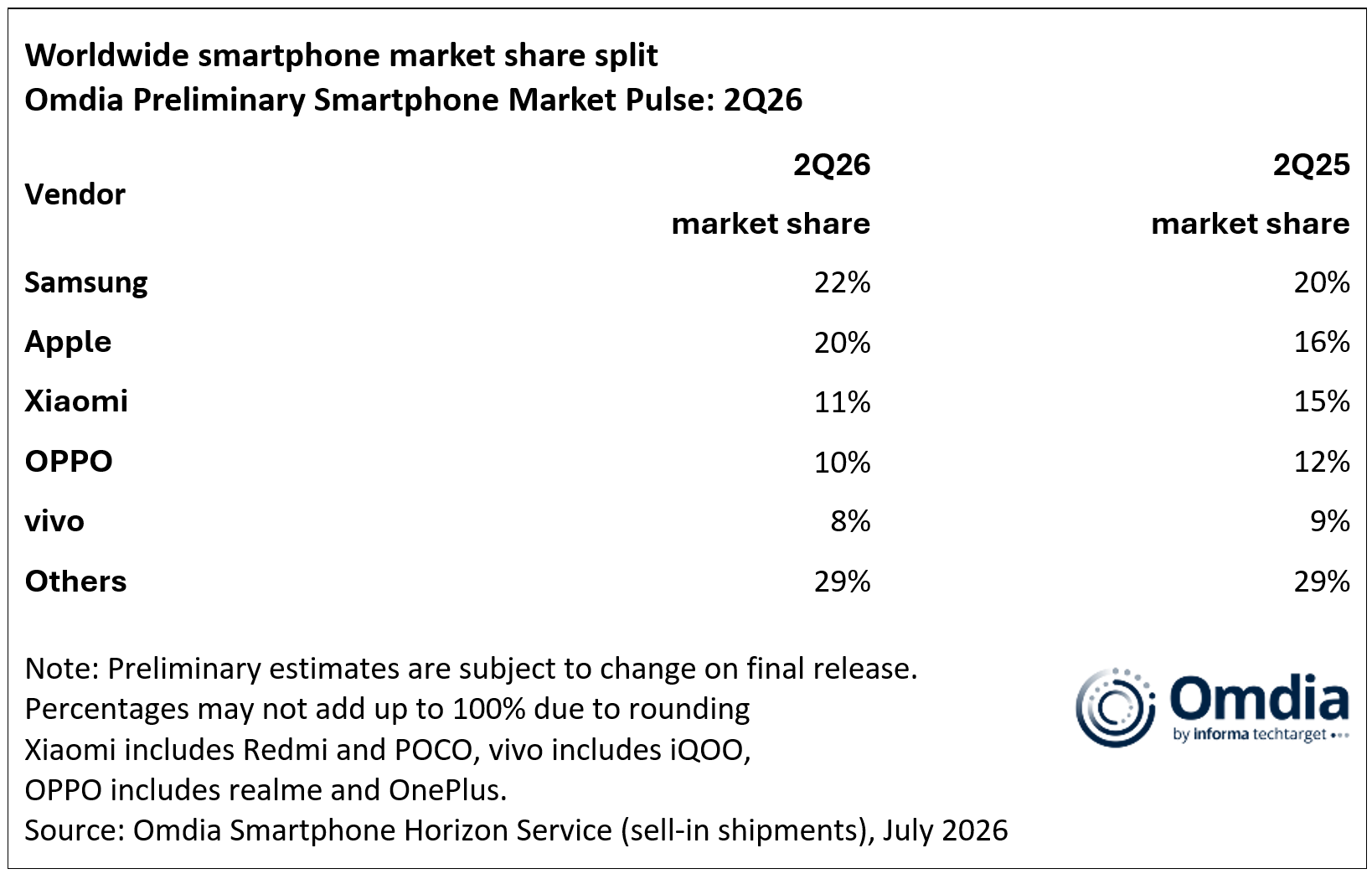
In this environment, scale is everything. Samsung held the largest smartphone share in the quarter at 24%, with Apple close behind at 20%, followed by Xiaomi at 12%, OPPO at 11%, and vivo at 8%. Both Samsung and Apple grew shipments and increased their market shares compared with a year earlier, gaining two and four percentage points respectively. Xiaomi and OPPO, by contrast, saw their shares fall, and the combined share of all smaller manufacturers slipped from 28% to 26%.
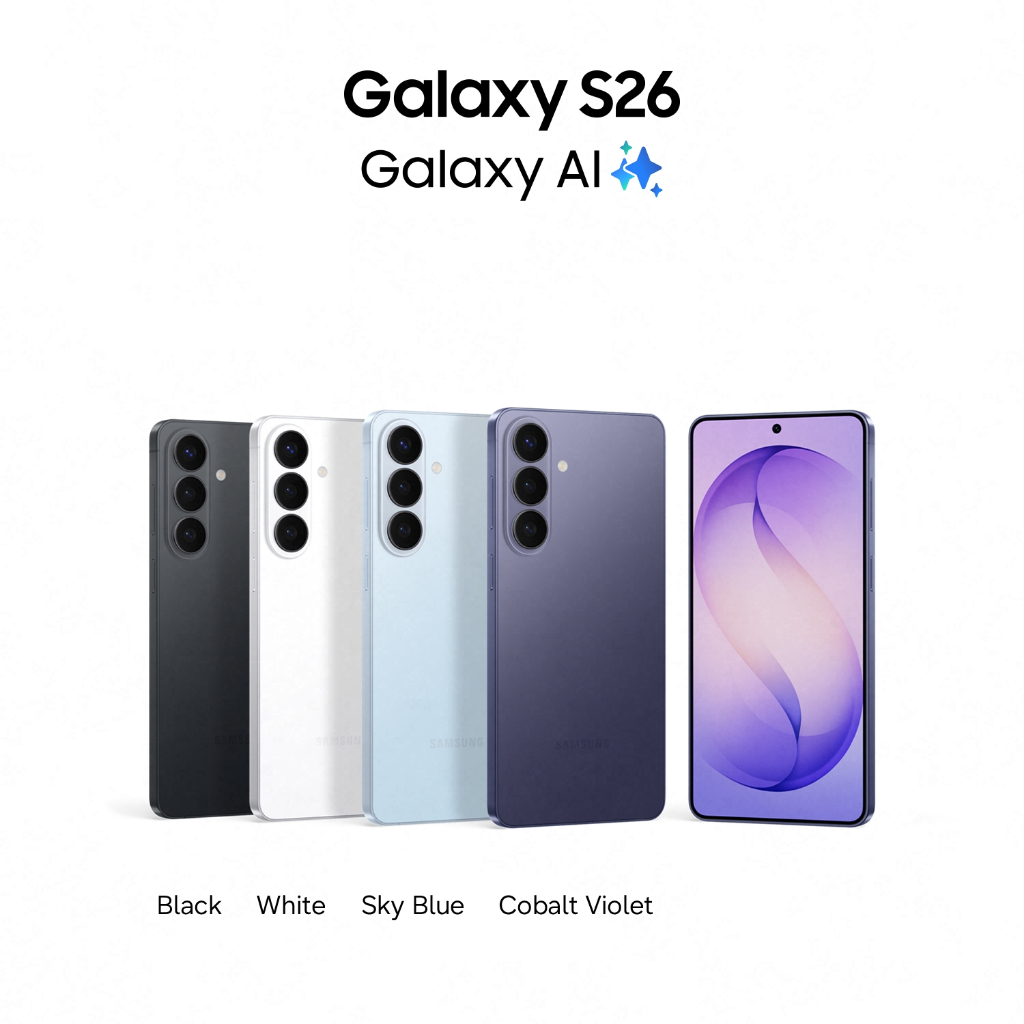
The strategy gap is clear. Apple avoided smartphone price hikes during the quarter, which helped sustain demand while competitors raised prices. Samsung grew faster thanks to strong Galaxy S26 demand, better availability, and aggressive promotions. Meanwhile, declines in the mass-market segment squeezed many players beyond the top two, even as Xiaomi managed to defend third place with 11% share. This is classic consolidation: when supply chains strain and costs spike, the biggest brands use their balance sheets and marketing power to harden their positions, while smaller rivals pull back from low-end volume that no longer pays.
What the Market Shakeout Means for Ordinary Buyers
For everyday smartphone users, the industry’s pivot from volume to value has a tangible downside. As vendors retreat from low-margin models and move upmarket, they offer fewer options to budget‑constrained consumers. Many mass‑market buyers will be forced to delay purchases, lower their expectations, turn to financing, or choose refurbished devices instead of new ones. Researchers expect manufacturers to keep cutting low-margin models, tweak storage tiers, and rely more heavily on refurbished and previous‑generation phones until supply conditions improve.
From a user’s perspective, this means fewer ultra-cheap new phones and more pressure to stretch existing devices for another year. Paradoxically, this also supports Apple’s position: when an upgrade is rare and expensive, many people prefer to spend on a device they trust to last, even if the upfront price is higher. Apple’s steady iPhone sales growth in the face of the smartphone market decline suggests that premium buyers are sticking with the brand rather than trading down. The cost squeeze is making smartphones feel less disposable—and that favors companies that already sell on longevity and ecosystem lock‑in.
Can Apple Keep Growing as Subsidies Fade and Prices Rise?
Apple’s current success hides a more uncomfortable question: how long can this model last in a world of rising prices and weaker upgrade habits? Apple held the line on iPhone pricing through most of the quarter, but raised prices on its Mac and iPad lineups toward the end as margin pressure grew. The upcoming iPhone 18 Pro series is expected to launch with material price hikes, and analysts already see evidence of slowing sales momentum as the iPhone 17 hype fades.
According to a recent research note, the risks are piling up: slowing iPhone builds amid price increases, weak U.S. upgrade activity, changing device subsidy models, and likely lower expectations for Mac, iPad, and wearables by 2027. One analyst argues that consensus expectations of 8% iPhone growth in 2027 are “too aggressive,” warning that slower unit growth will reduce expansion of Apple’s user base and pressure its services business. With carrier subsidies already being scaled back in key markets, international buyers are expected to shoulder more of the iPhone growth burden at the same time as prices rise. The uncomfortable truth for Apple is that the same consolidation that boosted its market share today may cap its growth tomorrow if consumers simply stop upgrading fast enough.

The Takeaway: Consolidation Favors Apple—For Now
The story behind Apple’s market share gain is not that the smartphone market suddenly loves premium phones again; it is that a stressed market is concentrating power in the hands of a few brands. Memory shortages and spiking component costs have dragged global shipments down even as Apple and Samsung widened their lead. Apple’s 3% iPhone sales growth and record 20% global share during this mobile industry contraction prove the resilience of its brand and the strength of the premium segment.
But consolidation is not the same as unlimited growth. The next 18–24 months will test whether Apple can raise prices, absorb fading subsidies, and still keep iPhone unit growth healthy enough to feed its services engine. Vendors expect the sharpest volume declines to hit during upcoming peak seasons, and memory price relief is not likely until at least the second half of 2027, with no return to pre‑2025 levels on the horizon. In that world, Apple’s edge is clear—but its margin for error is shrinking along with the market it dominates.