
Our Top Pick: Topical Minoxidil Foam for Most Men
Dermatologist-approved hair loss treatments for men are clinically tested solutions—like topical foams, serums, thickening shampoos, and laser hair growth devices—that improve scalp health, stimulate follicles, and slow male pattern thinning over months of consistent use. For most men, the best starting point is a topical minoxidil foam: it is one of the only FDA-approved drugs for hair growth and is widely recommended by dermatologists for early and moderate thinning. Minoxidil directly stimulates weakened follicles, nudging more hairs into the growth phase so you see denser coverage along the hairline and crown over time. It fits the key rule for the best hair loss treatments men should use: proven science first, gimmicks never. If you can commit to daily application for at least six months, this is the most accessible, dermatologist-approved hair loss option to start with at home.
Clinically Proven DHT-Focused Formulas and Shampoos
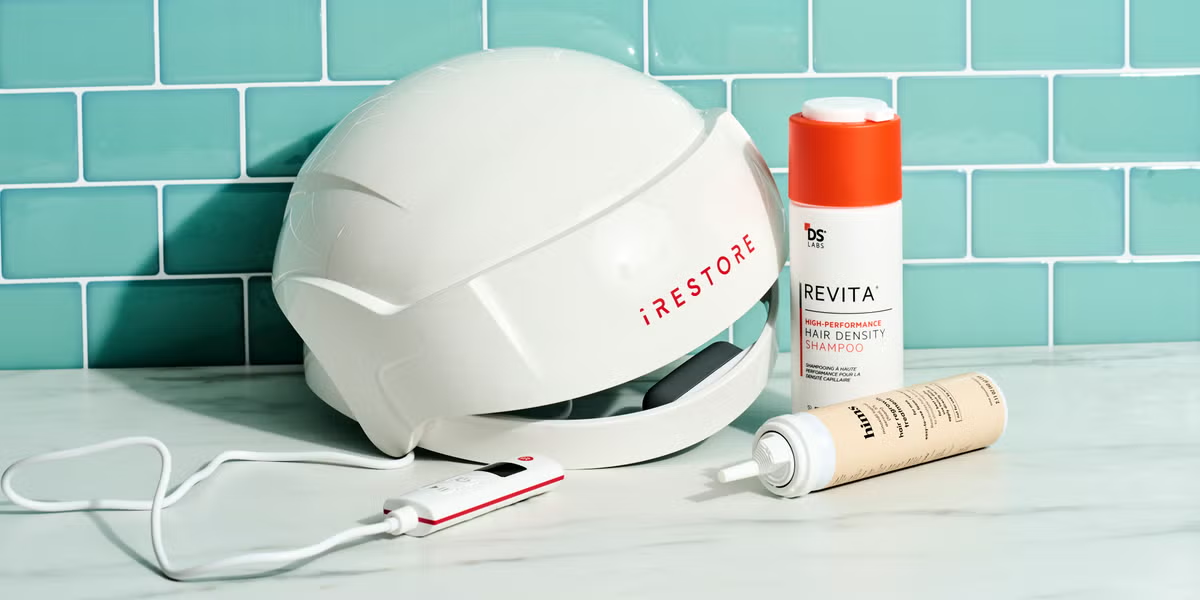
To tackle the root cause of male pattern hair loss—surging dihydrotestosterone (DHT) that shrinks follicles—dermatologists pair growth stimulators with DHT-focused formulas. Finasteride is one of the only FDA-approved drugs for hair growth and works by blocking DHT, protecting follicles from further miniaturization so they can keep producing thicker strands. According to board-certified dermatologists, men noticing early thinning should use minoxidil to stimulate regrowth and finasteride to block DHT, addressing both new growth and long-term follicle protection. Complementing these with a DHT blocking shampoo that includes clinically studied ingredients like saw palmetto or rosemary extract can support scalp health, though shampoos alone are not enough. The goal is a simple, sustainable routine: a daily growth topical, a DHT-focused agent, and a scalp-friendly wash that keeps the environment for hair roots as healthy as possible.
Laser Hair Growth Devices vs. Topicals: How They Work
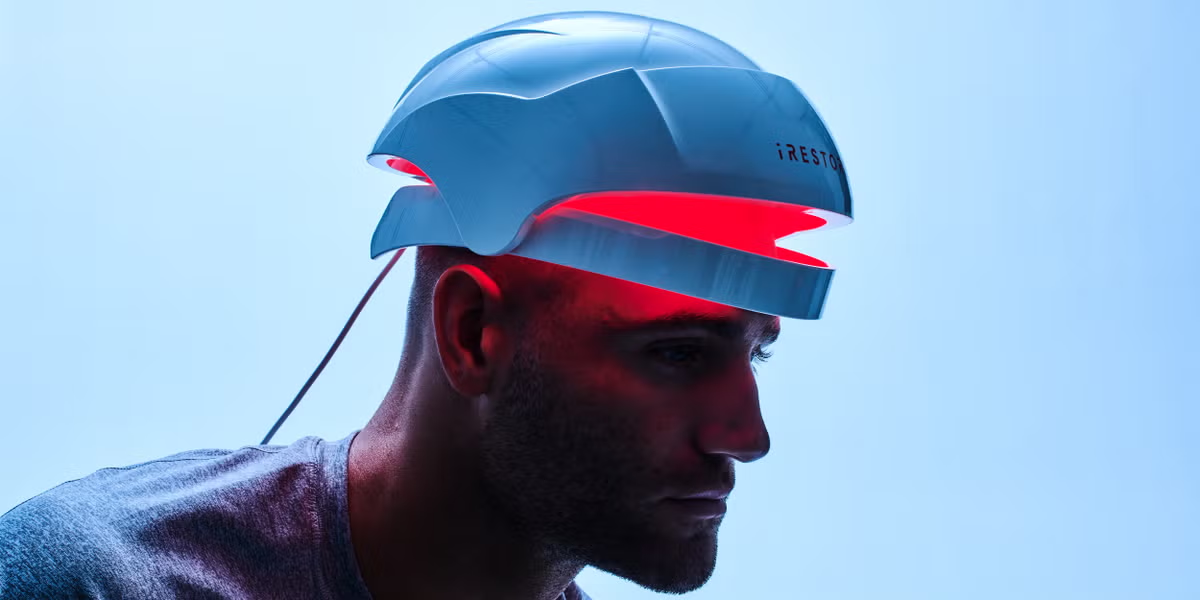
Laser hair growth devices use low-level laser therapy (LLLT) to stimulate weakened or dormant hair follicles through photobiomodulation, improving cell metabolism, blood flow, and inflammation control so follicles re-enter and stay in the growth phase. These devices focus on male pattern baldness driven by hormonal changes, where testosterone declines and DHT rises, leading to the classic receding hairline and crown thinning. Topical treatments like minoxidil and DHT-focused formulas work chemically at the follicle level, while LLLT provides a physical energy boost to the same structures. Both approaches share one critical trait: they are slow but reliable when you stick with them. Supply matters because hair regrowth is gradual and meaningful results usually appear from about six months to a year, not within weeks. The smartest plan is to treat lasers as a powerful add-on to a topical routine, not a stand-alone shortcut.
| Spec | Topical Treatments | Laser Hair Growth Devices |
|---|---|---|
| Mechanism | Chemical stimulation of follicles and DHT control | Photobiomodulation via low-level laser therapy (LLLT) |
| Main Targets | Early to advanced thinning, DHT-related miniaturization | Male pattern baldness with weakened or dormant follicles |
| Result Timeline | Noticeable change at 3–6 months; fuller results at 6–12 months | At least six months of consistent use before visible results |
How to Choose: Light Type, Wavelength, and Budget Reality
If you decide to add a laser hair growth device, focus on three key criteria: light type, wavelength, and your ability to use it consistently. For light type, devices built around laser diodes penetrate deeper and are more effective for regrowth, while LED-based tools are gentler and better suited to sensitive scalps or very early shedding. For wavelength, dermatologists recommend the therapeutic band between 630 and 680 nanometers to reach follicles, with the 650-nanometer range recognized as optimal for mitochondrial energy support. Compliance still matters most: if you cannot wear a cap or helmet on schedule for months, you will not see the results you paid for. Laser hair growth devices are rarely cheap—you will not find an effective one below USD 400 (approx. ₱22,400)—so many men sensibly stick to dermatologist-approved topicals as their first, cost-effective line of defense.
Buy if / Skip if
- Buy the topical minoxidil foam if you want the best hair loss treatments men can start at home with strong clinical backing and simple daily use.
- Skip the topical minoxidil foam if you know you cannot commit to twice-daily application for at least six months, since poor compliance kills results.
- Buy the DHT-focused finasteride-based regimen if your dermatologist confirms male pattern hair loss and you want to protect follicles while boosting regrowth.
- Skip the DHT-focused finasteride-based regimen if you are wary of systemic DHT blocking and prefer to stay with topical-only or non-drug options after medical advice.
- Buy the laser hair growth devices if you already use topicals consistently and want to supercharge follicle energy with LLLT for additive gains.
- Skip the laser hair growth devices if your budget is tight or you cannot guarantee regular sessions for at least six months, given that effective devices cost more than USD 400 (approx. ₱22,400).
- Buy the DHT blocking shampoo if you want a supportive wash with clinically studied ingredients alongside proven treatments, not in place of them.
- Skip the DHT blocking shampoo if you expect a shampoo alone to reverse established thinning, because cleansers are secondary helpers, not primary therapies.