
The top pick for most men: an FDA‑cleared laser cap
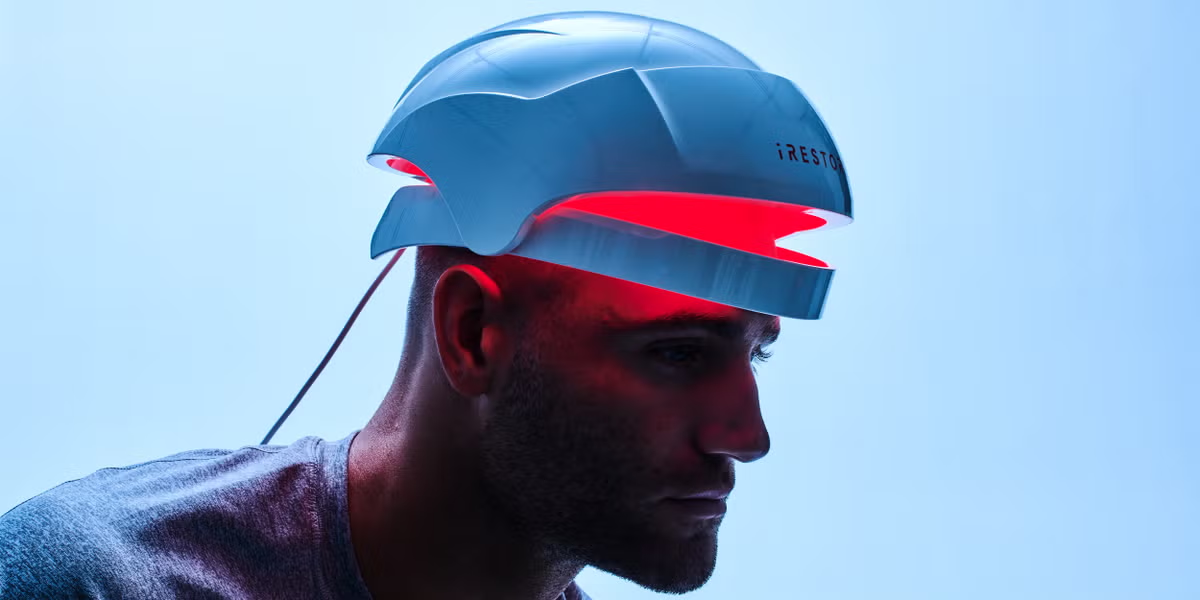
Laser hair growth devices are non-invasive tools that use low level laser therapy to stimulate weakened or dormant hair follicles, making them a leading at-home hair loss treatment for men with androgenetic alopecia. The best overall choice for most men is a full-coverage, FDA‑cleared laser cap using medical-grade laser diodes at therapeutic wavelengths, because it targets the entire scalp evenly while fitting into a simple, repeatable routine at home. For the majority of men, hair loss stems from male pattern baldness, a genetic condition driven by hormonal shifts that produces a receding hairline and thinning at the crown. Experts explain that laser hair growth devices are best at treating this specific cause of hair loss, since the follicles are weakened rather than destroyed. If you want a serious, doctor-validated hair restoration alternative without surgery, a quality laser cap should be your first move.
How low level laser therapy stacks up against hair transplants
Low level laser therapy (LLLT) powers these laser hair growth devices, using red and near-infrared light to improve cell metabolism, blood flow, and inflammation control around hair follicles. Hair restoration physicians describe this process, called photobiomodulation, as stimulating follicles to re-enter and stay in the growth phase. A surgical hair transplant moves follicles from denser areas to balding zones; LLLT instead focuses on reviving existing, miniaturised follicles. For men with early to moderate male pattern thinning, dermatologists validate that top-rated laser devices are effective at optimising the scalp environment and promoting visible thickening over time. Another advantage is safety: while effective devices are rarely cheap and sit well above budget gadgets, you avoid incisions, anaesthesia, and surgical downtime. That makes LLLT the smarter first-line hair loss treatment for men who still have a decent amount of hair across the scalp.
Key criteria dermatologists want you to check
Dermatologists highlight three main criteria when choosing laser hair growth devices: light type, wavelength, and regulatory status. First, light type: devices use either LEDs or laser diodes. Hair restoration specialists recommend focusing on laser diodes because they are more powerful and penetrate deeper, reaching the follicle root more effectively. LEDs are gentler and suit sensitive scalps with early shedding, but they struggle with more advanced loss. Second, wavelength: experts recommend 630–680 nanometres to penetrate the scalp and stimulate follicle growth, with around 650 nm particularly important for mitochondrial energy production in hair follicles. Third, FDA clearance: there are different regulatory levels, and "FDA-listed or FDA-registered simply means that the manufacturer has informed the FDA, but doesn’t imply approval or authorization. FDA clearance, on the other hand, means the device is substantially equivalent to a product already on the market".
Matching device type to your hair and scalp
To pick the right hair restoration alternative, you need to match the device to your hair pattern and scalp sensitivity. Men with classic male pattern baldness—receding hairline and thinning crown—benefit most, because this condition leaves follicles weakened but still present. For sensitive or easily irritated scalps, start with devices that either combine laser diodes with LEDs or run lower intensities, then build up carefully to reduce redness or swelling risk. If thinning is early and scattered, LED-heavy designs can be enough; as loss progresses, prioritise more laser diodes for deeper penetration. Always look for FDA‑cleared models, confirming they meet safety and performance standards comparable to existing cleared devices. Consistent use matters more than bells and whistles, so choose a cap or band that fits comfortably into your weekly routine and fully covers the areas you are trying to preserve.
Buy if / Skip if
- Buy the laser cap if you have early to moderate male pattern thinning with visible hair still present across the scalp.
- Skip the laser cap if your hair loss is mainly from illness, medications, nutritional deficiencies, or autoimmune disease, where follicles may be damaged or inactive and less responsive to light treatment.
- Buy the laser cap if you want a non-invasive hair loss treatment men can use at home before considering surgery, with dermatologist-backed low level laser therapy.
- Skip the laser cap if you cannot commit to consistent, long-term use, since LLLT relies on regular sessions to maintain follicle stimulation.
- Buy the laser cap if you are ready to invest in an FDA-cleared device that uses laser diodes in the 630–680 nm range for deeper follicle targeting.
- Skip the laser cap if your scalp is extremely sensitive and you are unwilling to start slowly or manage temporary redness or irritation risk from stronger laser diodes.