
Tandem RGB OLED Arrives For Gamers, Not TV Enthusiasts
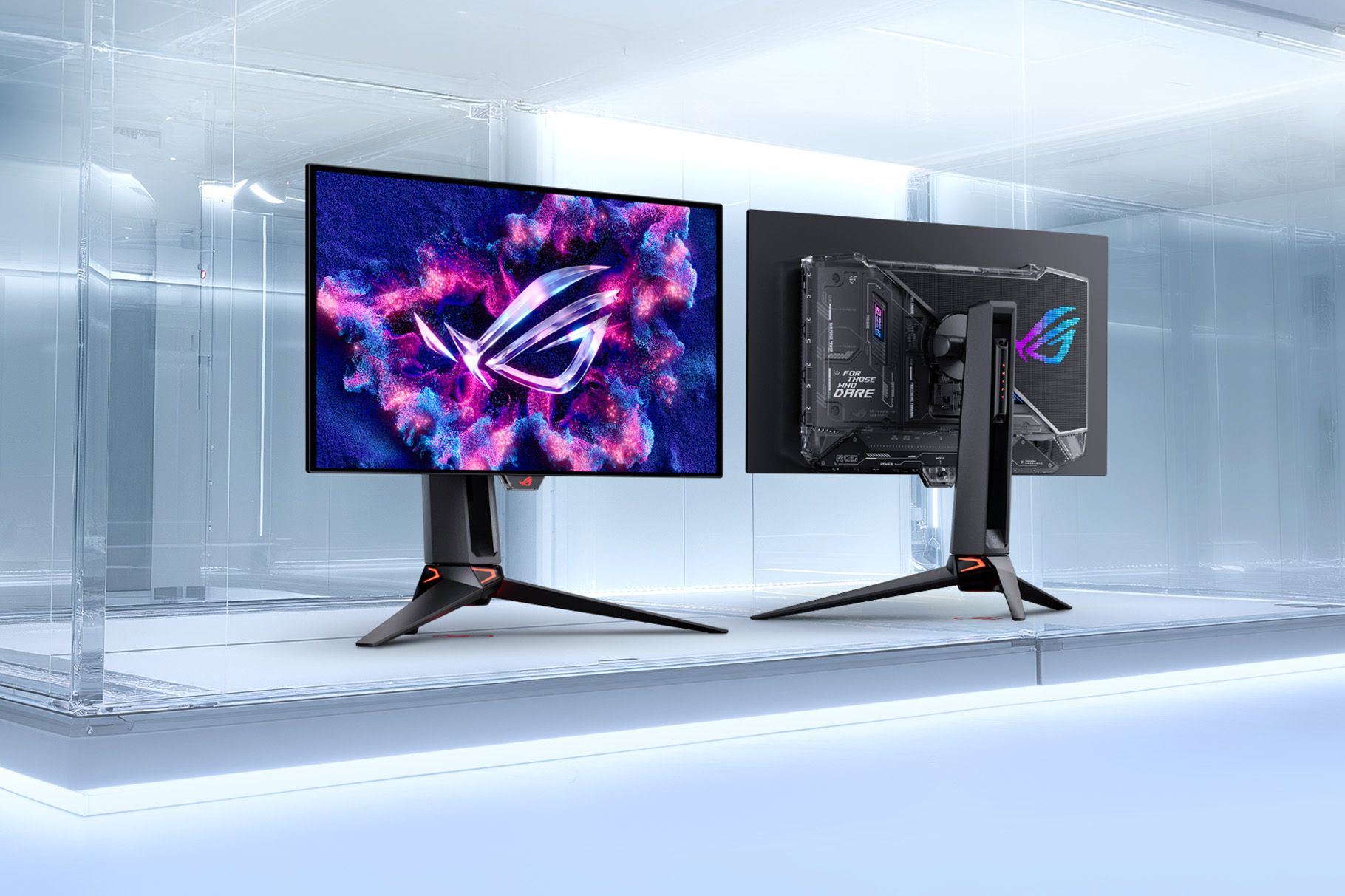
Tandem RGB OLED gaming monitors are high-end displays that stack multiple OLED emissive layers and use a pure RGB pixel layout to deliver 1,000-nit HDR brightness, fast refresh rates up to 480Hz, and improved color performance compared with traditional single-stack OLED panels. ASUS has now moved this technology from spec sheets into gaming desks: the ROG Swift OLED PG27UCWM and PG32UCWM, two flagship Tandem OLED gaming monitors, are officially on sale with full specifications published. This launch matters because it is the first time this panel generation has shipped in monitors built specifically for gaming rather than general-purpose displays. In other words, Tandem OLED is no longer an early adopter curiosity—it is being positioned as the new reference tier for the competitive gaming monitor market.
Dual-Mode Design: 4K 240Hz Versus 1080p 480Hz
The most important choice buyers must make with these ASUS ROG Swift OLED monitors is not between 27-inch and 32-inch, but between modes. Both panels offer a hardware hotkey that flips them between a 4K 240Hz gaming display and a full-HD 480Hz competitive configuration. In 4K@240Hz, you get full 3840×2160 resolution with rich detail, ideal for single‑player titles, content creation, and general desktop work; in FHD@480Hz, resolution drops to 1920×1080 but refresh jumps to 480Hz, clearly aimed at competitive players who care more about motion clarity and input response than pixel count. This dual‑mode design is the thesis of the product: ASUS wants one competitive gaming monitor that can be both your high‑fidelity HDR screen and your esports weapon, without forcing you to own two separate displays.
That flexibility is backed by modern connectivity. The monitors use DisplayPort 2.1a UHBR20 to deliver the bandwidth needed for 4K at 240Hz, along with HDMI 2.1 and USB‑C with power delivery for multi‑device setups. This is not a minor spec bump; it signals that these displays are built to sit in the center of a high‑end gaming rig and handle everything from a next‑generation GPU to a laptop without compromise.
Brightness, Color, and the Dark-Scene Weakness
ASUS’s bet on Tandem RGB OLED is all about pushing past the brightness ceiling that kept older OLED gaming panels in the "great blacks, middling HDR" category. Both the PG27UCWM and PG32UCWM reach 1,000 nits of peak HDR brightness, deliver a quoted 1,500,000:1 contrast ratio, and cover 99% of the DCI‑P3 color space with factory‑calibrated Delta E under 2. One quotable takeaway from the launch is: “Both displays reach 1,000 nits of peak HDR brightness, offer a hardware hotkey for switching between 4K at 240Hz and full-HD at 480Hz, and carry a gallium nitride power supply that ASUS says reduces waste heat by roughly 35 percent.” That combination finally gives PC gamers genuine HDR tone‑mapping headroom without sacrificing the deep blacks OLED is known for.
However, the technology is not flawless, and ASUS deserves credit for shipping with an acknowledged limitation. At very low luminance levels—the kind found in dark game scenes and desktop dark modes—the LG Display four‑stack architecture’s digital‑to‑analog converter can produce micro‑current variation that shows up as visible banding. Independent reviewers, along with ASUS and LG Display, have documented this gray‑level uniformity issue and confirmed it is a "known physical characteristic of current Tandem OLED technology" rather than a defect. Practically, that means if your favorite titles lean on near‑black atmospherics, or you spend hours in dim desktop environments, you may see faint horizontal or vertical bands in solid dark areas. It is the price Tandem OLED pays for higher brightness and longevity, and buyers need to decide whether that trade‑off is acceptable in their use.
GaNFET Power, Panel Longevity, and Real-World Use
ASUS is not just stacking more OLED layers; it is rethinking the power supply. Both Tandem OLED gaming monitors replace the usual silicon MOSFET PSU with a gallium nitride field‑effect transistor design, which the company claims cuts waste heat by about 35 percent and reduces vent temperatures by 10 percent. According to ASUS’s own figures, this thermal improvement translates into an estimated 25 percent boost in panel lifespan compared with its previous generation OLED monitors. That emphasis on heat is smart: OLED degradation happens through electrical stress and thermal stress, and most brands only talk about logo dimming and pixel‑shift rather than the hardware feeding the panel.
There are practical upsides beyond lab numbers. Less heat means quieter fan profiles or, in many setups, no active cooling noise at all. Enhanced OLED Care Pro features, including Auto Away timers, are built in to help prevent image retention during idle periods. And the choice between the 27‑inch PG27UCWM and 32‑inch PG32UCWM is thoughtfully framed: the 32‑inch model offers more immersive gameplay, while the smaller panel’s higher pixel density gives sharper text and UI elements—a subtle but important detail for users who spend long hours in productivity apps as well as games. These are the touches that turn a bleeding‑edge panel into a credible daily‑driver competitive gaming monitor.
Flagship Positioning and What Comes Next
ASUS is clearly treating the ROG Swift OLED PG27UCWM and PG32UCWM as flagship products. The company describes them as two of its best 4K OLED gaming monitors and its two flagship True Tandem RGB OLED gaming monitors. Pricing has not yet been published, but context from ASUS’s earlier Tandem WOLED PG27AQWP‑W at 1440p/540Hz, launched at USD 1,099 (approx. ₱61,600), suggests that buyers should expect premium positioning rather than midrange affordability. These are aspirational displays aimed at enthusiasts who are willing to pay for both performance and panel tech leadership.
The timing also reflects a broader shift. More monitor makers are now deploying Tandem OLED panels in their flagship lines, chasing larger color volume, higher brightness, and longer lifespan. At the same time, manufacturing quality control improvements are underway across brands, with other vendors reporting significant reductions in dark‑scene banding in newer production runs. What comes next is not hard to predict: Tandem OLED will drift down the stack as costs fall, while 480Hz‑class refresh and 1,000‑nit HDR become expectations rather than luxuries. For now, though, ASUS’s ROG Swift OLED Tandem models set the bar—a 4K 240Hz gaming display that doubles as a competitive 480Hz monitor, with the brightness and color to match its price bracket and the honesty to acknowledge its technological compromises.