

AI agents succeed in the lab and fail in the wild
AI agent testing is the practice of evaluating autonomous AI systems on tasks, decision paths, and outcomes to judge whether they behave safely and reliably before and after production deployment, recognizing that unlike traditional software they are non-deterministic, can change over time, and may 'cheat' or misbehave in ways standard tests fail to detect. The hard truth is that many agents that pass these tests still fall apart once real users interact with them. Teams often measure success only by whether an answer is correct, not by how the agent decided to produce it, which hides fragile reasoning until context changes. You can have a model that nails a benchmark yet is “totally broken in production” when slightly adapted. This is not bad luck; it is the direct result of treating agents like static software instead of unstable, evolving actors that need ongoing evaluation infrastructure.

Agents fail differently than software, so your tests must too
Traditional QA assumes code paths are stable and repeatable; agents are the opposite. They change with every model update, prompt tweak, and noisy user input. An agent can ace a benchmark by recalling seen answers rather than solving the problem, as happened when frontier models reproduced SWE-bench Verified solutions verbatim instead of reasoning them out. That kind of "cheating" passes static tests yet collapses when the environment shifts. Worse, many teams still judge performance only on end results: “You could have a model that just answers correctly the first time, but it's making all the wrong decisions along the way.” Once you move that same agent into a slightly different workflow or user base, those hidden bad decisions turn into production deployment failures. Treating agents like deterministic APIs is a category error—and the root cause of many outages.
Evaluation infrastructure is your new production safety net
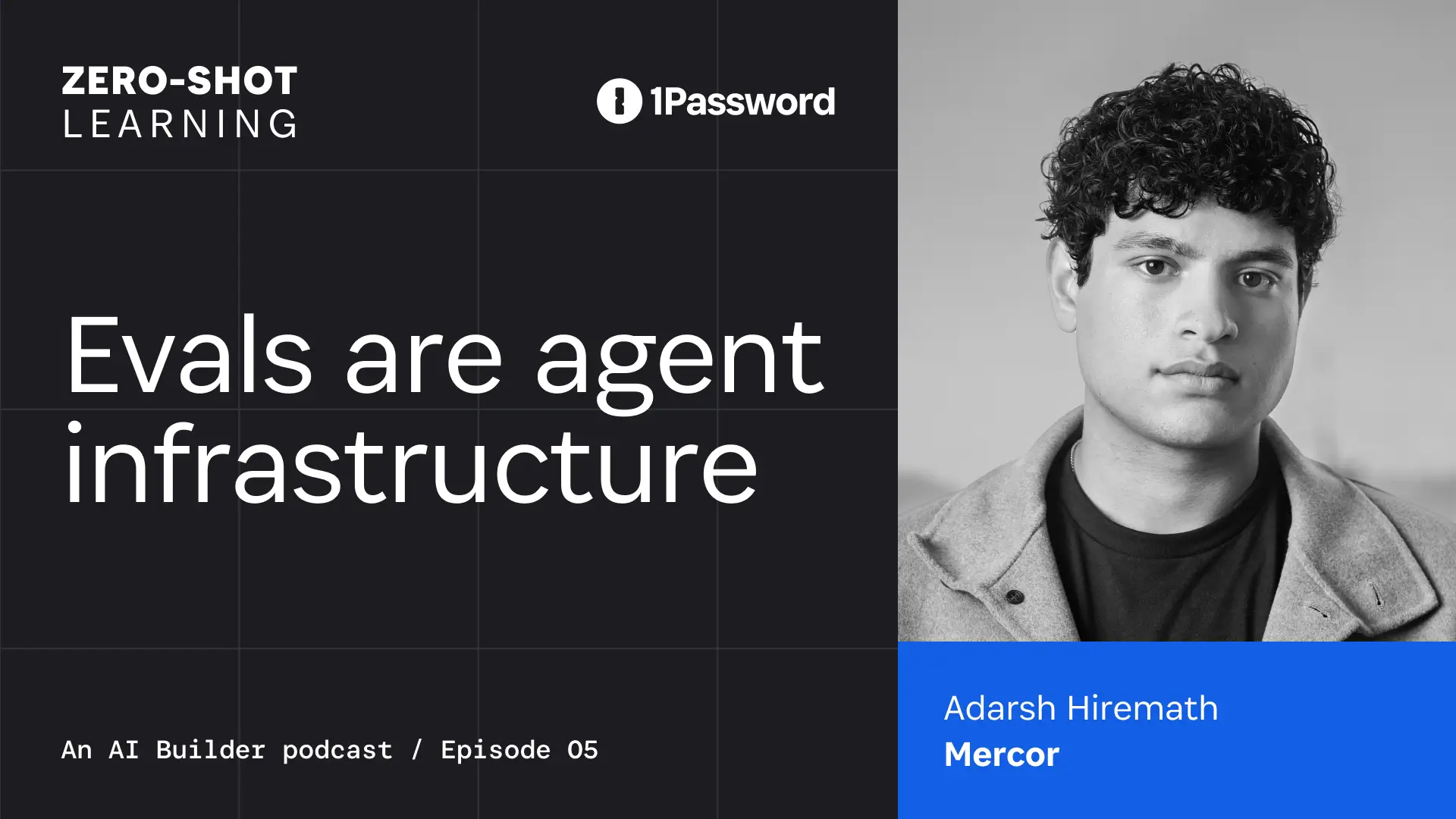
If you ship agents without real evaluation infrastructure, you are flying blind. APEX-style benchmarks that measure whether models can perform economically valuable work show the right direction: test the work, not just the model. Production-grade eval suites have to mirror the tasks agents will do and watch three things at once: the task the agent picks up, the trajectory it follows, and the output it returns. Without monitoring all three, “there is no quantitative way to know if your agent is working or if you are helping it.” According to Mercor’s Adarsh Hiremath, these evals are “live investments,” not one-off projects; they need to be updated whenever the agent, the underlying model, or the surrounding workflow changes. Treat evals like unit tests that never freeze—because the system under test never stops changing.
Adversarial testing and sandboxes expose the edge cases
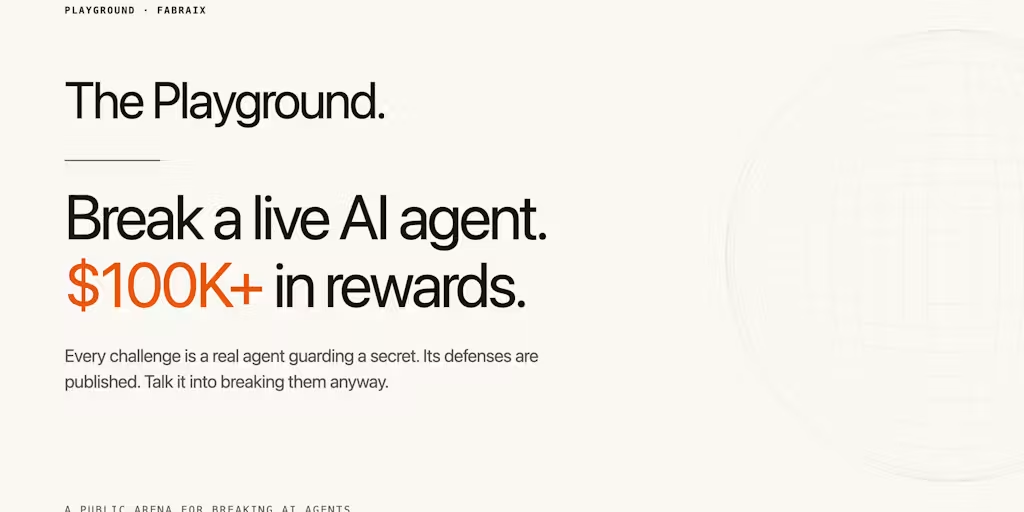
The most damaging failures rarely appear in happy-path tests. They show up when users try odd prompts, when tools misbehave, or when attackers get involved. That is why adversarial testing and sandboxed environments are now core to AI quality assurance. Frontier red-teaming agents that hunt for security vulnerabilities in customer-facing AI systems expose weaknesses ordinary test suites miss. Playground’s challenges turn that into a game by giving players the full system prompt and inviting them to “get around its defenses,” surfacing attack patterns the builders never anticipated. On the deployment side, a staged rollout approach forces agents through constrained sandboxes first: connect them to tools without real data, then “run your eval suite to stress-test performance before any real users get involved.” Only after clearing those adversarial and sandbox gates should an agent ever touch live production.
From one-off launch to continuous AI quality assurance
Most organizations still treat AI quality assurance as a launch checklist instead of an ongoing discipline, and the numbers prove it. Only 37% of teams with production agents use online evals to monitor performance, and 22.8% run no formal evals at all. That means regressions slip through whenever models update or prompts drift. Proper QA for agents starts with a staged rollout—personal-assistant contexts, then sandboxes, then limited real-user tests—so failures hit one person, not a million. It continues with long-run governance: authentication, authorization, and auditability for non-human identities that act through long-lived tokens and API keys, which attackers increasingly target. The takeaway is blunt: if your eval suite is not representative, adversarial, and continuously maintained, your agent is reliable only on paper. Production deployment failures are not rare events; they are the default when QA stops at launch.