
A brand that promised to kill flagships, then left the stage
The story of OnePlus is the story of a startup that turned a USD 299 (approx. ₱16,700) Android phone into the most coveted “flagship killer” of its time, built a cult following around budget flagship phones, then slowly lost its edge until its market exit from the U.S. and Europe marked the end of an era in Android phone history. This arc matters because it exposes a harsh lesson: in a mature smartphone market, hardware value and enthusiast love are not enough when the battlefield is controlled by brands with deeper pockets, stronger carrier ties, and entrenched loyalty.
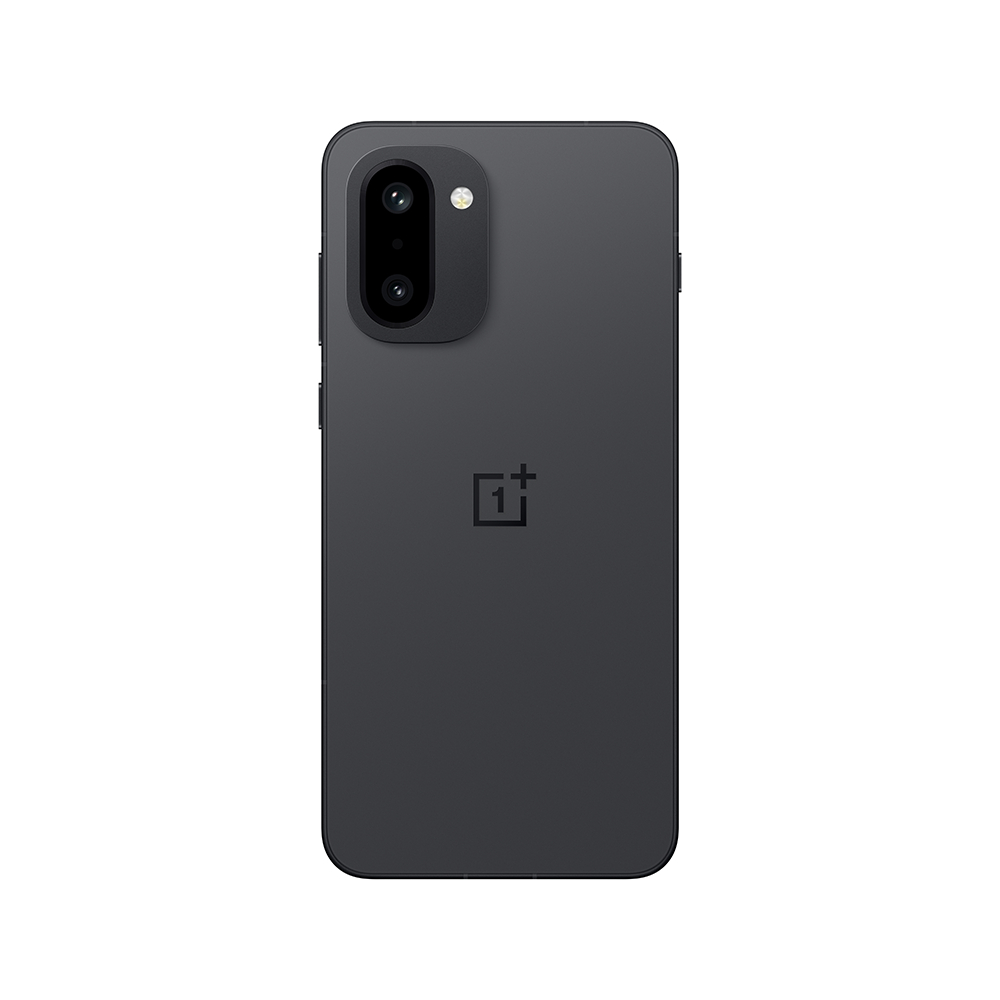
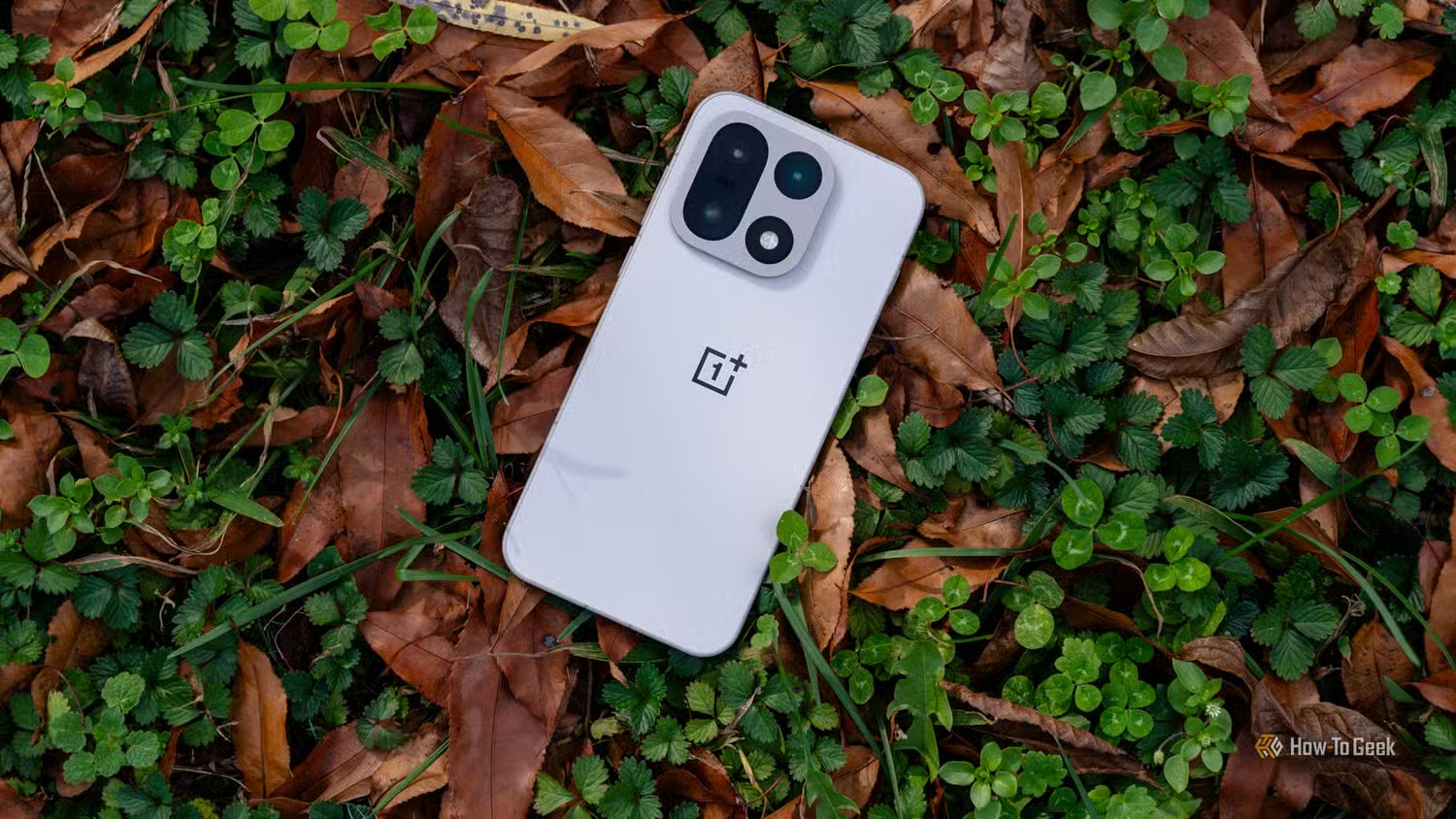
Today, OnePlus is withdrawing from the U.S. and European markets, with the OnePlus 15 and 15R closing its chapter there. For many longtime Android users, this is more than a line on a sales chart; it feels like the moment when the platform’s most memorable challenger concedes defeat to the establishment. Not to mention that the competitive landscape is getting a little smaller with the departure of OnePlus, which reinforces how thoroughly Apple and Samsung have divided the market between themselves. The flagship killer did not die because its phones became bad; it died because the game changed and it couldn’t change fast enough.
How a USD 299 upstart rewrote Android phone history
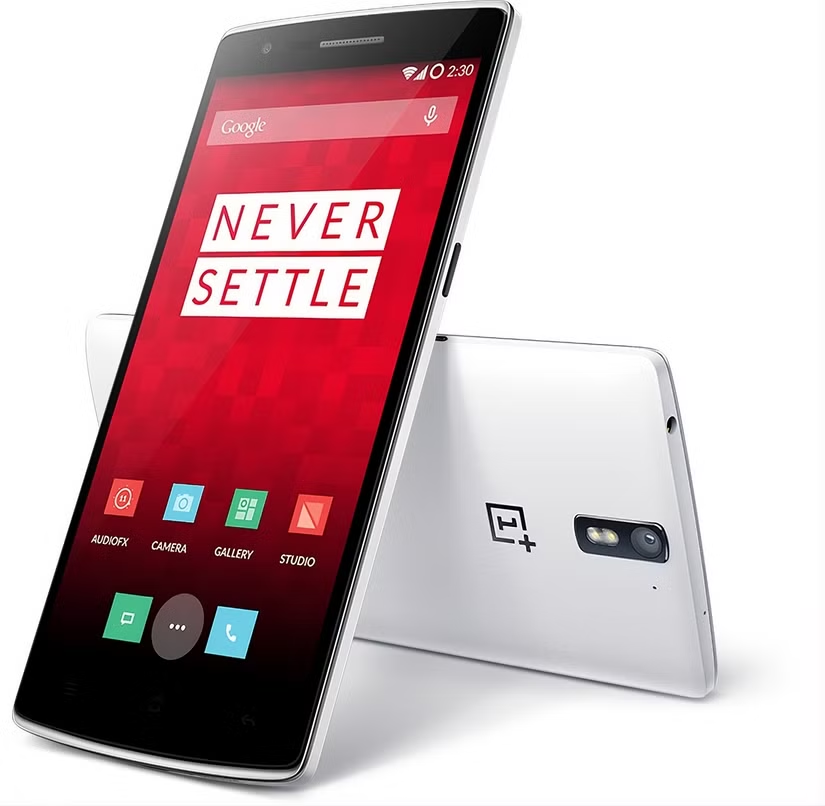
To understand why the OnePlus market exit stings, you have to go back to April 2014, when the company unveiled the OnePlus One. Back then, Android phones were a lot more daring, and the OnePlus One arrived with a blunt promise: flagship-level specs at a mid-range price. While devices like the Samsung Galaxy S5, HTC One M8, and LG G3 sat in the USD 600–700 (approx. ₱33,600–₱39,200) range, the OnePlus One launched at USD 299 (approx. ₱16,700) for 16GB and USD 349 (approx. ₱19,500) for 64GB. Above all, though, it was the price that made this phone a “flagship killer,” as OnePlus very cleverly dubbed it: USD 300 (approx. ₱16,800) was, at the time, pretty much exactly half of what a flagship phone from Samsung cost.
The hardware sealed the deal. Buyers got a Snapdragon 801, 3GB of RAM, a solid 1080p display, and a 3,100mAh battery, beating some more expensive rivals on raw specs. Enthusiasts were equally drawn to the near-stock Cyanogen OS experience, which felt cleaner and faster than heavily skinned UIs laden with bloatware. The textured sandstone back, curved design, and thoughtful accessories made the phone stand out physically as well. This combination of design, performance, and value did not merely compete with flagships—it mocked them. It told Android power users they no longer had to choose between top-tier hardware and a reasonable price, and that message spread fast.
Hype, scarcity, and the birth of the OnePlus cult
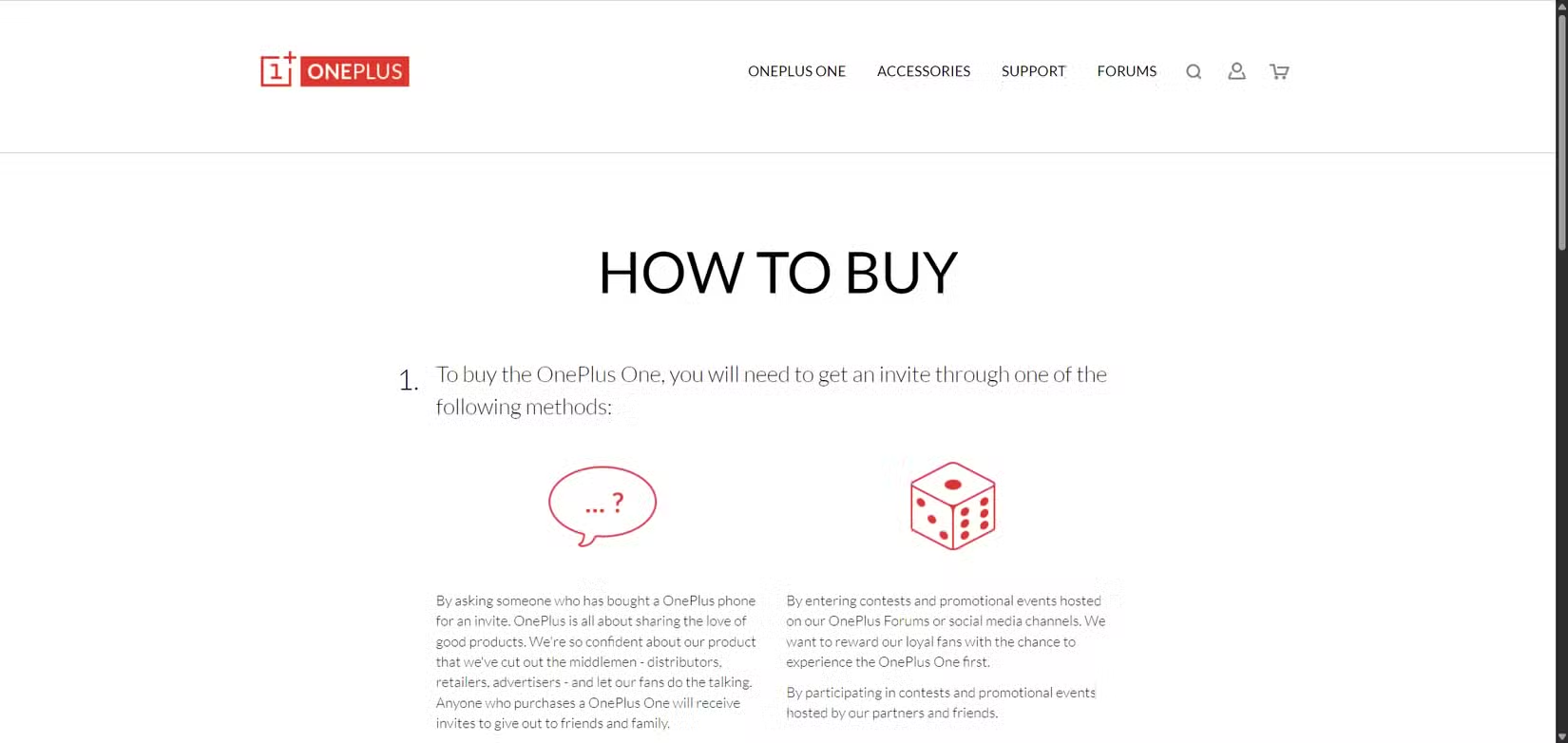
OnePlus did not become the OnePlus flagship killer by accident; it engineered a sense of exclusivity and rebellion that most budget flagship phones can only dream of. If you wanted to buy the OnePlus One, you first had to secure an invitation code, because demand far outpaced production. This invite-only sales system created a frenzy, turning a USD 299 (approx. ₱16,700) gadget into a status symbol within Android circles. The disastrous “Smash the Past” campaign, which encouraged people to destroy their current phones for a USD 1 (approx. ₱56) OnePlus One, amplified the hype—even when thousands misunderstood the rules and smashed their devices prematurely.
This was clever, sometimes reckless marketing, but it worked. Reviewers and enthusiasts hunted for units, buying them on resale platforms when official channels were closed. According to one reviewer, OnePlus “reignited competition in the smartphone market with clever marketing and a very good phone at an exceptionally affordable price.” The term “flagship killer” was not merely a nickname; OnePlus heavily marketed the phone as such. That branding told buyers they were joining a movement against overpriced incumbents. The company placed itself off the beaten Android path, offering unusual software, distinctive hardware, and a feeling of insider membership. For a brief period, it succeeded so thoroughly that other Android vendors had to pay attention.
From killer to contender: when the market caught up
The problem for OnePlus is that no disruptive price–spec combo remains unique for long. What followed the OnePlus One were numerous phones from other brands—including Xiaomi’s Poco line—that adopted the same idea of delivering flagship-level specs at aggressive prices. Over time, prices in the Android segment increasingly aligned with competition levels, reducing the shock value of OnePlus’ pricing. Meanwhile, Apple and Samsung continued to cement their grip, dividing the market between themselves and turning what had once been exciting into something closer to a two-horse race. In this environment, OnePlus’ early advantage eroded: budget flagship phones were no longer rare, and the brand’s unique positioning blurred.
Internally, OnePlus shifted strategy. The company slowly pivoted from a "Flagship Killer" identity toward becoming a niche high-end phone brand, a move that didn’t pay off. As prices rose and features converged, OnePlus devices failed to secure a mass-market foothold in key regions. The OnePlus One had broken the rules by being cheaper and bolder; later models were simply another option on crowded carrier shelves. Name recognition, strong marketing, and carrier relationships turned out to be more important than specs alone, and OnePlus failed to learn the lesson it had taught the rest of the Android ecosystem: a good phone cannot sell itself. Once OnePlus was no longer a clear bargain, many users defaulted back to the big brands they already trusted.
What OnePlus’s exit tells us about the future of Android
Today’s OnePlus market exit from the U.S. and Europe feels symbolic because the company’s journey mirrors Android’s evolution from wild experimentation to polished stability. The OnePlus One was released in a completely different era, when the platform invited risk-taking and smaller manufacturers could briefly upset the hierarchy. Now, the smartphone market is dominated by a handful of established players with stronger resources, marketing power, and brand loyalty. Not to mention that the competitive landscape is getting a little smaller with the departure of OnePlus, which removes one of the few remaining challengers to the duopoly.
One reviewer summed up the emotional side of this shift: "Goodbye, OnePlus I’ll miss the OnePlus brand, because I associate it with innovation and high product quality—qualities that have been with me for many years." That nostalgia is deserved. But it should not blind us to the larger conclusion: the age of scrappy flagship killers is largely over. When even a company that pioneered the idea of budget flagship phones cannot sustain its presence against entrenched giants, it suggests the Android world is entering a phase where breakthroughs will come from the inside—through software, services, and ecosystems—rather than from hungry outsiders swinging at the throne. Goodbye, OnePlus; your legacy is the proof that shaking the market is possible, and the warning that it is rarely sustainable.
![[NEW] OnePlus 15 Smartphone | Snapdragon 8 Elite Gen5 | 165 Hz | 7300mAh | 4K 120fps Dolby Vision | Shopee Philippines](https://img.milik.ai/product/2026/07/18/262aefb2-e795-4784-b978-59f644eca905.jpg)