
Hide My Email Was Meant to Protect You—Now It Can Expose You
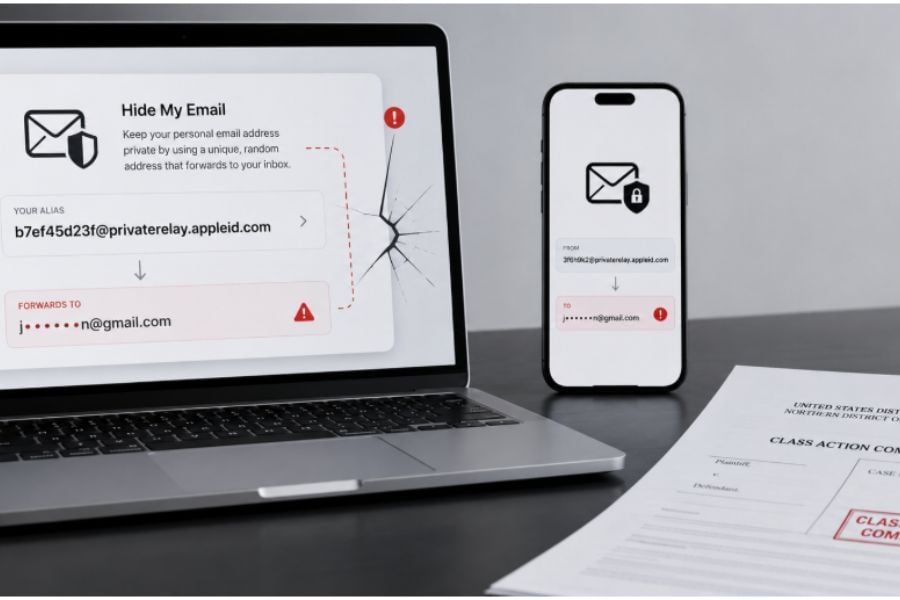
Apple’s Hide My Email feature is a privacy tool that generates temporary iCloud email aliases, forwards messages to your real inbox, and is marketed as a way to protect your primary address when signing up for services or visiting untrusted websites. A proposed class action now alleges that this protection is badly compromised: a flaw can reveal the real email addresses behind those aliases to anyone with access to basic lookup tools. That turns what many people saw as a shield into an unexpected exposure. Instead of acting as a clean separation layer, Hide My Email may be leaking the very identifier you were trying to keep out of reach—your core email address, which ties together your identity, accounts, and long digital history.
The Apple Privacy Lawsuit: Why This Flaw Matters
At the center of the Apple privacy lawsuit is a simple allegation: the company sold a privacy perk it could not deliver. The complaint says Apple was alerted to the Hide My Email flaw in June 2025 but continued marketing it as a secure privacy tool while the vulnerability remained exploitable. The suit seeks class action status, accuses Apple of false advertising, fraud, and breach of contract, and claims the value of the combined customer claims is greater than $5 million. Apple reportedly told the researcher it had fixed the issue in March 2026, yet testing allegedly showed the flaw was still present. Whether the court ultimately rules against Apple almost matters less than the message: privacy promises are now a legal liability, not just a marketing slogan. Users have a right to expect that “private” means technically sound, not aspirational.
What the Email Privacy Vulnerability Actually Exposes
The core Hide My Email flaw is that basic online identity search tools can analyze iCloud temporary email addresses and uncover the real addresses behind them. One investigation reported that 100% of the Hide My Email addresses tested on two sites were exploitable. Even though there are no confirmed real-world attacks so far and technical details remain undisclosed, the implications are serious. Once an attacker has your true email, they can plug it into public-record databases to pull your name, home address, phone number, and other sensitive details. They can also match it against password lists from past data leaks, opening the door to targeted phishing, profiling, spam, and account recovery attacks. In short, users who believed Hide My Email gave them anonymity may already be visible to anyone motivated enough to run a lookup.
How Apple’s Design Choices Undercut Its Own Privacy Story
Hide My Email lives inside iCloud+ subscriptions and Sign in with Apple, with iCloud+ plans starting at USD 0.99 (approx. ₱56) per month for broader alias creation. That means Apple directly profits from a feature it promotes as a privacy upgrade. Yet the current design leaves aliases structurally traceable, and planned changes may make things worse for users who care about anonymity. Apple says it will switch Hide My Email domains from “iCloud.com” to “private.iCloud.com,” a move that could make it easier for websites to filter these addresses and block signups, pushing users toward exposing their real email or hunting for third‑party tools instead. On paper, Hide My Email is clear that it doesn’t encrypt messages or make you fully anonymous, but the marketing around privacy has set expectations far higher than the underlying technical guarantees. That gap is the real vulnerability.
What You Should Do Now to Protect Your Email Address
Until Apple provides a verified fix and explains the limits of Hide My Email, treat aliases as a thin privacy layer, not a safety net. First, stop using Hide My Email for accounts that control money, identity, or sensitive work—especially for account recovery or verification. Organizations should review any use of personal Apple IDs or aliases in corporate systems and phase them out for critical access. Second, assume your primary address may already be somewhere in breach data; enable multi-factor authentication everywhere, and avoid reusing passwords. Third, if you relied on Hide My Email for anonymity on risky sites, consider changing passwords on linked accounts and watching for targeted phishing. Finally, be patient but informed about the lawsuit process; it will take time before any class action opens to join, and your best protection today is behavioral: limit where your real email appears, and stop trusting aliases as unbreakable privacy tools.