

The next Fold will be more expensive—and that is not an accident
The Samsung Galaxy Z Fold 8 price story is about more than a single phone: it signals how far premium foldable phone pricing can stretch before early adopters start to push back, in a market where rising component costs, complex designs, and fading launch perks collide with buyers who now expect more value—not higher bills—for each new generation.
All signs point in the same direction: the next Fold will cost more, one way or another. The upcoming Galaxy Unpacked event in London on July 22 will reveal the Galaxy Z Fold 8, Fold 8 Ultra and Flip 8, but leaks already outline a clear price trend. A base 256GB Fold 8 is reported at USD 2,199 (approx. ₱123,000), a USD 100 (approx. ₱5,600) increase over the Fold 7. The Fold 8 Ultra is tipped to start at USD 2,099 (approx. ₱117,400) for 256GB, roughly USD 100 (approx. ₱5,600) above last year’s ultra-tier launch. These are not small increments; they are a deliberate signal that Samsung believes the ceiling on foldable pricing has moved higher.
Global RAM shock and why foldables get hit hardest
If you blame greed alone for the Samsung Z Fold cost increase, you miss the bigger structural shift. The AI boom has triggered a global RAM shortage that is squeezing the entire tech industry, from laptops and smartphones to gaming consoles. Foldables, with their heavy multitasking and large screens, are exactly the kind of devices that suffer most when memory prices spike.
Reporting from industry analysts shows how extreme this cost shock has become. Memory’s share of total component costs in premium smartphones has more than doubled, rising from 11% to 26% in just two quarters. Counterpoint Research estimates that memory now makes up about 40% of the bill of materials for an USD 800 (approx. ₱44,800) smartphone, up from 14% in early 2025, with DRAM and NAND on a single model jumping about 4.6x to USD 291 (approx. ₱16,300). In plain terms: when nearly half of your parts budget is eaten by RAM and storage, devices that rely on bigger, faster memory pools—like foldables—become the first place price rises show up.
Sticker shock vs. hidden costs: how much more are you paying?
The headline numbers already look steep, but the real twist is how the effective launch cost may climb even faster than the MSRP. In some markets, the base Fold 8 is expected to match the previous starting price—for example, leaks suggest a hold at €1,999 that would likely keep the entry price aligned with last year’s level. That sounds reassuring until you consider where Samsung is applying the biggest increases and what promotions might disappear.
High-capacity models take the hardest hit. One report has the 1TB Fold 8 Ultra jumping €280 to €2,799. At the same time, Samsung has historically softened its premium foldable phone pricing with preorder deals that bumped buyers from 256GB to 512GB at no extra cost. If that storage upgrade vanishes, a buyer who sees a base Fold 8 hold at €1,999 but now has to pay extra for the higher storage they previously got for free ends up paying more for an equivalent configuration without the MSRP moving at all. That is the kind of quiet cost increase that erodes trust among loyal buyers.
Premium foldables: innovation, complexity…and a growing disconnect
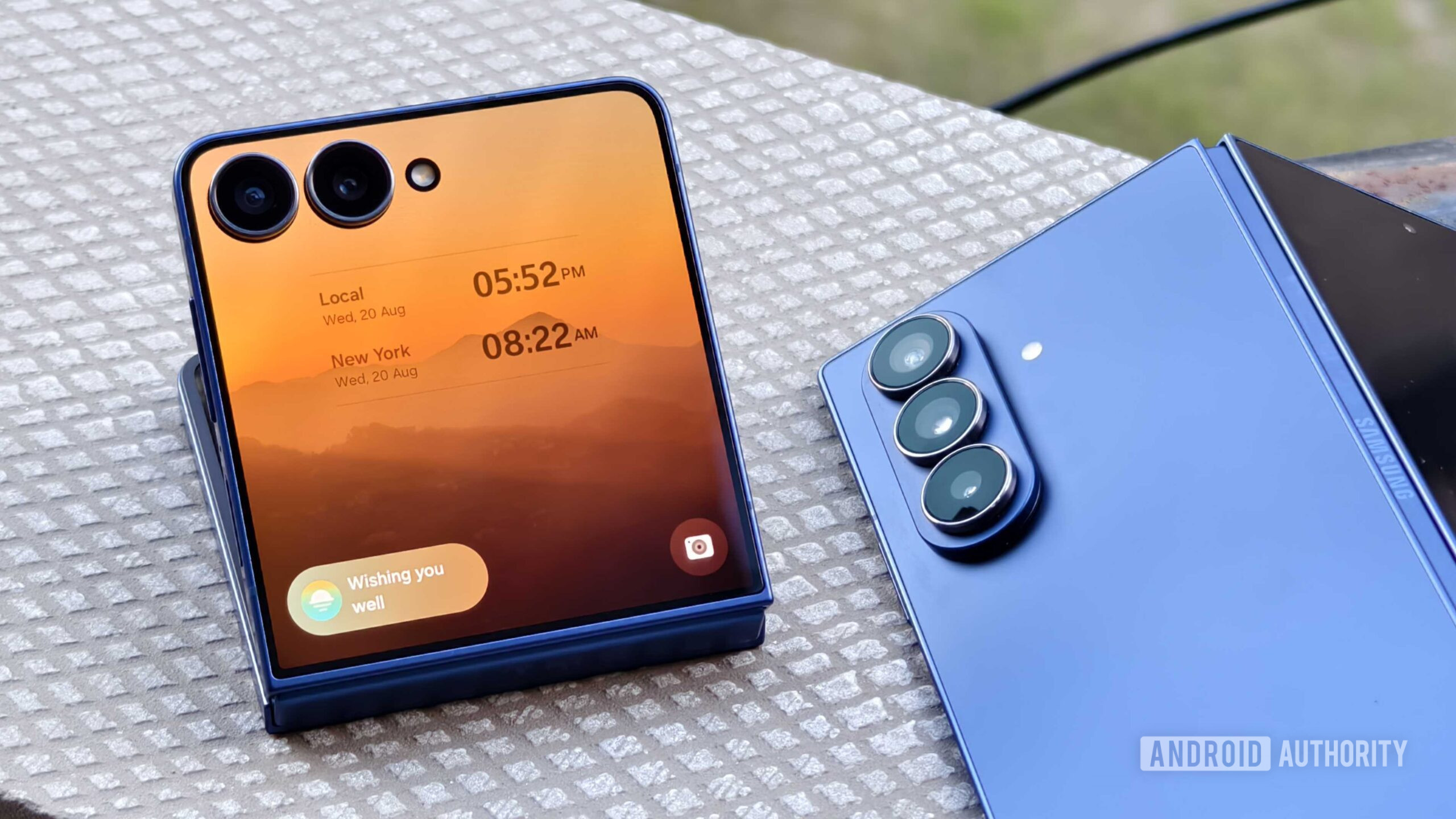
It is easy to forget how far from a standard slab phone a device like the Fold 8 really is. Foldables stack two displays, complex hinge assemblies, reinforced flexible panels and reinforced internal structures on top of the same high-end chipsets and cameras expected of any premium smartphone. Multiple reports note that rising memory costs are a main driver of foldable price increases and that these devices use more memory and more complex internal designs than conventional handsets. In that sense, a higher Samsung Galaxy Z Fold 8 price is not irrational; it is the visible tip of very expensive engineering.
Samsung is also layering on new software and hardware to defend the higher price: One UI 9.0 with integrated Gemini Intelligence, a reported wider-format Fold variant aimed at better multitasking and AI workloads, and a chipset switch to Snapdragon for the Flip 8 in at least some markets. The company has already tested appetite for higher tags by raising prices on its recent S26 line compared to the previous S25, including a USD 100 (approx. ₱5,600) jump on the base model. The message is clear: Samsung sees its foldables as the top of the premium smartphone market and is pricing them accordingly.
Will buyers keep paying more for folding screens?
This is where the strategy gets risky. Foldables no longer live in a vacuum; they compete against cheaper slabs that share the same processors and cameras, and against rival folding phones pushing hard on value. Meanwhile, consumers are not blind to pattern. Samsung raised Galaxy S26 prices after several stable years, then increased prices mid-cycle on 512GB Fold 7 and Flip 7 variants, and now looks set to continue that arc with the Fold 8 line.
The core tension is simple: buyers expect more maturity to bring better value, not steadily higher bills. A roughly USD 100 (approx. ₱5,600) increase for the Z Fold 8 base model and similar jump rumored for the Flip 8, plus steeper hikes on higher tiers, will test how much early adopters still value the form factor. As one analysis notes, “Whether those additions justify higher base prices and weaker launch incentives simultaneously is what July 22 will have to answer”. My view: unless Samsung pairs these prices with longer support, stronger trade‑ins, and clearer everyday benefits from its AI push, the Z Fold 8 risks proving that the cutting edge and good value are drifting further apart.