
Android’s AI Lock-In Is Ending—and That’s the Point
The new Android AI assistant competition rules require Google to grant ChatGPT and other rival assistants the same deep system access that Gemini enjoys, including hotword activation, app-level actions, and search data, with the explicit goal of boosting consumer choice and breaking Gemini’s privileged position inside the operating system. This is not a minor tweak; it is an attack on Google’s ability to hardwire its own AI into every Android phone. The European Commission has issued two binding decisions under the Digital Markets Act, ordering Google to open eleven key Android features to competing AI services, free of charge and across the entire Android ecosystem. Coming right after an upheld 4.1 billion euro Android fine, this is the second major blow to Google’s mobile dominance in a matter of weeks. The clear message: platform owners will not be allowed to keep AI assistants as closed, default-only experiences.
What Google Must Hand Over to Gemini Alternative Assistants
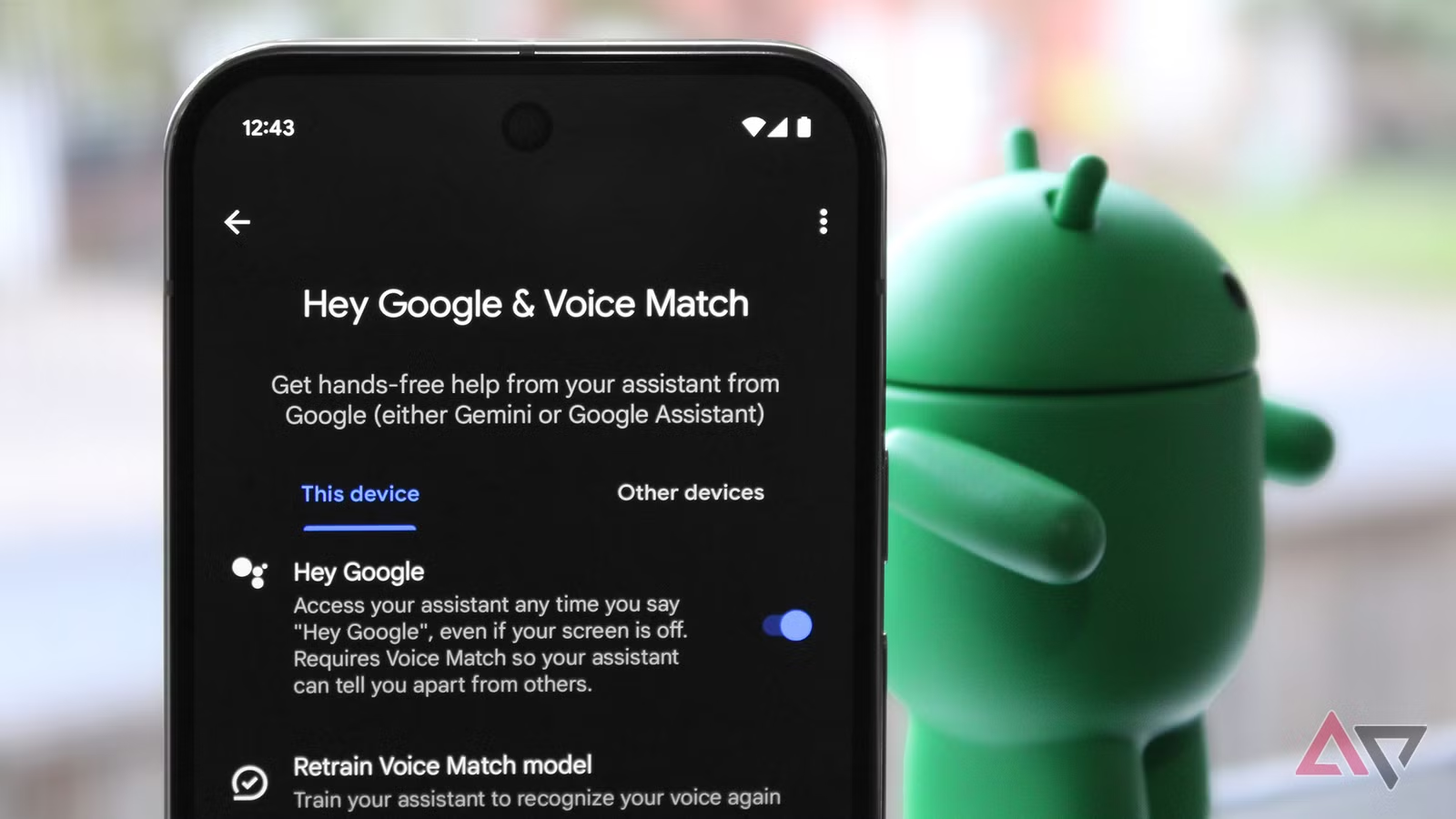
Until now, Gemini has been the only AI assistant with full run of Android: it is the sole assistant you can wake by voice at any time and the only one allowed to perform tasks inside other apps. The new decisions force Google to share those powers. Rivals such as ChatGPT, Claude, or Perplexity should eventually be usable as comfortably as Gemini, including waking them with a hotword similar to “Hey Google” even with the display off. On request, these assistants will be able to draft emails, create calendar events, or order food from within apps, and offer proactive suggestions, live translation, and access to on‑device AI models like Gemini Nano. At the same time, anonymized search data must be handed to competing search engines and AI chatbots with search features, with the dataset due by November 2026 and a pricing model by January 2027. Exactly as with the earlier opening of WhatsApp to third‑party chatbots, the idea is to pry open another closed gateway.
Why Regulators Are Targeting Android AI Assistant Competition Now
Regulators are not suddenly interested in phones; they are continuing a long fight against big platform lock‑in. This latest move arrives "after the upheld 4.1 billion euro Android fine" and marks the second major strike against Google’s mobile strategy in quick succession. The EU’s argument is explicit: Android users cannot be free to pick AI chatbots other than Gemini while Google keeps a monopoly over Google Search data and deeper interactions inside the operating system. With Gemini expanding its abilities to freely access data across Google’s services, the imbalance between a system‑integrated assistant and every third‑party app has become too large to ignore. The guidance under the Digital Markets Act is therefore aimed at making sure competing AI chatbots “have all the same tools that Gemini does,” including hotword triggers like “Okay Google” or “Hey Google.” In short, regulators see AI assistants becoming the new browser or search box—and they want to prevent a repeat of old monopolies.
Privacy Fears vs. Real Gains for Users and Developers
Google’s legal team is not pretending to like this. Kent Walker has sharply criticized the decisions, warning they risk undermining privacy and security guardrails for millions of people. Google also argues that letting third parties tap into search data and deep OS hooks could weaken protections, especially as Gemini now draws on wide‑ranging information from across Google’s services. Regulators answer that direct identifiers such as usernames and IP addresses will be stripped, rare queries suppressed, and every user folded into a group of at least 1,000 people sharing language, region, and device class, with independent audits every year. From a user perspective, the trade‑off looks worthwhile. Nothing gets access without explicit consent, and the gains are huge: the ability to swap Gemini for a preferred AI, use a chosen hotword, and gain richer in‑app help from alternative assistants. For developers, the message is equally important: if you build a better assistant, Android will no longer keep you stuck behind Gemini’s front door.
What Happens Next—and Why This Will Shape AI Beyond Android
No one should expect their phone to behave differently tomorrow. Google must ship the Android changes with version 18 by August 1, 2027, while concurrent hotword detection for several assistants can wait until Android 19, due by August 2028. In other words, this is a slow‑burn reform. But it will define the next phase of EU Google antitrust enforcement in AI: instead of punishing past behavior alone, regulators are rewriting how future platforms must work. The precedent is clear, too. When hardware rules like USB‑C were imposed, companies hesitated to build different devices for different markets; with software, region‑specific builds are easier, but rivals and consumers elsewhere will see what users in the EU get and start asking why they are stuck with Gemini as the default. Whether or not these exact rules spread, Android’s future is now tied to open AI assistant competition. If AI is the new interface for computing, regulators have just insisted that no single company owns that interface by default.