
From generic chatbots to app-specific AI companions
AI mobile app integration is the shift from using separate, general-purpose chatbots to embedding specialized AI assistants directly inside niche apps, where they can use app-specific data and features to offer contextual help tailored to a particular task, activity, or workflow instead of broad, one-size-fits-all answers.
This shift matters because it flips the AI relationship: you no longer leave your tools to talk to an assistant, the assistant comes to where you already work and play. The result is a new generation of specialized AI assistants that behave less like magic search boxes and more like teammates who know the course you play, the playlists you love, or the shopping lists you forget. Google’s expanding AI Mode and niche apps like 18Birdies and Arccos show that the future of AI will be hyper-specific, not universal, and that the winning products will fuse app-specific AI features directly into everyday habits.
Golf apps turn smart glasses into real-time AI caddies
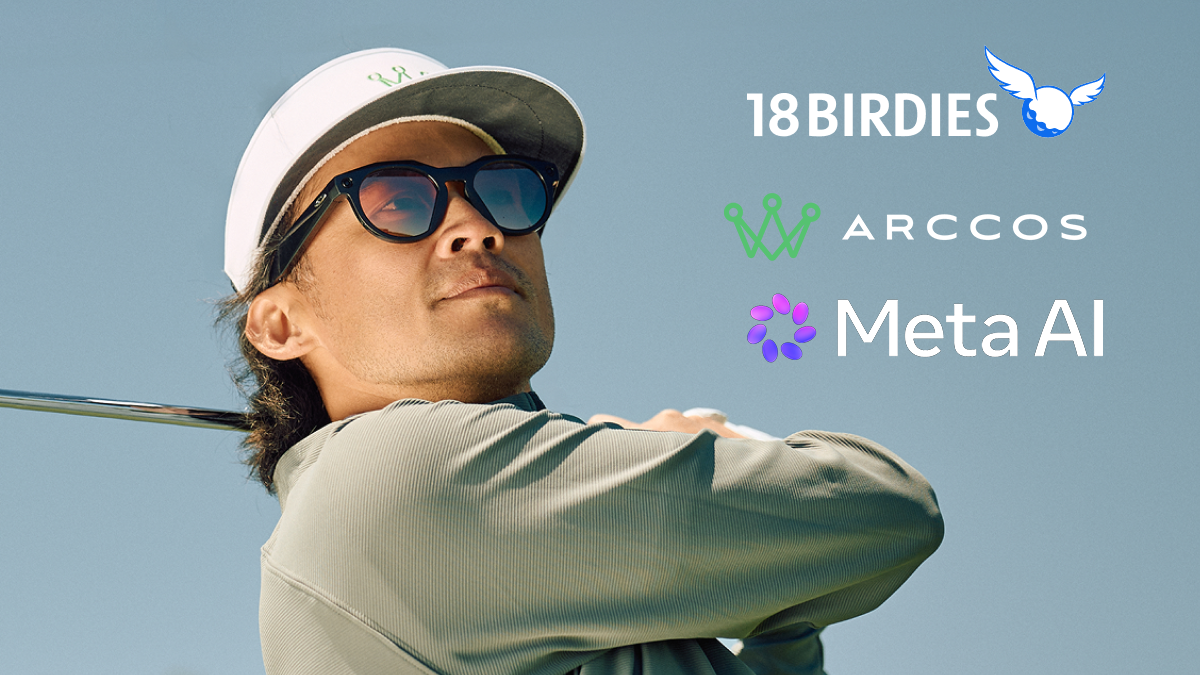
Golf may be the clearest example of specialized AI assistants leaving generic chat behind. The 18Birdies and Arccos apps, now integrated in Meta AI on smart glasses in the US and Canada, can act as your personal AI golf caddy. That means your long-trusted stat tracker or shot analyzer is no longer stuck on your phone; it is speaking in your ear while you walk the course. With 18Birdies, players can say things like “Hey Meta, start a round at Torrey Pines from the blue tees” or “Hey Meta, what club should I use?” to get on-the-spot guidance, including distance, aim, and wind direction. Arccos goes further for serious golfers, allowing questions such as “Hey Meta, what’s my score right now?” or “How is the wind affecting play right now?” based on sensor-driven performance data.
This is more than a voice interface. It turns golf apps into AI-powered companions that understand both the course and your game. To use these integrations, golfers must be in the US or Canada and keep their phone within Bluetooth range, but the phone does not need to be unlocked or have any particular app open. That constraint still feels like a small trade-off for hands-free, context-aware advice. The message is clear: niche app developers are no longer content to be passive logbooks; they aim to become active strategists that stand beside you on every hole.
Google AI Mode apps: Canva, YouTube Music, Instacart get smarter
On the broader consumer side, Google is knitting AI directly into popular services. Rolling out this week in the US, you can now connect Canva, YouTube Music and Instacart to AI Mode in Search. According to Google, “AI services will slot more naturally into your day when you don't have to think about opening the Gemini app to use them”. That is a blunt statement of intent: AI should disappear into whatever app you already rely on.
These Google AI Mode apps highlight what app-specific AI features look like in practice. In YouTube Music, you can ask AI Mode to create a playlist based on your prompt, and Gemini will connect to YouTube Music and drop the suggested playlist into the chat feed for you to open in the app. In Canva, the AI can mock up design templates—for example, flyers for an upcoming party—by pulling in calendar information to make them fit the event. Instacart goes from shopping tool to planning assistant: once connected, the AI can add ingredients and grocery items directly to your cart, again using saved events like a BBQ as context for the list. This is not generic advice; it is task-specific workflow built inside the apps people already use.
Why cross-platform AI integration reduces friction
The real story behind these launches is friction—or rather, its removal. Historically, using AI meant stepping out of your flow: opening a separate chatbot, pasting context, and then manually moving the answer back into your app. With cross-platform AI integration, that overhead disappears. Google’s AI Mode is designed so that AI services will “slot more naturally into your day” when you do not have to remember to open the Gemini app at all. Similarly, connecting 18Birdies or Arccos to a Meta account lets golfers start a session with “Hey Meta” on smart glasses and query live round data without touching their phone.
This shift has two big implications. First, users stay loyal to their preferred tools; there is less incentive to abandon a familiar app for a flashy standalone AI assistant when that assistant is already wired into it. Second, the AI becomes more useful because it can tap real context—course stats, calendars, playlists, carts—rather than abstract prompts. Cross-platform AI integration is not a convenience add-on; it is the glue that turns separate services into a cohesive, assistant-driven experience.
What’s next: apps as AI-driven activity partners
These integrations are not isolated experiments; they are the leading edge of a wider redesign of how we use software. Personal Intelligence—Google’s name for Gemini’s ability to pull in information from other apps to assist with its responses—was added to AI Mode at the beginning of this year, and the company has been gradually widening out the features available in Search throughout 2026. Google says it is working with other partners to launch similar integrations in the future. That signals a roadmap where more categories—fitness, finance, education, travel—gain their own specialized AI assistants inside the apps that already dominate those spaces.
The lesson for developers is blunt: building a standalone tool is no longer enough. 18Birdies and Arccos show how niche apps can become AI-powered companions for golfers, while Canva and Instacart demonstrate workflow-aware helpers for design and shopping. The conclusion is unavoidable. As AI mobile app integration deepens, the apps that win will be the ones that stop behaving like static utilities and start acting like partners—apps that know what you are trying to do and quietly help you do it faster, in context, and without forcing you to ever think about “using AI” at all.