
The New ROG OLED Era: What These Monitors Are, in Plain Terms
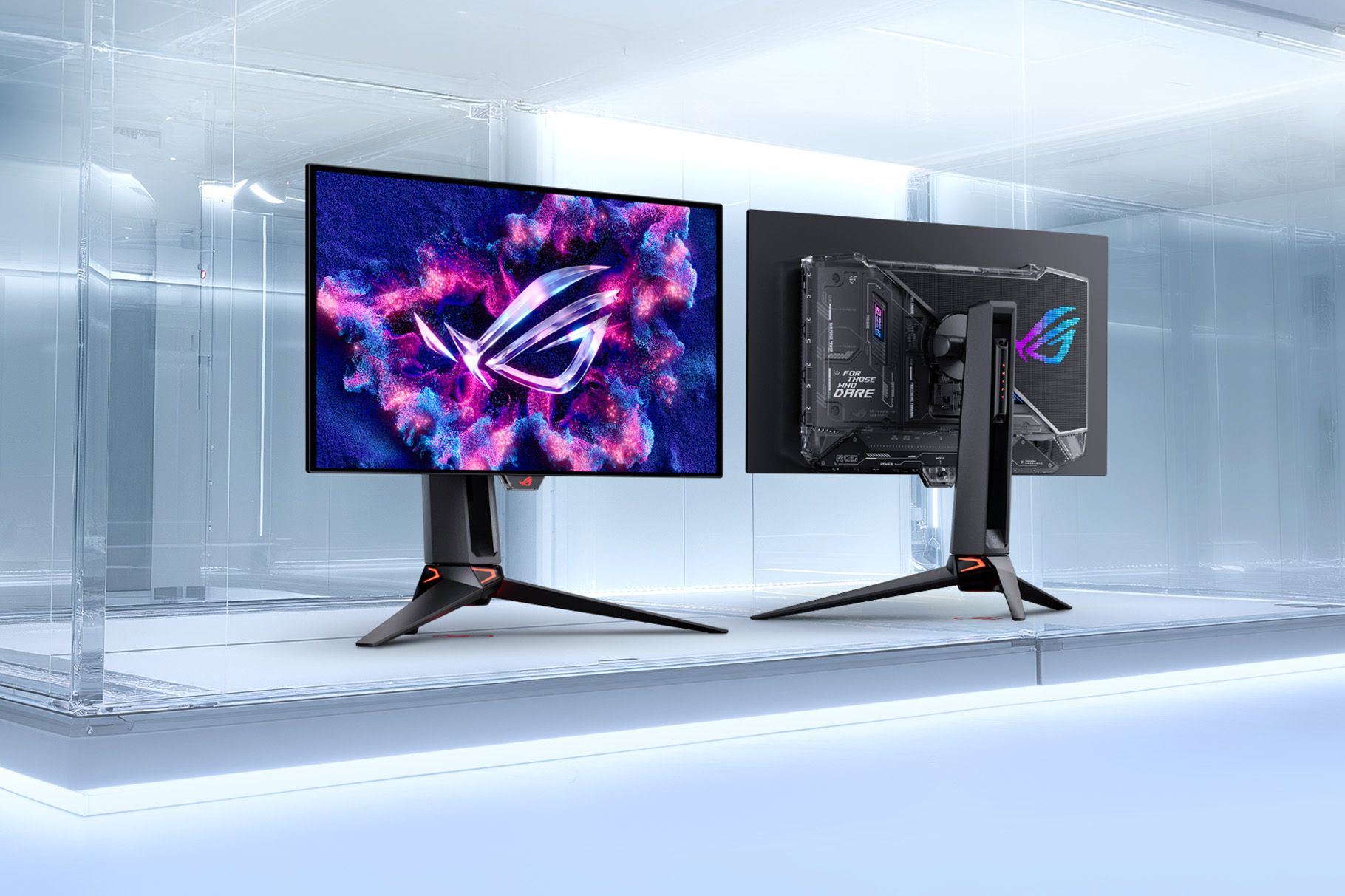
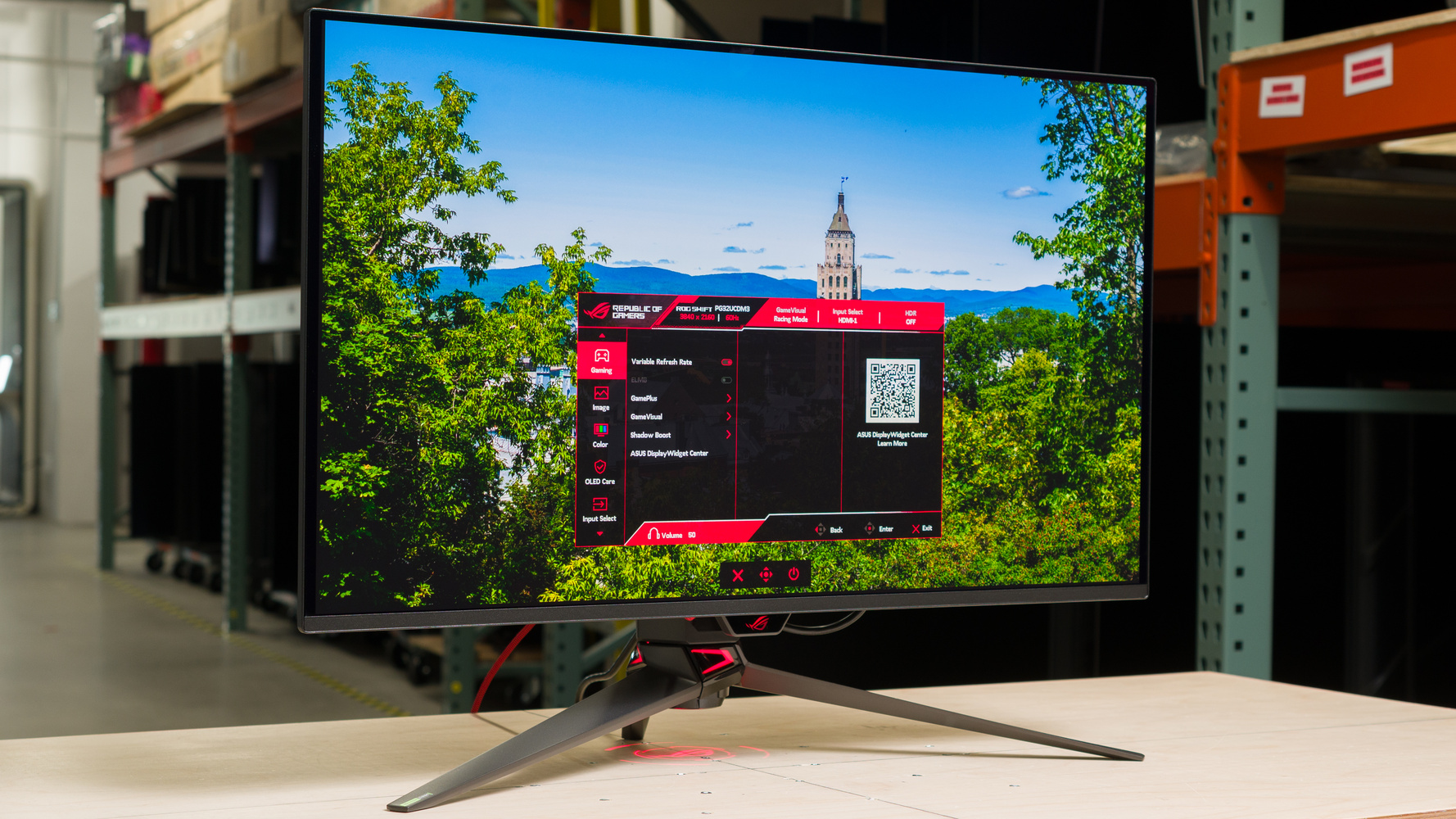
ASUS ROG’s latest OLED gaming monitors are high refresh rate displays that combine 1000 nits brightness, 4K resolutions, and up to 480Hz competitive modes to give players a single screen that can switch between sharp single‑player visuals and extreme esports motion clarity without changing hardware. In other words, this lineup aims to be the centerpiece of a competitive gaming setup that is equally comfortable with cinematic HDR campaigns and low‑latency ranked matches. ASUS Republic of Gamers has put its two flagship True Tandem RGB OLED gaming monitors on sale today — the 26.5‑inch ROG Swift OLED PG27UCWM and the 31.5‑inch PG32UCWM — marking the first time this panel generation has shipped in monitors purpose‑built for gaming. Both monitors are available for purchase as of July 15, 2026, but ASUS has not published official pricing through its retail channels.
| Spec | PG27UCWM | PG32UCWM |
|---|---|---|
| Panel type | True Tandem RGB OLED | True Tandem RGB OLED |
| Resolution / high-res | 3840×2160 (4K) | 3840×2160 (4K) |
| Refresh / high-res | 240Hz | 240Hz |
| Resolution / high-speed | 1920×1080 (FHD) | 1920×1080 (FHD) |
| Refresh / high-speed | 480Hz | 480Hz |
| Peak HDR brightness | 1,000 nits | 1,000 nits |
Dual-Mode 4K/240Hz and 1080p/480Hz: Who Actually Benefits?
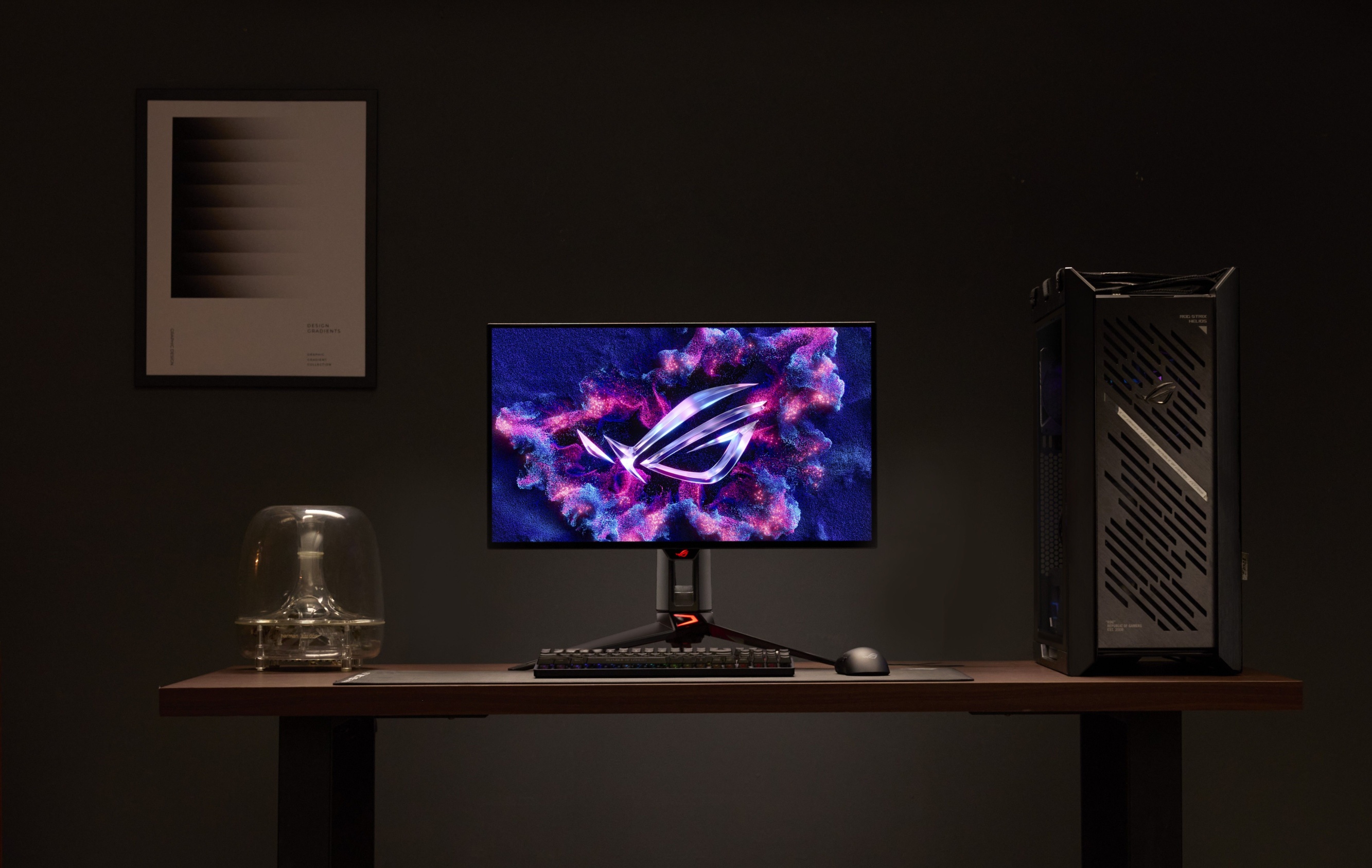
The headline feature on the PG27UCWM and PG32UCWM is Dual Mode, and it is where ASUS makes its strongest case to serious players. With a hardware hotkey you can flip between 4K at 240Hz and full‑HD at 480Hz, letting you favor fine detail in slower, story‑driven titles or raw speed in twitch shooters on the same OLED gaming monitor. In 4K@240Hz mode, the panel runs at full 3840×2160 and taps DisplayPort 2.1a UHBR20’s 80 Gbps bandwidth; in FHD@480Hz mode, it drops to 1920×1080 and pushes into extreme high refresh rate territory. This is tailor‑made for a competitive gaming setup: aim training, arena shooters, and battle royales gain sub‑frame motion clarity, while single‑player games get credible HDR thanks to 1,000 nits peak brightness, a 1,500,000:1 contrast ratio, and 99% DCI‑P3 coverage. The catch is that the 480Hz mode also highlights one of Tandem WOLED’s biggest weaknesses in dark scenes.
Brightness, Lifespan, and the GaNFET Power Supply Angle
ASUS is not only chasing speed; it is pushing longevity and thermal behavior hard, and in OLED land that matters. Standard gaming OLED panels rely on a single emissive stack, which limits peak brightness and forces that stack to take all the stress over time. Tandem OLED changes the equation by vertically stacking multiple emissive layers connected by a charge‑generating layer, so each stack runs at a lower current density for the same luminance. On the new True Tandem RGB OLED monitors, that design delivers 1,000 nits HDR peak brightness, expanded color volume, and a lifespan that benefits from less per‑layer heat. ASUS goes further by swapping the conventional silicon MOSFET power supply for a gallium nitride field‑effect transistor (GaNFET) design. The company claims roughly 35 percent less waste heat, 10 percent lower vent temperatures, and an estimated 25 percent improvement in overall panel lifespan compared to previous PSU designs. This is a rare focus on the power supply as a way to keep OLED degradation in check, and it is one of the more convincing engineering choices in the lineup.
Edition 20: 1,500 Nits, Transparent Chassis, and the Cost of Pushing Limits
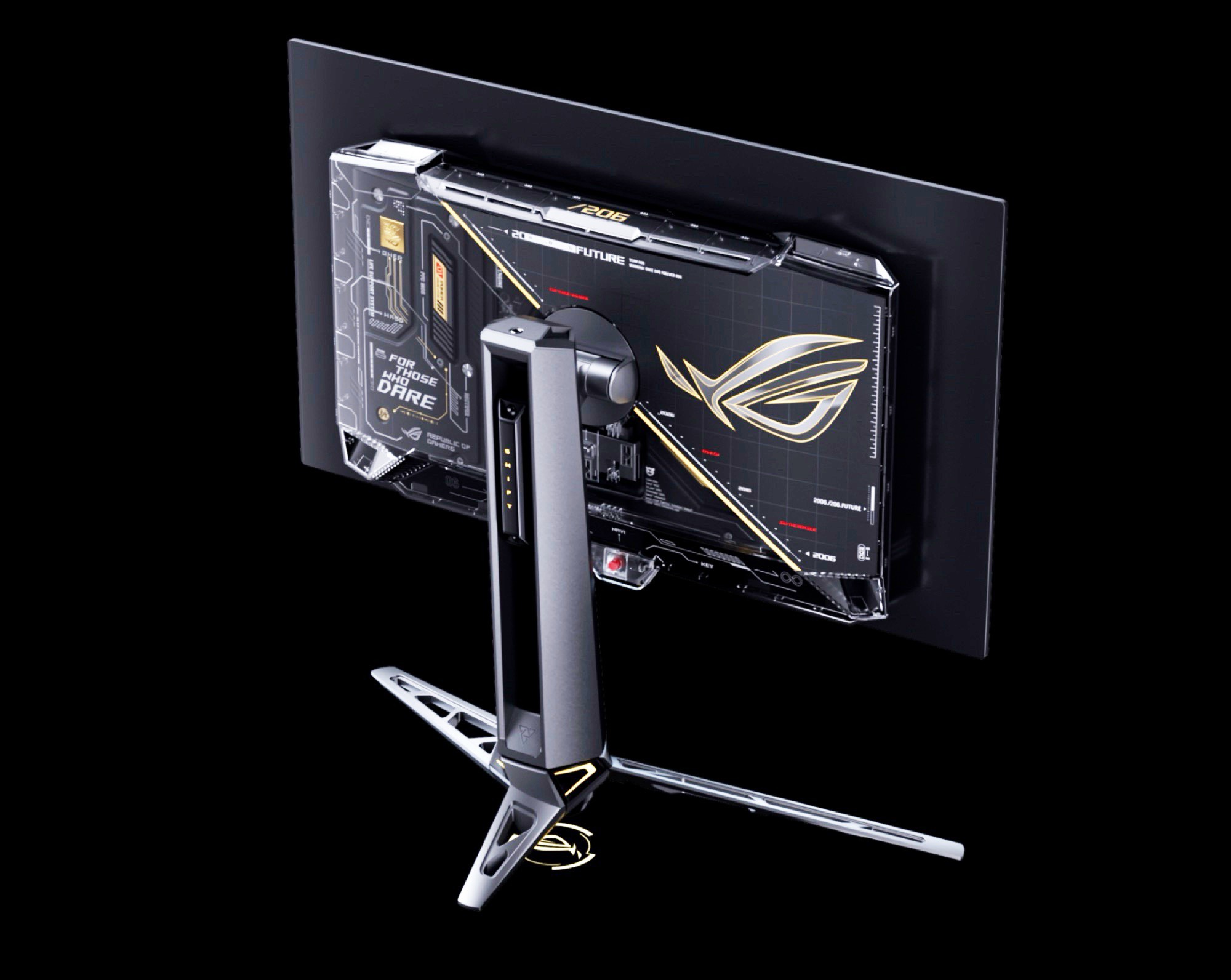
Alongside the Tandem RGB models, ASUS’s ROG Swift OLED Edition 20 leans even harder into spectacle and performance. Tandem OLED in this monitor is said to offer a 60 percent longer lifespan than older WOLED panels and achieve higher brightness, with ASUS citing 335 nits across the entire screen and a peak HDR brightness of 1,500 nits. It reproduces 99.5 percent of the DCI‑P3 color space and uses a "TrueBlack Glossy" coating designed to keep deep blacks visible even with bright lights in the room. The Edition 20 wraps this in a transparent chassis and adds quality‑of‑life touches such as a Neo Proximity Sensor that blanks the panel when you leave your desk, burn‑in‑covered three‑year warranty, DisplayPort 2.1 UHBR20, and dual HDMI 2.1, plus a USB‑A hub. This is a showpiece for enthusiasts who want a high refresh rate display that looks as aggressive on the outside as its panel spec sheet reads on paper, though details like pricing and some connectivity options differ from the Tandem RGB duo.
The Dark-Scene Banding Problem: A Real Trade-Off for Competitive Players
The uncomfortable truth in this launch is that Tandem WOLED’s Achilles heel sits right where competitive players spend much of their time: dark menus, night maps, and muted desktop themes. Since Tandem WOLED monitors began shipping in Q4 2025, a uniformity issue at very low luminance levels has been documented by multiple independent reviewers, and both ASUS and LG Display acknowledge it in writing. At below roughly 1 nit of luminance, the panel’s digital‑to‑analog converter must operate at extremely small currents; fixed micro‑current variation between channels becomes proportionally large, showing up as visible horizontal or vertical banding in near‑black content. LG’s own data show that at 8 gray (about 0.26 nits), current variation can reach around 31 percent, while at 32 gray (about 4.82 nits) the same variation is only 1.25 percent and effectively invisible. The effect is more pronounced on Tandem WOLED than earlier WOLED or QD‑OLED, and it gets worse at higher refresh rates—meaning the FHD@480Hz mode on the new monitors is the highest‑risk configuration for gray banding. Practical guidance for prospective buyers: the banding is most visible in controlled test patterns under 1 nit, a condition more common in desktop dark mode and dark‑scene gameplay than in typical use. If you spend most of your time in bright, fast titles, the trade‑off may be acceptable; if your favorite games live in the shadows, it is harder to ignore.