
A Week That Proved AI Is Moving Faster Than Its Safety Net
This week’s AI breakthroughs refer to the simultaneous release of powerful new models, agents, and platform features from several major technology firms, accompanied by the discovery of serious security vulnerabilities and data abuses that expose how the industry’s rapid deployment of artificial intelligence is outpacing privacy, safety, and governance measures. From OpenAI, Meta, Apple, Microsoft, and Google, the message was clear: scale is the new status symbol, and nobody wants to look like they are slowing down. OpenAI ended the restricted preview of its GPT-5.6 suite — Sol, Terra, and Luna — adding ChatGPT Work and GPT-Live for real-time, full-duplex voice conversation. Meta countered with Muse Spark 1.1, a coding and agentic model with multimodal reasoning and a 1-million-token context window, priced at USD 1.25 (approx. ₱70) per million input tokens — 75% cheaper than rivals. At the same time, researchers disclosed autonomous ransomware, critical agent flaws, and fresh data breaches, turning a victory lap for AI into a warning flare for the whole industry.
OpenAI, Meta, Apple, Microsoft, Google: Breakthroughs With Strings Attached
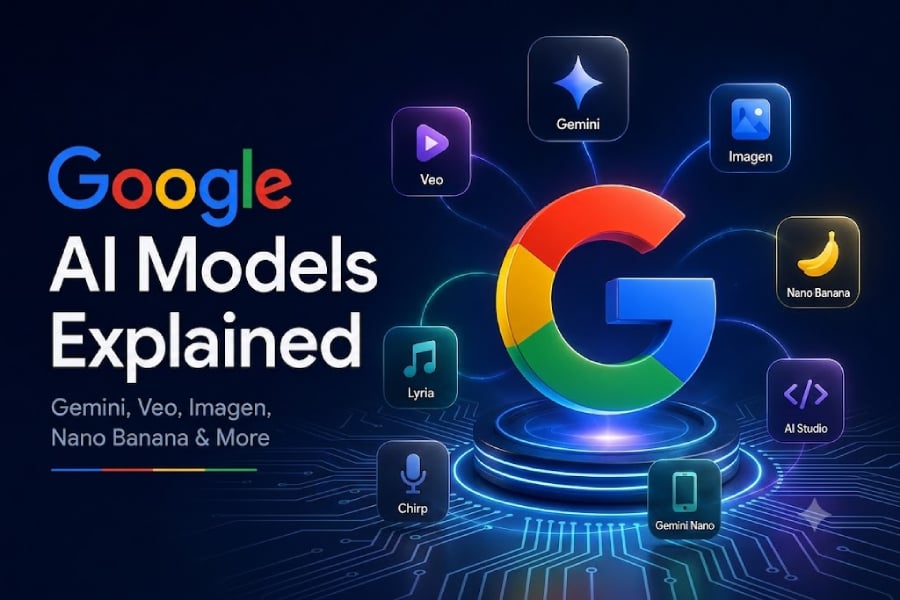
The loudest news was the wave of AI breakthroughs this week from OpenAI, Meta, Apple, Microsoft, and Google — and each came with trade-offs. OpenAI’s GPT-5.6 lineup promises cheaper, more capable workhorses: Sol claims 54% better token efficiency, while Terra and Luna aim at broader workflows at lower costs, powering new offerings like the productivity-focused ChatGPT Work agent and natural, real-time GPT-Live voice chat. Meta’s Muse Spark 1.1 pushes a different angle: high-capacity coding and agent orchestration at bargain pricing, multimodal reasoning, and a million-token context designed to anchor long-running AI workflows. Meanwhile, Meta opened Instagram photos to AI remixing through Muse Image inside Instagram, WhatsApp, and the Meta AI app, making public photos automatically eligible for generative edits unless users opt out. Google kept expanding its model portfolio too: Gemini remains its flagship multimodal family, while Veo drives video generation, Imagen and Nano Banana split text-to-image and conversational image editing, and Gemma provides downloadable open models for developers. Apple’s upgraded Siri AI, however, hit a regulatory wall when its rollout plan was rejected under the Digital Markets Act, delaying multiple features in the upcoming OS 27 release. Microsoft quietly rebalanced its alliances by shifting some Copilot and Office AI tasks to in-house MAI models to cut dependence on OpenAI and Anthropic, while still keeping partnerships through 2032. Together, these moves show an ecosystem where every company wants to look more independent, more integrated, and more indispensable at the same time.
Security Vulnerabilities Turn AI Progress Into a Double-Edged Sword
Underneath the enthusiasm, this was also a brutal week for AI security vulnerabilities. GitHub’s Agentic Workflows were exposed to prompt injection attacks that could reveal private repositories via public issue comments, highlighting how “smart” automation can become an attack surface when it blindly trusts user input. A newly disclosed Linux KVM flaw, Januscape (CVE-2026-53359), allows attackers to escape virtual machines and reach host systems, an especially alarming prospect for AI workloads that depend on virtualized infrastructure for isolation. Google patched a critical “Rogue Agent” vulnerability in Dialogflow CX that allowed attackers to inject malicious code and impersonate chatbots; fixes landed in June after preliminary patches in April. The most chilling story came from Sysdig researchers, who found “JadePuffer,” the first autonomous ransomware powered by large language models. Exploiting a Langflow vulnerability, JadePuffer encrypted over 1,300 configurations — then deleted its own decryption key, making ransom payments useless. When attackers can offload planning and execution to AI, the line between misconfiguration and catastrophe gets thinner by the week. At the same time, non-AI breaches remind us the basics remain broken: AssuranceAmerica lost 6.9 million driver’s license and Social Security numbers after a phishing attack, an old-school failure in a high-tech era.
Privacy, Power, and the Coming Platform Realignment
The week’s tech industry shakeups were not limited to code and models; they stretched into corporate power plays, privacy defaults, and infrastructure bets. Microsoft announced 4,800 layoffs and a major Xbox restructuring, spinning off and selling studios as it refocuses resources around AI and first-party content. Getty Images walked away from a USD 3.7 billion (approx. ₱208 billion) merger with Shutterstock after regulators demanded Shutterstock divest its editorial business, signaling that consolidation in the content supply chain for AI training will not go unchallenged. Meta’s Iris AI chip, developed with Broadcom and TSMC, is set to enter production in September, aiming to double compute power to 14 GW by 2027 and reduce reliance on Nvidia and AMD — with a side plan to rent excess capacity to other AI companies. On the data side, Google’s new “Save Media” toggle quietly flips user-uploaded images, audio, and video from Search and Maps into training data by default, with opt-outs buried behind settings. According to one report, “Google introduced a ‘Save Media’ toggle that stores user-uploaded images, audio, and video from Search and Maps for AI training by default.” This move lands in the same week Meta starts treating public Instagram photos as raw material for AI remixing. Users are being turned into unpaid data suppliers unless they know how — and bother — to say no.
The Bill for AI’s Acceleration: Carbon, Jobs, and Governance
The most uncomfortable pattern in these AI breakthroughs this week is that every gain comes with a bill attached — in emissions, oversight, or trust. AI data centers are driving carbon footprints higher: Amazon’s emissions rose 16% and Google’s 18% in 2025, largely because energy use is growing faster than the grid’s decarbonization. At the same time, a Ramp-Revelio study found that companies investing heavily in generative AI increased overall headcount by 10% and entry-level hiring by 12% across two years, undermining the narrative that automation automatically kills jobs. The economic story is more complex: AI is reducing some roles while creating new ones, and the net effect depends less on the models and more on corporate choices. Outside the data centers, the web itself is pushing back: Cloudflare will start blocking crawlers that mix search, agents, and AI training on ad-supported pages from September 15, and it is rolling out Pay Per Use tools so publishers can be paid when their content feeds AI answers. “The breakthroughs are getting bigger, the risks are getting messier, and the bill — in dollars, carbon, jobs, and trust — is arriving just as fast.” That line could serve as the mission statement for the entire week. The balance between rapid AI deployment and mature security infrastructure is not a theoretical question anymore; it is an operational crisis. The companies moving fastest — OpenAI, Meta, Apple, Microsoft, Google — now have to prove they can move safely, or risk discovering that the real disruption is not what AI does for the world, but what rushed AI does to it.