
Samsung’s Big Reveal: A Display Company Thinking Past the Fold
Samsung Display’s next‑generation innovation push combines slidable phone concepts, near‑zero‑bezel OLED panels and extreme durability testing to redefine what premium foldable and flexible phone screens can be over the rest of this decade, signaling a future where creases fade, bezels nearly disappear, and display engineering—not camera specs—sets the pace of smartphone design. This is not a neutral technology briefing; it is a calculated statement of intent from the world’s leading OLED supplier that the foldable era is only a stepping stone. The company has, for the first time, opened the doors of its headquarters labs to journalists, turning secret testing rooms and prototype bays into a guided tour of its roadmap. Timed one week before the next Galaxy Unpacked event and ahead of an expected rival foldable launch, the message is clear: while others race to catch up on foldable phone technology, Samsung Display is already investing its prestige in what comes after.
Inside the 24‑Hour Durability Labs: Where Creases and Failures Are Designed Out
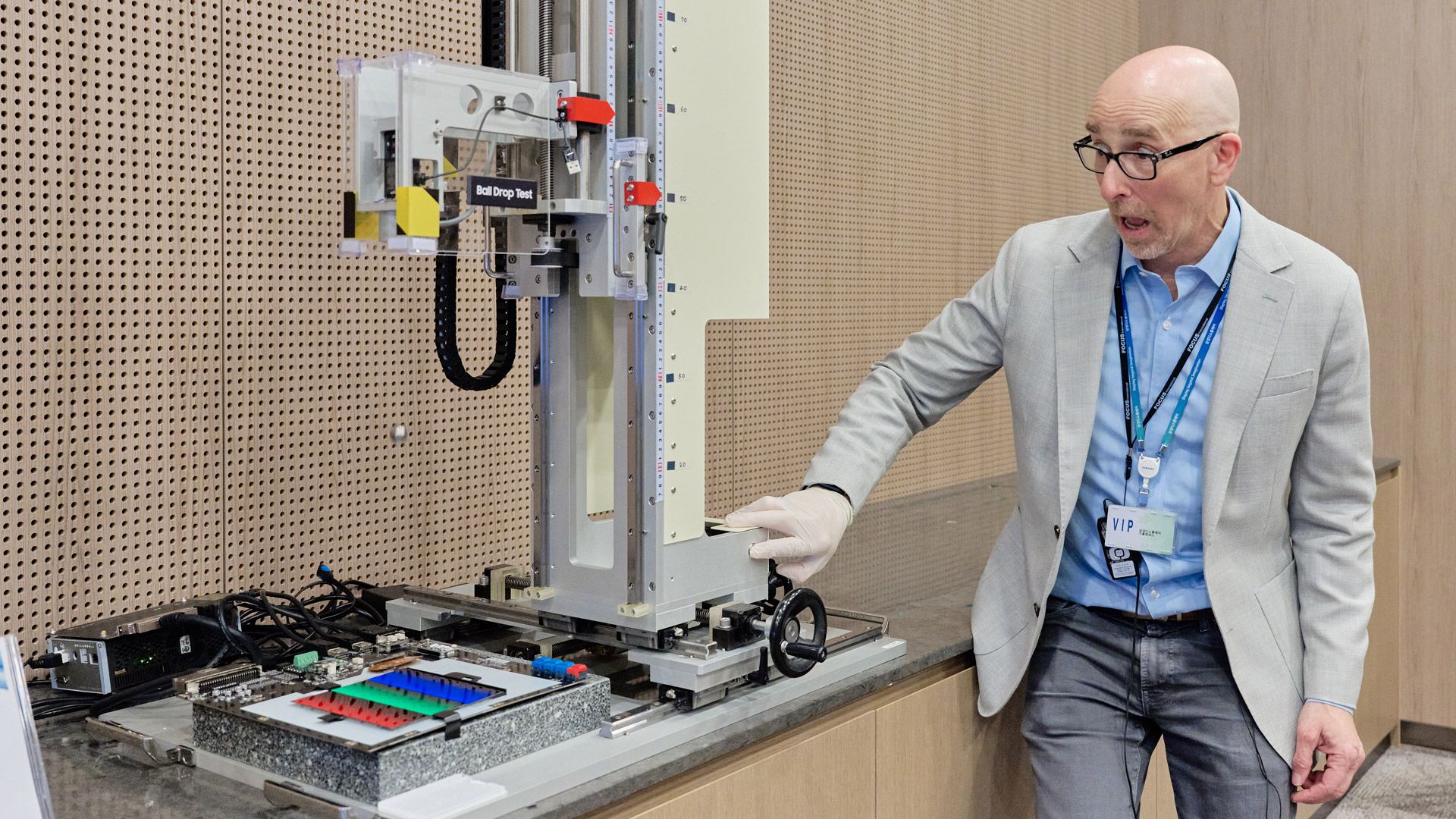
The most telling part of Samsung Display’s opening-up is not the glossy concept hardware, but the brutal test rigs that hammer those concepts into long‑term products. Behind an ID‑locked door sits a 24‑hour lab that keeps running even when engineers are asleep, filled with machines that fold, heat, cool and physically assault panels to answer a simple consumer question: “How long can I use it?” Here, foldable displays are bent open and shut thousands of times a day, then exposed to temperatures from 60 degrees Celsius down to minus 20 degrees Celsius to probe failure points. A steel ball weighing 21.7 grams is repeatedly dropped from 30 centimeters by a 220‑pound machine onto thin flexible panels to test impact tolerance, a crude but effective reminder that next‑gen display durability is not marketing—it is physics. At the press day, a miniature durability lab showed foldable panels driven to 500,000 open‑and‑close cycles before earning commercial certification, a benchmark that matters more to users than any spec sheet brag.
Slidable Phones: The Bold Answer to the Foldable Crease Problem
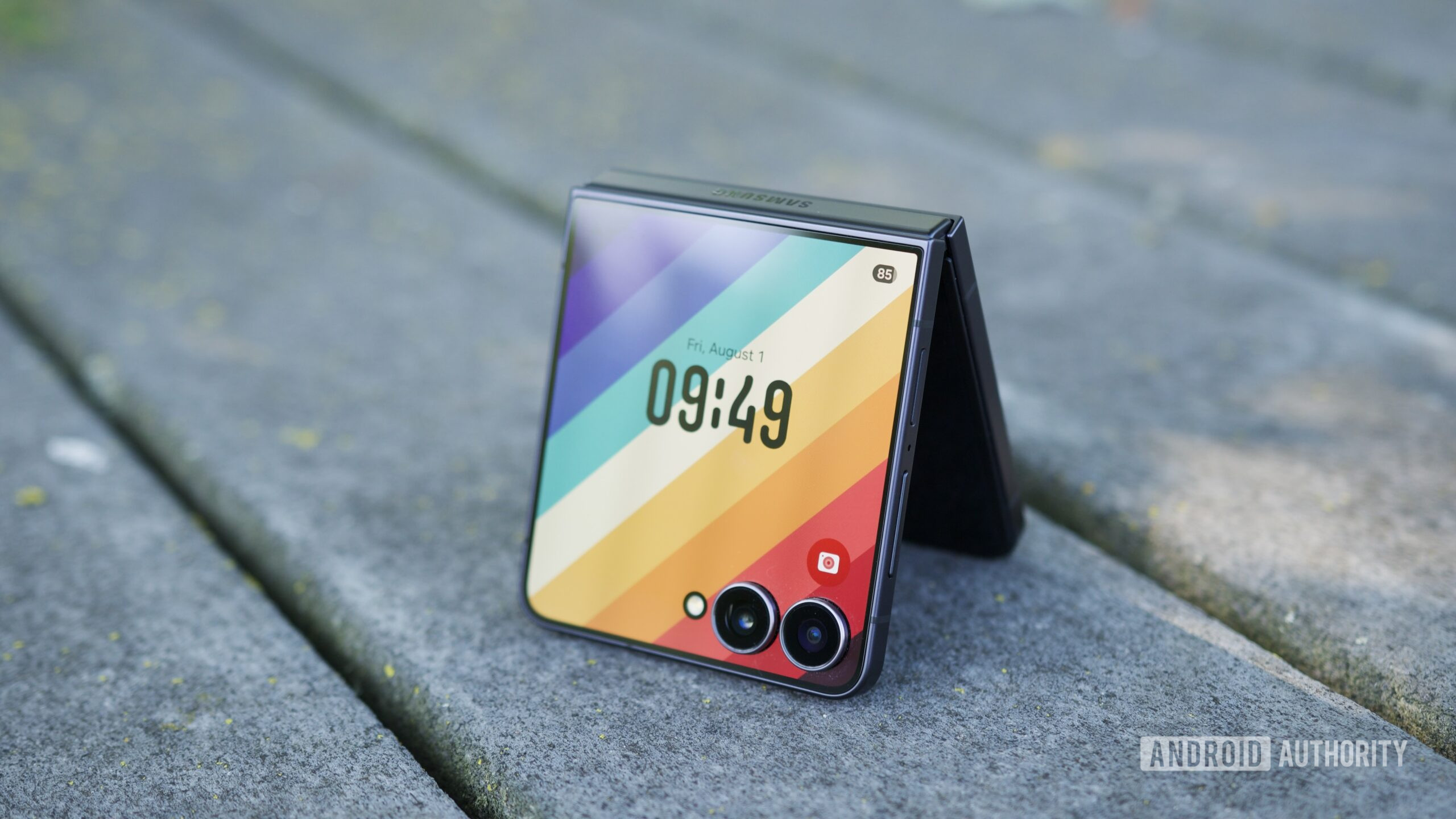
Foldables solved screen size; they did not solve the crease. Samsung’s slidable phone concepts are an explicit attempt to remove that compromise from the user experience. The Flex Slidable starts as a compact 4.7‑inch slab and stretches to 7.2 inches when one end is pulled, revealing a hidden section of OLED—phone to tablet, no hinge, no fold line. Flex Hybrid hits the same 7.2‑inch target but mixes a foldable left side with a slidable right side, creating a single flexible panel subjected to two different stress patterns at once. The engineering conviction here is sharp: a slidable phone rolls the display around internal guide rollers, distributing stress across a long arc so there is never a single axis where a crease can form. This is a direct strike at the most visible flaw in foldable phone technology. But it comes at a cost: powered actuators, geared rail systems, and rerouted batteries turn the internal layout into a three‑dimensional puzzle, and every failure mode—from snagging to uneven tension—must be eliminated before these devices leave the lab.
Near‑Zero Bezels and Titanium Layers: Premium Differentiation by Design
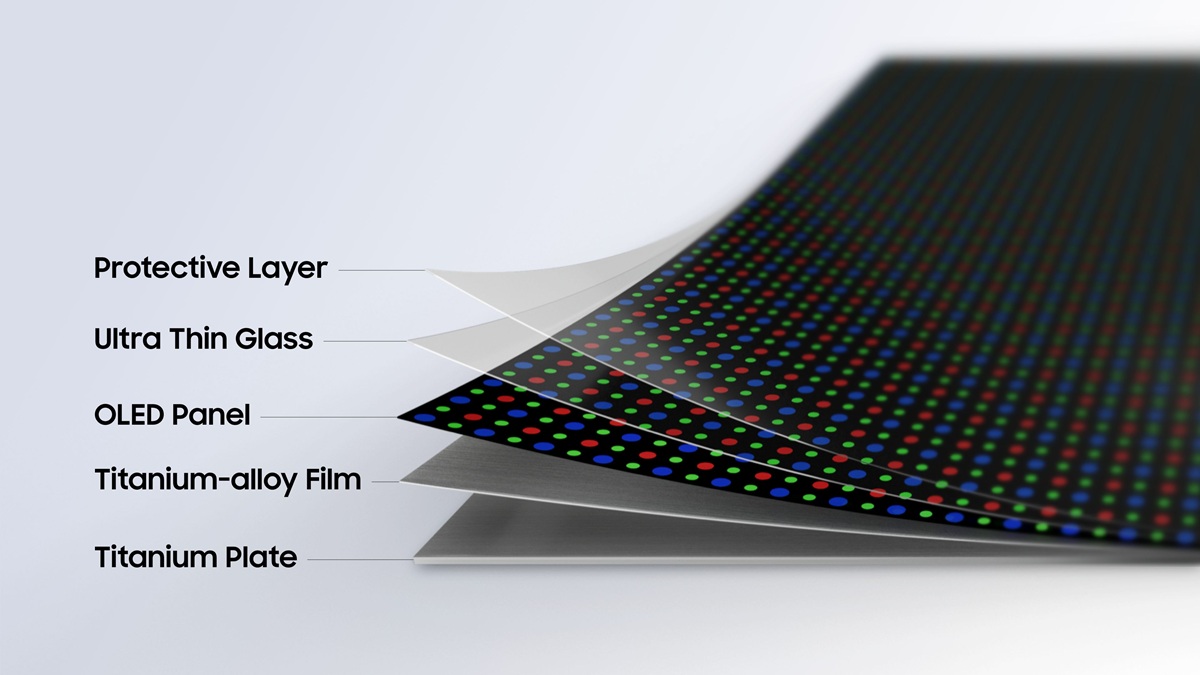
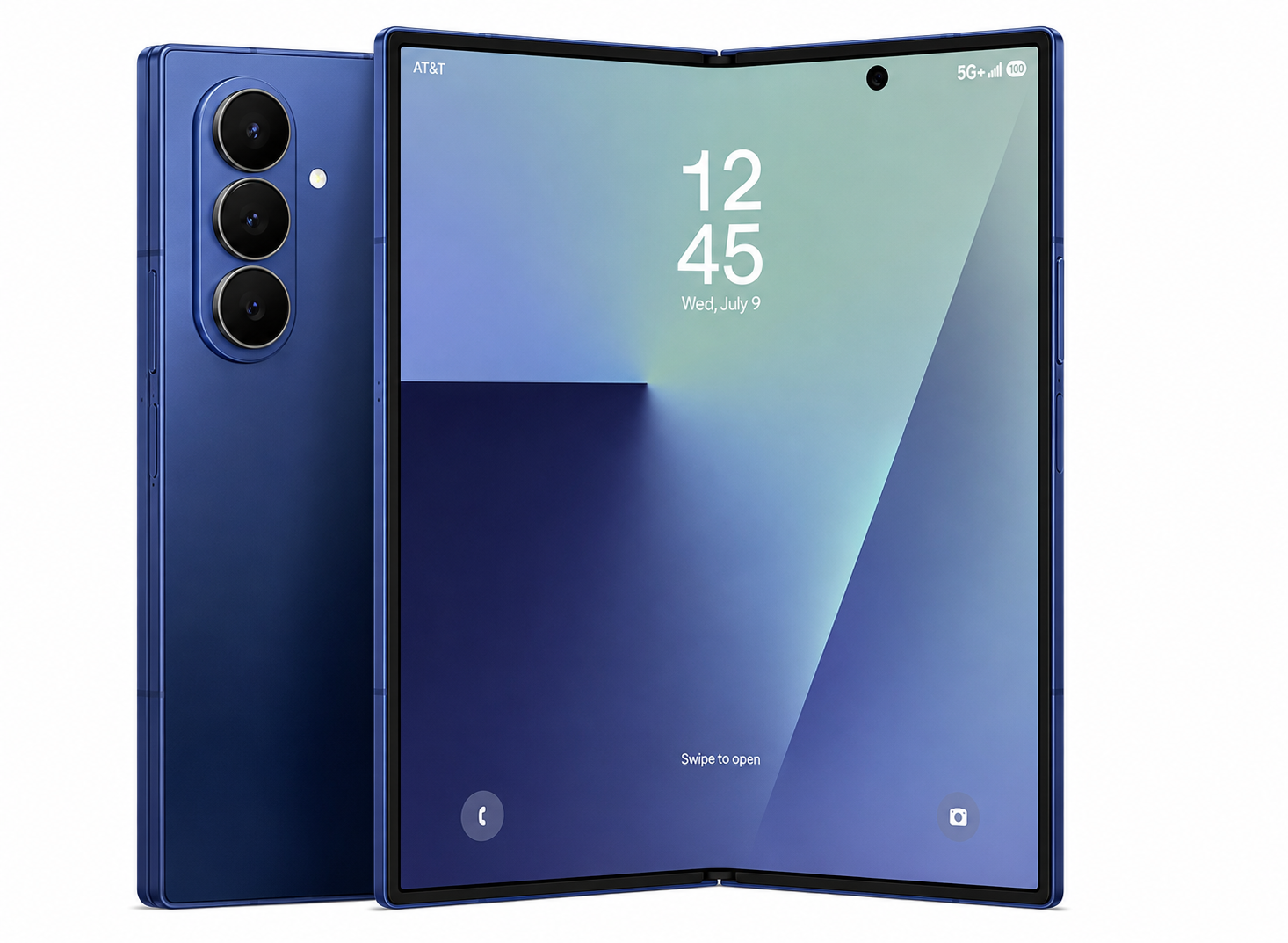
Samsung’s 6.8‑inch near‑zero‑bezel OLED panel is less a party trick than a declaration that the company intends to keep control of the premium display segment by solving problems others still treat as edges of the spec sheet. With a top border of 0.4mm and 0.6mm on the remaining sides, the bezels slip under the threshold of easy visual detection, delivering the all‑screen look users have been promised for years. To pull this off, Samsung moves driver ICs away from visible edges using its Y‑OCTA on‑cell technology and bends the flexible substrate behind the stack so connection tails no longer consume border space. On foldables, the intent is similar: the so‑called Flex Titanium Technology replaces a polymer layer under the OLED with a new paper‑like titanium alloy film atop a rigid titanium plate, thinner yet more resilient. Polymer layers are good for flexibility but prone to permanent deformation; titanium alloy cuts that risk, targeting less visible creasing over a device’s life. The remaining path to true zero‑bezel panels is defined not by imagination but by the minimum perimeter needed for thin‑film encapsulation to keep moisture and oxygen from degrading the OLED materials.
A Roadmap Meant to Keep Samsung Ahead While Others Catch Up
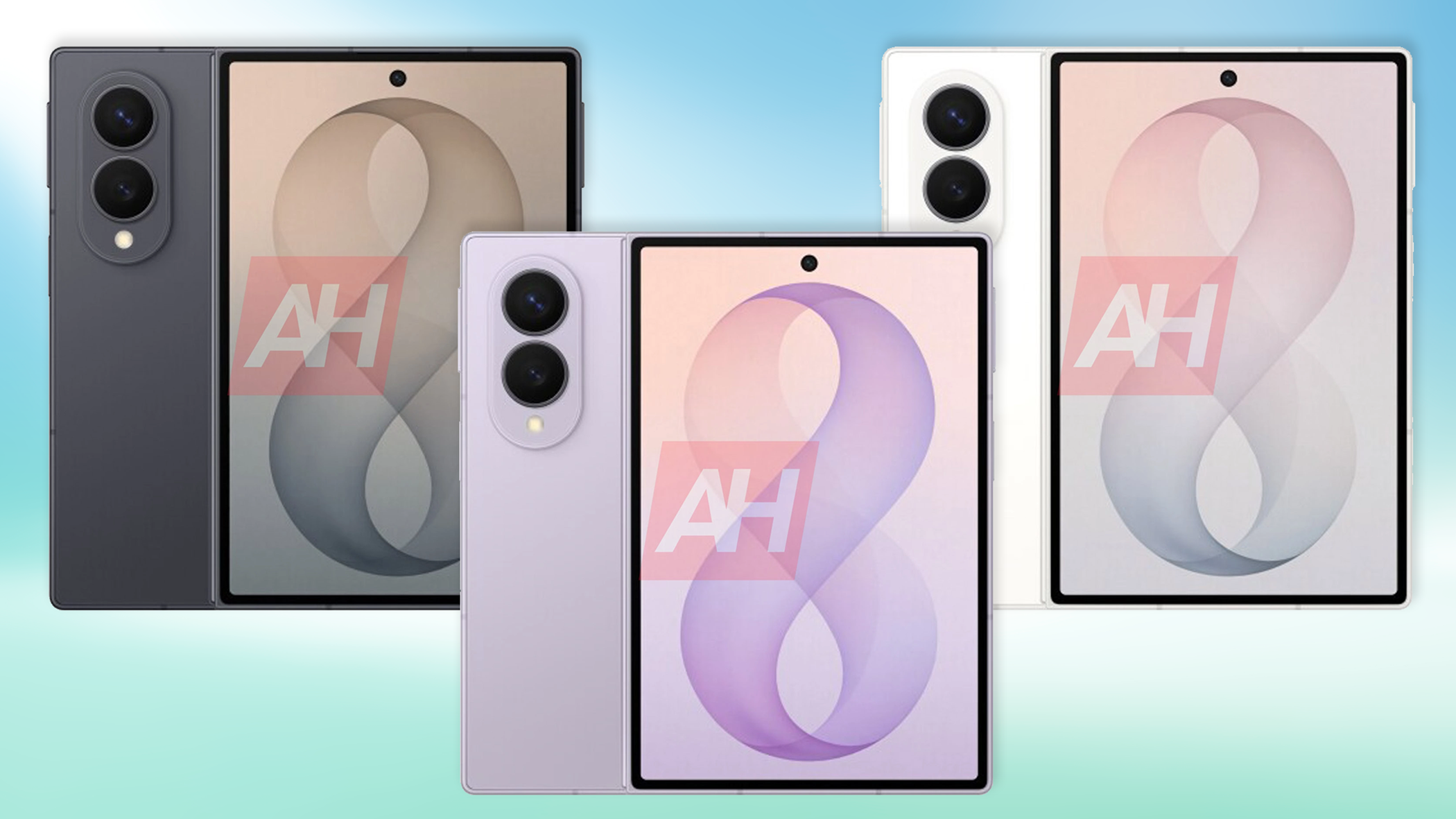
Taken together, the slidable phone concept, titanium‑reinforced foldables, and near‑zero‑bezel OLED panels add up to more than a product tease; they form a coherent strategy to protect and extend Samsung Display’s lead in high‑margin screens. According to CINNO Research and UBI Research, Samsung Display controls roughly 41.7% of global AMOLED smartphone panel shipments and 48% of global OLED revenue, a revenue share that outpaces its volume share and underlines its dominance in premium segments. A company that shows what comes after foldables while rivals are still trying to match its current foldables is making a forward claim that these numbers will not fall easily. Supply chain reports point to the first half of 2028 for a commercial slidable device—an honest, durability‑led timeline instead of hype. Meanwhile, an exclusive agreement to supply foldable OLED panels for a major rival’s first foldable phone, with mass production underway at its facilities, turns competition into business. With the next Galaxy Unpacked event set to bring new foldables, watches and glasses soon, Samsung Display’s message from the lab is unapologetically confident: the future premium phone will be defined by screens that bend, slide and nearly erase their borders, and it intends to be the company that builds them.