
A Quietly Radical Shift: Third-Party App Stores Inside Google Play
Google’s new policy allowing third-party app stores to be downloaded and used from within the Google Play Store marks a major change in Android app distribution, turning what was effectively a single dominant marketplace into a more open, competitive ecosystem where multiple stores can coexist on equal footing. This is not a minor tweak; it is a structural break from the idea that one company should control how software reaches most Android phones. Starting July 22, users will be able to install rival marketplaces like any regular app, browse their catalogs, and still have downloads processed through Google Play’s infrastructure. Google is presenting this as a way to “deliver greater app store choice, lower prices, and more opportunities for developers and users,” but that framing hides an uncomfortable truth: it is being dragged into openness by the courts, not volunteering it.
Epic’s Long War With Google Finally Forces the Door Open
This moment exists because Epic Games refused to accept Google’s control over mobile payments and distribution. The clash began when Epic tried to bypass Play Store fees by selling Fortnite currency directly, triggering a years-long legal fight. Google ultimately lost a key judgment in October 2024 that ordered it to carry rival Android app stores inside Google Play and share its entire app catalog with them. In late 2025, Google and Epic proposed a softer settlement that would have avoided the most disruptive changes, focusing instead on more flexible distribution and payments outside Play. Then, almost at the last second, both companies withdrew that settlement, forcing Google back under the original injunction. The result: Google must now host third-party app stores directly in Play and open its catalog to them via the new Play Catalog Access Program. The monopoly did not crumble from goodwill; it cracked under legal pressure.
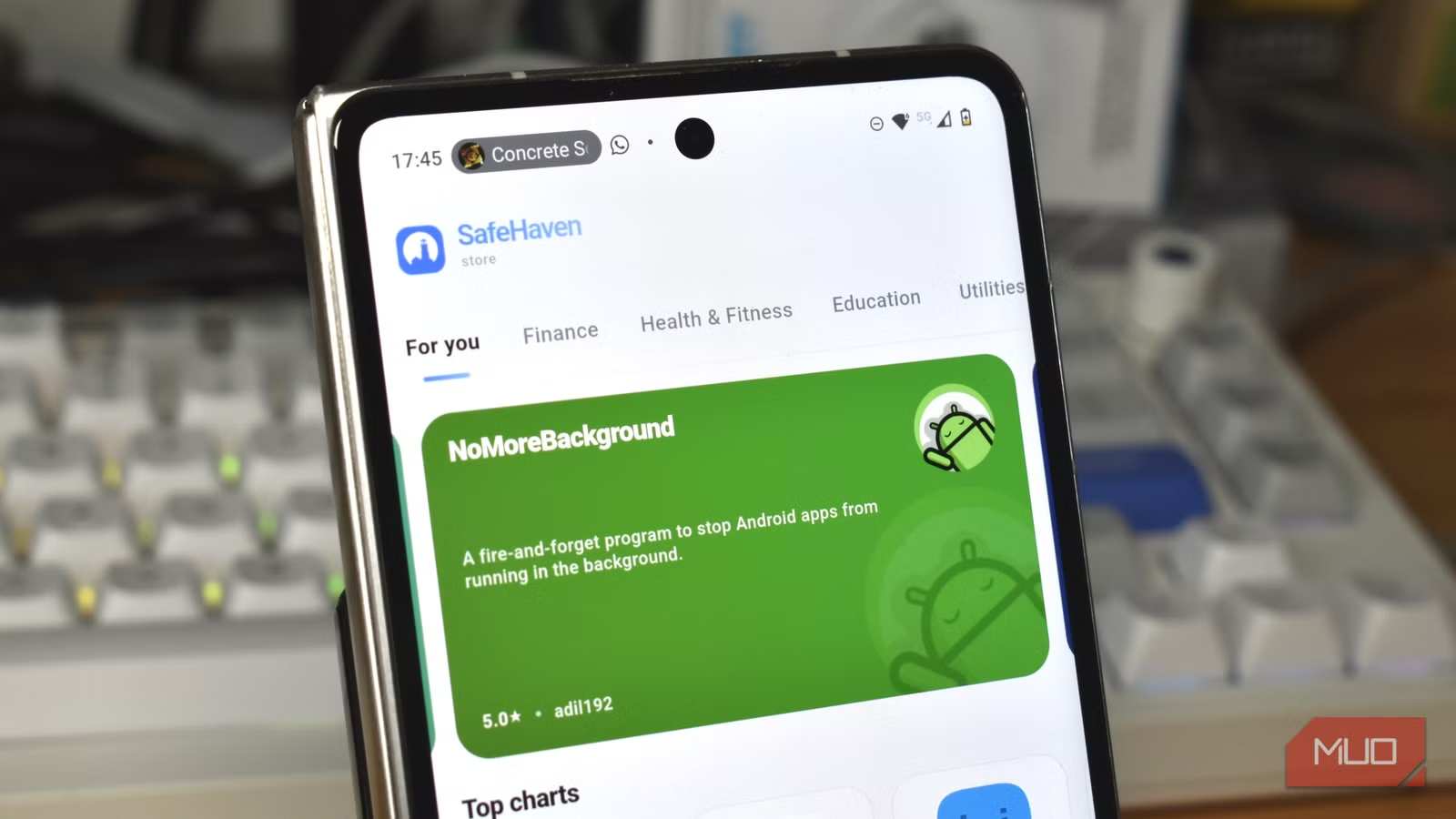
How the New Android App Distribution Model Will Work
For everyday users, the change looks deceptively simple: you’ll be able to search for and install third-party app stores from Google Play the same way you install any other app. Once installed, those stores can present catalogs that are automatically pre-stocked with existing Play Store listings, unless developers choose to opt out. Downloads themselves still run through Google Play, and Google keeps charging its 10% service fee on paid apps and in-app purchases. According to Google, this model “maintain[s] Android’s industry-leading security and foster[s] a competitive ecosystem where every app store and developer has the freedom to compete.” In practice, that means you get more choice of storefront without losing the underlying installation framework or security checks you’re used to. It is competition wrapped in Google’s rails, not true independence, but it is still a meaningful step away from one-store dominance.
Who Really Benefits: Users, Developers, or Google?
On paper, this looks like a win-win: more third-party app stores, more competition, potentially lower costs and better deals for users and developers. Yet the fine print shows Google is making sure it still gets paid and still sets the rules. Third-party stores must enroll in the Play Catalog Access Program, pay an upfront fee of USD 5,000 (approx. ₱280,000) for onboarding security review and another USD 5,000 (approx. ₱280,000) annually to retain catalog access. They must qualify as a “Legitimate Marketplace” and design their apps primarily for discovery and installation. That is not an open field; it is a gated community. Large players and well-funded niche stores will enter; smaller, experimental markets may never clear the bar. Still, even a curated set of competing stores can pressure Google on commissions, promotion, and policies. Users should be ready to reward stores that use their new freedom to offer better prices, clearer policies, and more transparent ranking, not just a different logo.
A Turning Point, Not the Endgame, for Google Play Store Alternatives
Starting July 22, the Play Store will stop being the only mainstream way to browse for Android apps, and that matters. Even if Google keeps processing downloads and collecting fees, the appearance of third-party app stores inside its own storefront is a symbolic and practical shift: users will see that alternatives exist, and developers will have more bargaining power. Outside the US, Google will continue pushing its Registered App Stores program, where rival stores remain sidelined as sideloaded apps instead of first-class citizens in Play. That two-track approach shows this move is less a voluntary embrace of openness and more a forced concession where the court holds leverage. Still, cracks in a monopoly rarely open all at once. This is stage one: multiple stores, shared catalogs, and a slightly more competitive Android app distribution landscape. The next stage depends on whether users and developers take advantage of these Google Play Store alternatives, or quietly stick with the status quo.