
Slideable Phones: The Next Big Pivot Beyond Foldables
A Samsung slideable phone is a next-gen phone design that uses a rollable OLED display on a motorized rail system to extend from a compact slab into a larger, tablet-like screen without a hinge or crease, positioning sliding phone technology as a distinct Samsung foldable alternative for buyers who want more screen without giving up one-handed portability or durability concerns about visible fold lines. Samsung Display’s first-ever press day made that pivot unmistakable. On Wednesday, the company opened its headquarters to journalists for the first time and put two slidable phone concepts and a near-zero-bezel OLED panel front and center. This was not a neutral tech demo; it was an answer to the looming question: what comes after the Galaxy Z Fold and the wave of foldables it inspired? The answer, at least in Samsung’s mind, is a screen that rolls instead of bends.
Inside Samsung’s First Press Day: Two Slidables and Vanishing Bezels
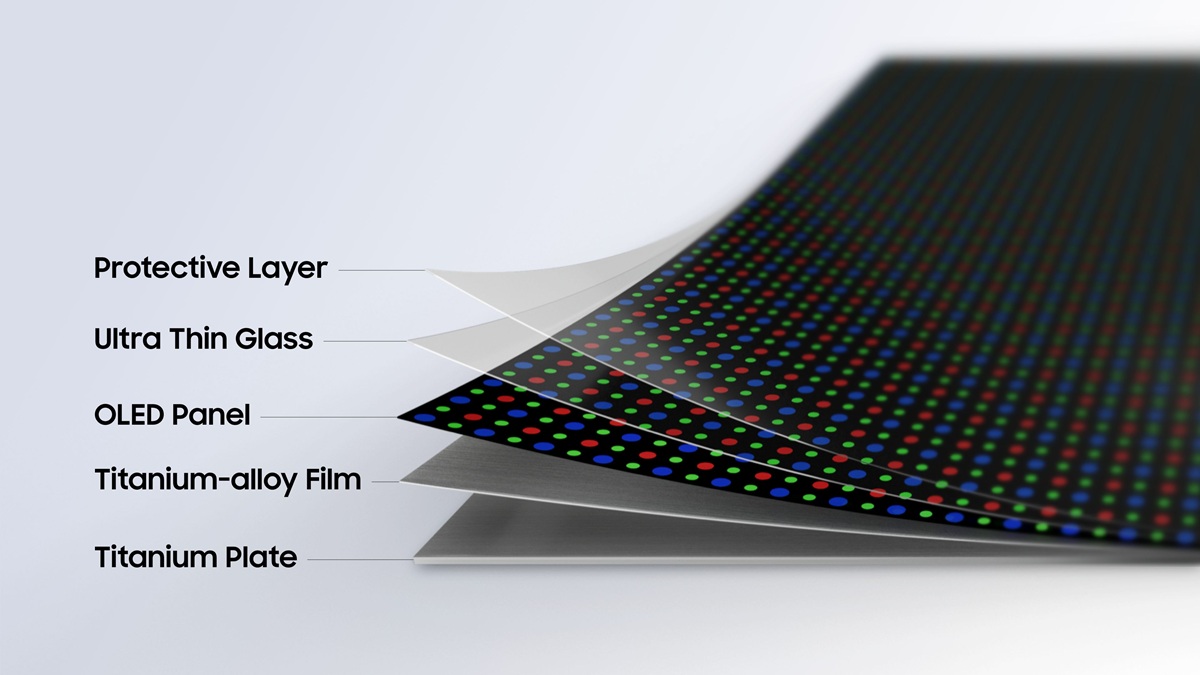
At the press event, Samsung Display laid out a roadmap that stretches to the end of the decade and beyond, and it did so with hardware, not slides. The Flex Slidable concept starts as a compact 4.7‑inch slab and expands to 7.2 inches when one end is pulled, turning a phone-sized device into near‑tablet territory without a hinge, crease, or fold line. The second concept, Flex Hybrid, combines foldable and slidable in one chassis, with the left side folding and the right side sliding to reach the same 7.2‑inch target. This is Samsung Display saying it sees sliding phone technology as an entire new category, not just a niche experiment. Equally telling was the near‑zero‑bezel 6.8‑inch OLED: a top border of 0.4mm and 0.6mm on the other sides, a claimed 40% bezel reduction versus current phones. If slideables are the next form factor, these bezels are the finishing touch.
From 2028 to “Next Year”: Why the Slideable Timeline Is Accelerating
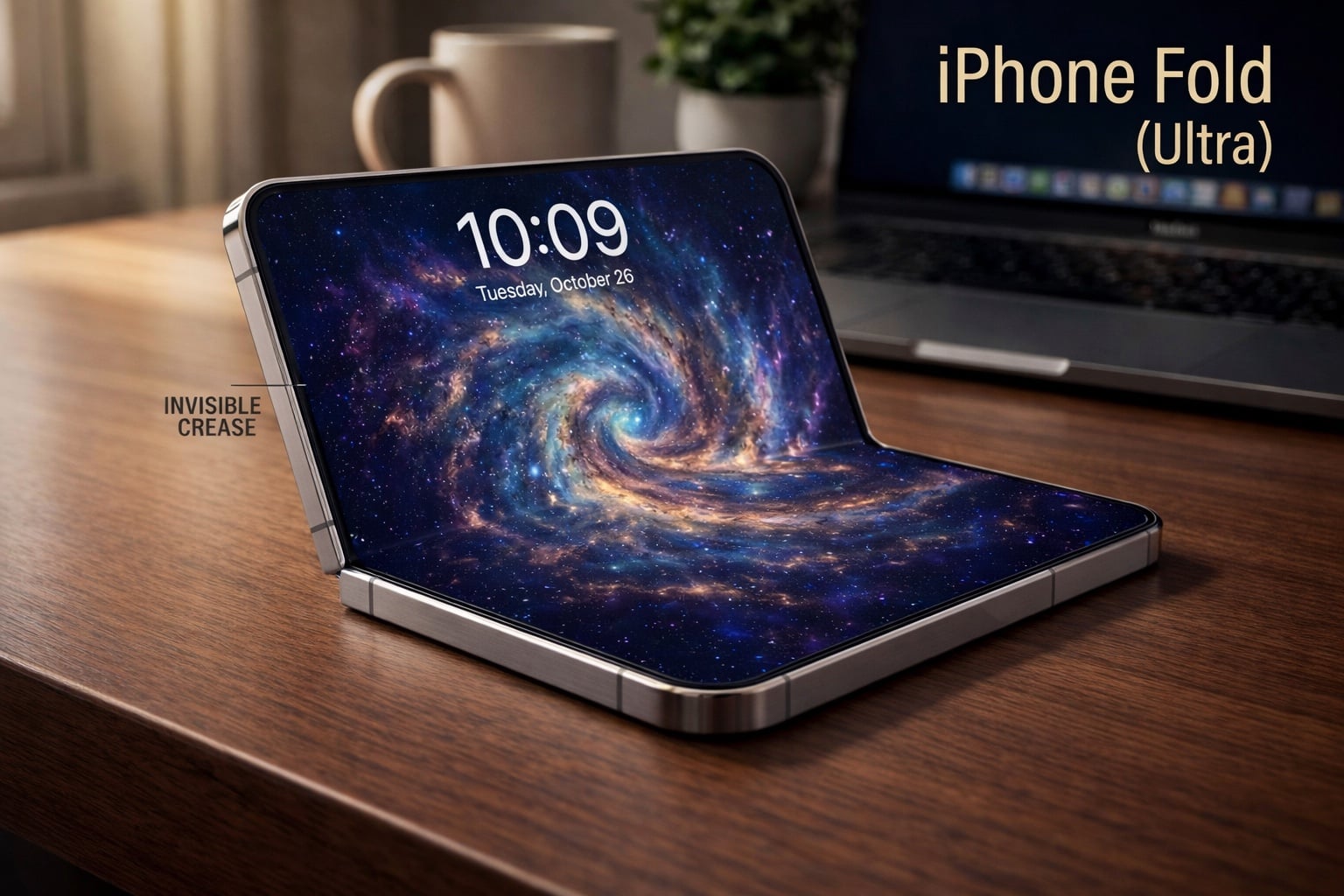
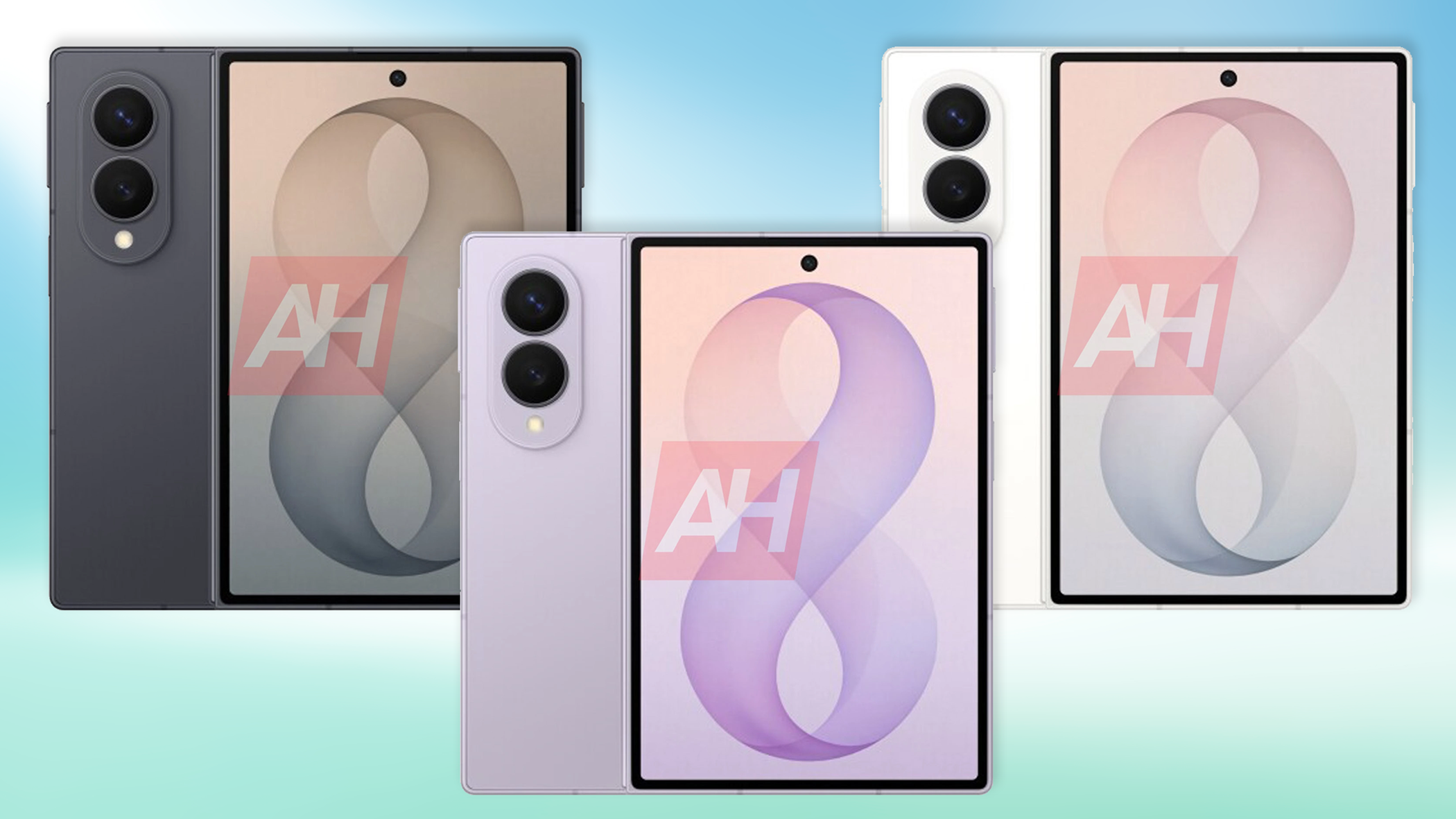
Until very recently, the slideable story sounded like a slow burn. Supply chain reports had Samsung’s mobile division targeting the first half of 2028 for its first commercial slidable device, a timeline that matched cautious engineering talk about durability and complex motorized mechanisms. Now, fresh leaks point to a very different pace: earlier reporting about an early‑2028 rollable has been overtaken by claims it could arrive as soon as 2027, potentially ahead of the Galaxy Z TriFold 2. That effectively pulls the window forward a year and reframes sliding phone technology from distant experiment to near‑term product strategy. This shift is not happening in a vacuum. The press day was timed one week before Samsung’s major Unpacked event for the Galaxy Z Fold 8 family and roughly eight weeks before a foldable iPhone reveal that will also use panels from Samsung Display. In other words, slideables are now part of Samsung’s competitive signaling, not just its lab work.
A Crease-Free Samsung Foldable Alternative—and a Threat to the TriFold 2
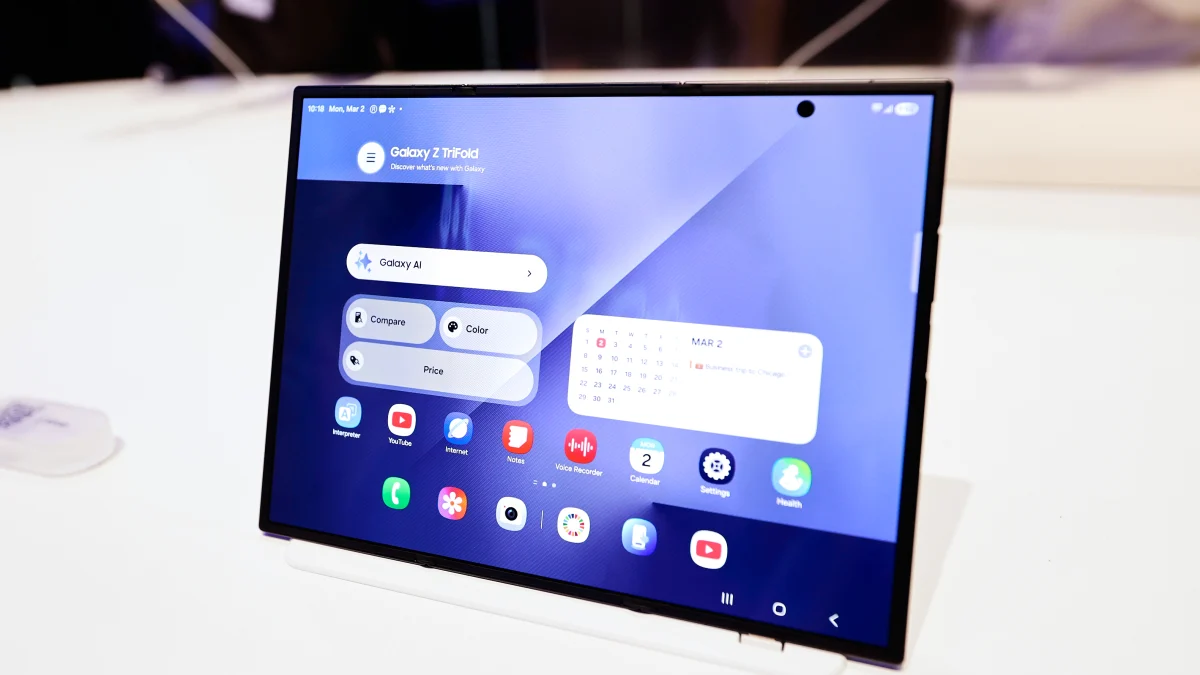
For people already using a foldable, the appeal of a slideable phone is blunt: no crease. In a foldable, stress concentrates along a single bend axis, leaving a visible mark after thousands of opens and closes. In a slidable, the display rolls around internal guide rollers, spreading stress along a longer arc, making that persistent fold line structurally impossible. That alone makes slideables a serious Samsung foldable alternative for buyers tired of living with a permanent scar down the middle of their screen. But the strategic impact runs deeper. A new report says Samsung’s sequel to the Galaxy Z TriFold could be preempted by a mobile device with a rollable OLED panel, with the slideable now tipped to arrive before the TriFold 2. If that happens, it won’t just delay a niche tri‑fold; it will signal that Samsung sees slideables, not ever‑more‑complex hinges, as the primary path forward.
What This Means for Buyers: Wait, But Don’t Hold Your Breath
From a buyer’s perspective, the practical impact of this next‑gen phone design is starting to come into focus. Slideables promise pocketable 4.7‑inch phones that stretch to 7.2 inches on demand, near‑invisible bezels with 0.4mm top borders and 40% thinner edges than today’s devices, and a crease‑free viewing experience that fixes one of the most visible compromises of foldables. At the same time, the engineering is brutal: a motor‑driven rail system, battery routing around moving parts, and display connections that must endure thousands of extension cycles without failure. That is why timelines remain slippery. One leak now says 2027 instead of 2028, but even that comes with a warning that plans can change and products can be delayed or canceled. For now, the smart move is not to skip the Galaxy Z Fold 8 outright, but to recognize that if you care about screen quality more than hinge tricks, the most important Samsung phone may be the one that rolls, not folds.