
From $300 Flagship Killer to Market Exit
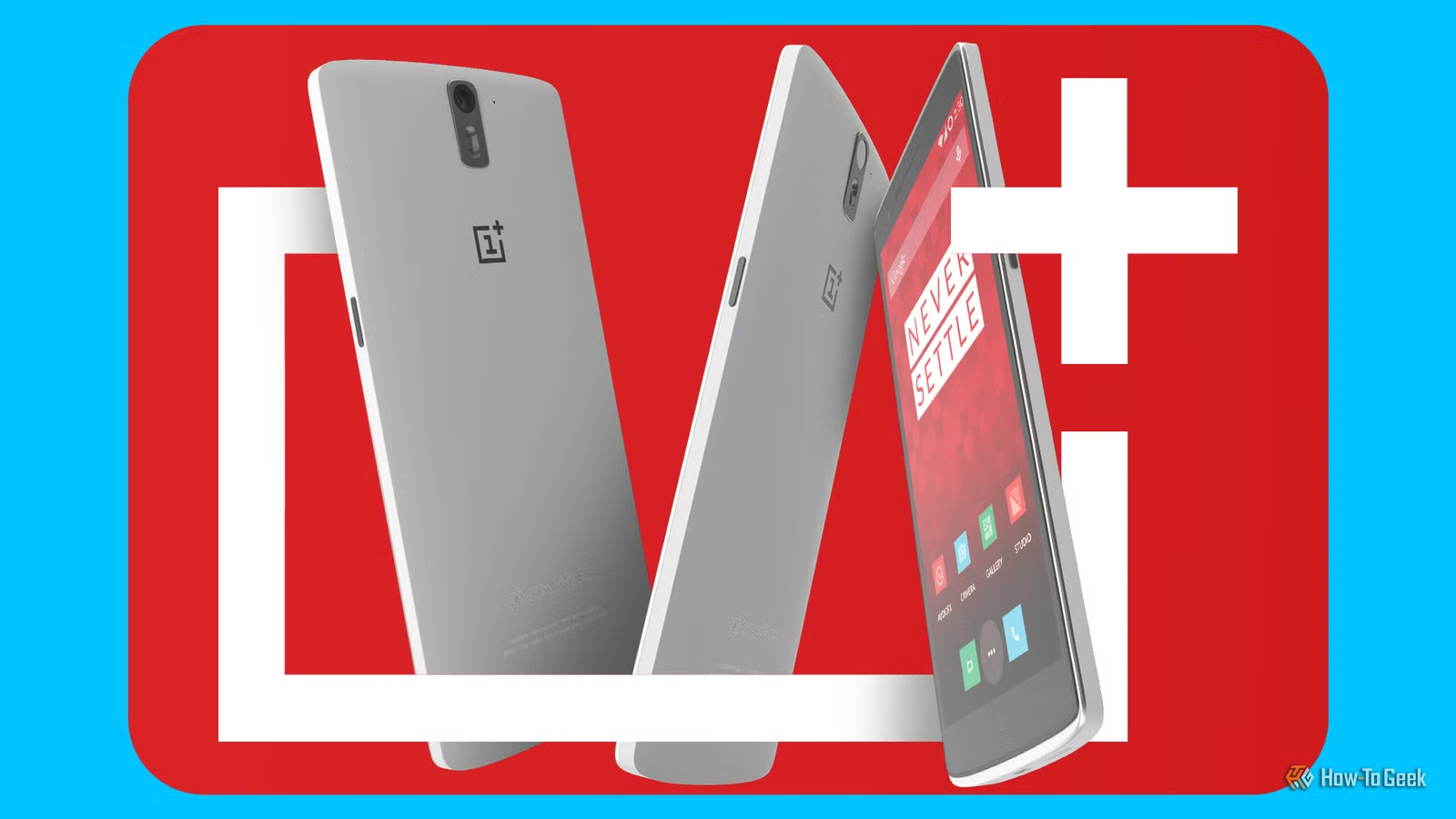
OnePlus’s market exit from major Android markets refers to the company halting sales of new smartphones where it once built its “flagship killer” reputation, ending mainstream access to its devices and forcing loyal users to look for Android alternatives that match its blend of high performance and budget flagship phones. OnePlus did not start as a safe, incremental brand. When the OnePlus One was announced to the public in April 2014, it promised flagship-level specs at a mid-range price. Back then, phones like the Galaxy S5 and other Android flagships dominated the market in the USD 600 to 700 (approx. ₱33,600–₱39,200) range, while the OnePlus One launched at USD 299 (approx. ₱16,700) for 16GB and USD 349 (approx.₱19,500) for 64GB. Above all, it was this price that made the phone a “flagship killer,” half of what a top Samsung model cost. That founding idea is exactly what is disappearing with OnePlus’s withdrawal today.
How OnePlus Rewrote the Rules on Value and Performance
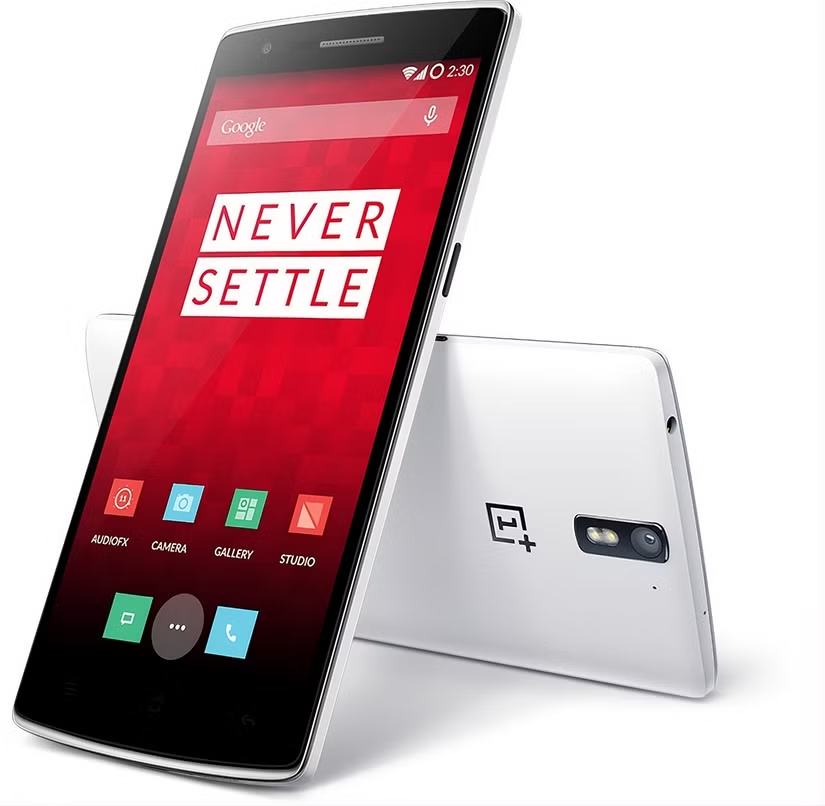
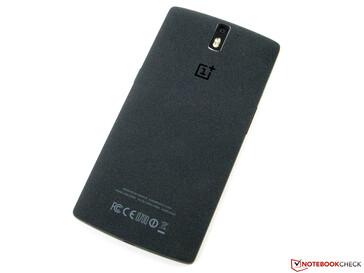
The OnePlus One didn’t win hearts through gimmicks; it won through a ruthless focus on value-performance. Its Snapdragon 801 paired with 3GB of RAM, a solid 1080p display, and a 3,100mAh battery made expensive flagships look wasteful when they shipped with less memory and smaller batteries at twice the price. CyanogenOS provided a near-stock Android experience that ran smoothly and avoided the bloated interfaces that frustrated enthusiasts at the time. This was off the beaten path: custom software, a textured sandstone back that felt premium and distinctive, and hardware that enthusiasts could respect. The invite-only sales model, plus infamous campaigns like “Smash the Past,” turned scarcity into hype and helped OnePlus reignite competition in Android with clever marketing and a highly affordable phone. The term “flagship killer” wasn’t a nickname; it was the brand’s thesis, and the OnePlus One made the concept mainstream.
From Flagship Killer to High-End Niche—and Out the Door
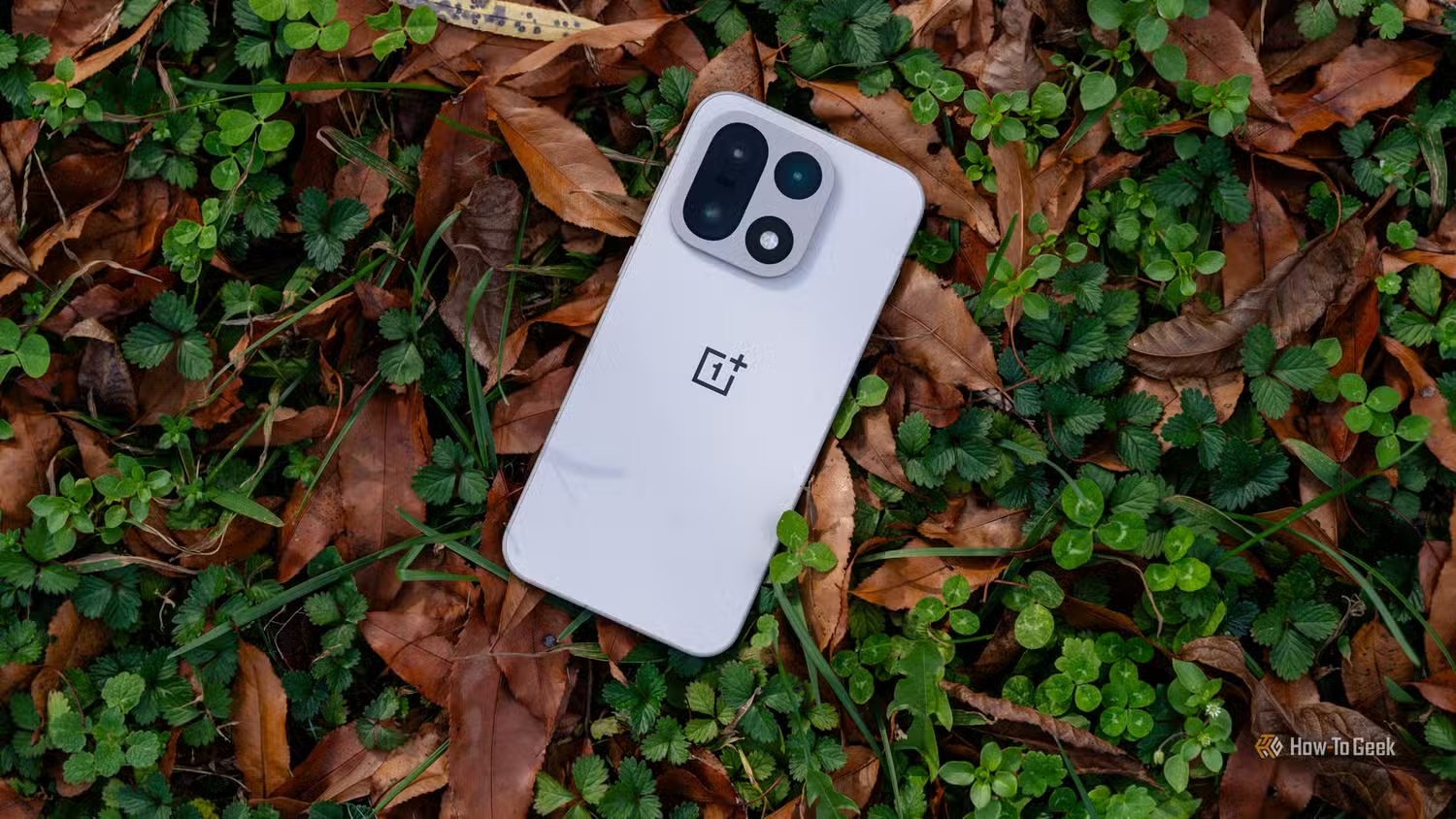
Over time, OnePlus drifted away from its original mission. Prices and specs crept upwards and increasingly aligned with the broader competition, as the company tried to compete directly in the high-end segment. Devices like the OnePlus 15, launched with a starting price of USD 900 (approx. ₱50,400), packed extreme specs: a Snapdragon 8 Elite Gen 5 SoC, up to 16GB of RAM, a 165Hz display, a 7,300mAh battery, 100W charging, and IP69K resistance. On paper, these phones were monsters, still speaking to enthusiasts who cared about raw performance. But the slow pivot from “flagship killer” to niche high-end phone brand did not work. Name recognition, strong marketing, and carrier relationships proved more important than specs alone, and OnePlus’s devices failed to secure a stable foothold in the market. As a result, the OnePlus 15 and 15R stand as the last of its smartphones to appear in these markets—an unmistakable end of an era for budget-conscious Android fans.
What OnePlus’s Exit Means for Enthusiasts
For loyal OnePlus users, the brand’s departure is more than a business decision; it feels like losing a companion that brought innovation and high product quality for years. Many remember the line fondly, from the OnePlus One through the OnePlus 2, 3, and experimental designs like the 7 Pro’s pop-up camera. The invite-only chaos, the textured sandstone backs, and the smooth custom interfaces gave OnePlus a personality that generic mid-range devices lacked. Its exit underlines an uncomfortable truth: a good phone cannot sell itself without strong branding and carrier support. Ordinary users, who once could rely on OnePlus to deliver affordable, high-performance hardware, now lose a familiar option in the value-performance space. While innovation continues elsewhere in Android, the specific mix of daring design, enthusiast-friendly software, and aggressive pricing that defined OnePlus’s early years is unlikely to return in the same form, and many users will miss that distinct spirit.
The New Landscape of Android Alternatives
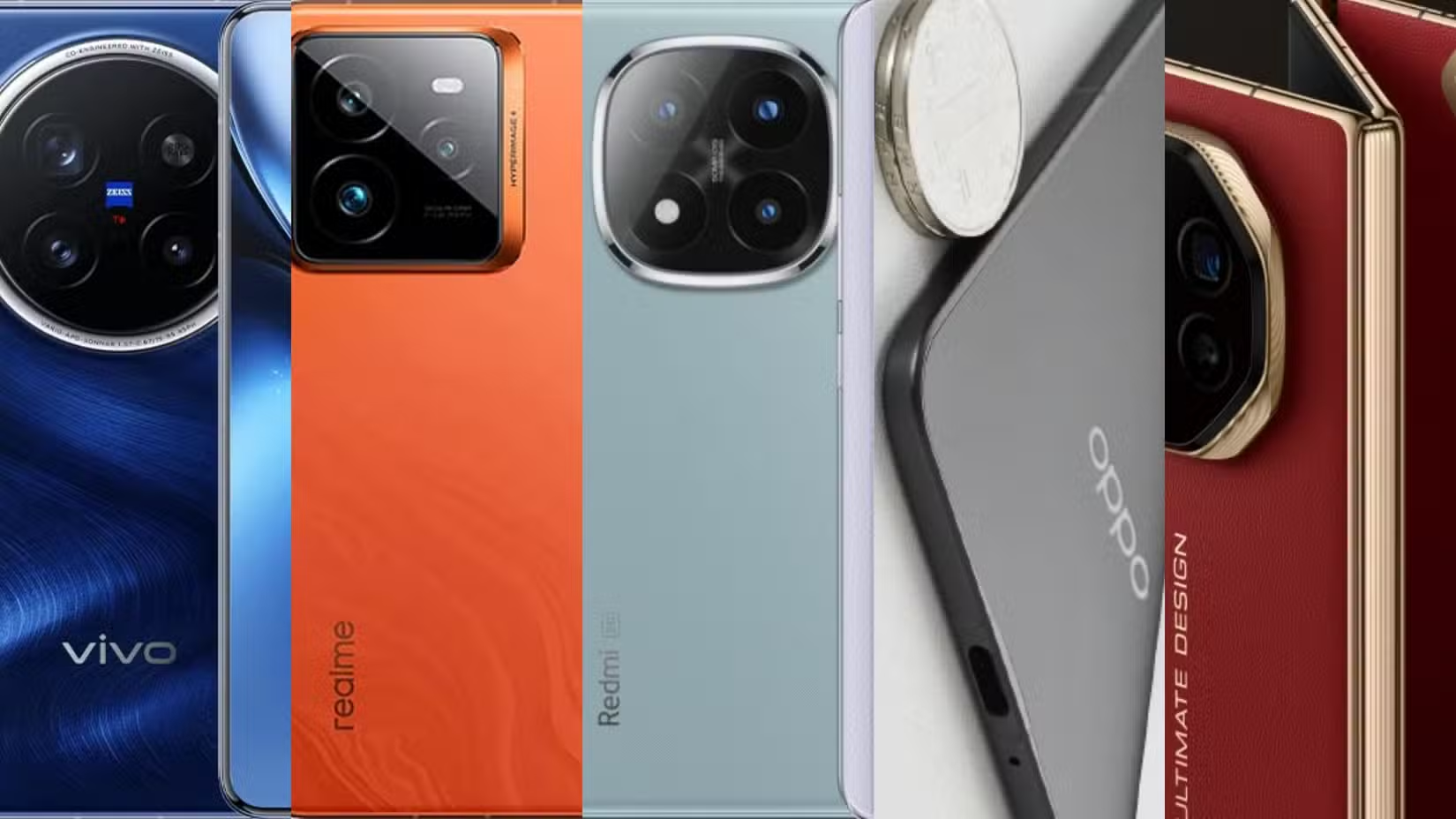
OnePlus’s exit leaves a clear gap—and it has already changed how other Android brands compete. After the OnePlus One, numerous phones followed its blueprint, especially lines like Xiaomi’s Poco, which pushed flagship-level specs at aggressive prices in their own way. According to one analysis, “OnePlus reignited competition in the smartphone market with clever marketing and a very good phone at an exceptionally affordable price.” Today, users looking for budget flagship phones must compare offerings from these newer value-focused brands, as well as young players such as Nothing, or related companies like Oppo. Yet smaller brands cannot easily match the combination of high performance, quality displays, and steep discounts while keeping margins healthy, so compromises are inevitable. There are Android alternatives, but many enthusiasts do not associate them with the same pioneering spirit that defined the original flagship killer. The void is filled functionally, but not emotionally.