
Your Navigation App Now Has Opinions About Your Driving
Waze Gemini AI is an upgrade to the Waze navigation app that uses Google’s Gemini models to learn your driving preferences, personalize routes, and support natural voice conversations for reporting road issues and searching destinations.
The key change is blunt: Waze is no longer a generic GPS; it is an AI navigation app that adapts to you. With the latest update, the Waze team at Google is rolling out Gemini-heavy features that personalize recommendations based on your past trips and habits. If you tend to pick highways with fewer stops, or prefer weaving through quicker city lanes to beat traffic, Waze will remember and favor those options next time. That is personalized route planning in practice, not as a marketing line. For people who drive daily, the difference between a route that looks good on paper and one that matches your tolerance for stress, risk, and delays is huge—and Waze is betting Gemini can finally bridge that gap.
Personalized Routes: Convenience Upgrade or Filter Bubble for Drivers?
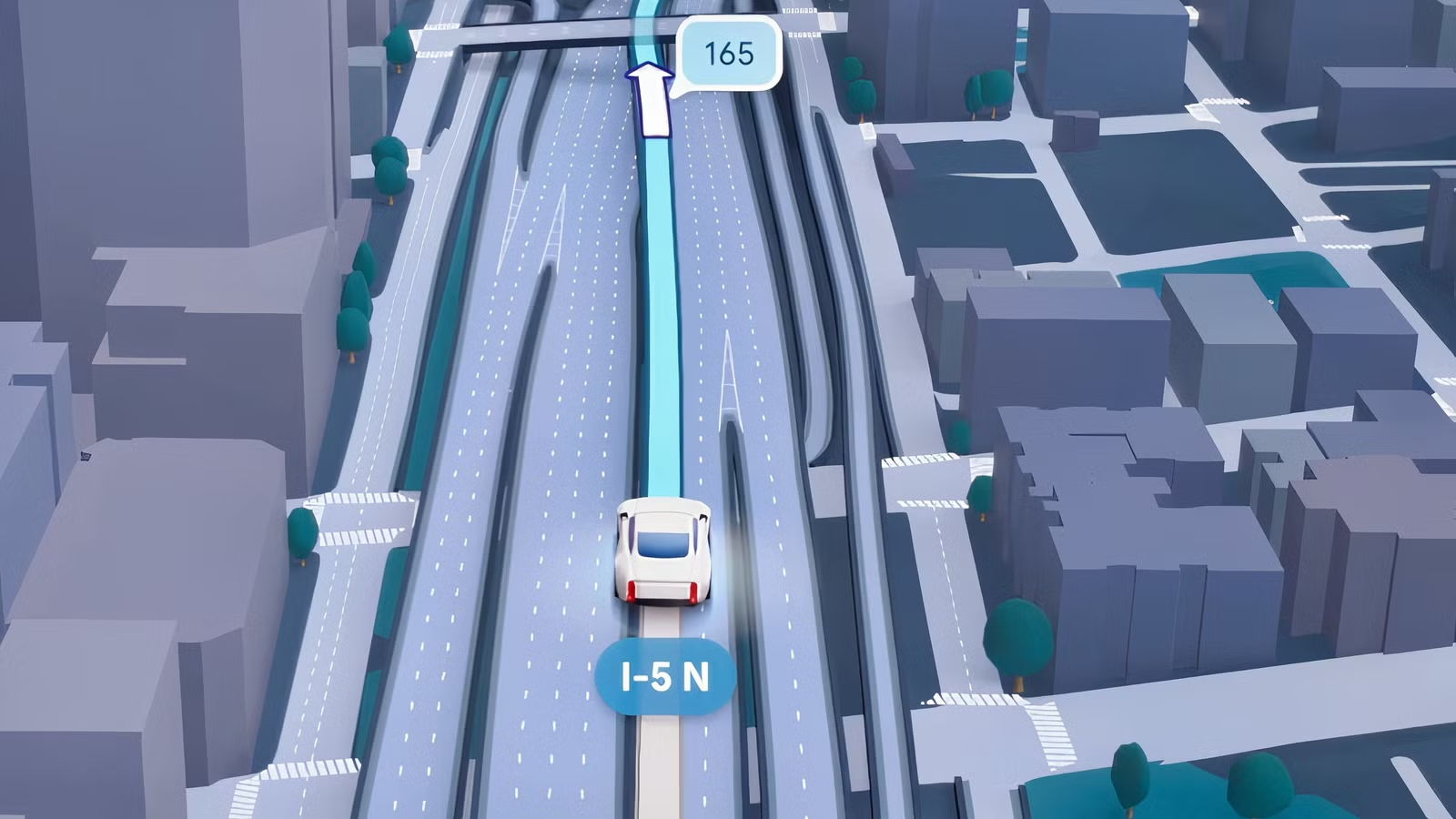
Personalized Navigation now uses your trip history plus Waze’s “hyperlocal traffic” data to keep you on what it thinks is the best route for you, not for some average driver. The app will remember whether you like highways with fewer stops or quicker lanes that dodge jams, and optimize future routes around those preferences. This is the logical next step for Waze Gemini AI: it turns years of crowdsourced data into individualized route logic instead of one-size-fits-all directions.
That is a clear win for convenience, but it is not without trade-offs. Over time, you may be nudged into a “driving filter bubble” where the app overfits to what you usually do rather than what might sometimes be safer or more efficient. The saving grace is control: if you do not like these tailored recommendations, you can turn them off. In other words, Waze is adding opinionated AI on top of the map—but you still get a veto.
Talking to Waze: Conversational Reporting and Smarter Voice Search
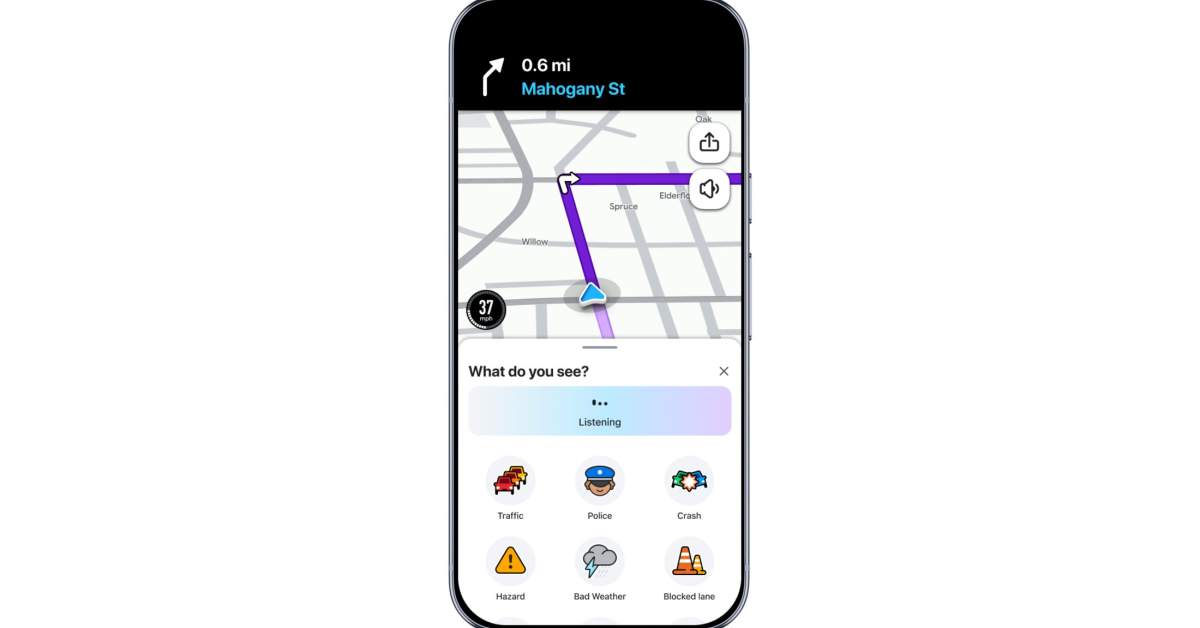
The most important safety move in this update is conversational reporting. Instead of tapping tiny on-screen icons while driving, you can speak naturally to Gemini to file road hazards or map fixes, and the AI will classify the report for you. The existing Gemini-powered Conversational Reporting already handled crashes and slowdowns; now you can also report road closures or incorrect addresses by talking to the app. For a navigation tool built around live, crowdsourced data, lowering the friction to contribute is a big deal.
Gemini also powers expanded voice search. Destination Search with Gemini lets you say broad commands such as “Find me a gas station” and get relevant options along your route. More impressively, Waze can now respond to vague, real-world requests like “Find a gas station which also sells coffee with vegan milk options,” pulling up recommendations in a way that mirrors Google’s Ask Maps feature. This turns Waze into a far more flexible AI navigation app: you describe needs, not exact place names.
Motorcycle Mode: AI Routing for the Roads Cars Avoid
Waze’s new Motorcycle Mode is where the “AI navigation app” label stops being hype and starts being specific. The mode, now supercharged with AI, provides bike-specific routing that takes into account the shortcuts and restrictions unique to two-wheelers. According to Waze, Motorcycle Mode uses AI to incorporate two-wheeler shortcuts and restrictions for optimal routing and accurate ETAs.
In practice, that means routes may include narrow lanes or shortcuts that are unsuitable for cars or larger vehicles, giving riders options that typical car-focused maps will never suggest. Along the way, Motorcycle Mode surfaces hazards that matter to bikes—speed bumps, raised crosswalks, narrow bridges, and other potential stoppages. Waze says dedicated map editors are reviewing these additions for accuracy, underscoring that this is not only AI guesswork but human-checked map curation. For riders, that blend of AI and local editing is exactly what you want: aggressive optimization, tempered by sanity checks.
Less Chatty Mode: Keeping the AI, Muting the Backseat Driver
Waze has always walked a fine line between helpful and nagging. The new Less Chatty mode is a rare feature that respects driver focus instead of fighting for attention. When enabled, it cuts down the frequency and length of voice prompts so you can concentrate on music, podcasts, or simply the road. Waze still warns you about crucial hazards or obstructions; it just stops filling the silence with commentary.
Crucially, this does not turn off the Waze Gemini AI itself. Personalized route planning, conversational reporting, and Gemini-powered destination search keep working in the background; you are muting the personality, not the intelligence. All of these features, apart from the improved Motorcycle Mode, are rolling out to Android and iOS users worldwide, with the changes going live starting this week. The direction is clear: the future of Waze is not a louder assistant, but a smarter, quieter one that learns how you prefer to drive and then gets out of your way.