
ASUS ROG Gjallar: A Desktop Speaker Built to Challenge Headsets
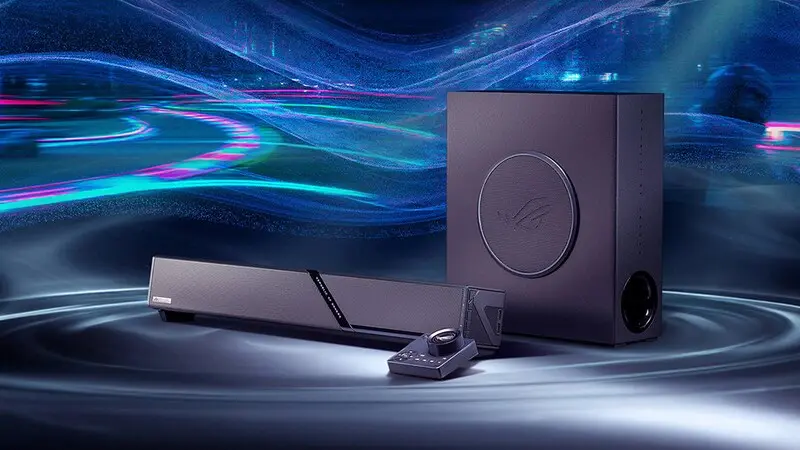
ASUS ROG Gjallar is a 2.1.2-channel Dolby Atmos gaming soundbar system with a wireless subwoofer and control hub, designed to bring immersive spatial desktop gaming speakers to players who prefer speakers over headsets. ASUS has officially entered the dedicated gaming speaker market with the launch of the Republic of Gamers Gjallar, the company’s first standalone audio system designed specifically for gaming and multimedia applications. Instead of another pair of RGB head-clamps, ASUS is planting a flag on your desk: a compact gaming soundbar system, a 6.5‑inch 65W wireless subwoofer, and a desktop console with built‑in chat mics in one coordinated package. The message is clear—desktop gaming audio is no longer an afterthought, and the company wants ROG fans to stop tolerating tinny monitor speakers as their default option.
Dolby Atmos Gaming Audio Comes to the ROG Ecosystem
The most important move here is Dolby Atmos gaming audio moving from living-room soundbars to a purpose-built desktop rig. The ROG Gjallar is built around a 2.1.2‑channel speaker configuration, with two tweeters and four full‑range drivers split between forward‑ and upward‑firing orientations to reproduce Dolby Atmos height effects. According to ASUS, “together, they deliver a 2.1.2-channel Dolby Atmos experience aimed at creating more immersive positional audio.” This matters because competitive and cinematic games keep leaning into spatial sound for awareness and atmosphere—footsteps above, aircraft flyovers, vertical spell effects. Until now, the answer for serious players has mostly been headsets. Gjallar argues that desktop gaming speakers can now play in that same space, letting you keep your ears free while still benefiting from directional cues when playing compatible games or streaming Atmos‑enabled movies and shows.
A Gaming Soundbar System That Treats Audio Like a First-Class Peripheral
Crucially, ASUS didn’t stop at “soundbar plus bass box.” The ASUS ROG Gjallar speaker system combines a compact soundbar, a wireless 6.5‑inch, 65W subwoofer, and a dedicated desktop control console into a single gaming soundbar system. The sub connects over a 5 GHz wireless link, freeing you to hide it where it sounds best instead of where a cable reaches. The control hub is more than a volume knob: it’s the primary connection point with HDMI eARC, USB‑C, Toslink, AUX, and Bluetooth available for gaming PCs, notebooks, TVs, consoles, smartphones, and other devices. On top of that, ASUS has integrated dual Acoustic Echo Cancellation microphones and a dedicated DSP so you can use speaker audio while staying audible in multiplayer chat or meetings without feeding game sound back into comms. This is what treating audio as a real peripheral looks like.
Desktop Gaming Speakers as the New Multiplatform Hub
Gjallar also taps into a broader trend: gamers now live across platforms, and their audio needs to keep up. The soundbar is compact enough to sit beneath most monitors while including left and right full‑range drivers, dual tweeters, and two upward‑firing speakers that can even be disabled if you prefer a flatter profile. Connectivity is anything but an afterthought—HDMI 2.1 (eARC) with 4K 120 Hz passthrough, 3.5 mm audio, optical, USB‑C, and Bluetooth 5.3 make it an easy fit for PC, Mac, PlayStation, Xbox, Nintendo consoles, televisions, and mobile devices alike. An integrated USB expansion hub in the controller and two USB‑A ports on the soundbar itself mean your audio bar doubles as I/O cleanup for the rest of your setup. This is desktop gaming speakers evolving into central command, not background accessories.
Why ROG Gjallar Signals a Shift in Gaming Audio Priorities
The ROG Gjallar is more than another ROG-branded box; it’s ASUS formally stepping into premium desktop gaming speakers as part of a larger multi‑sensory ecosystem that already spans monitors, graphics cards, networking gear, and peripherals. For years, gamers were told: if you care about audio, buy a headset. Now we have a Dolby Atmos gaming audio system that integrates lighting, chat, device switching, and USB expansion while aiming squarely at gamers who want a “premium desktop audio upgrade.” Pricing, release date, and some specs remain undisclosed, but the intent is obvious: gaming audio is graduating from a checkbox to a selling point. As more players chase immersion, creators crave better monitoring, and households mix games with streaming, solutions like ASUS ROG Gjallar will likely become the default expectation, not a niche luxury.