
What Watercolor Eyeshadow Is—and Why It’s Everywhere
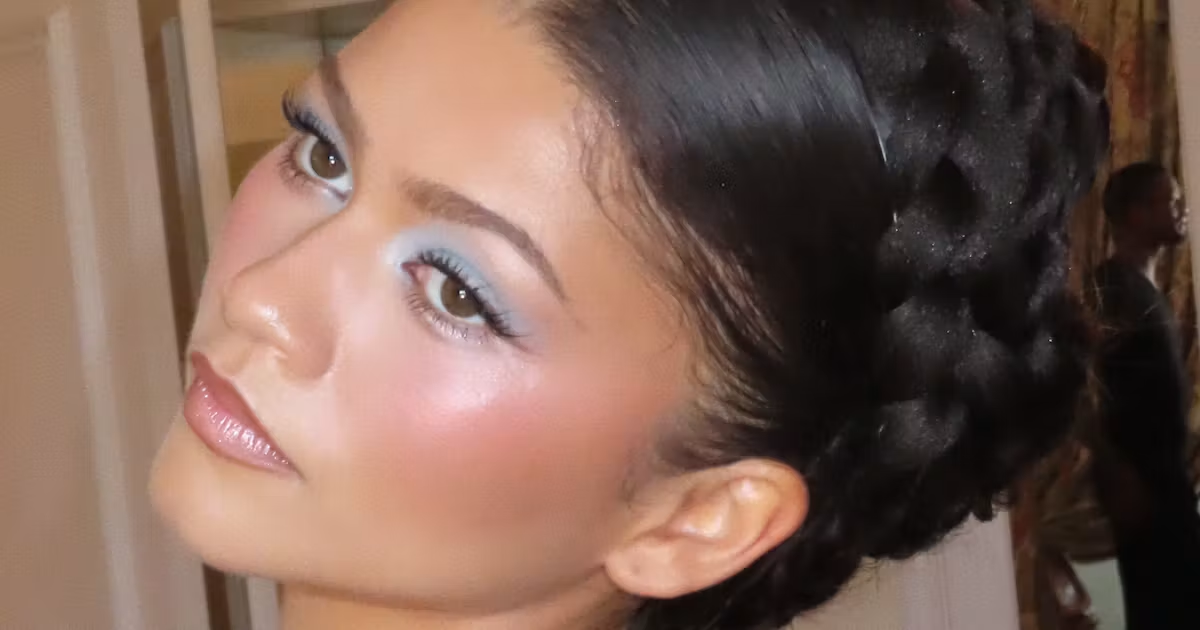
Watercolor eyeshadow is a soft-focus makeup trend where sheer, translucent color is diffused across the lids so the natural skin still shows through, creating a cloudlike, painterly effect that feels romantic rather than heavy or graphic.
Think of this watercolor eyeshadow technique as the eye-makeup cousin of blurred lips and watercolor blush: the color floats over the lid instead of sitting in a thick, opaque layer. According to celebrity makeup artist Christian Briceno, “It’s all about a translucent wash of color across the lids” that feels “diffused, cloudlike, almost airbrushed — but never opaque.” Pastels like baby blue, lavender, mint, and peach are obvious choices, but softened taupe or warm terracotta can look just as fluid and skin-like. The payoff is color and dimension without the commitment of a packed, bold shadow—ideal if you like the idea of bright lids but prefer them to feel easy and lived-in rather than theatrical.
What You Need Before You Start
This look is forgiving, but a few basics make a big difference in how polished your diffused eyeshadow application turns out. You do not need advanced blending skills or a drawer of pro tools; you only need products that allow transparency and a bit of control. The main caveat is that if you usually erase all lid color with heavy concealer, you’ll need to unlearn that habit, because the skin’s natural texture is part of the effect.
- Eye primer: A thin layer helps sheer shades cling without needing heavy pigment.
- Lightweight concealer (optional): Use the tiniest amount only where you want to even out discoloration so some natural skin still shows.
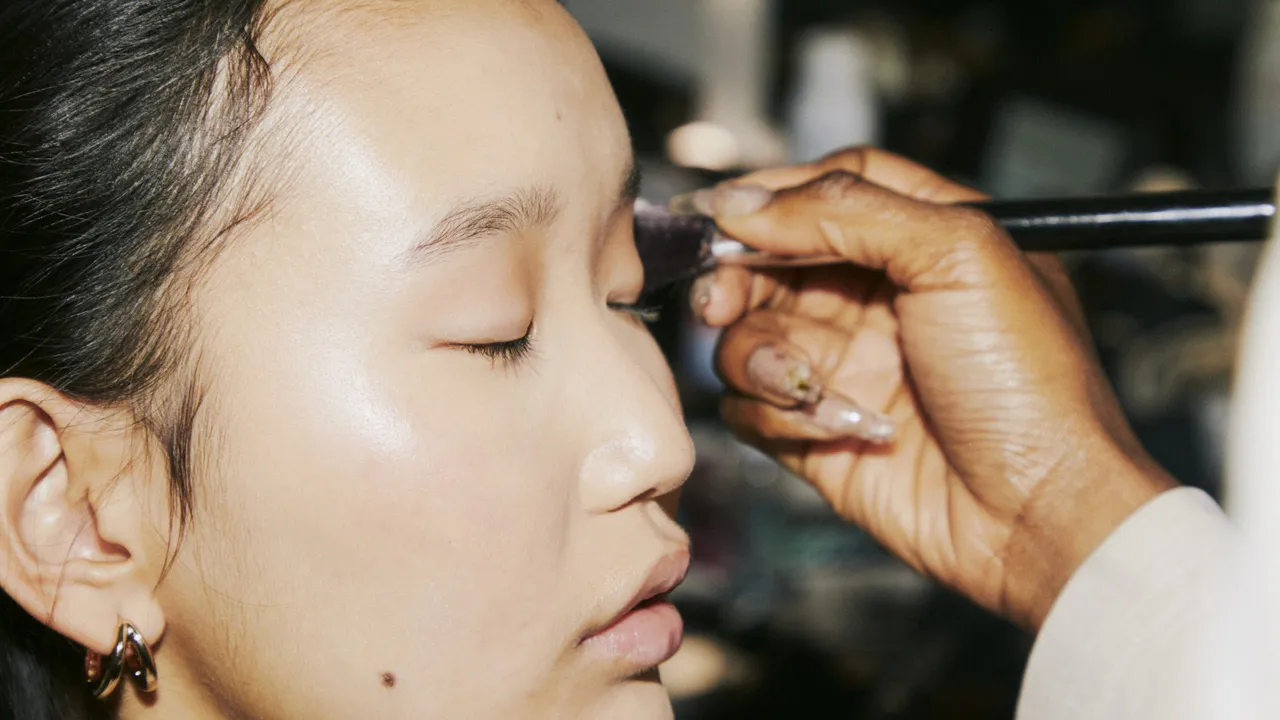
- Medium fluffy eyeshadow brush: It should be soft enough to blend but structured enough to place color without packing it on.
- Sheer or buildable powder or cream shadows: Pastels or soft neutrals work well for the watercolor eyeshadow technique.
- Mirror with good, indirect light: Essential for spotting uneven edges or areas that look too dense.
Since watercolor eyeshadow is about softness, skip ultra-opaque, stiff formulas that cling in patches. Sheer shadows make it easier to layer translucent color without crossing into heavy smoky territory, so you can adapt the look to any eye shape or skin undertone while still keeping that floaty, skin-like finish.
Step-by-Step: A Sheer Eyeshadow Tutorial for Watercolor Lids
Here’s the part you’d walk a friend through in front of a mirror: a simple, ordered routine you can repeat and tweak. Follow the steps in order, because each one sets up the next—skip the prep, and your veil of color either grabs too hard or fades too fast.
- Prep the lids with a thin layer of eye primer, then add the tiniest amount of concealer only where you want to even out discoloration so the natural skin quality still comes through.
- Load a medium fluffy brush with a small amount of shadow, then tap off the excess so you’re starting sheer, not opaque.
- Place color on the part of the lid where you want the most intensity—usually the center or slightly toward the outer third—using light, pressing motions.
- Without adding more product, use whatever shadow is left on the brush to softly feather the edges outward and upward, avoiding harsh lines.
- Repeat with a second light layer if needed, building a soft veil instead of aiming for full coverage in one pass.
- Add a touch more depth at a focal point, such as the outer corner or along the lower lash line, so the eye looks structured instead of unfinished.
- If using more than one shade, apply the next color adjacent to the first and blend only where they meet, keeping the colors distinct so they look melted together rather than fused into a muddy single shade.
- Check in the mirror and stop while the color still looks translucent and airier than a smoky eye, so it reads as a soft filter over the lid instead of a block of pigment.
The expected result is “a translucent wash of color across the lids” that feels cloudlike and airbrushed, where the skin shows through and the color seems to float rather than weigh down the eye. Done well, it looks more like a gentle filter over your eyes than a statement graphic look. This is where restraint matters: the watercolor eyeshadow technique is intentionally imperfect, so you are not chasing razor-sharp edges or maximum payoff; you are building a soft-focus mood.
Avoiding Muddy Color and Other Common Mistakes
Most problems with watercolor eyeshadow come from doing too much rather than too little. One big mistake is skipping any structure; if you only wash color everywhere without adding a focal point, “the eye can look unfinished rather than delicate.” A faint haze along the lower lash line or a touch more depth in the outer corner is enough to keep the look intentional without breaking the soft-focus vibe.
Another common issue is over-blending and over-layering. People keep touching the eye to make it look seamless, but eventually the color fades, turns gray, or loses its shape. To avoid muddy tones, test color combinations on the back of your hand; if they look gray or dirty where they overlap there, they will behave the same way on your lids. When using more than one shade, keep each one distinct and blend only at the borders so they appear melted, not completely fused. Remember, soft edges and visible skin are the goal, not a flawless gradient that hides every trace of your natural lid.
Why This Soft-Focus Makeup Trend Is Worth Trying
Watercolor eyeshadow is an easy entry point if bold color has always felt too intense on you. The transparency gives even bright shades a lighter, lived-in feel instead of an ’80s-style, packed pastel block. Because the color is sheer and diffused, it works across different eye shapes and skin undertones; pastels can look airy and ethereal, while softened taupe or warm terracotta deliver the same fluid, soft-focus effect in a more neutral palette. On days when harsh wings and sculpted smoky eyes feel overdone, a watercolor wash offers color and dimension without looking mapped out or high-effort. The main thing to watch for is knowing when to stop: once the lids look like they have a translucent, floating veil of color and the eyes appear softly defined, put the brush down and let the look stay relaxed.