
Battery Is No Longer the Foldable Compromise
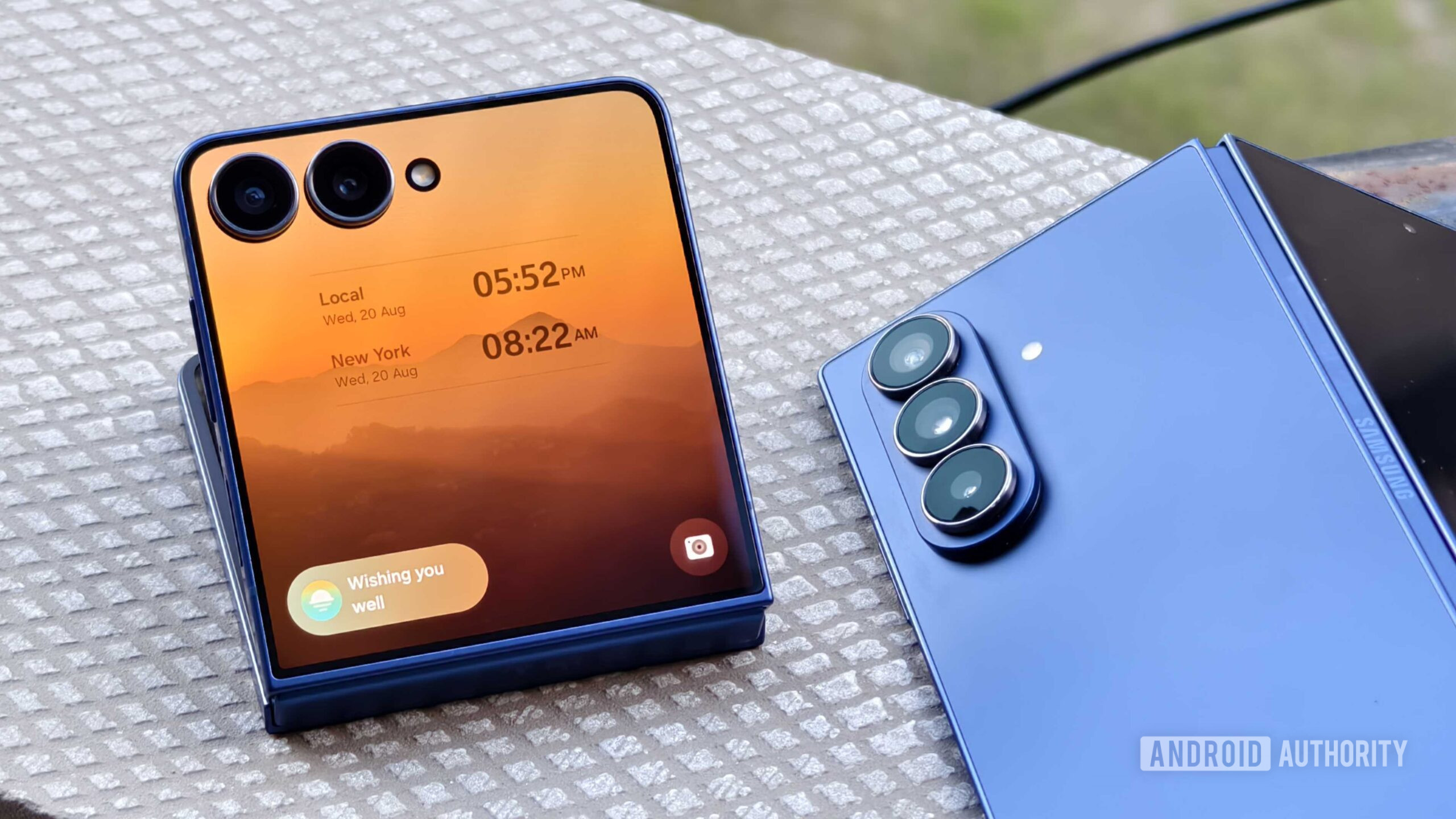
The Galaxy Z Fold 8 and Galaxy Z Fold 8 Ultra are upcoming book-style foldable phones whose officially listed battery endurance ratings signal a major generational step forward for foldable phone battery life, closing much of the gap with conventional flagships and promising longer, more dependable all‑day use for people who rely on large folding screens.
For once, the headline upgrade on a Samsung foldable is not a new hinge trick or camera gimmick, but raw stamina. European Product Registry for Energy Labeling (EPREL) entries spotted by a well‑known tipster show the Galaxy Z Fold 8 rated at 49 hours 10 minutes of endurance, while the Galaxy Z Fold 8 Ultra reaches 51 hours. The previous Galaxy Z Fold 7 was rated at 40 hours by the same methodology, so we are not talking about a marginal tweak but a sizeable jump that users will feel on day one. If you have avoided foldables because of battery anxiety, this is the first generation that looks ready to challenge that perception.
What the Official Ratings Tell Us About Real-Life Use
EPREL’s Battery Endurance rating is not some idealized lab loop; it mixes web browsing, video playback, streaming, gaming, voice calls, messaging, and standby in a unified test that every phone faces in the same way. That matters, because it turns the Galaxy Z Fold 8 battery gains from theoretical to practical. A move from 40 hours on the Fold 7 to 49 hours 10 minutes on the Fold 8 and 51 hours on the Fold 8 Ultra represents around a 20% improvement in foldable phone battery life under a use pattern that resembles everyday reality.
Yes, each of us abuses our phones differently, so your mileage will vary, particularly if you game heavily on the big inner screen. But when a standardized, mixed-usage test says both upcoming folds will offer "notably better battery life," that is strong evidence the upgrade will be obvious even to casual users. In plain terms: where a Fold 7 user might start rationing brightness by late afternoon, a Fold 8 owner should be far more comfortable stretching into the evening without hunting for a charger.
Bigger Batteries, Smarter Silicon: Why the Jump Is So Large
Samsung is not defying physics; it is finally respecting it. The Galaxy Z Fold 7 made do with a 4,400mAh battery. The new Galaxy Z Fold 8 bumps that to 4,800mAh, paired with 45W wired charging. The Fold 8 Ultra goes further with a 5,000mAh cell at the same 45W ceiling. On paper, those capacity jumps alone explain part of the roughly 20% EPREL endurance improvement. For heavy multitaskers who live on split‑screen apps, that extra capacity is the difference between worrying at 20% and coasting at 35–40% by night.
Hardware efficiency is the other half of the story. Both foldables are expected to run Qualcomm’s Snapdragon 8 Elite Gen 5 for Galaxy, a new generation chipset that should be more power efficient at a given performance level than what powered the Fold 7. When a larger battery is combined with a more efficient SoC, you get compounding gains: less energy wasted pushing pixels on those big panels, and more screen‑on time per charge. This is the kind of Samsung foldable upgrade that matters far more than another tiny design shave or a slightly brighter display.
Ultra: The Big-Screen Workhorse Foldable Users Have Wanted
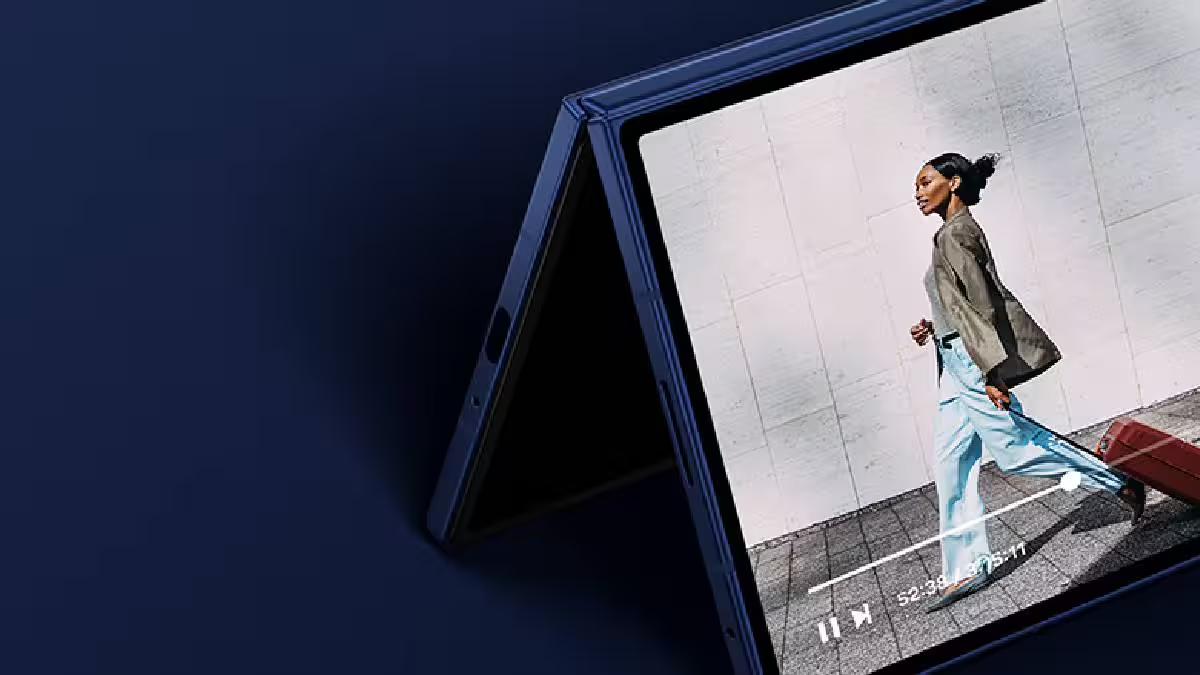
The Galaxy Z Fold 8 Ultra is where the numbers become most interesting for power users. It is tipped to include a larger 6.5‑inch cover display and an 8‑inch inner screen with a sharper 2504 × 2256 resolution, along with a 200MP main camera, 50MP ultrawide, 10MP 3x telephoto and dual 10MP selfie cameras. Normally, a bigger display and more capable camera stack are a tax on endurance. Here, the story is different because they are paired with a 5,000mAh battery and the same 45W charging speed as the standard model.
For productivity‑first buyers, this changes the equation. A nearly 8‑inch canvas that can survive long stretches of video calls, document edits, and media consumption without constant top‑ups turns the Ultra into a credible laptop‑lite companion rather than a fragile tech toy. According to the EPREL listing cited by Ice Universe, "the Galaxy Z Fold 8 Ultra can reach 51 hours" of endurance under the unified test scenario. That is exactly what an Ultra badge should mean: not only more features, but the battery headroom to use them without compromise.
Pricing, Positioning, and What Comes Next
Battery upgrades do not arrive in a vacuum; Samsung intends to sell this leap in endurance as part of a broader premium package. The Galaxy Z Fold 8 is reported to start at €1,999, while the Galaxy Z Fold 8 Ultra may start at €2,199, with RAM configurations up to 16GB and storage up to 1TB on the Ultra. Colour options also reinforce the two‑tier strategy, with the Fold 8 said to come in Graphite, Cream, Lavender and Pistachio, and the Ultra in Graphite, Cream, Violet Shadow and Green Shadow. Put simply, Samsung is framing the better battery as an integral part of its top‑shelf foldable story, not a footnote.
Officially, Samsung has not confirmed the full spec sheets yet, but both foldables are expected to be unveiled at the next Galaxy Unpacked event on July 22, with availability in global markets likely to follow soon after. If the EPREL data and leaked Z Fold 8 Ultra specs hold up, this will be the first time Samsung’s book‑style foldables feel less like early‑adopter experiments and more like dependable daily drivers. The big test now is simple: can real‑world owners replicate those endurance gains, and will rivals respond with similar battery‑first foldable phone designs? If they do not, the Fold 8 series may set a new baseline that other foldables struggle to match.