
What Studio Headphones Really Need to Do
A studio headphones comparison is the process of judging how different professional monitoring headphones balance isolation, accuracy, comfort, and practicality so engineers can make reliable mixing and tracking decisions in controlled listening environments. If you treat studio cans like fashion accessories, you miss the point. What matters is how they help you work. The HEDD HEDDphone D1 and Sennheiser HD 480 PRO answer the same brief—honest monitoring for serious audio work—but they march in from opposite sides: one as an open, speaker-inspired design, the other as a closed-back workhorse aimed squarely at tracking. In this mixing headphones review, the real question is not which is “better” in a vacuum, but which design philosophy fits your room, your sessions, and your tolerance for compromise.
HEDD HEDDphone D1: Open-Back Precision, Studio Cave Only
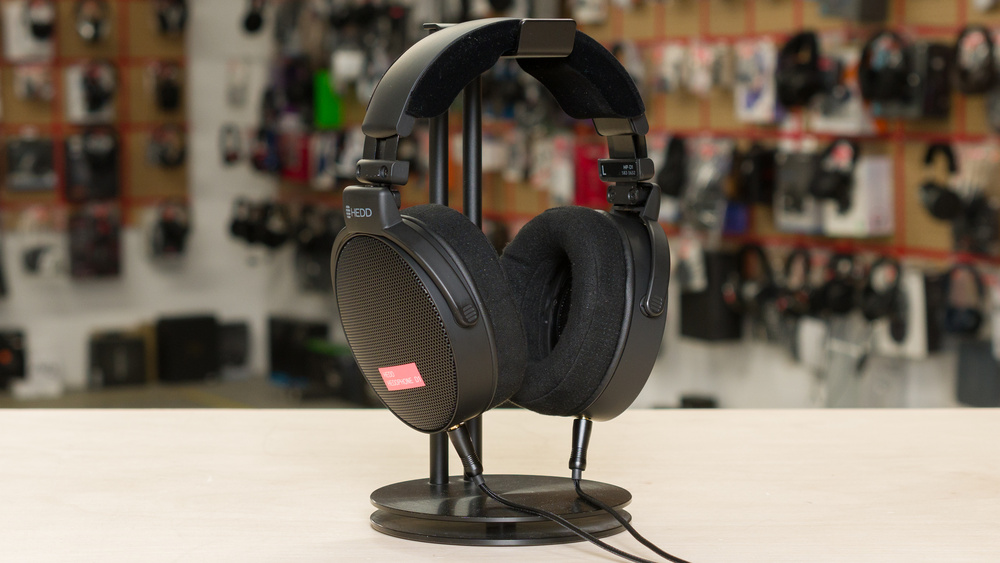
The HEDD HEDDphone D1 is the archetypal engineer’s toy: a headphone that behaves more like a nearfield speaker planted directly on your head. That ambition comes with a clear catch. Due to their open design, you are exposed to environmental noise, and they do not block much background sound; worse, they leak a lot of audio and can disturb anyone nearby. This alone makes them a poor choice for shared rooms, tracking spaces, or any situation where click tracks and cue mixes must stay inside the cups. In a quiet, controlled mix room, though, that same openness can be a strength. The lack of isolation and the leakiness are the price you pay for a spacious, unconstrained listening experience that aims squarely at mix and critical listening rather than multi-purpose studio duties.
Sennheiser HD 480 PRO: Closed-Back Control for Tracking
The Sennheiser HD 480 PRO take the opposite tack: control and containment first. Their closed-back design offers some passive attenuation, though it may disappoint listeners used to active noise cancelling. The key is their over-ear seal, which cuts a solid amount of treble noise and some midrange content, even if bass-heavy sounds like kick drums and bass guitars still break through. That balance is almost tailor-made for closed-back headphones tracking: the drummer hears enough of the room’s low-end energy to play naturally, but harsh cymbal and snare spikes are tamed. Importantly, they do not leak much audio, which is a real advantage when tracking quiet sources such as violins and trying to avoid cue-mix bleed into microphones. In other words, these cans are built to live inside live rooms and vocal booths, not only behind the console.
Isolation, Leakage, and the Reality of Shared Studios
Both headphones come with hard limits that matter more than any spec sheet. The HEDDphone’s open structure makes you susceptible to distractions, since they scarcely block background noise, and your mix leaks enough to annoy colleagues. In a shared studio, that is a workflow problem, not a minor flaw. The HD 480 PRO fix this by clamping sound inside the cups. Their passive isolation is not as strong as full-blown ANC, which can feel underwhelming if you live in consumer noise-cancelling headsets, but that is not their mission. What counts is that they meaningfully reduce upper-frequency spill from the room and keep your cue mix from pouring into the live mics. If you measure headphones by how well they fit into a busy, multi-room facility, the Sennheiser model plays far nicer with others.
Which Monitoring Tool Belongs in Your Workflow?
Treat these two not as interchangeable studio headphones, but as different tools built around different assumptions. The HEDDphone D1 assumes a silent, private environment where leakage is irrelevant and the priority is open, speaker-like listening for mix and critical evaluation. The HD 480 PRO assume a messier reality: drummers nearby, string players under microphones, singers in booths, and the ever-present risk of cue bleed. Their closed-back seal isolates enough external noise for accurate studio monitoring and tracking by cutting treble and midrange distractions, even if low-end rumble still sneaks in. The practical conclusion is simple: if your workdays are dominated by tracking and live-room chaos, the Sennheiser design aligns with that life. If your world is a quiet mix room where isolation is guaranteed, the HEDD approach makes far more sense.