

A gimbal camera phone that dares to look different
The Honor Robot Phone is a flagship gimbal camera phone that places a motorized 4D titanium alloy gimbal system on a mechanical arm above the chassis, using physical movement instead of software alone to stabilize video, track subjects, and reframe shots in ways fixed smartphone cameras cannot.
Honor is not just refreshing another glass slab; it is questioning the rules of mobile photography. In a market where most flagships argue over marginal sensor upgrades and algorithm tweaks, a motorized phone camera arm that rises, tilts, and spins is a deliberate provocation. The company has already confirmed that the device is complete, with CEO Li Jian stating that it is scheduled for a retail launch in the third quarter and that the hardware would be displayed at the World AI Conference on July 18. By opening pre-orders at that event, Honor is signalling that this design, not a slim profile or safe layout, is where it wants to stake its flagship identity.
Why a motorized 4D gimbal could change how we shoot
Honor’s decision to build a physical titanium alloy 4D gimbal into the Robot Phone is a direct challenge to the assumption that software stabilization is enough. The motorized neck deploys in 0.8 seconds and can rise, tilt, and rotate up to 360 degrees, allowing the camera to follow motion in real space instead of faking it frame by frame. For vloggers, parents filming kids, or anyone who has fought shaky clips, this aims to remove the need for a separate gimbal or bulky stabilizer rig.
Honor couples this with serious optics: a 200MP main sensor on the moving arm, a 50MP ultra-wide, and a second 200MP telephoto camera. That hardware, enhanced with film-grade color profiles from camera maker ARRI, shows an intent to bridge smartphone convenience and cinematic control. The message is clear: flagship camera innovation does not have to mean only bigger sensors and more AI filters; it can mean rebuilding how the camera itself moves and behaves in your hand.
Living with a robot phone: trade-offs and real-world benefits
There is a catch: this is not a phone for slim-device fans. Hands-on footage makes it clear that Honor sacrificed thinness to house the robotic arm and gimbal, prioritizing mechanical capability over pocket minimalism. Yet that compromise looks intentional. If the camera is the point of your device, the priority should be what it lets you shoot, not whether it disappears in skinny jeans.
Honor is also working to ensure that living with moving hardware does not become a maintenance nightmare. The company is offering a free 1-year gimbal replacement guarantee, letting users replace the movable robotic camera arm up to three times in a year at no cost. That warranty choice is as strategic as the design itself: it reduces anxiety about the most novel component and signals confidence in the engineering. Combined with Snapdragon 8 Elite Gen 5 performance, a 1.5K flat display, and 120W fast charging under the hood, the Robot Phone argues that you do not have to pick between experimental hardware and standard flagship muscle.
AI brains behind the moving camera
Honor is not treating the motorized gimbal as a gimmick bolted onto a standard software stack; it is pairing it with a more hands-off AI experience. In a public demo, Chief AI Officer Huang Fei used voice commands with the YOYO assistant instead of digging through menus. The assistant adjusted screen brightness, turned on an anti-motion sickness display mode, set an alarm, and booked a taxi, only asking for one final tap to confirm the ride. That kind of automation matters when you are using the camera on the move: fewer taps mean fewer chances to miss a moment while wrestling with settings.
Honor’s quote-worthy bet is this: “By handling the tracking mechanically, the device aims to eliminate the need for bulky external stabilizers.” The logic extends to software. If the phone can manage background tasks and keep you focused on filming, the whole system—AI plus 4D gimbal—feels less like a party trick and more like a deliberate tool for creators. In a flagship landscape that often slaps AI labels onto every feature, tying AI to the physical behavior of the camera gives Honor a more convincing story.
Pre-orders, perks, and what this means for flagship rivals
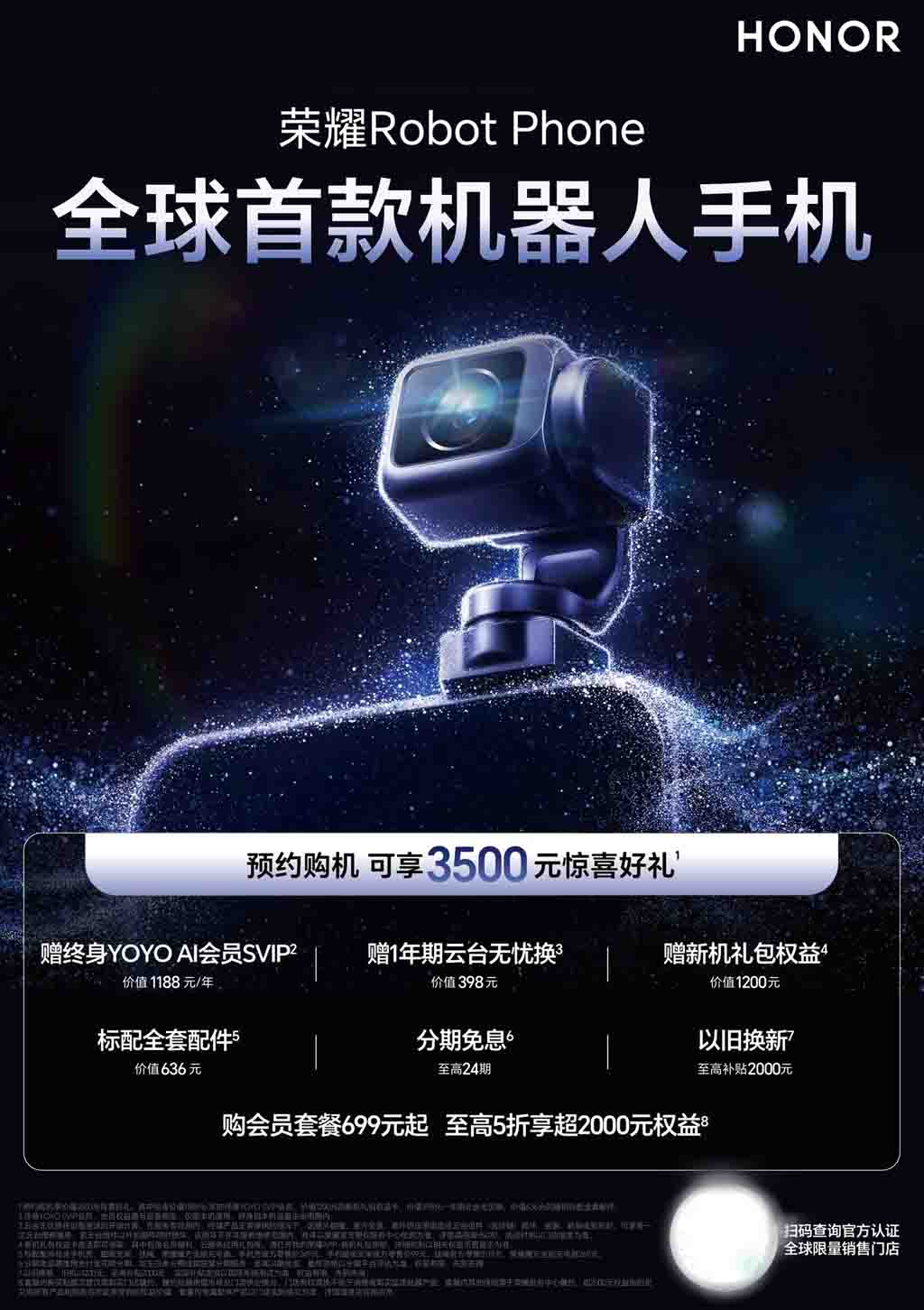
On the second day of the World Artificial Intelligence Conference, Honor opened pre-orders for what it calls the world’s first Robot Phone, signaling that this concept is ready for buyers, not just stage demos. The company hints at an August launch window, reinforcing its earlier Q3 retail timeframe. This is not a quiet release: interested customers can reserve through Honor’s official channels, gaining a mystery gift box worth 3500 yuan, a lifetime YOYO AI SVIP 2 membership worth 1188 yuan per year, and a special package of four extra benefits worth 1200 yuan.
Most telling is the safety net around the headline feature. Alongside the 1-year gimbal replacement guarantee, Honor allows up to three free replacements of the robotic camera arm in that period, and offers trade-in subsidies plus accessories valued at 636 yuan for the standard configuration. These incentives are more than marketing generosity; they are a push to lower the barrier to trying a new form factor. In a time when “In big 2026, smartphone designs rarely surprise us anymore,” Honor is using the Robot Phone to claim the role of differentiation leader in a crowded flagship market—and to dare rivals to rethink what a flagship camera phone can be.