

Neck rejuvenation deserves its own clinical playbook
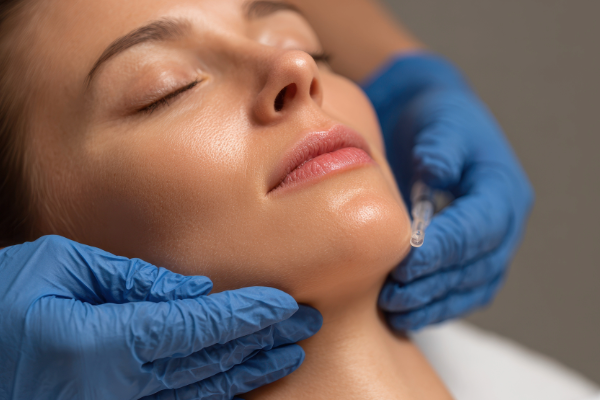
Neck rejuvenation treatment refers to targeted clinical strategies that address age-related changes in the skin, soft tissue, and underlying structure of the neck and submental area, aiming to restore contour, reduce heaviness or laxity, and harmonise the transition from face to chest while respecting the region’s distinct anatomy and function. Today, the central mistake in aesthetics is treating the neck as a mere extension of the lower face. Patients are increasingly aware that the area below the jawline often betrays age sooner than facial features, and they expect protocols built around its unique behaviour. Yet many treatment plans still focus on isolated wrinkles or pockets of fullness instead of the broader anatomical story. Professional education and clinical resources now emphasise up-to-date information across news, webinars, journals, reports and interviews, helping practitioners refine more specialised approaches for ordinary patients seeking realistic neck improvements.
Submental fullness: why single-technique thinking fails
Submental fullness is often framed as a simple fat problem, but that lens is too narrow for modern neck contouring. In clinical practice, fullness under the chin can involve adipose tissue, muscle tone, skin quality and even posture. When clinicians respond with one default device or injectable, they risk sculpting a sharper profile on paper while leaving patients dissatisfied in the mirror. A more effective stance is to treat submental fullness as a multi-factor condition that requires a multi-modal plan. This is where up-to-date educational content delivered through clinical news, webinars, journals, reports and interviews becomes practically important, giving practitioners current perspectives that they can translate into tailored protocols for everyday patients who want a more refined but believable jaw–neck transition rather than a photo-filtered profile that collapses under real-world lighting.
Facial bone resorption and the hidden drivers of neck change
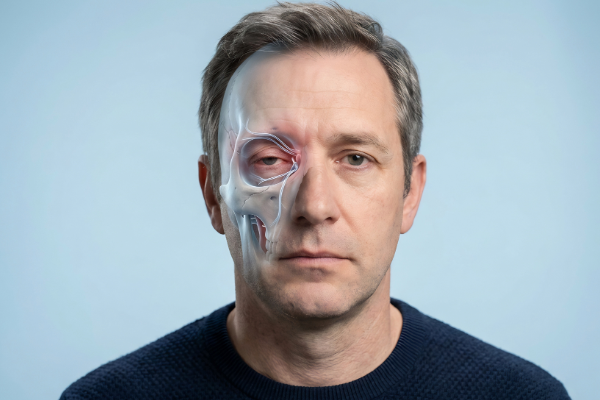
Visible neck aging is not only about what hangs; it is also about what disappears. Facial bone resorption shifts structural support over time, subtly changing the angle of the jaw and the platform on which neck tissues rest. Ignoring this process leads clinicians to chase surface laxity while the underlying framework keeps receding. Thoughtful neck rejuvenation treatment therefore has to be informed by an understanding of bony changes alongside soft-tissue dynamics. Clinicians who stay closely connected to current anatomical research through dedicated news, webinar updates, journal articles, reports and expert interviews are better placed to identify when contour issues stem from deeper support loss rather than superficial sagging alone. In practice, this mindset nudges treatment plans away from one-dimensional tightening and toward strategies that respect the evolving architecture of the lower face.
Comprehensive assessment and multi-modal practice
If the neck ages through intersecting changes in skin, fat, muscle and bone, then assessment has to be just as layered. A narrow focus on either submental fullness or skin crepiness misses the interaction between them. Clinically, the most convincing results arise when practitioners map the entire lower-face and neck complex, then match each finding with an appropriate modality instead of forcing every patient into the same template. Here, the practical impact of quality educational material is clear: up-to-date information shared via clinical news, webinars, journals, reports and interviews equips dermatologists and aesthetic doctors to combine techniques more confidently, rather than over-relying on a single familiar tool for every problem. This improves real-world outcomes for patients whose daily lives demand necks that look natural in motion, not only in still photographs.
The future neck: treating below the jawline as a priority zone
The neck is no longer a secondary concern tagged onto facial work; it is a priority aesthetic zone that deserves its own clinical logic. Submental fullness, changing neck contours and the quieter impact of facial bone resorption together argue for protocols built from anatomy outward, not from device marketing inward. Practitioners who commit to ongoing learning through structured news, webinars, journals, reports and interviews are better able to translate complex evidence into clear, personalised plans that matter to ordinary patients living with visible neck changes every day. The strongest opinion emerging in contemporary practice is straightforward: neck rejuvenation treatment done well is comprehensive and multi-modal, and any strategy that treats the area below the jawline as an afterthought will fall short of the aesthetic results patients now expect.