
Why last-generation full-frame mirrorless cameras are the smart buy
Last-generation full-frame mirrorless cameras are previous-generation bodies that pair proven high-resolution sensors, solid autofocus and strong build quality with substantial discounts, giving serious photographers professional camera value without paying for bleeding-edge features they may never use. The best buying move for most photographers today is the Nikon Z7 II: it delivers landscape-ready 45.7MP image quality, extensive weather sealing and a magnesium-alloy chassis while costing far less than current flagships. Compared with newer models that chase faster burst speeds, more complex autofocus and extreme video specs, the Z7 II focuses on what matters most to still photographers—files that look like they came from top-tier DSLRs such as the D850, but in a modern mirrorless package. In short, it’s the landscape photography camera that hits the sweet spot between professional results and full-frame mirrorless deals.
Nikon Z7 II: the go-to landscape and detail workhorse
If you shoot landscapes, architecture or studio detail work, buy the Nikon Z7 II before you even consider pricier current-gen bodies. Originally launched as Nikon’s unofficial flagship, it now sells for as little as USD 2,196 (approx. ₱123,000), and used prices start around USD 1,229 (approx. ₱69,000), which is outstanding professional camera value for a high-resolution full-frame mirrorless body. Its 45.7MP sensor delivers images comparable to the revered D850, backed by a weather-sealed magnesium-alloy body built for outdoor abuse. The trade-offs are clear and acceptable for this type of shooting: its last-gen autofocus trails systems in cameras like the Z8 and Z6 III, burst tops out at 10fps, and 4K/60p video uses a slight crop. Landscape photographers don’t need class-leading AF, lightning burst speeds or pro-grade video; they need dependable image quality, and the Z7 II nails it.
| Spec | Nikon Z7 II | Who it suits |
|---|---|---|
| Sensor resolution | 45.7MP full-frame | Landscape, architecture, studio detail |
| Body construction | Magnesium-alloy, extensive weather sealing | Outdoor photographers, travel shooters |
| Burst speed | Up to 10fps stills | Moderate action, events (not high-end sports) |
| Video | 4K/60p with slight crop | Hybrid shooters needing occasional high-quality video |
Canon EOS R5 and Nikon Z8: when you should pay more
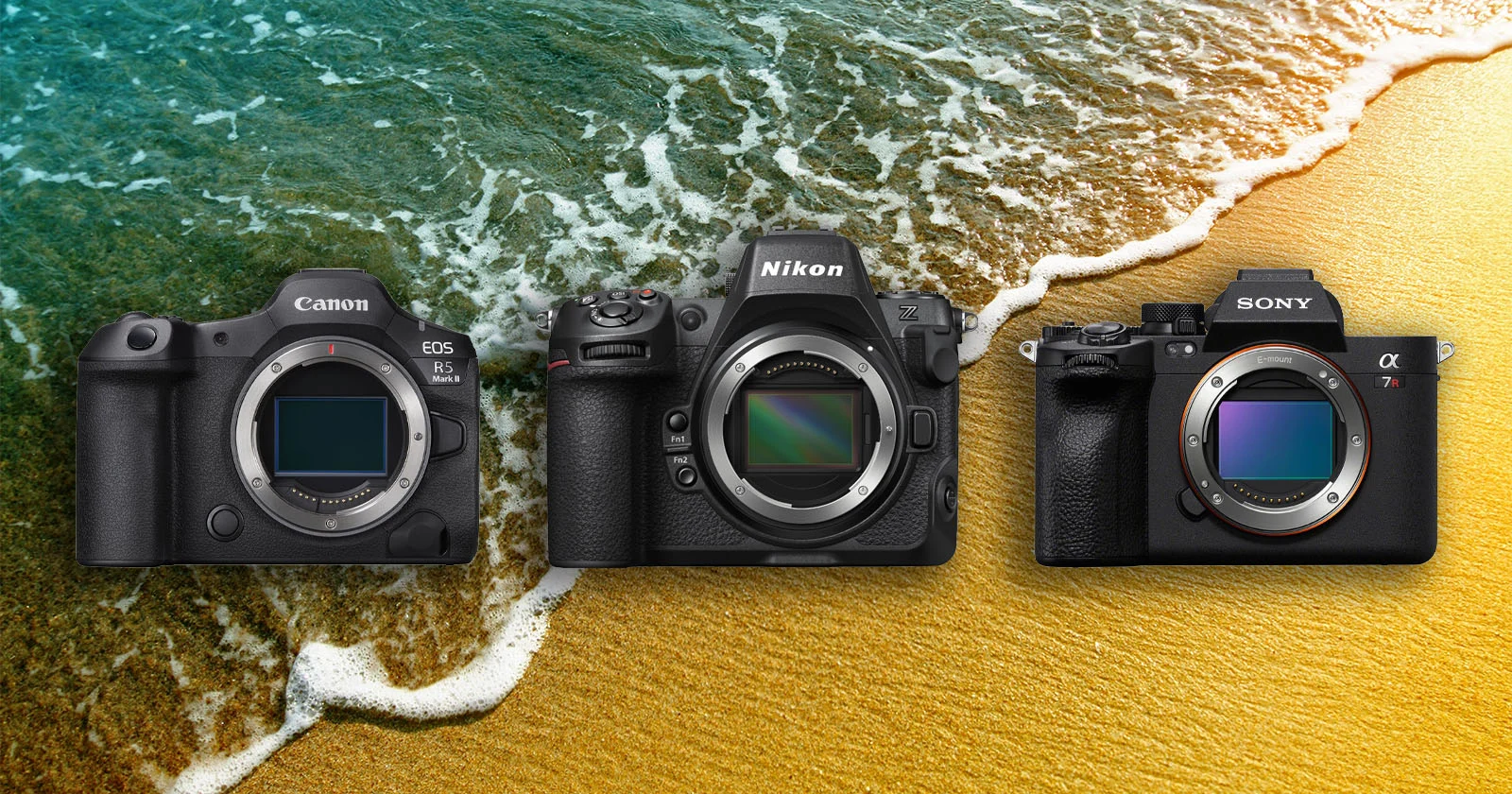
Not everyone can stay on last-generation gear. If you shoot fast action, wildlife or demand cutting-edge autofocus, stepping up to bodies like the Canon EOS R5 or Nikon Z8 makes sense. The EOS R5 is a 45MP full-frame mirrorless camera, currently available around USD 2,599 (approx. ₱145,000), thanks to a USD 700 discount—an example of full-frame mirrorless deals bringing advanced specs within reach. The Nikon Z8, also 45MP full-frame, is described as Nikon’s best camera for nearly all photographers and is about USD 600 off, at USD 3,696.95 (approx. ₱206,000), still high-end but able to “do it all.” These bodies add superior autofocus tracking, higher burst rates and advanced video that action specialists and hybrid shooters will use daily. If you don’t need that speed or those video tools, the Z7 II remains the smarter landscape photography camera and general stills choice.
Sony a7R V and other last-gen deals for portraits and hybrid work
Sony’s lineup shows how last-generation bodies become excellent mirrorless camera deals once their successors hit shelves. The 61MP a7R V has been pushed down in price by the newer a7R VI and now sits around USD 3,298 (approx. ₱184,000), USD 500 off its regular price. For many photographers—especially landscape and portrait shooters—the a7R V offers plenty of resolution and capable autofocus, making it a strong alternative to paying more for the very latest sensor. Similarly, the Sony a7 IV has benefited from the arrival of the a7 V: with a 28–70mm kit it’s available for USD 2,198 (approx. ₱123,000), USD 500 off and even USD 700 less than the newer a7 V body alone. A concise takeaway: if you match your actual shooting needs to what last-generation bodies deliver, you avoid overspending on cutting-edge specs you won’t use and stretch your budget into better lenses instead.
How to match your shooting needs to the right generation
The single biggest mistake in any camera buying guide is chasing specs instead of identifying how you shoot. One photographer weighed the Nikon Z7 II against the Z8 and chose the Z8 only because their work centers on sports and wildlife, where newer autofocus and speed matter more. For many serious shooters, however, high-resolution stills, reliable autofocus, good build quality and sensible burst rates cover everything. Last-generation bodies like the Z7 II were near-flagships at launch and now cost far less while maintaining strong sensors and dependable performance. Add current mirrorless camera deals—multiple high-quality cameras across brands discounted by USD 400–700 or more—and professional-grade gear becomes accessible to photographers on tighter budgets. According to one source, “That’s a very good price indeed for a high-resolution, full-frame mirrorless camera,” which neatly sums up why skipping the flagship is often the smarter move.
- Buy the Nikon Z7 II if you prioritize high-resolution stills, landscape work and outdoor reliability over the fastest autofocus and bursts.
- Skip the Nikon Z7 II if your main subjects are fast sports or wildlife that demand Nikon’s latest autofocus systems and higher continuous shooting speeds.
- Buy the Canon EOS R5 if you want a discounted current-gen hybrid body with 45MP full-frame quality and advanced video features at a lower price than its successor.
- Skip the Canon EOS R5 if you won’t use its advanced AF, burst or video tools and would rather save money on a more focused stills camera.
- Buy the Nikon Z8 if you need an all-rounder that is described as Nikon’s best camera for nearly all photographers and can genuinely "do it all."
- Skip the Nikon Z8 if its high-end pricing still stretches your budget and your work doesn’t require its top-tier autofocus and speed.
- Buy the Sony a7R V if you shoot portraits or landscapes and want high resolution plus capable AF, now made more affordable by newer models.
- Skip the Sony a7R V if you rarely print large or crop heavily and could put the savings from cheaper last-gen bodies toward lenses or travel instead.