
A Definition of Leica’s New Flagship Mirrorless Ambition
The Leica SL3-P is a full-frame mirrorless camera built around a 45.8MP BSI sensor, 40fps burst shooting, and 8K open gate video, launched alongside new 50mm and 100mm L-Mount prime lenses to position the L-Mount ecosystem as a serious alternative to mainstream Sony and Canon systems for professional stills and video creators. This is not a niche luxury body; it is Leica’s first “can-shoot-anything” camera, designed to move the brand from prestige accessory to practical workhorse in the bags of working photographers and hybrid filmmakers. Leica’s key bet is straightforward: match the headline performance of established full-frame mirrorless leaders while retaining the minimalist, all-metal design and distinctive color rendering that keeps the brand desirable. On paper, the Leica SL3-P specs read like a direct answer to complaints that Leica cameras are beautiful but slow, limited, or too focused on stills. Here, speed, resolution and video are treated as equal priorities, not afterthoughts.
Performance: 45MP, 40fps and 8K Open Gate Are No Longer a Luxury Side Show
If you strip away the logo mystique, the SL3-P’s appeal lives in its performance envelope. The camera uses a 45.8MP full frame BSI CMOS sensor (44.9MP effective) with hybrid autofocus — 315 contrast-detect points and 819 phase-detect points — plus 5-axis stabilization rated at 5 stops. Continuous shooting hits 40fps with autofocus using the electronic shutter, and 7fps with autofocus on the mechanical shutter, putting this full-frame mirrorless camera into the same speed conversation as sports-oriented bodies from Japanese rivals. The headline, however, is 8K video recording. Leica calls this its most video-centric camera yet, and the SL3-P offers 8K 24p open gate, 10-bit 4:2:0 capture, with 8K RAW open gate shooting that outguns several well-known hybrid competitors. In practical terms, open gate 8K gives creators room to reframe, crop to different aspect ratios, and deliver high-detail masters while keeping one sensor mode for everything. According to one review, it is “the first can-shoot-anything camera that Leica has ever produced,” a rare admission that video is now a first-class citizen in Leica land.
Minimalism Meets Machismo: Design, Handling and Real-World Output
Leica has doubled down on its minimalist design philosophy while quietly admitting that professionals need more than pretty metal. The SL3-P is the third full-frame mirrorless camera in the SL3 range, but unlike its siblings, it drops the iconic red dot on the front, giving a stealthier look that suits documentary and commercial shooters who care more about attention to their subjects than to their gear. The body keeps an all-metal build, IP54 weather sealing, 5.76M-dot EVF with up to 120fps refresh, a 3.2-inch 2.33M-dot LCD, and dual card slots (CFexpress Type B plus SD UHS-II), along with HDMI, headphone, microphone, timecode, USB-C, WiFi, and Bluetooth 5.0. Only four buttons carry labels — Play, Function, Power, and Menu — leaving everything else assignable. This is both the camera’s charm and its risk: experts can shape the SL3-P into a streamlined tool, while newcomers may find the blank controls confusing. Yet in extensive field testing, one reviewer shot around 3,500 images and praised the output, noting that color science and the interaction between DNG RAW files and SL lenses made images look better straight out of camera than expected. This combination of austere design and muscular performance gives the camera a kind of machismo that feels deliberate rather than ornamental.
New 50mm and 100mm L-Mount Primes: Serious Glass for Serious Work
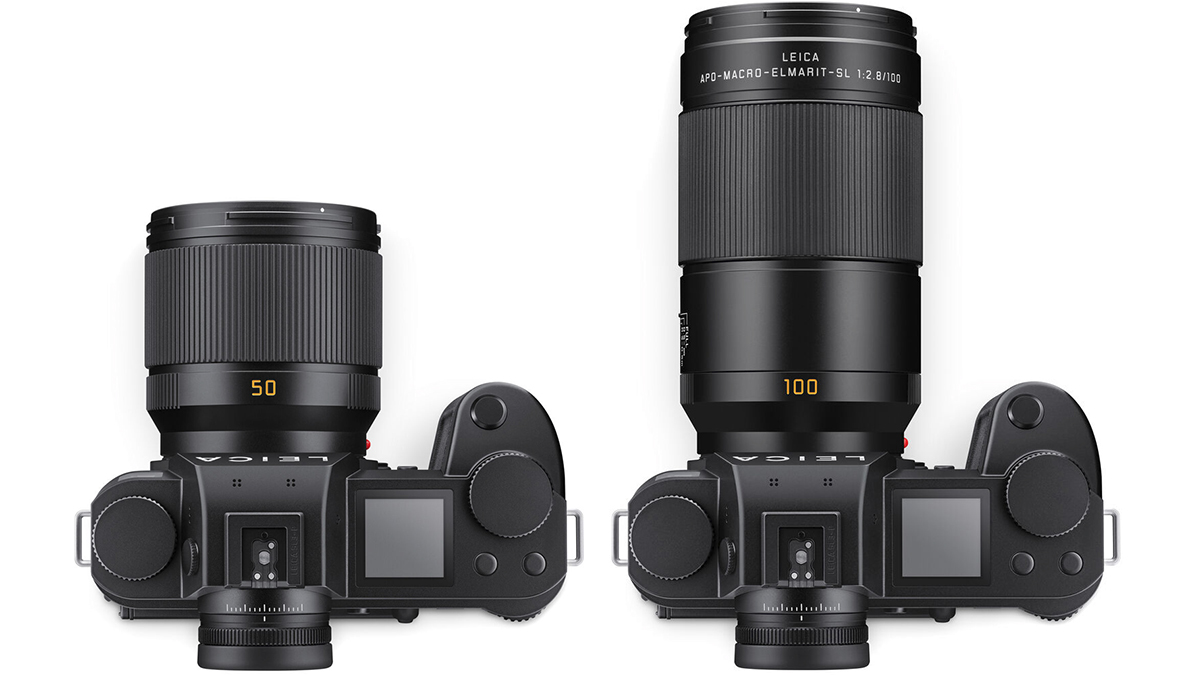
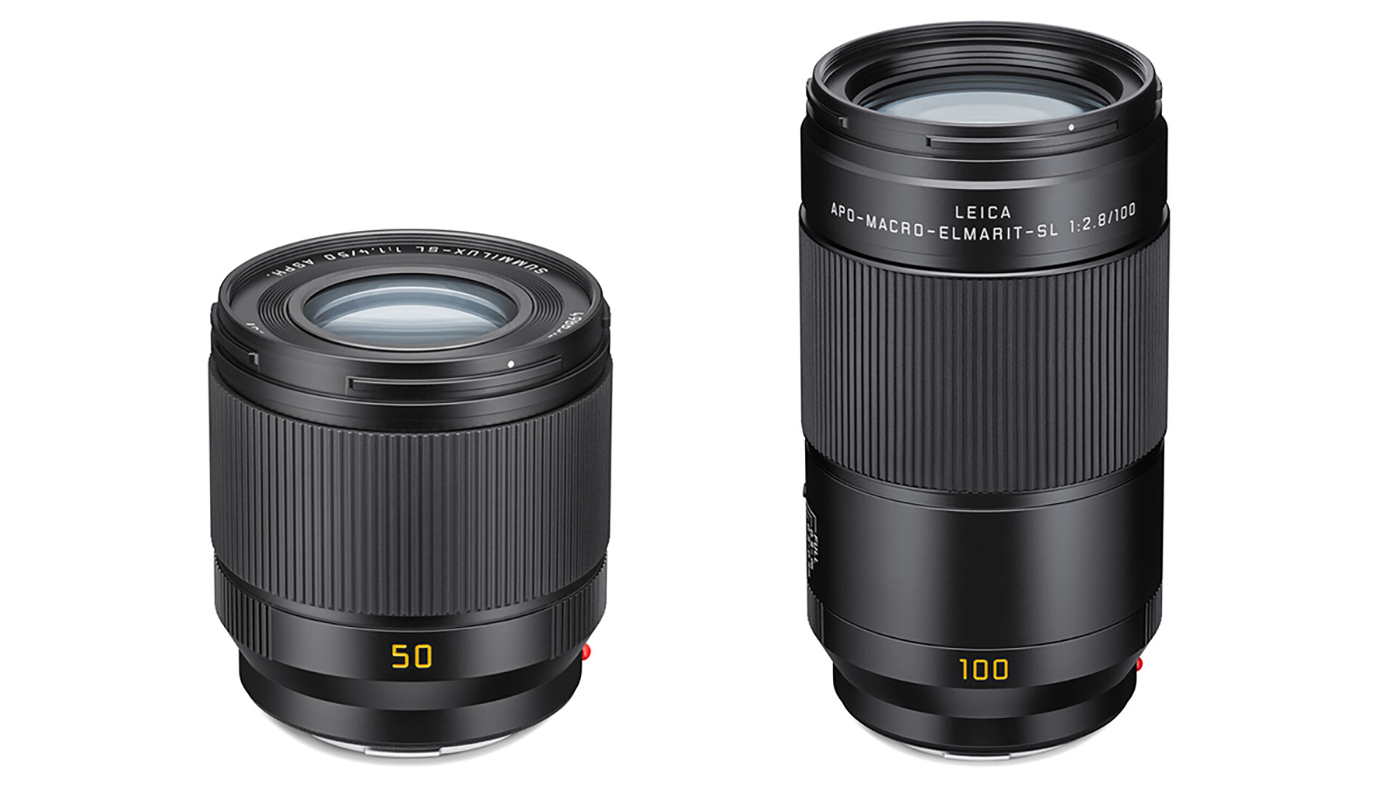
Leica’s launch strategy makes clear that the SL3-P is not meant to stand alone. Alongside the camera, the company introduced two new full-frame L-Mount lenses: the Summilux-SL 50mm f/1.4 ASPH. and the APO-Macro-Elmarit-SL 100mm f/2.8, both designed to expand the creative options available to L-Mount shooters. Leica describes the Summilux-SL 50mm as the world’s most compact autofocus lens at this focal length and maximum aperture, at around 75.5mm in length and 74mm in diameter. Despite the compact dimensions, it uses a full-metal body and weighs about 584g, with dust and water resistance to IP54 and AquaDura coating for extra protection. Optically, the 50mm builds on 11 elements in six groups, including two aspherical elements, with a Voice Coil Motor drive for fast, quiet autofocus and an 11-bladed iris to deliver smooth bokeh. The APO-Macro-Elmarit-SL 100mm f/2.8 nods to the classic APO-Macro-Elmarit-R 100mm from 1987, adding 17 elements in 12 groups and true 1:1 macro capability with a close focus distance of 30cm. Its full-metal body weighs about 862g, with a length of 137.6mm and a 67mm filter thread, and Leica says the eight-bladed aperture works with the optical design to create a “harmoniously rendered background.” Both lenses are scheduled to be available from the end of 2026, which signals ongoing commitment to rounding out the L-Mount ecosystem rather than treating it as a side project.
Where the SL3-P and L-Mount Sit Against Sony and Canon – and What Happens Next
For years, the common critique was that Leica’s full-frame mirrorless cameras were beautiful but lagged behind Sony and Canon in autofocus speed, burst rates, and video depth. The SL3-P takes direct aim at that narrative. With AI-assisted autofocus, 40fps bursts, and 8K open gate video recording, it now sits in contention with high-end hybrid bodies from Canon, Nikon, and Sony rather than comfortably outside that race. This matters because professional buyers increasingly judge systems by how well they handle both stills and video; a luxury brand that cannot keep up on spec sheets risks being seen as a secondary, indulgent toy. The pricing reflects Leica’s attempt to balance aspiration and practicality. The SL3-P body is listed at USD 6,690 (approx. ₱374,000), positioned between the lower-resolution SL3-S at USD 5,665 (approx. ₱317,000) and the 60MP SL3 at USD 7,485 (approx. ₱419,000). Meanwhile, the Summilux-SL 50mm f/1.4 ASPH. is priced at USD 4,950 (approx. ₱277,000), and the APO-Macro-Elmarit-SL 100mm f/2.8 at USD 2,700 (approx. ₱151,000), with both primes due at the end of 2026. For a brand known for opulent pricing, one reviewer even remarked that the SL3-P was not as expensive as expected, noting that some Japanese hybrid mirrorless cameras reach similar levels. The practical impact for ordinary users is clear: those who adopt the SL3-P gain a camera that can shoot sports at 40fps, capture detailed 45MP stills, and record 8K open gate video in a single, cohesive package, all backed by a growing catalog of L-Mount lenses tailored for serious work. The images and footage promise more than technical perfection; they offer the recognizable Leica look with the speed and flexibility modern workflows demand. In conclusion, the SL3-P marks a pivot point: Leica is no longer content to be the boutique option on the sidelines. With this body and the new L-Mount lenses, it has stepped onto the same playing field as Sony and Canon — and, for once, it seems determined to compete rather than merely inspire.