
More Focal Lengths, Fewer Compromises: The New Lens Arms Race
The current wave of cinema lens releases shows manufacturers racing to expand focal length options, from ultra-wide primes to specialized zooms and mount adapters, so professional filmmakers can match lenses precisely to modern production demands instead of accepting one-size-fits-all glass. That shift is visible in Sirui’s growing Vision Prime Series, Fujifilm’s wider GF cinema zoom lenses, and P+S Technik’s HEXAMO system for Leitz HEKTOR primes on ARRI ALEXA bodies, all aimed at filling long-standing gaps in real-world shooting kits.
The key takeaway is simple: lens makers now treat missing focal lengths and mount limitations as strategic problems to solve, not as quirks users must work around. That mindset favors crews who mix formats, swap cameras mid-project, and care more about a specific look than about staying locked into one ecosystem. It also raises the bar for what “complete” means in prime lens expansion and cinema zoom lenses—sets and zoom ranges can’t stop at safe mid‑range choices anymore.
Sirui’s Vision Prime Expansion: From Trio to True Working Set
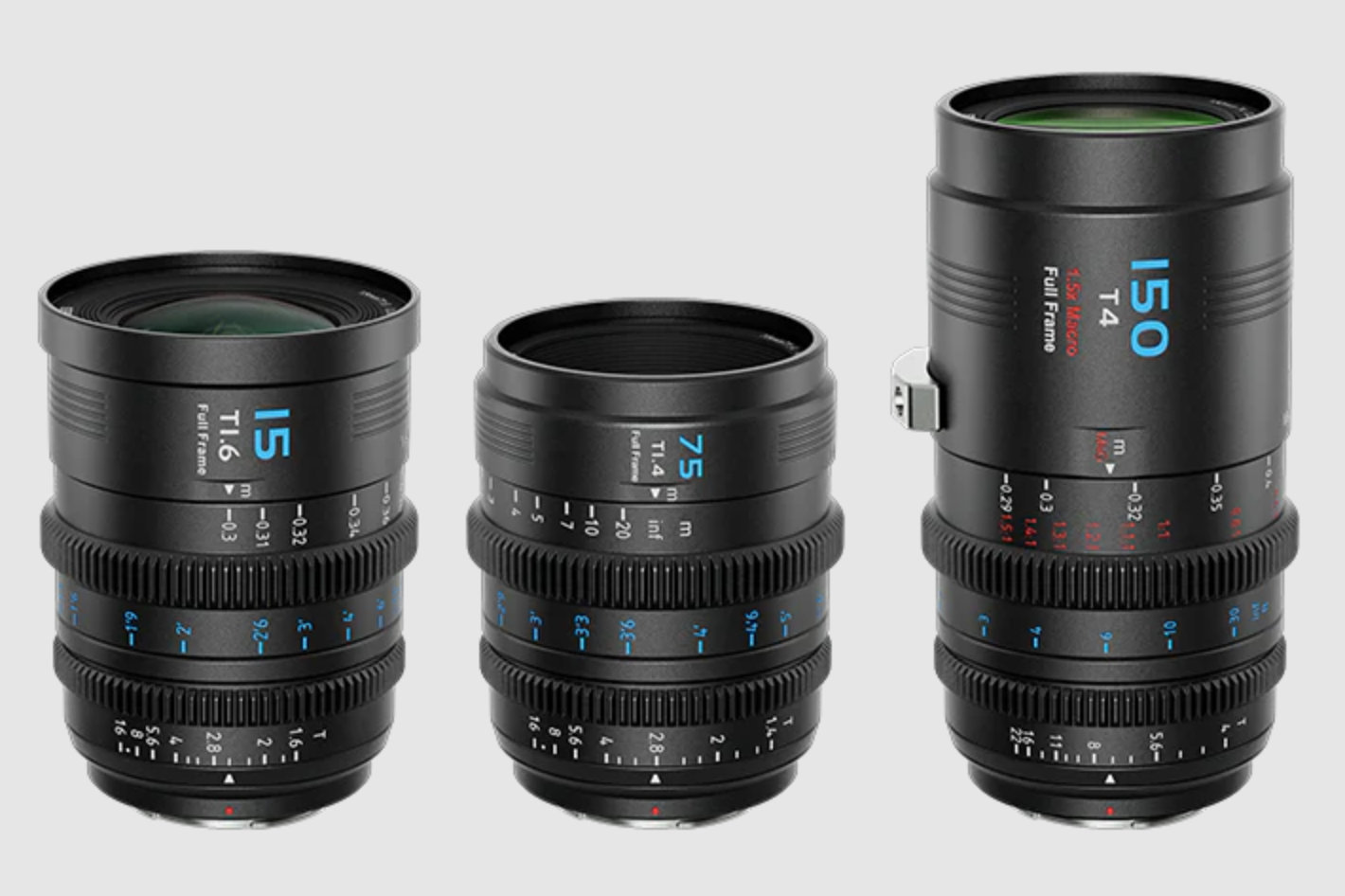
Sirui’s Vision Prime lineup is the clearest sign that prime lens expansion has become a competitive mandate, not a niche experiment. The series grows from an original 24/35/50mm T1.4 trio to six lenses, adding a 15mm T1.6, 75mm T1.4, and 150mm T4 1.5x Macro, covering ultra-wide through medium telephoto shooting. That range turns what was a promising three‑lens set into a more practical toolkit that can follow a narrative from sweeping establishing shots to compressed close‑ups and macro inserts without changing systems.
The artistic intent behind each focal length matters. The 15mm T1.6 offers a 109.3° diagonal full‑frame field of view, with a fast aperture and 0.3m minimum focus distance to create layered bokeh on an ultra‑wide—a look previously reserved for much pricier glass. The 75mm T1.4 aims squarely at portrait and commercial work, with telephoto compression and smooth subject isolation for narrative shorts and advertising. The 150mm T4 1.5x Macro is the outlier and arguably the boldest move: a “dual‑purpose telephoto macro prime rare in lightweight cine optics,” capable of a 1.5x reproduction ratio and a 0.29m minimum focus distance for macro details while still delivering distant wide shots and intimate character close‑ups.
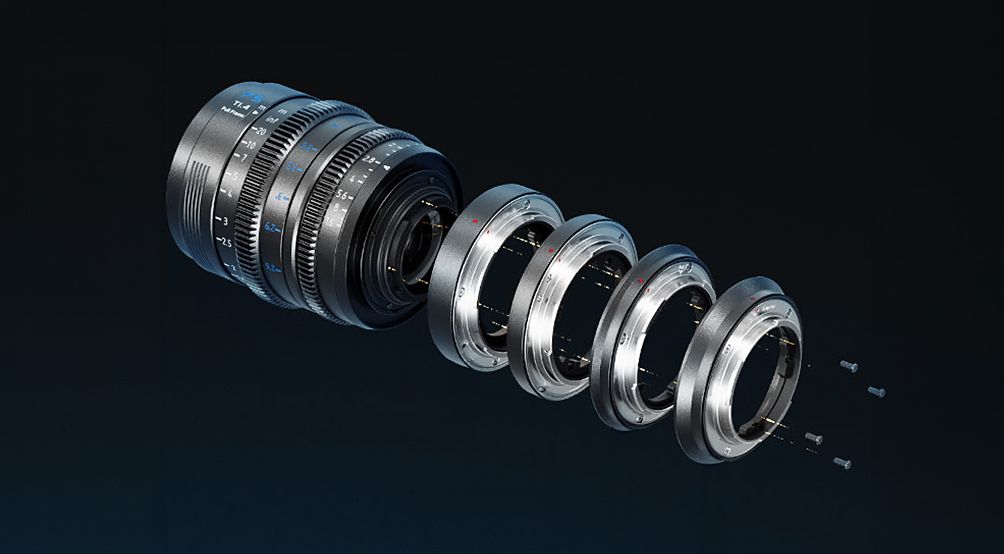
From a workflow standpoint, Sirui’s interchangeable mount system is the practical story. Native Sony E-mount is standard, but RF, Z, and L modules are included and require no shims, so crews can move these professional video lenses across mainstream full‑frame and S35 cinema cameras without painful re‑rigging. The full set is marketed as cost‑efficient and versatile for multi‑camera, cross‑brand productions, which is exactly where lens choice has traditionally been constrained. With prices of USD 549 (approx. ₱31,000) each for the 15mm T1.6 and 75mm T1.4, USD 649 (approx. ₱36,600) for the 150mm T4 1.5x Macro, and a three‑lens kit at launch for USD 1,499 (approx. ₱84,400), Sirui is clearly betting that an affordable yet complete focal range will win over owner‑operators and smaller rental houses.
Fujifilm’s GF19–35mm: Ultra-Wide Cinema Zoom for Large Format
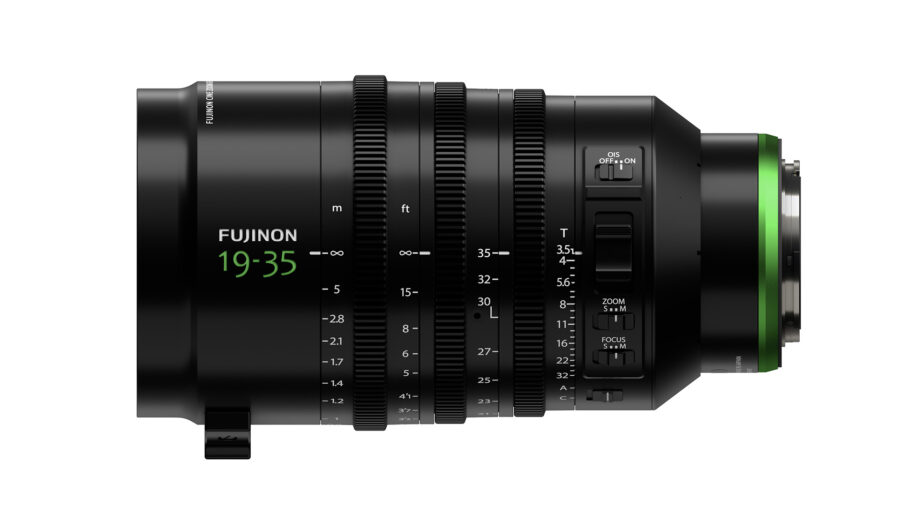
On the large‑format side, Fujifilm is answering a different gap: the lack of wide cinema zoom lenses for its GF format. The company has expanded its GF cinema zoom line with the FUJINON GF19-35mmT3.5 PZ OIS WR, the second motorized power zoom lens purpose‑built for the GFX System and the widest angle of view yet available in GF format. Covering 19–35mm (equivalent to 15–28mm in full frame) with a constant T3.5 aperture, built‑in optical image stabilization, and internal servo control of focus, iris, and zoom, it enters the market at USD 5,499.95 (approx. ₱310,000) with availability from July 23, 2026.
This lens is more than a spec sheet update; it redefines what a wide‑angle anchor looks like for the GF line. Until now, the system offered only the GF32-90mm T3.5 PZ OIS WR as a standard cinema zoom covering large‑format sensors, and commentators called for wider and longer options. The new GF19-35mm slots directly above that lens as the ultra‑wide partner, designed to work as a matched pair so crews can swap between wide and standard coverage without shifting matte boxes, follow‑focus units, or lens motors. According to one report, that interchangeability is “a genuine practical advantage rather than a marketing line” for run‑and‑gun and documentary work, where minimizing rig changes is critical.
Inside, the GF19-35mm uses 23 elements in 15 groups, with four ED and three aspherical elements to suppress aberrations across the zoom range while holding the constant T3.5 aperture. The lens inherits optical performance ideas from Fujifilm’s Premista series of large‑format cinema zooms, including a 13‑blade iris for rounded bokeh, Nano GI coating to reduce flare and ghosting, and internal construction aimed at limiting focus breathing. Critically, it maintains coverage of the Open Gate mode on the GFX ETERNA 55, currently the only body supporting full motorized power zoom control, with support for additional GFX series mirrorless cameras planned via firmware updates. For large‑format shooters, this is the first sign that wide‑angle cinema zoom lenses for the system will not be an afterthought.
HEXAMO: Adapters Grow Up and Become System Decisions
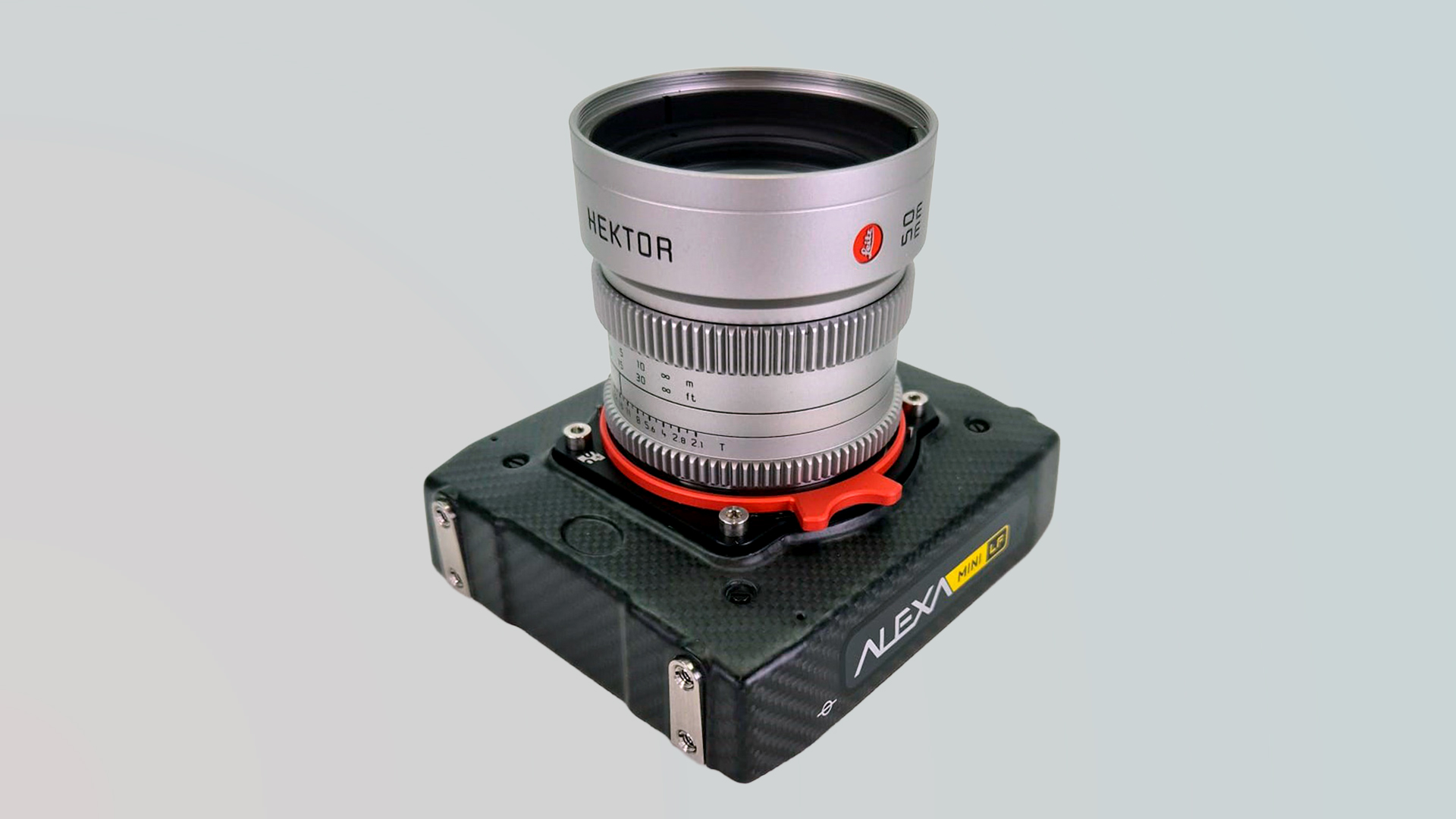
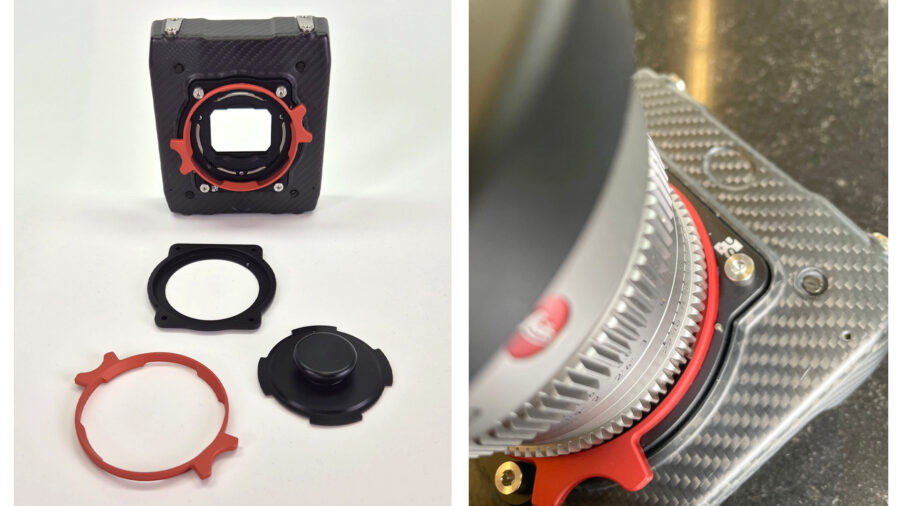
If Sirui and Fujifilm are filling focal length gaps with new glass, P+S Technik is tackling a different bottleneck: mount and flange distance. The company has introduced HEXAMO, a dedicated mount system that enables Leitz HEKTOR Cine Prime lenses to be used on the ARRI ALEXA platform. The HEKTOR primes were developed for modern mirrorless camera systems with short flange focal distances, which means conventional adapters place them too far from the sensor on an ALEXA, blocking infinity focus. HEXAMO is an answer to that optical geometry problem, not a generic piece of hardware.
The goal is clear: combine the image character of the Leitz HEKTOR series—smooth focus roll‑off, organic rendering, distinctive flares—with the established ARRI ALEXA platform that dominates many high‑end productions. For cinematographers, rental houses, and productions already invested in ALEXA bodies, HEXAMO offers access to that look without shifting to a mirrorless camera body or abandoning existing accessories and workflows. Technically, the original ALEXA mount block is removed by loosening four screws and replaced with a specially developed low‑profile mount, creating the needed flange depth. Each HEKTOR lens then receives a precision‑machined three‑part rear interface, replacing the original rear mount and forming the mechanical counterpart to HEXAMO, after which each lens is calibrated.
HEXAMO is not a casual purchase—pricing is not listed publicly, and information on supported ALEXA models, conversion options, lead times, and reversibility is available only on request. That alone signals that the system is aimed squarely at serious users who see lens character as part of their brand. The bigger implication is that high‑end adapters are turning into system‑level upgrades, not afterthoughts for hobbyists. When one mount solution can unlock an entire family of professional video lenses on a flagship cinema platform, the line between “native” and “adapted” glass starts to blur.
Where This Leaves Filmmakers: A New Standard for Lens Choice
Taken together, these moves show a lens market that finally respects how fragmented modern productions are. Sirui’s expanded Vision Prime Series turns an affordable prime trio into a full‑range set covering ultra‑wide, portrait, and macro‑telephoto needs across multiple mounts. Fujifilm’s GF19–35mm widens the large‑format GF ecosystem with a dedicated ultra‑wide cinema zoom that pairs intelligently with its existing standard zoom lens. P+S Technik’s HEXAMO treats the desire to mix Leitz HEKTOR primes with ARRI ALEXA cameras as a solvable engineering challenge, not a fringe request.
For filmmakers, the practical impact is straightforward: fewer compromises when choosing focal lengths, less friction when combining camera systems, and more respect for the specific look of a lens as part of the creative palette. The burden now shifts toward productions to be more deliberate. With specialized cinema lens releases, prime lens expansion, and smarter adapters on the table, sticking to an incomplete kit is no longer a technical limitation—it is a choice. The winners will be those who build lens lineups that serve the way they shoot, not the way manufacturers used to ship their boxes.