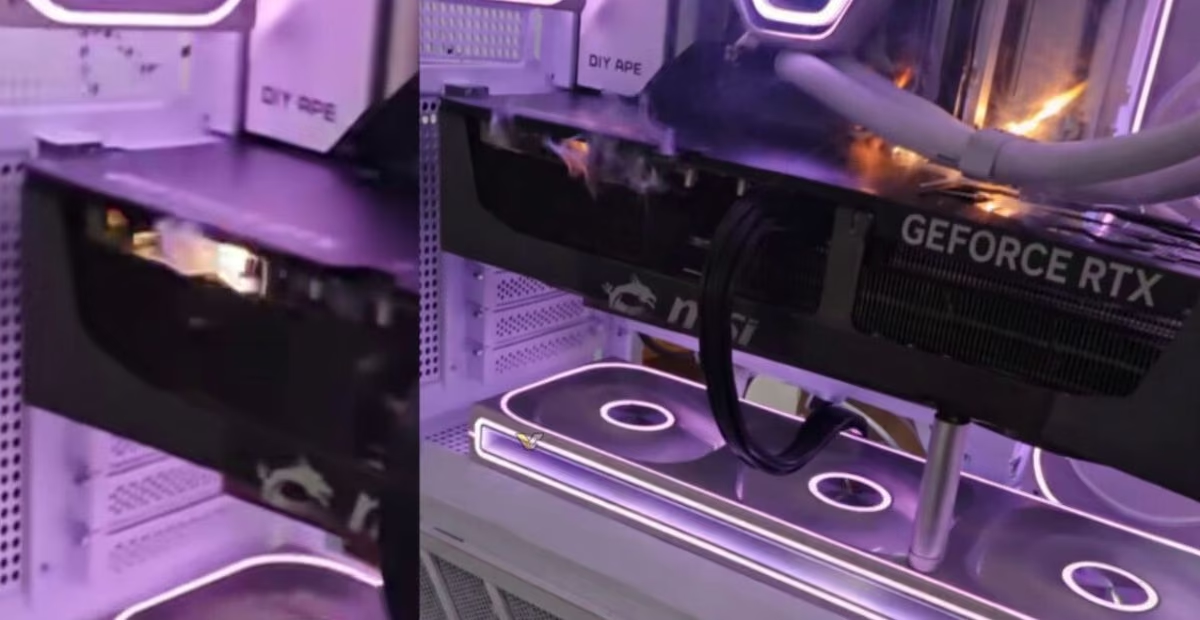

Hotspot monitoring: the metric NVIDIA tried to hide
RTX 50 hotspot temperature monitoring is the practice of tracking the hottest point on a GPU die, a sensor reading that reveals localized thermal stress, throttling risk, and cooling defects far better than a single average core temperature value can ever show for modern graphics cards.
NVIDIA’s decision to conceal the NVIDIA hotspot sensor readings on RTX 50-series drivers did not remove the hardware; it removed transparency. When the series launched, reviewers saw hotspot readings misreported or missing in tools like HWiNFO and MSI Afterburner, before realizing the option to monitor hotspot temps had been removed at the driver level. In other words, RTX 50 cards still measure hotspot temperature; users simply were not allowed to see it. For overclockers, system builders, and repair shops, that is not a minor omission. It directly undermines GPU thermal monitoring, hides RTX throttling detection signals, and turns a vital safety gauge into an internal-only diagnostic feature.
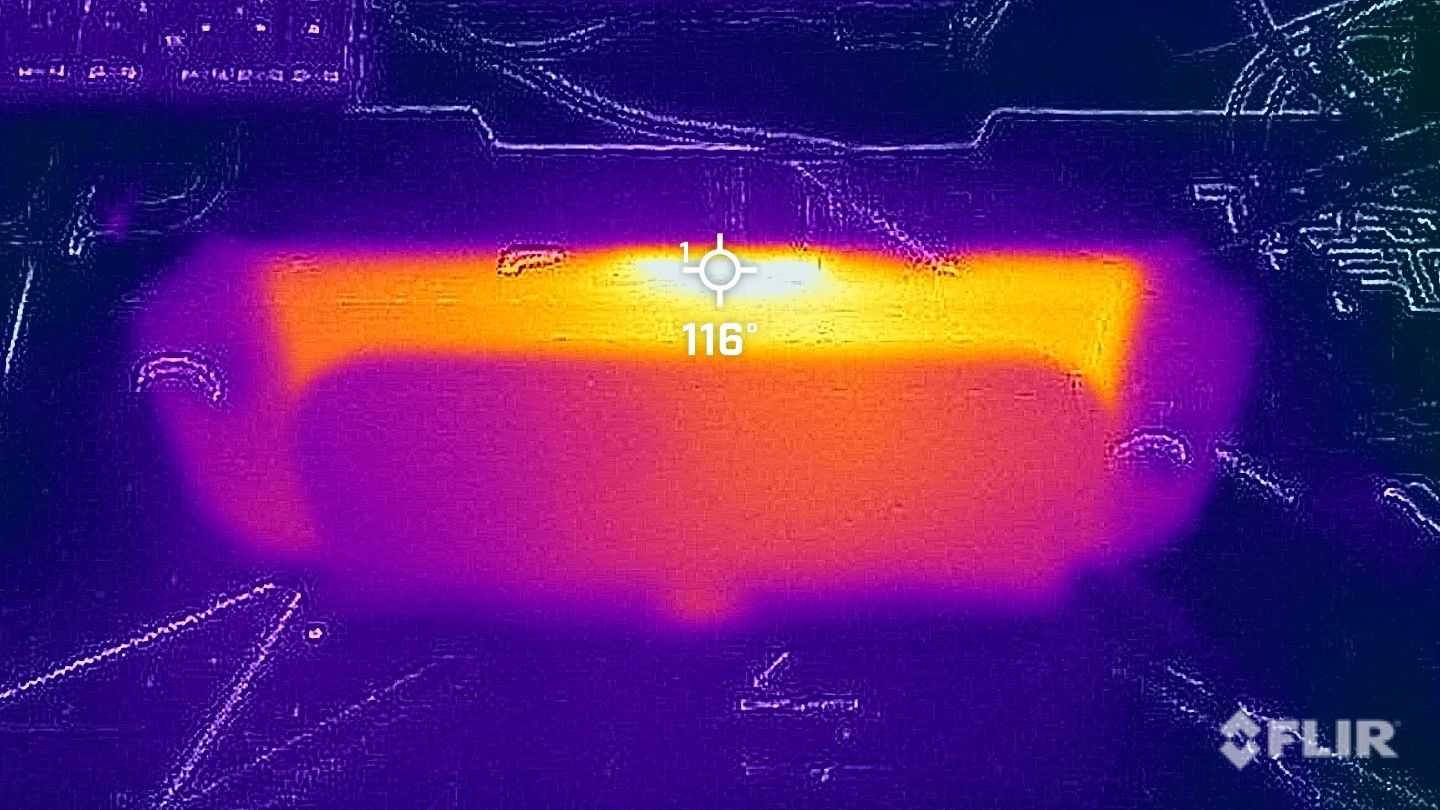
How the community cracked NVIDIA’s driver wall
As usual in PC hardware, a restriction from the vendor became a challenge for the community. NVIDIA concealed hotspot sensor data in RTX 50 drivers, blocking monitoring tools from reading the hottest point of the GPU. But the hardware path remained intact, so it was only a matter of time before someone restored access. HWMonitor’s developers were first to bypass the restriction and bring back RTX 50 hotspot temperature readings, making it again possible to see the hottest spot on cards like the RTX 5090. Under full load, a GeForce RTX 5090 Founder's Edition reports a hotspot of around 86–88 °C, similar to RTX 40 behavior. That alone demolishes narratives that hotspots on Blackwell must be hidden for user protection. If anything, the data shows normal behavior when the card is healthy.
The more interesting part is that NVIDIA never treated hotspot telemetry as "too dangerous" for themselves. Their internal Modular Diagnostics Software, or MODS, still reads the sensor directly. MODS is used to test GPUs before shipping and during RMA, and it runs under a minimal Linux environment so the OS cannot intercept hardware monitoring calls. Repair specialists have used MODS to confirm that the hotspot sensor on Blackwell gaming GPUs is alive and accurate, even while Windows users see nothing. That double standard—full visibility inside the factory, selective blindness for customers—says everything about whose interests this restriction serves.

The 107°C RTX 5070 Ti that proves why hotspot data matters
If you want a practical test case of why GPU thermal monitoring must include hotspots, look at the RTX 5070 Ti that arrived at a repair shop with overheating issues. In Windows, average temperature sat at an apparently safe 67–68 °C under load. Without hotspot visibility, most users would conclude the card was fine. But MODS told a different story: the hotspot temperature spiked to 107 °C almost immediately. That is not a minor discrepancy; it is a smoking gun. According to testing by Paulo Gomes, “the RTX 5070 Ti's hotspot was hitting 107 degrees Celsius, and the card throttled and dropped its clock speeds right away,” with 107 °C defined as the upper limit for RTX 50-series. In other words, the GPU was in full self-preservation mode while pretending, via average temps, that all was well.
Once the cooler was removed, the root cause became obvious: poor thermal contact between the heatsink and core. The thermal interface material had pooled around the edges, leaving the center of the die mostly dry. Reapplying TIM with SnowDog Husky paste dropped the hotspot to around 100 °C and eliminated throttling under load. This is textbook RTX throttling detection: hotspot spikes, clocks collapse, fix the thermal path, temperatures fall, performance stabilizes. And yet, because NVIDIA locked hotspot telemetry, what should have been a straightforward at-home repaste turned into a repair job—and a user in the dark about why their expensive GPU underperformed.
Why NVIDIA’s rationale falls short
To be fair, there is context. Earlier testing of several RTX 50 GPUs found a "hotspot issue" across the lineup, tied not to silicon design but to board construction. Poor PCB manufacturing—lighter materials and less ideal stackups—meant parts of the substrate could heat up even when the core appeared cool. NVIDIA’s own guidelines urged board partners to tune for ideal rather than worst-case conditions, amplifying the problem. Seen from that angle, hotspot data is embarrassing: it exposes weak PCBs and marginal cooling on cards that still pass factory checks. But hiding RTX 50 hotspot temperature readings is a policy bandage over a hardware wound. It avoids awkward conversations with enthusiasts while leaving owners unable to catch dangerous edge cases, like a card sitting on the thermal cliff at 107 °C.
This is also a trust issue. Users know that modern GPUs pull hard and run hot, and they accept that. What they do not accept is being treated as children who cannot be trusted with their own telemetry. The idea that "hotspot numbers would scare people" collapses once you see how calmly the community has reacted to RTX 50 hotspot numbers around 86–88 °C on a healthy RTX 5090. Enthusiasts are not asking NVIDIA to guarantee perfection; they are asking for honest data so they can decide whether to change their case airflow, adjust their overclock, or RMA a defective card. Locking sensors is not safety; it is opacity.
Where this leaves enthusiasts and builders
With HWMonitor restoring hotspot access and MODS confirming that the sensor was never gone, the message is clear: hotspot visibility is not a bonus feature; it is core GPU telemetry. For anyone tuning an RTX 50 build, RTX 50 hotspot temperature numbers are now as essential as core frequency or power draw. If hotspot creeps toward 100 °C at full load, you should assume something is off in the cooling path and start checking fans, heatsink mounting, and TIM application. And if your card hits the 107 °C limit and begins throttling, that is explicit proof that the hardware is protecting itself from damage—even when average temperature readings claim everything is normal.
The takeaway is blunt: enthusiasts should not accept locked sensors on open PC platforms. GPU thermal monitoring only works when the same tools NVIDIA uses internally are available, in principle, to end users. Hotspot telemetry is how you catch manufacturing defects, fix botched TIM jobs, and prove that RTX throttling detection is tripping earlier than marketing slides suggest. Until NVIDIA aligns its driver policy with that reality, expect more third-party workarounds—and more examples of the community doing what the vendor would not: giving owners the information they need to keep their hardware fast and alive.