
Beavis Ultrasound: A Definition of Hardware Preservation in Practice
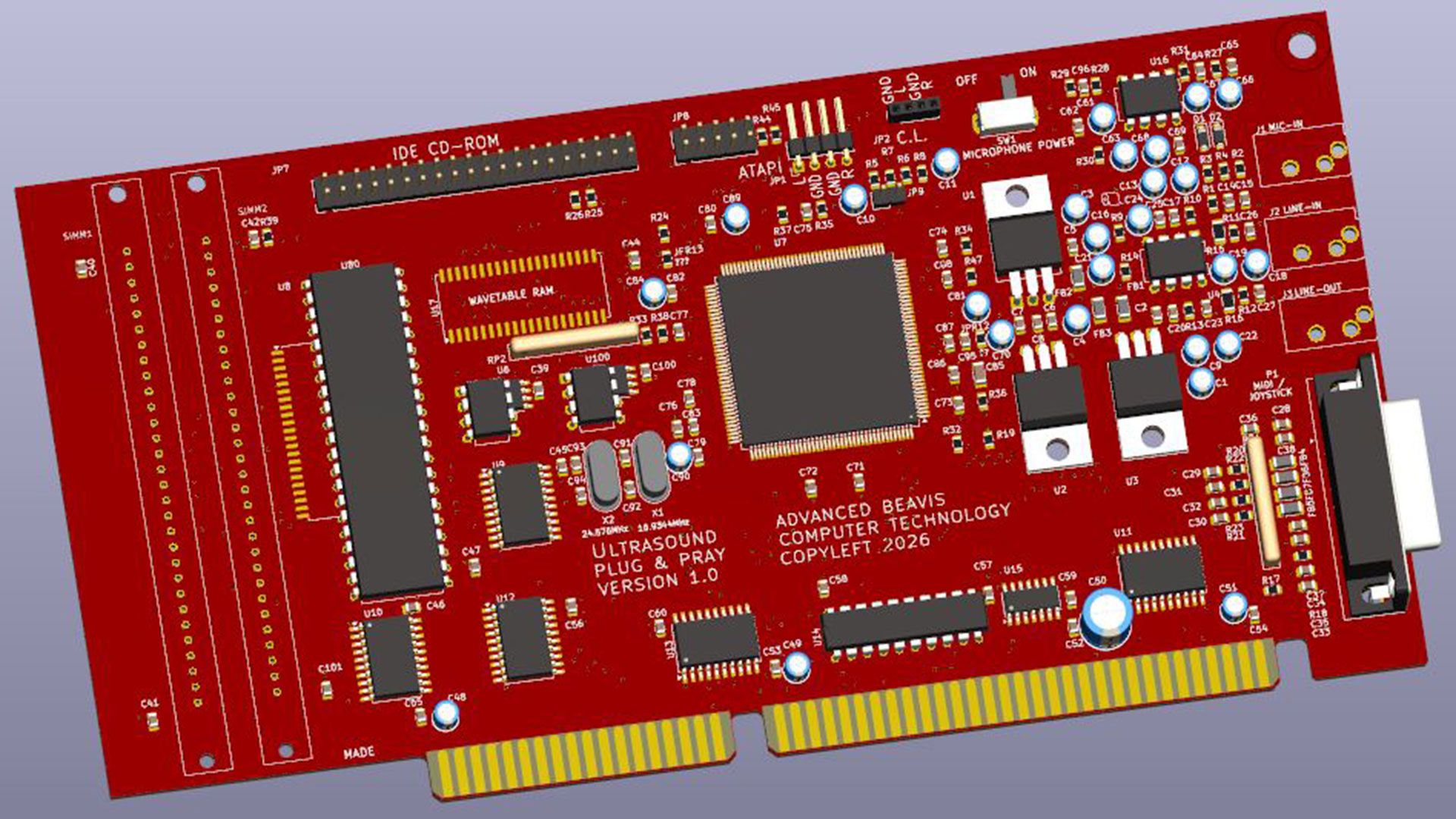
The Beavis Ultrasound project is an open-source, hardware-accurate recreation of the Gravis Ultrasound Plug and Play ISA sound card, providing complete KiCad schematics, PCB layouts, sample ROM data, and reverse-engineered programmable logic so that retro computer hardware enthusiasts can build functional vintage sound card replicas from scratch. This is not another software emulator disguised as hardware; it is a blueprint for reviving one of the most famous PC sound cards as a fully discrete, faithful reproduction. The key takeaway is blunt: this Gravis Ultrasound clone treats retro audio as an engineering artifact to be preserved, not a nostalgic theme to be approximated. In doing so, it lays out a model for vintage sound card recreation that other communities should copy before more classic designs disappear into private collections and proprietary archives.
KiCad Files as the New Service Manual
What sets Beavis Ultrasound apart is not that it exists, but that it is fully inspectable. Developer schlae released the Beavis Ultrasound PnP ISA Sound Card Replica repository with complete KiCad schematics, PCB layout, sample ROM, reverse‑engineered GAL logic for the IDE CD‑ROM interface, assembly notes, and more. In other words, KiCad hardware design files are now serving the role that service manuals and factory schematics once did. According to one open-source hardware report, the project provides access to KiCad schematics, PCB layout, sample ROM, reverse-engineered GAL logic, assembly instructions, and associated design files via a public Git repository. That matters because it makes the entire design chain transparent. Engineers and hobbyists can read the netlists, study the routing, and step through the logic equations, not just trust a black-box board. For retro computer hardware, this is the difference between a collectible trinket and a living, teachable design.
Reverse-Engineered GALs and the Ethics of Accuracy
Most modern recreations of old audio hardware compromise somewhere: a microcontroller stands in for discrete logic, or software emulates a once‑dedicated chip. Beavis Ultrasound takes the opposite stance. Its creator highlights that, unlike other clones, the design includes the entire schematic and the reverse‑engineered source code of the GAL, which is responsible for providing an operational IDE CD‑ROM interface just like the original Gravis Ultrasound PnP cards. The reverse‑engineered GAL logic explicitly replicates the IDE CD‑ROM interface functionality from the original card. This is more than nerd perfectionism. By avoiding substitute components and refusing to offload functions onto general‑purpose microcontrollers, the project preserves timing, behavior, and quirks that define how games and demos interacted with the hardware. As the source notes, this kind of hardware recreation does not emulate in software but aims to reproduce the original hardware as faithfully as possible. That level of accuracy turns open source reverse engineering into a form of historical record.
The Trade-Offs for DIY Builders: Authenticity vs Accessibility
For ordinary tinkerers, the Beavis Ultrasound design is both empowering and demanding. On one hand, publishing complete schematics and board design files lets engineers examine, modify, and reproduce this historically interesting ISA sound card without losing any design information. On the other hand, the project makes no effort to hide its Achilles heel: you must source an old AMD AM78C201 InterWave chip to complete a build and enjoy its sound, a component that is long out of production and only available as old or second‑hand stock. That constraint stands in sharp contrast to alternatives. The PicoGUS solution, for example, uses a Raspberry Pi Pico microcontroller to handle GUS‑compatible audio playback in software, avoiding rare vintage components like the AMD InterWave entirely. Likewise, a recently revived ISA sound card with some GUS functionality is a commercial, non‑open‑source product aimed at similar demand. The message is clear: if you want maximum authenticity, you will pay in parts hunting and risk.
Why This Clone Matters Now—and What Comes Next
Beavis Ultrasound did not appear in a vacuum. Interest in Gravis Ultrasound‑compatible hardware has been rising, as shown by the return of commercial ISA cards that include some GUS functionality because of popular demand. Yet those products are closed and proprietary, which means when their makers move on, the knowledge disappears with them. By contrast, this open Gravis Ultrasound clone demonstrates how open-source technologies can help preserve classic hardware designs and aid future reverse engineering of similar devices. There is a catch: the developer openly admits the board has not been fabricated or tested yet and advises users to build it at their own risk. That honesty is a feature, not a bug. It invites the community to finish the experiment, validate the design, and iterate. The likely future for vintage sound card recreation lies in this kind of community‑driven refinement: KiCad projects that start as bold first drafts and become reference designs through collective testing.