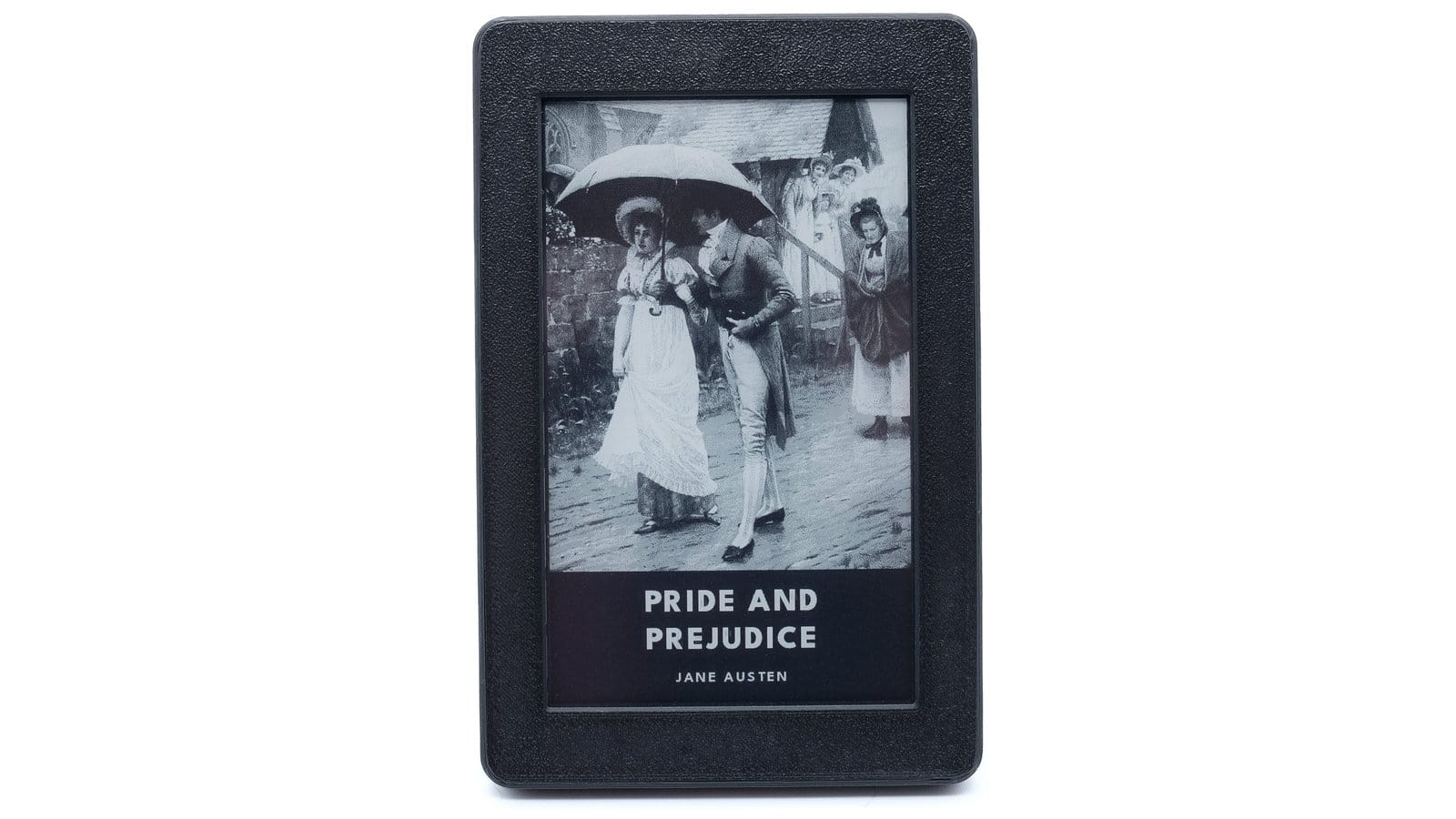

An Open Hardware E‑Reader That Refuses to Phone Home
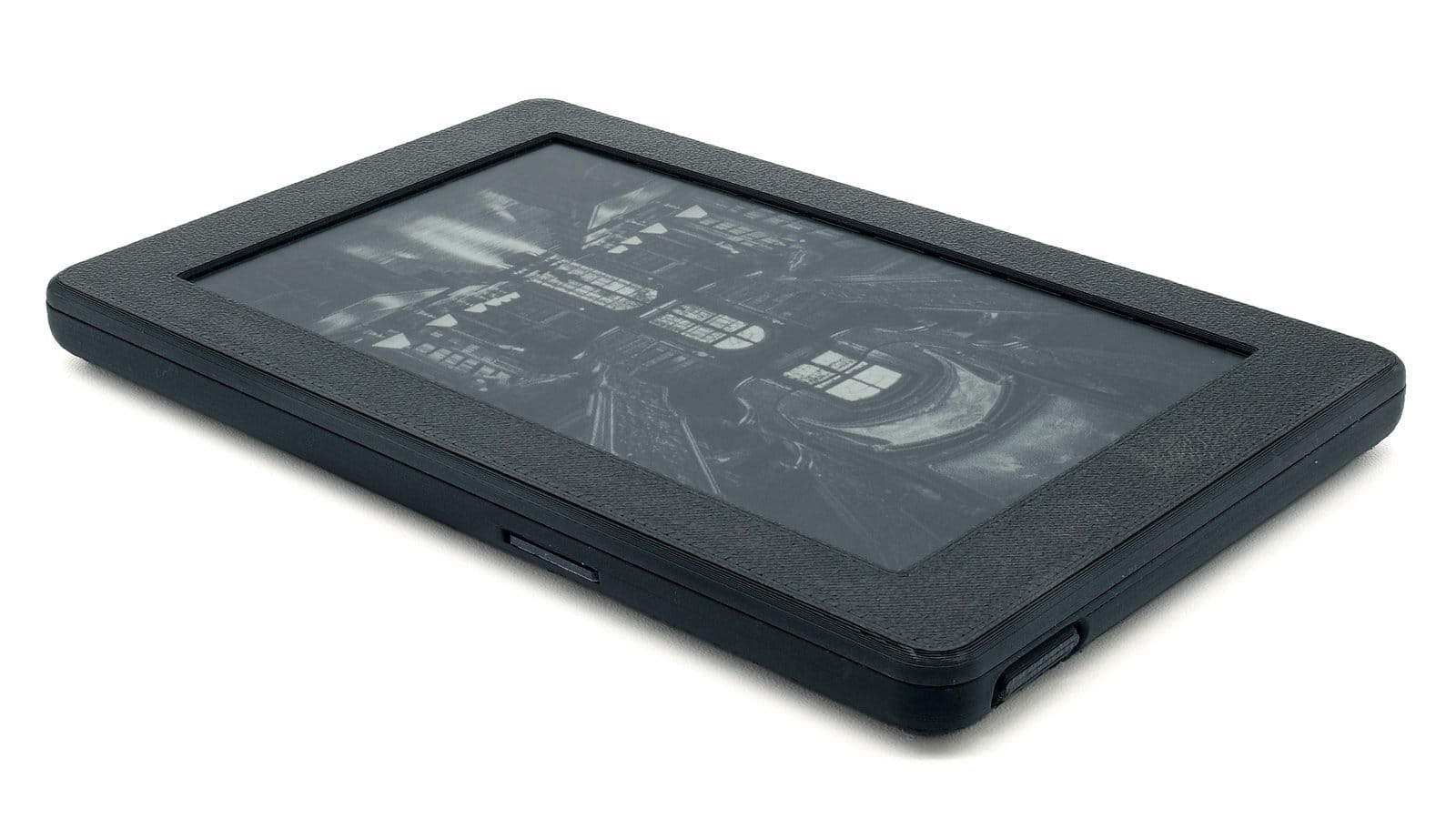
Open Book Touch is an open hardware e-reader and DRM-free e-reader built around an ESP32-S3 microcontroller, offering a customizable, repairable alternative to proprietary, cloud-tied reading devices that normally lock users into closed ecosystems and remote account control.
The headline promise is simple: for USD 149 (approx. ₱8,700), you get an e-reader that treats books as files you own, not licenses that can vanish overnight. Where mainstream platforms demand accounts, sync everything to distant servers, and enforce DRM, Open Book Touch boots up to your microSD card and your local Wi‑Fi — no mandatory account, no silent “phoning home”, and no DRM support by design. In a market where “reading” has become another subscription funnel, that is an outright challenge, not a feature checkbox. Reading shouldn’t require a subscription fee, or depend on a proprietary piece of hardware that can get ejected from its own ecosystem once its maker decides you need a new one.
This is not a hobby prototype. It is a fully formed crowdfunding gadget on Crowd Supply, with a base model priced at USD 149 (approx. ₱8,700) and a campaign already over 60% funded in a few days. That price undercuts many mainstream e-readers while offering something they never will: control that sits with the reader, not the platform.
ESP32-S3 at the Core: Customization Instead of Compliance
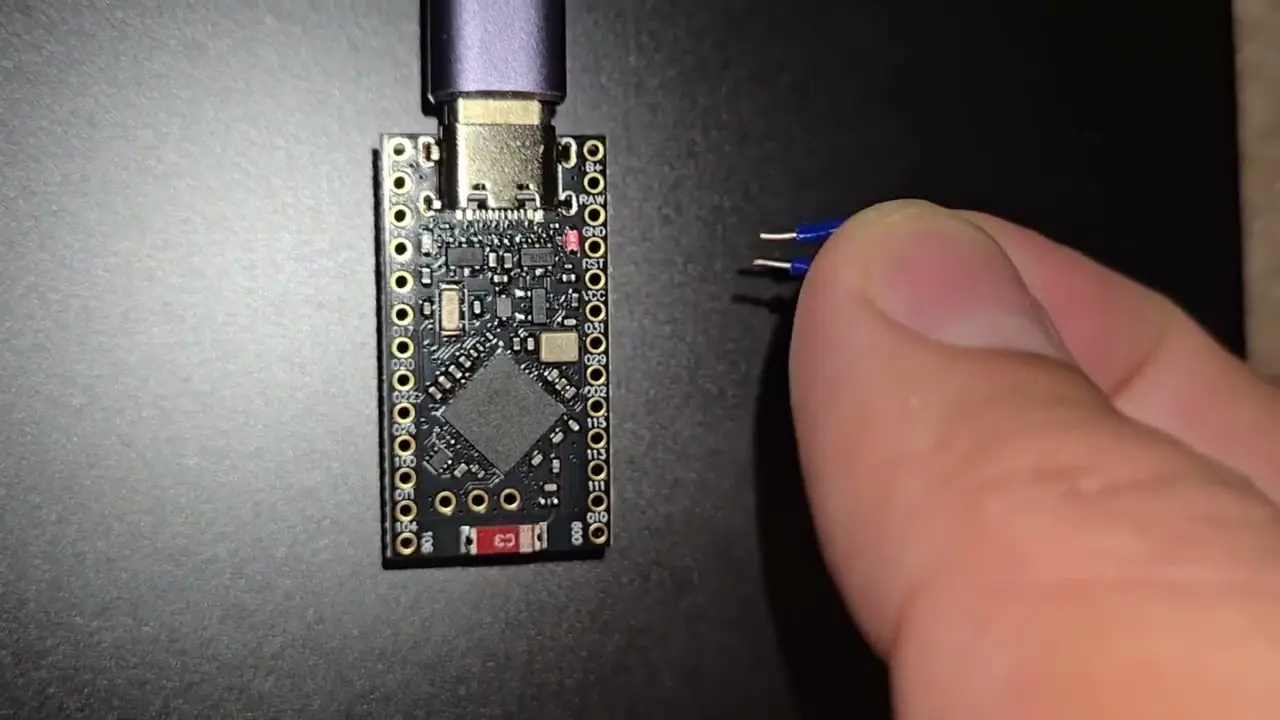
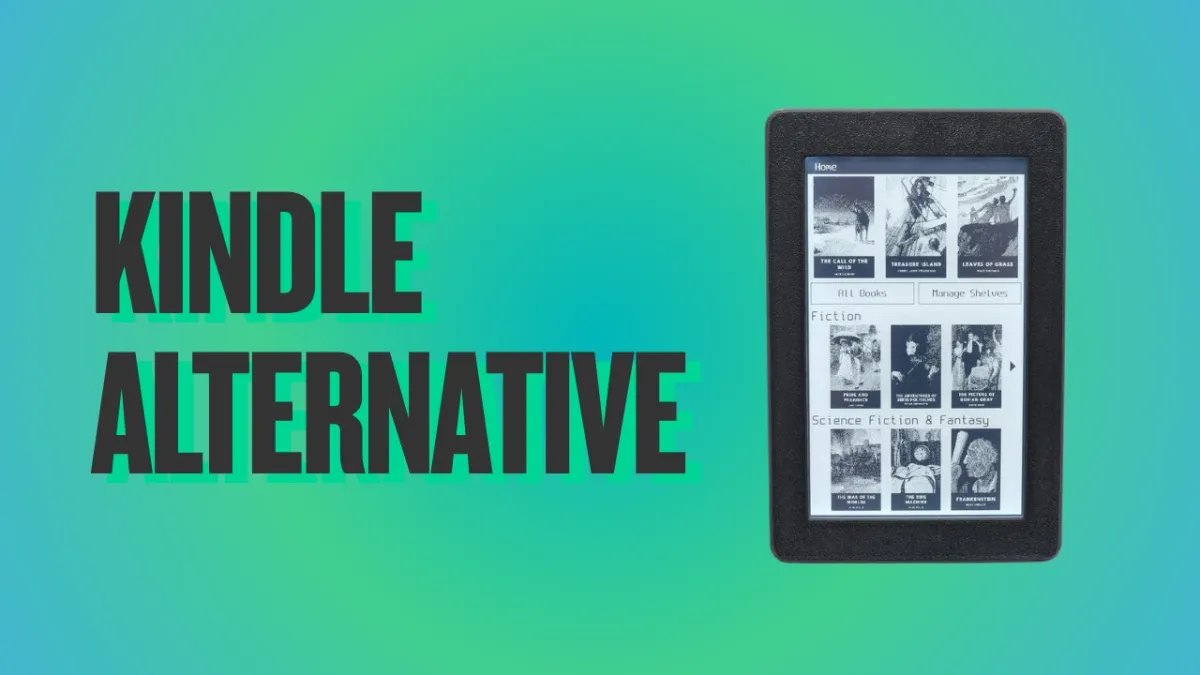
Most open-source devices compromise on polish; Open Book Touch instead uses its ESP32-S3 foundation to close the experience gap while opening the stack. The dual‑core ESP32-S3, paired with 16 MB of flash and 8 MB of PSRAM, is strong enough to parse EPUB files and drive a modern interface without dragging a full Linux single-board computer into the mix. Firmware runs in C++ on ESP-IDF and FreeRTOS, with SQLite quietly managing your library metadata. For ESP32-S3 projects fans, this is a rare consumer product that looks like a dev board in disguise.
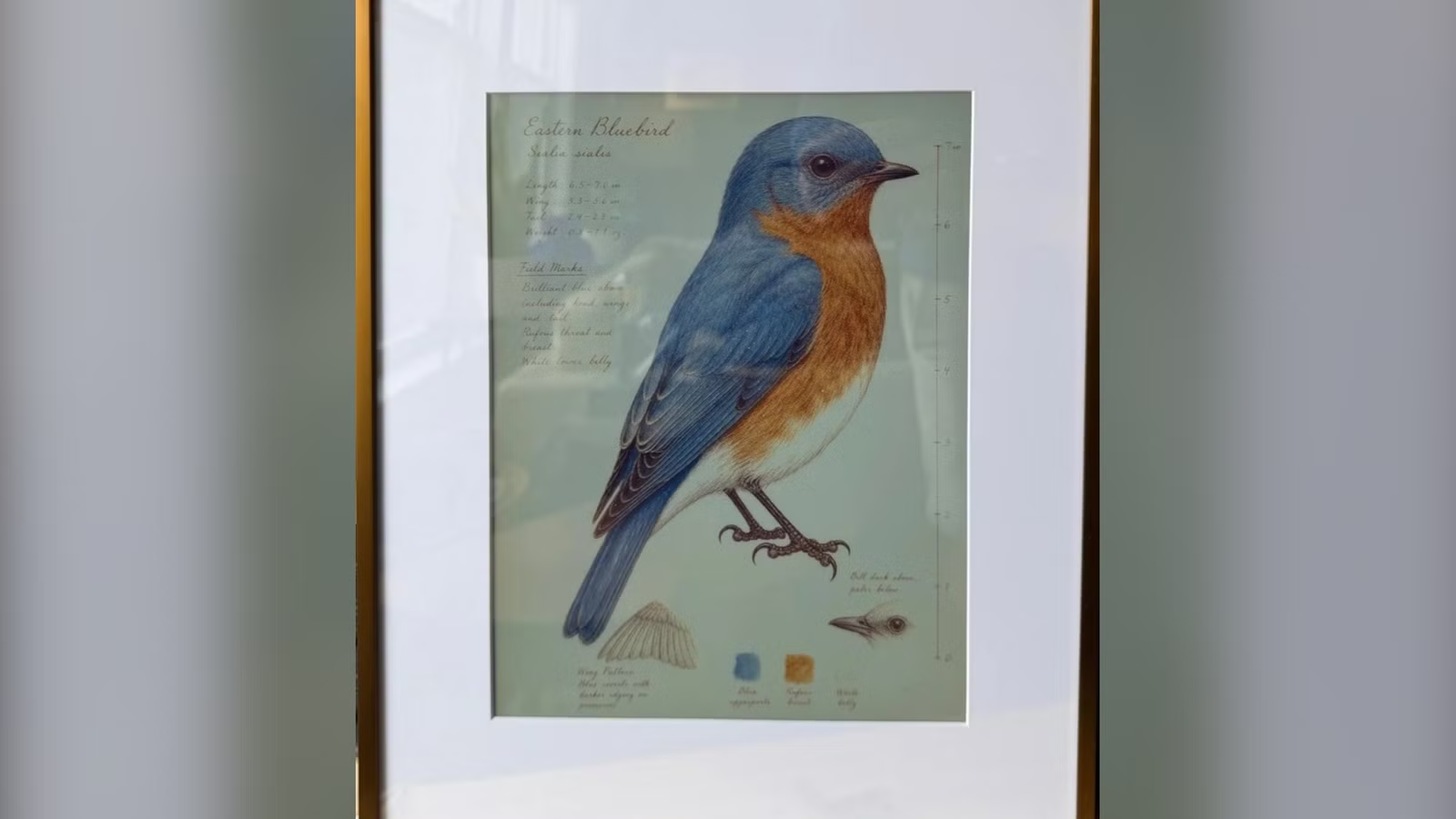
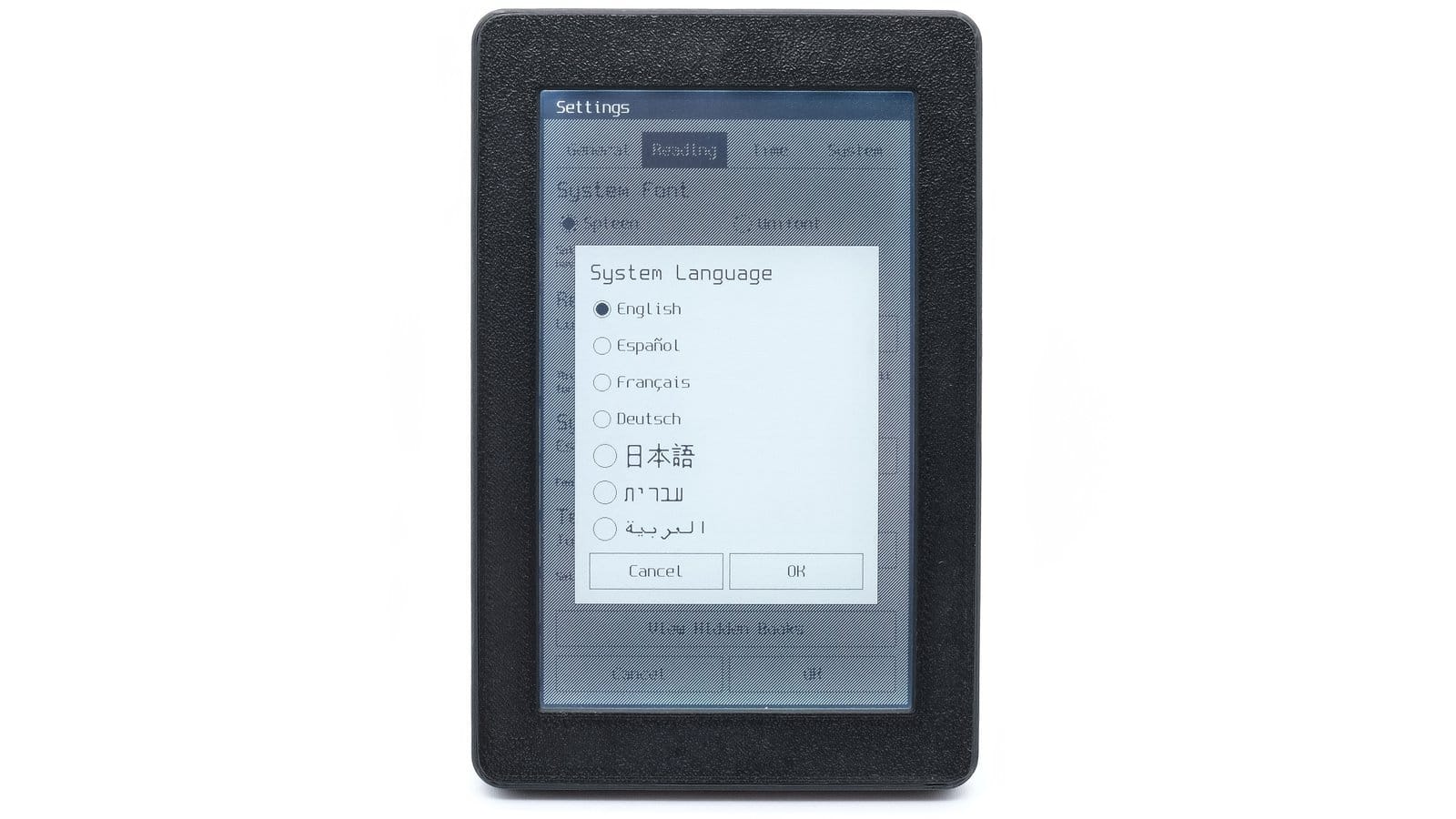
On top, a 4.26‑inch e‑paper touchscreen at 480 × 800 pixels delivers about 220 ppi, with 1‑bit speed for crisp page turns and 2‑bit grayscale reserved for the lock screen. A frontlight built from five warm and five cool LEDs lets you tune color temperature and brightness by touch, instead of accepting whatever a vendor decided your eyes should like. The UI offers virtual shelves, cover browsing, word lookup, and dog‑ear bookmarks — the sort of details that make it an everyday reader rather than a bare dev kit.
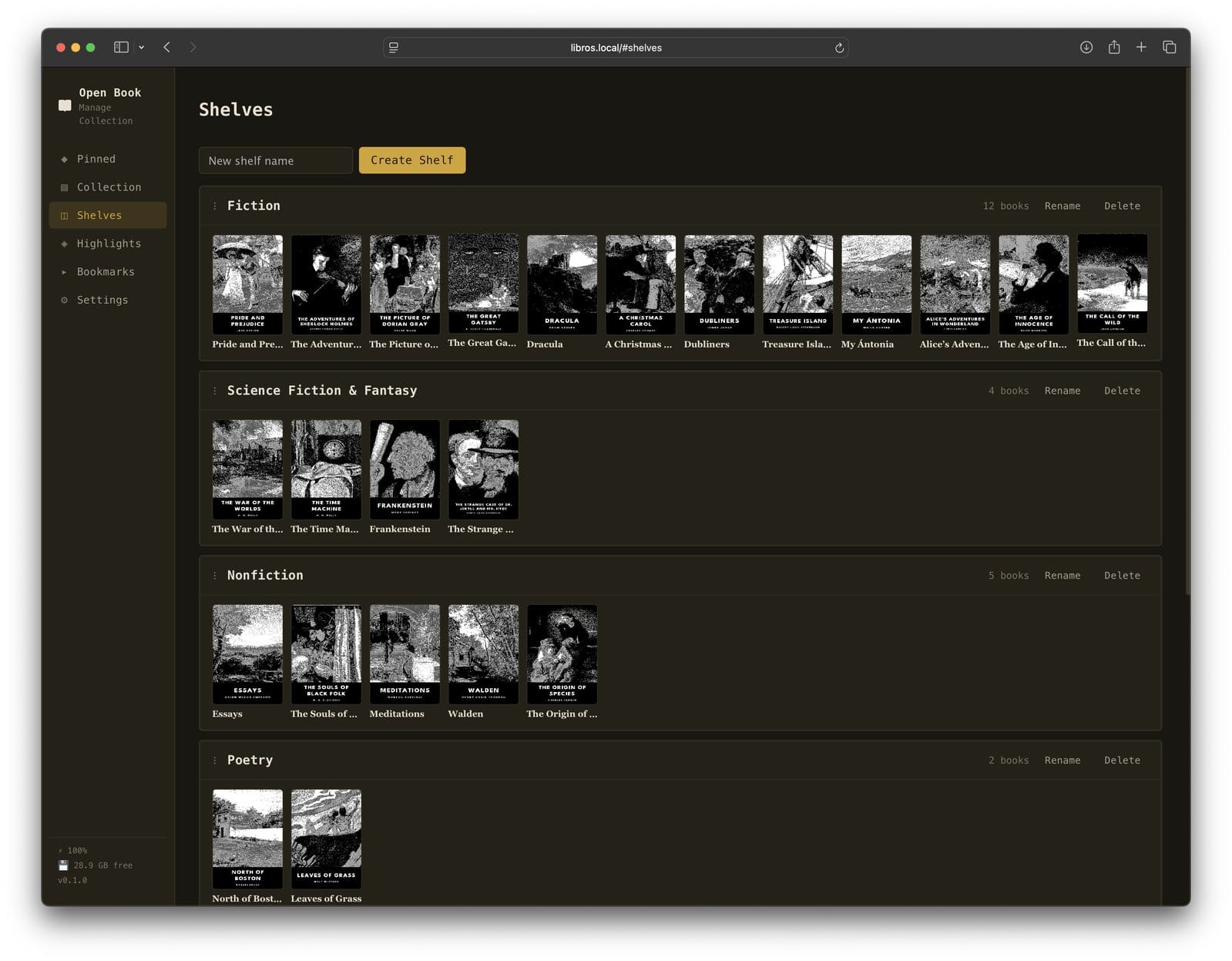
Because the heart is the Wi‑Fi-capable ESP32, the device can expose a web interface to manage your books over the network, so your "library app" is a browser, not a proprietary sync client. That matters: customization here is not a marketing word; it is what you get when your e-reader behaves more like a hackable microcontroller project than a locked ebook vending machine.
DRM-Free by Design: Escaping the E‑Reader Walled Garden
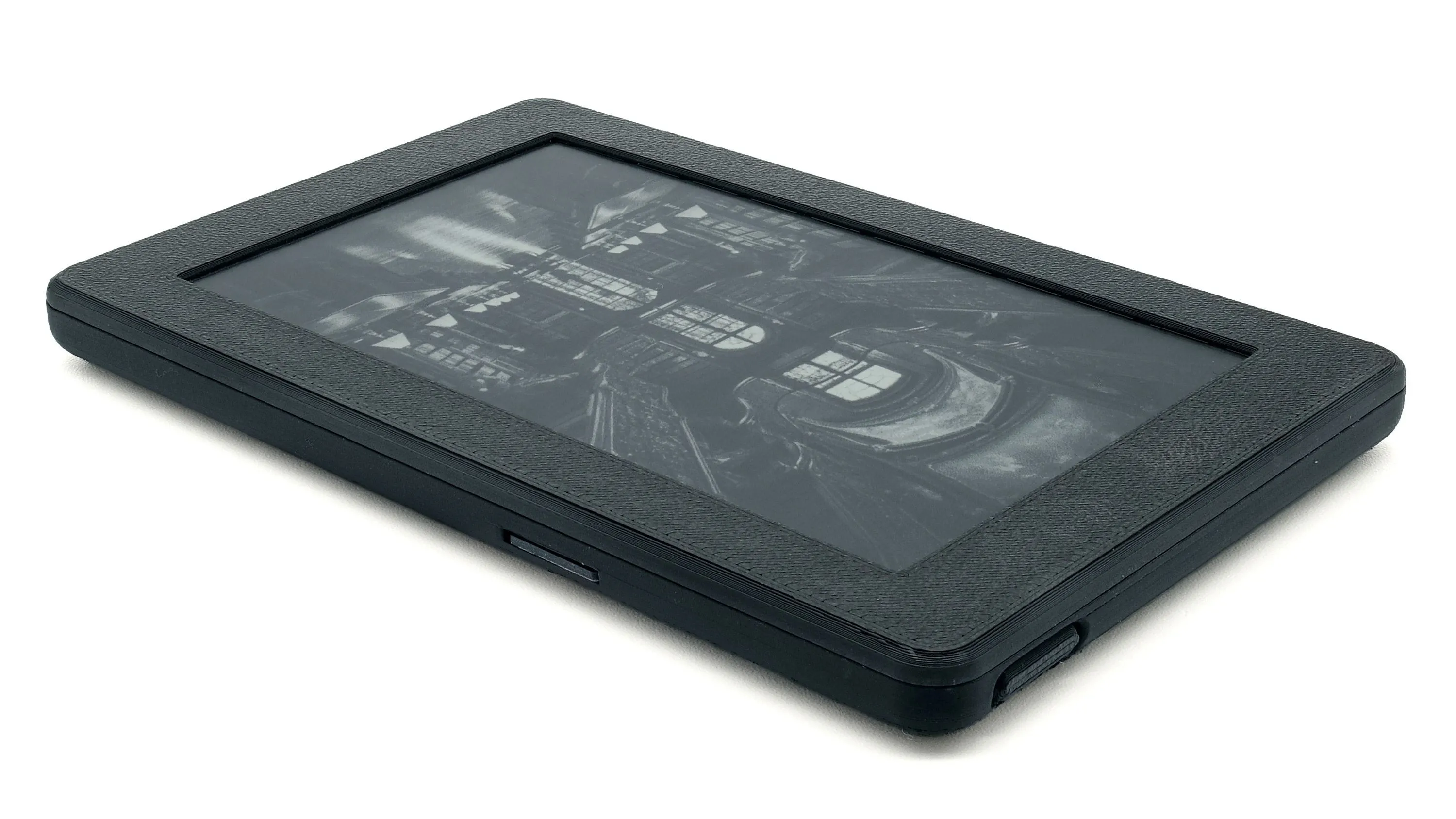
The most radical feature of Open Book Touch is the one it deliberately refuses to implement: Digital Rights Management. There is no DRM support here, by design. The device reads standard EPUB and plain text files from a microSD card, and uses Wi‑Fi only to move your own files over a local network. No cloud bookshelf, no account lock, no remote deletion. In a market built on walled gardens, that is open rebellion.
This choice matters for ordinary readers. When you buy a DRM‑laced ebook, your ability to read it rides on remote servers, terms of service, and devices that can be dropped from their ecosystem once the vendor decides it is upgrade time. Open Book Touch rejects that bargain. Your library is a collection of files you can back up, move, and archive as you see fit. For people who already hold sizeable ebook collections, an independent, DRM-free e-reader is less a gadget and more a safety deposit box for reading.
Of course there are trade‑offs. There is no slick companion app, and syncing progress across phones, tablets, and laptops is not built in. That inconvenience is the price of autonomy. The project’s quiet argument is that freedom from DRM and vendor lock‑in is worth a little friction — and that more open-source devices should dare to say no when platforms demand "integration" at the cost of user control.
From Maker Project to User-Repairable Product
Open Book started life as a solder‑it‑yourself open-source e-reader board from developer Joey Castillo, a design you could assemble with a soldering iron and patience. That early DIY board, released in 2020 and refined through later variants, built a community of people willing to trade polish for control. Open Book Touch keeps that spirit but changes the target: it is now meant to ship as a finished device, ready out of the box yet still easy to open, repair, and alter.
The hardware design leans into that ethos. The 800 mAh LiPo battery is user-replaceable, and the 3D‑printed snap‑fit case is designed to come apart without drama; CAD files will be available so you can print your own enclosure in another color or iterate a derivative design. This is the maker movement’s answer to glued‑shut consumer electronics: instead of tamper stickers, you get CAD and a screwdriver.
Importantly, the project commits to releasing open hardware files and MIT‑licensed firmware, with board designs, enclosure CAD, and device‑specific code going public once the campaign ships, first to backers and then to everyone. That means complete hardware specifications will be available for community modifications and derivative projects, turning a single DRM-free e-reader into a platform that others can fork, localize, and extend.
Crowdfunding Now, Open Ecosystem Later
Open Book Touch is now live as one of the more ambitious crowdfunding gadgets on Crowd Supply. The base open hardware e-reader starts at USD 149 (approx. ₱8,700), with a limited Author’s Edition offered at USD 249 (approx. ₱14,600) during the campaign. At the time of writing, the project has raised USD 25,658 (approx. ₱1,510,000) of a USD 45,000 (approx. ₱2,650,000) goal from 131 backers, with about five weeks left. Crowd Supply is targeting early 2027 for first deliveries through its usual fulfillment partner.
There is a catch: the board files, enclosure CAD, and Open Book Touch-specific firmware remain private until units ship, with backers getting the first look. Purists may bristle at this delay, but the intent is clear: secure a viable production run, then throw the design over the wall into the commons.
If that happens on schedule, Open Book Touch could become more than a quirky niche device. It would stand as evidence that open-source devices can match mainstream polish while defending reader autonomy. The stakes are bigger than one gadget. Either we accept that books now live on servers we do not control, or we back alternatives that keep reading on our terms. Open Book Touch makes that choice visible — and it prices it at USD 149 (approx. ₱8,700).