

Open-Source Robotics Hardware: From Isolated Machines to Shared Platforms
Open-source robotics hardware is a design and licensing approach in which physical robot components and reference electronics are published with modifiable schematics, firmware, and software interfaces, allowing developers, manufacturers, and hobbyists to reuse, customize, and standardize parts across many robot platforms instead of building proprietary, closed systems for each machine separately. The key shift today is that open boards, sensors, and robot AI models are no longer fringe experiments; they are becoming the backbone of cross platform robot control. When a single AI policy can run across dozens of embodiments while low-cost sensors plug straight into common robotics development tools, the old assumption that every robot needs its own stack starts to look wasteful. Open ecosystems are not just nicer for developers; they are beginning to tilt the economics of the industry.
LingBot-VLA 2.0: One Robot Brain, 20 Bodies
The most striking proof that shared robot AI models are viable comes from LingBot-VLA 2.0, released by Ant Group’s robotics division Robbyant on July 8. This 6‑billion‑parameter vision‑language‑action model runs the same trained policy on 20 distinct robot configurations from 17 manufacturers without per‑platform retraining. In a field where software fragmentation has stalled progress — each arm, mobile base, or humanoid historically needed its own control model — that is not a minor optimization, it is a structural break. The unification hinges on a 55‑dimensional canonical action vector that maps every supported body into a shared numerical language. Instead of treating each robot as a separate species, LingBot-VLA 2.0 treats hardware differences as zero‑padded variations in one action space, then uses sparse Mixture‑of‑Experts routing to specialize behavior without inflating inference cost. In plain terms, the model turns assorted machines into one programmable fleet.
OpenLIDAR: Community Hardware as a Robotics Development Tool
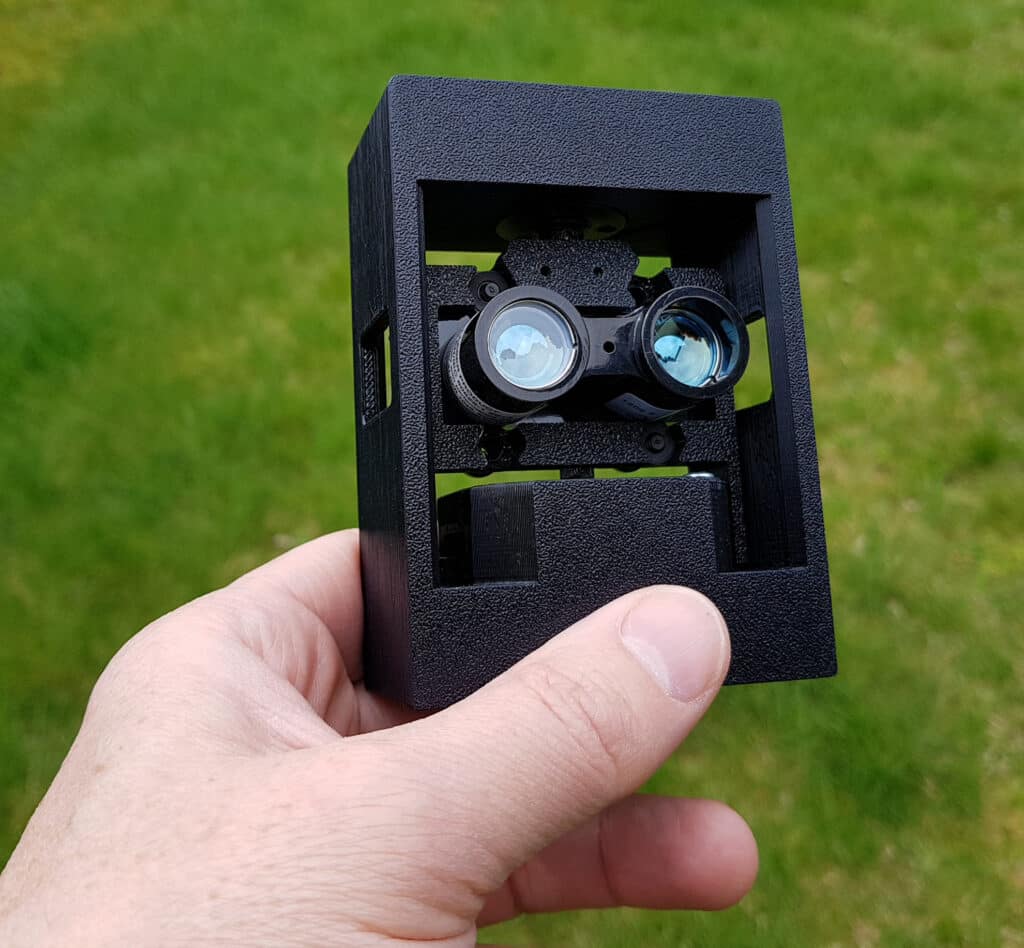
Hardware needs to keep pace with this software unification, and Xaxxon Technologies’ Arduino‑compatible OpenLIDAR sensor is a good example of how open source robotics hardware can do that. Built from a Garmin Lidar‑Lite v3 rangefinder, a stepper motor, a rotational slip ring, an Arduino‑compatible controller board, and 3D‑printed parts, the device weighs about 180 g and scans up to 40 m with sampling frequencies up to 750 Hz and rotation speeds up to 250 RPM. Fully integrated with the Robot Operating System, it streams 360‑degree LaserScan data in real time over USB for mapping, localization, and navigation in mobile robots. Unlike closed commercial LIDARs, engineers can modify both hardware and firmware to match their needs, and communicate through a serial protocol that fits languages such as Python. The point is not another sensor spec sheet; the point is that a capable, ROS‑ready module is now a modifiable community tool rather than a locked black box.
Lower Barriers, Faster Prototyping, Cheaper Fleets
These developments matter because they attack the two biggest frictions in robotics: per‑platform software work and expensive, proprietary hardware. OpenLIDAR is intentionally designed to be affordable compared to commercial sensors that are expensive, bulky, power‑hungry, or difficult to source. That affordability is not charity; it is a bet that community‑driven designs will grow the market by letting more teams build robots. On the software side, LingBot-VLA 2.0 was trained on roughly 60,000 hours of data — 50,000 hours of robot interaction trajectories from all 20 hardware configurations, plus 10,000 hours of egocentric human video distilled into manipulation priors. According to its technical report, "a single LingBot-VLA 2.0 policy trained jointly on nine tasks per embodiment" now controls mixed fleets that would previously have demanded separate models. This combination of shared data, unified action space, and open hardware cuts duplicated effort and reduces the cost of experimentation.
From Pilots to an Open Robotics Ecosystem
The real test of any open approach is whether it reaches ordinary deployments, not just lab demos. Here, signals are encouraging but incomplete. Robbyant is already running commercial pilots with hardware partners Leju and Ti5 Robot and enterprise customers GuoDa Drugstore and Longsheng Technology across retail sorting, logistics, and industrial automation scenarios. It has also announced plans for specialized technical toolkits and developer meetups to support the robotics developer community. On the hardware side, Xaxxon plans to release an OpenLIDAR version tailored to its Oculus Prime robot along with a depth camera, which would further broaden open sensor options. Still, we should stay skeptical until more independent verification appears; LingBot-VLA 2.0’s benchmark wins over rival models come from its own evaluation pipeline. Even with that caveat, the direction of travel is clear: open source robotics hardware and shared robot AI models are turning fragmented stacks into an ecosystem where cross platform robot control is the norm, not the exception.