
Why Budget Third-Party Primes Are Reshaping Lens Value
Budget third-party lenses are affordable prime lenses from independent brands whose optical performance and features now rival or beat first-party designs that cost two to three times more, forcing photographers to reconsider how much they must spend for professional-grade image quality. For most photographers today, lens choice is no longer a simple brand-loyalty decision: the value proposition of modern third-party primes is strong enough that paying a large premium only makes sense if you need specific first-party advantages.
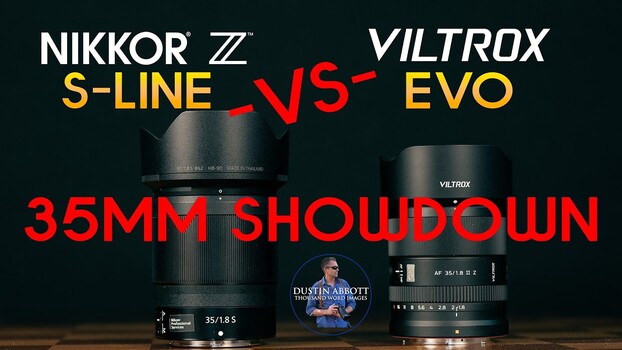
The clearest example is the Viltrox EVO 35mm f/1.8 on Nikon Z mount. In a direct head‑to‑head test, it not only keeps up with the Nikon Z 35mm f/1.8 S but proves sharper in the center, mid‑frame, and corners at wide apertures and extends that lead when stopped down. Yet it carries a USD 395 (approx. ₱22,100) MSRP compared to the Nikon’s list price near USD 900 (approx. ₱50,400), which often sits around USD 796 (approx. ₱44,600) in discounts. When a lens costing roughly half delivers better resolution, the argument for premium pricing weakens fast.
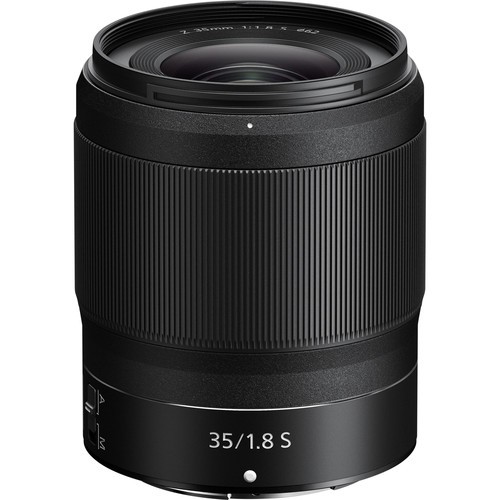
Viltrox EVO 35mm vs Nikon Z 35mm f/1.8 S: Where the Money Goes
At 35mm, the lens value comparison is stark. The Nikon Z 35mm f/1.8 S built the system’s reputation for high-end f/1.8 primes, but the Viltrox EVO 35mm arrives cheaper, smaller, and optically superior in many tests. Abbott finds the EVO sharper across the frame at wide apertures and still ahead once both lenses are stopped down. That makes the Nikon’s price hard to justify unless you need its specific strengths.
| Spec | Viltrox EVO 35mm f/1.8 | Nikon Z 35mm f/1.8 S |
|---|---|---|
| MSRP | USD 395 (approx. ₱22,100) | Lists near USD 900, often around USD 796 (approx. ₱44,600) |
| Diameter | 69 mm | 73 mm |
| Weight | Heavier by 11 g vs Nikon in test | 11 g lighter than EVO in test |
| Closest focus | 34 cm, 0.15× magnification | 25 cm, 0.19× magnification (noticeably closer) |
| Aperture control | Dedicated clickable ring with de‑click switch | Single control ring shares focus/aperture with some lag |
| Controls | Custom button + AF/MF switch | No dedicated AF/MF switch; single ring |
| Autofocus | Stepping motor; similar speed, slightly quieter | Stepping motor; similar speed and accuracy |
Features tilt hard toward the EVO, with its clickable aperture ring, de‑click switch, custom button, and AF/MF switch, against the Nikon’s single multifunction ring. Nikon, however, offers a closer 25 cm minimum focus distance with 0.19× magnification that feels “very noticeable in practice”, plus more extensive weather‑sealing and first‑party support. For video, the Nikon remains a favorite thanks to smoother, more cinematic focus pulls and notably lower focus breathing, while the EVO counters with better manual‑focus feel and more responsive aperture changes. Both lenses are effectively silent for stills and trade little in autofocus speed or accuracy, so the choice comes down to whether you value Nikon’s refinement and sealing enough to pay significantly more.
7Artisans 135mm f/1.8 MAX: Pro‑Level Portraits at Entry Pricing
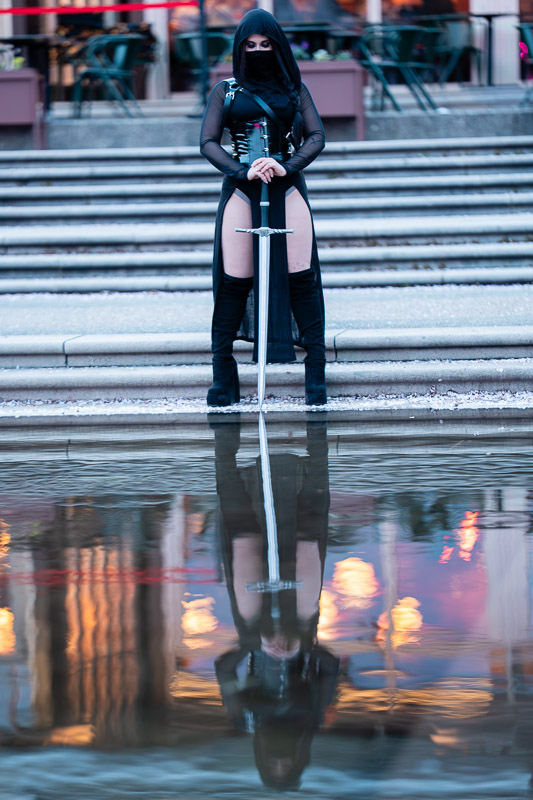
At the telephoto end, the 7Artisans 135mm f/1.8 MAX shows how far budget third-party lenses have come. It enters a crowded 135mm f/1.8 field as the most affordable option in its class, yet its optical performance is described as very strong at infinity, with excellent center sharpness wide open, very good mid‑frame, and corners that improve to excellent by f/5.6. According to one detailed review, “This is an exceptional performance, on par with or even better than more expensive lenses like Viltrox 135/1.8 LAB or Samyang 135/1.8.”
Portrait‑distance results are even more impressive: at f/1.8, the center and mid‑frame already out‑resolve a 33‑megapixel sensor, and by f/4 even near‑edge regions match that high standard. Close‑up sharpness at the 0.68 m minimum focus distance is good, though not as strong as at longer ranges until stopped down to about f/4. Distortion is very well controlled, with only minor pincushion that is easy to correct. In practical terms, you are getting professional‑grade subject separation and resolution for fashion, portraits, and tight headshots at the lowest price point among modern 135mm f/1.8 designs. For photographers who want that compressed perspective and creamy background without paying top‑tier prices, the 7Artisans MAX is the most compelling starting point.
Autofocus, Video, and Build: Are Premium Lenses Still Worth It?
Where premium lenses once justified their cost with clearly superior autofocus, video behavior, and construction, the gaps are now narrow. Both the Viltrox EVO 35mm and Nikon Z 35mm f/1.8 S use stepping motors, delivering similar autofocus speed and accuracy, with the EVO running slightly quieter; both are effectively silent for stills work. On the 7Artisans 135mm f/1.8 MAX, autofocus is described as average and accompanied by a faint whir, with occasional hesitation before locking focus. For high‑pressure action or erratic subjects, this is where first‑party telephotos and some higher‑end third‑party designs still hold a reliability edge.
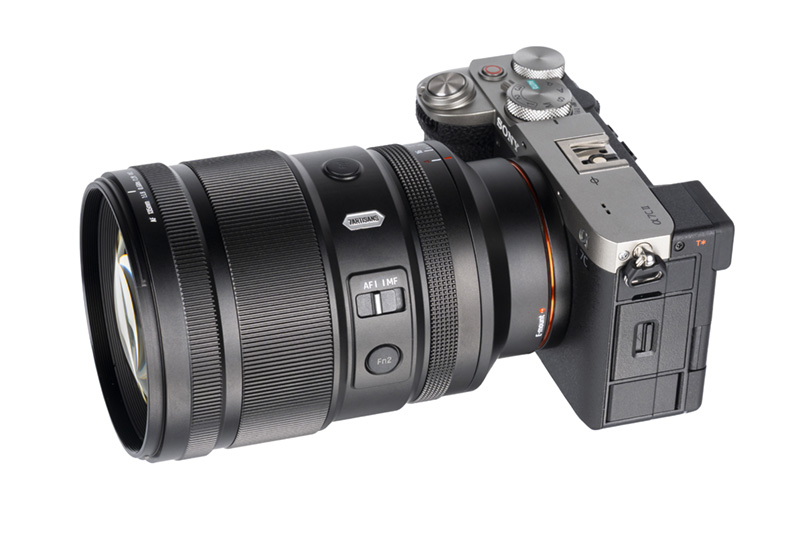
Video is one of the last clear wins for certain first‑party primes. The Nikon Z 35mm f/1.8 S is rated as a favorite among its brand’s primes for video work, thanks to well‑damped focus pulls and notably lower focus breathing. Third‑party makers respond with better tactile control: the EVO’s smoother rings and dedicated aperture control avoid the lag the reviewer saw when changing aperture via the Nikon’s single control ring, while the 7Artisans 135mm offers a large, smooth focus ring plus two function buttons and an AF/MF switch. Build quality is no longer a clear premium‑only feature either: 7Artisans uses an all‑metal barrel with weather‑gasketed mount, and Viltrox’s EVO line adds practical touches like matched filter threads and apochromatic designs that signal serious intent. For many enthusiasts and working photographers, these refinements make budget third‑party lenses credible tools rather than compromises.
Buy if / Skip if
- Buy the Viltrox EVO 35mm f/1.8 if you want sharper‑than‑Nikon optics and richer controls at roughly half the price for a fast everyday prime.
- Skip the Viltrox EVO 35mm f/1.8 if you rely heavily on close‑focus work, top‑tier weather‑sealing, or the most polished video rendering with minimal focus breathing.
- Buy the Nikon Z 35mm f/1.8 S if you prioritize closer focusing, stronger sealing, and smoother video behavior over absolute value in your 35mm prime.
- Skip the Nikon Z 35mm f/1.8 S if paying a significant premium for slightly lighter weight and first‑party branding matters less than saving money while gaining sharpness and features.
- Buy the 7Artisans 135mm f/1.8 MAX if you want the most affordable modern 135mm f/1.8 with optical performance on par with significantly more expensive competitors for portraits and fashion.
- Skip the 7Artisans 135mm f/1.8 MAX if you need faster, more confident autofocus with a focus limiter and quieter aperture operation for demanding telephoto work.
- Buy the budget third-party lenses mentioned here if your priority is maximum optical quality per dollar and you are willing to accept small trade‑offs in AF refinement and brand support.
- Skip the budget third-party lenses mentioned here if you value unified first‑party ecosystems, the very best video behavior, and long‑term service support above outright lens value comparison wins.