
The Big Shift: BIOS Support Turns CXMT Into a Real High-Speed Option
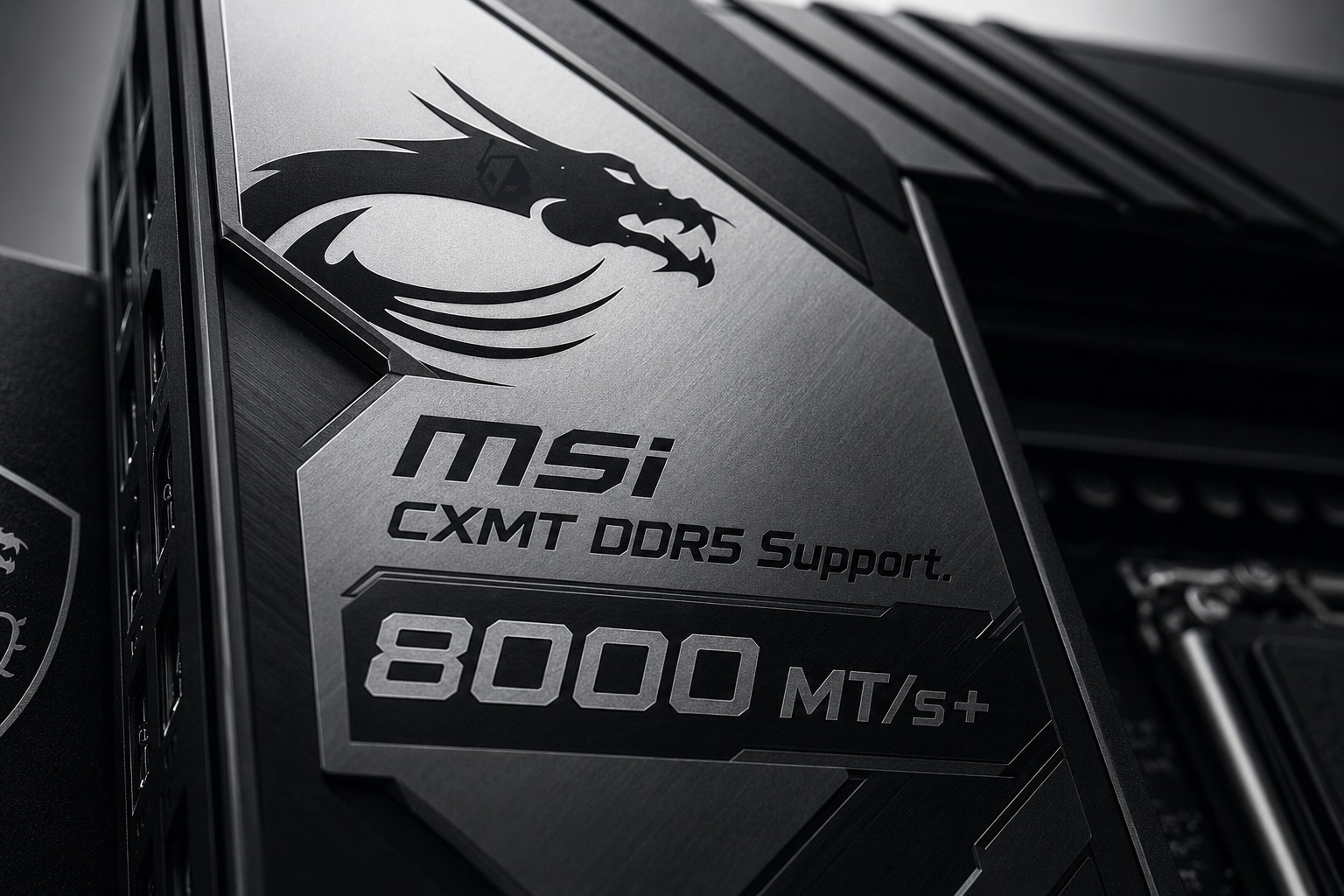
CXMT DDR5 memory support refers to motherboard BIOS and firmware optimizations that recognize CXMT DRAM chips, train their timings correctly, and maintain stable operation at high frequencies, enabling DDR5-8000+ performance levels that were previously unreachable on many Intel and AMD desktop platforms without vendor-specific tuning. For high-speed RAM enthusiasts, the key takeaway is blunt: CXMT-based DDR5 has crossed the line from “cheap but awkward” to “genuinely viable” for extreme frequencies once the right BIOS is in place. MSI says its Intel 800‑series Z890 boards are now fully optimized for CXMT DDR5, delivering stable DDR5‑8000+ operation after dedicated memory training and timing work. ASUS, meanwhile, has rolled out a Beta BIOS for several AMD 600 and 800‑series boards to enhance compatibility with CXMT DDR5 modules and push them beyond 8000 MT/s. This is not a minor tweak; it reshapes the RAM buying calculus for overclockers.
MSI Z890 BIOS Update: DDR5-8600 Is No Longer Exotic
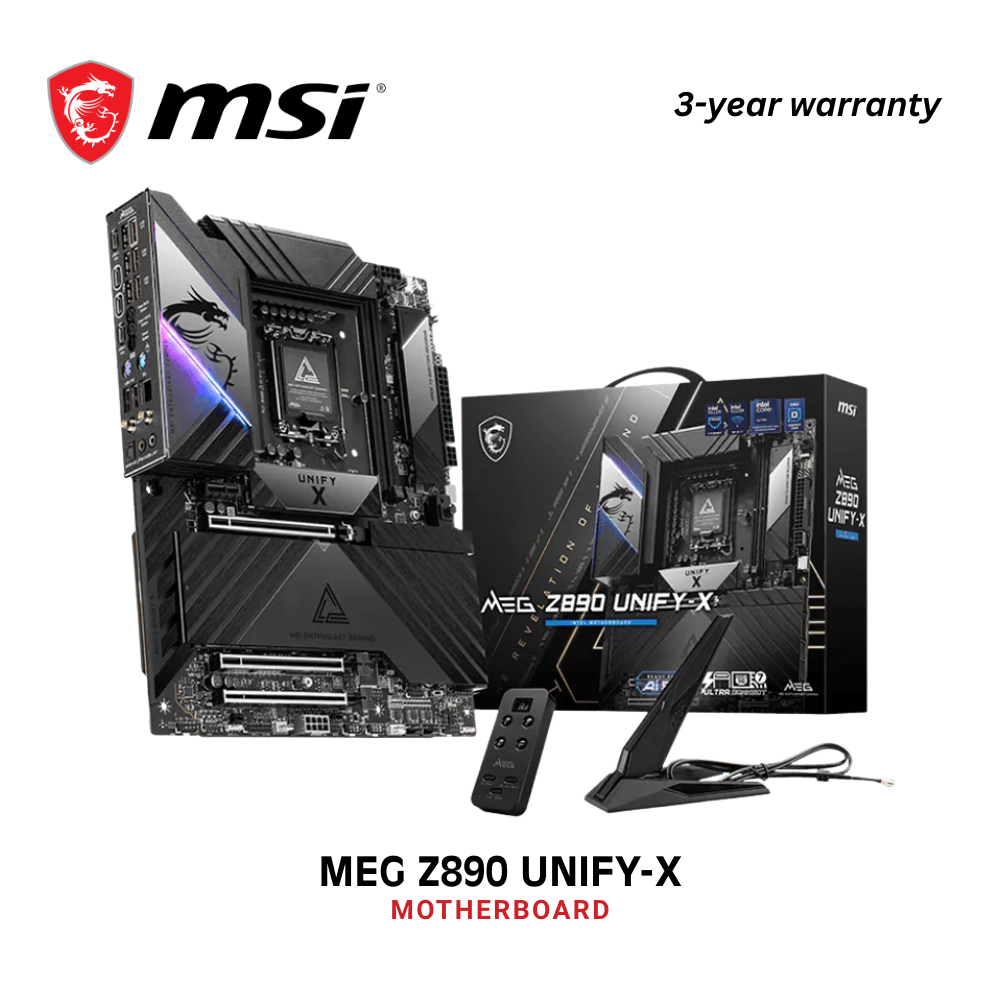
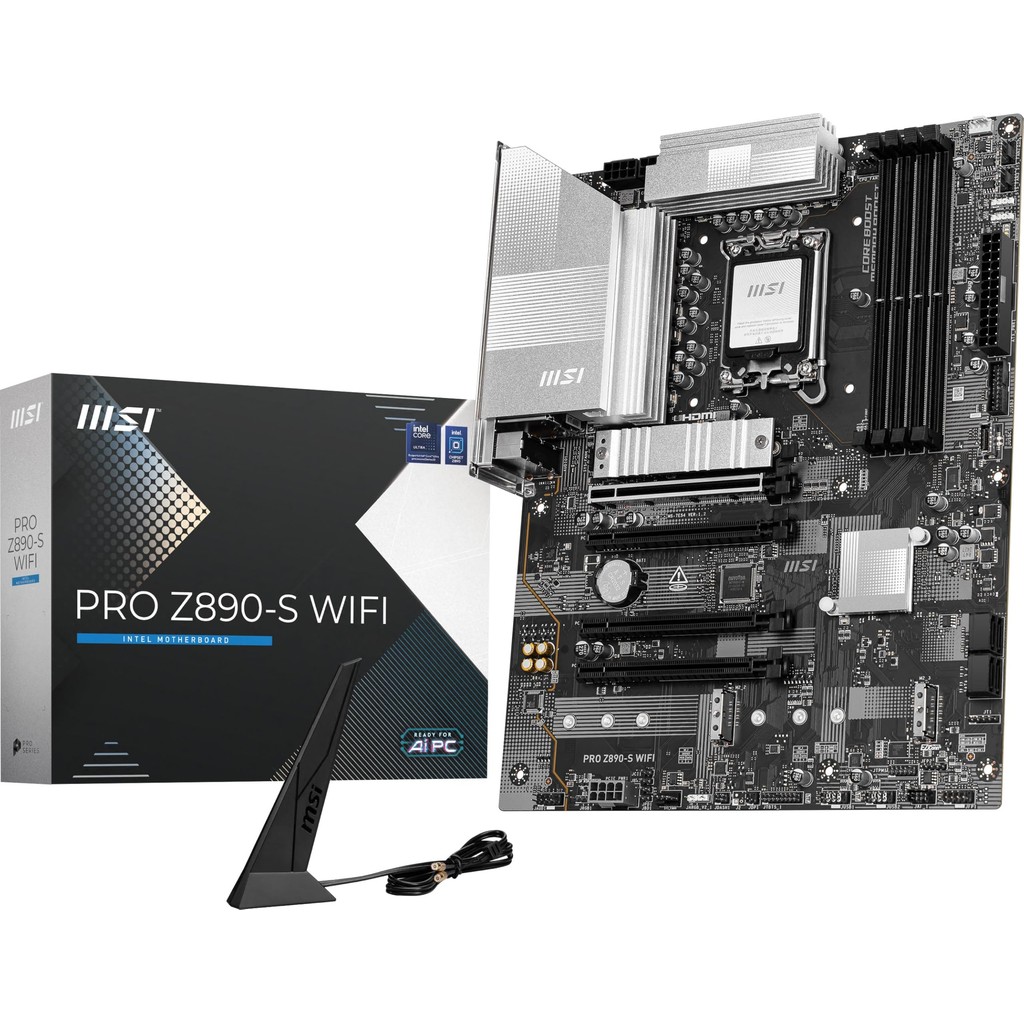
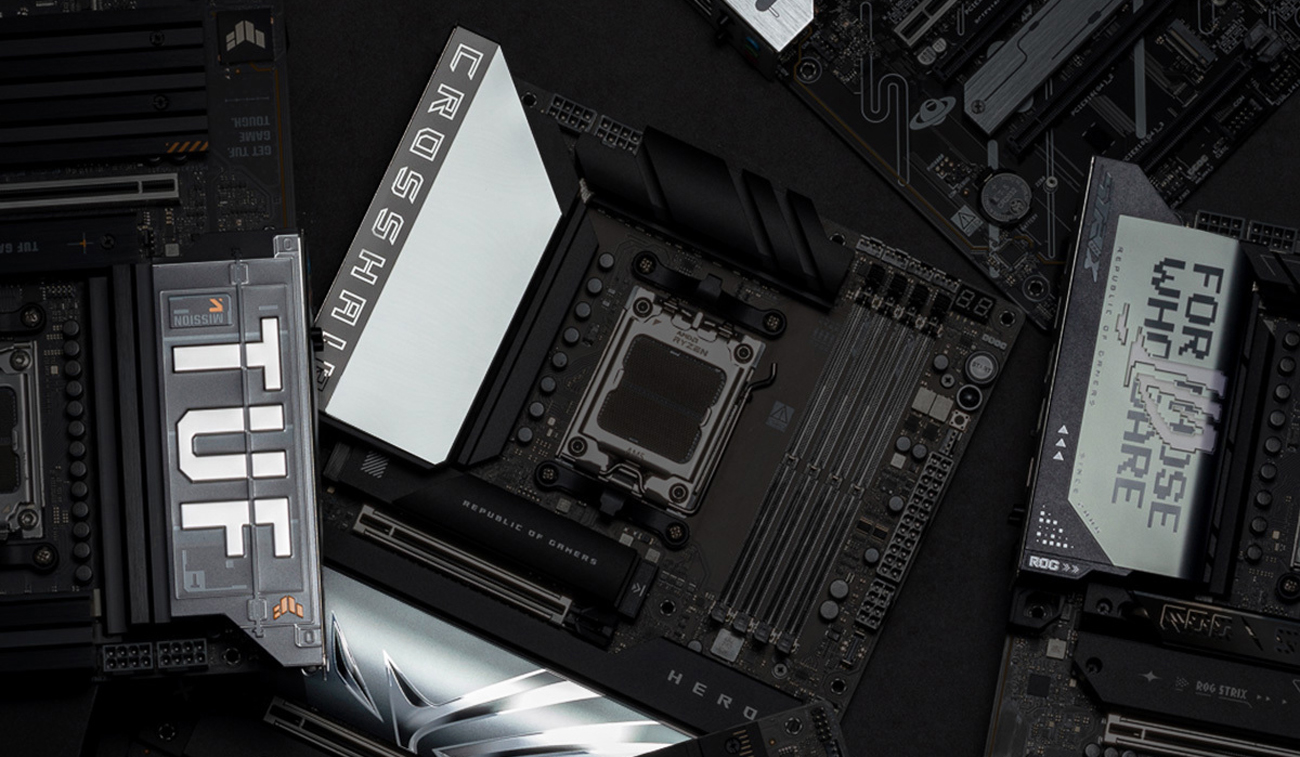
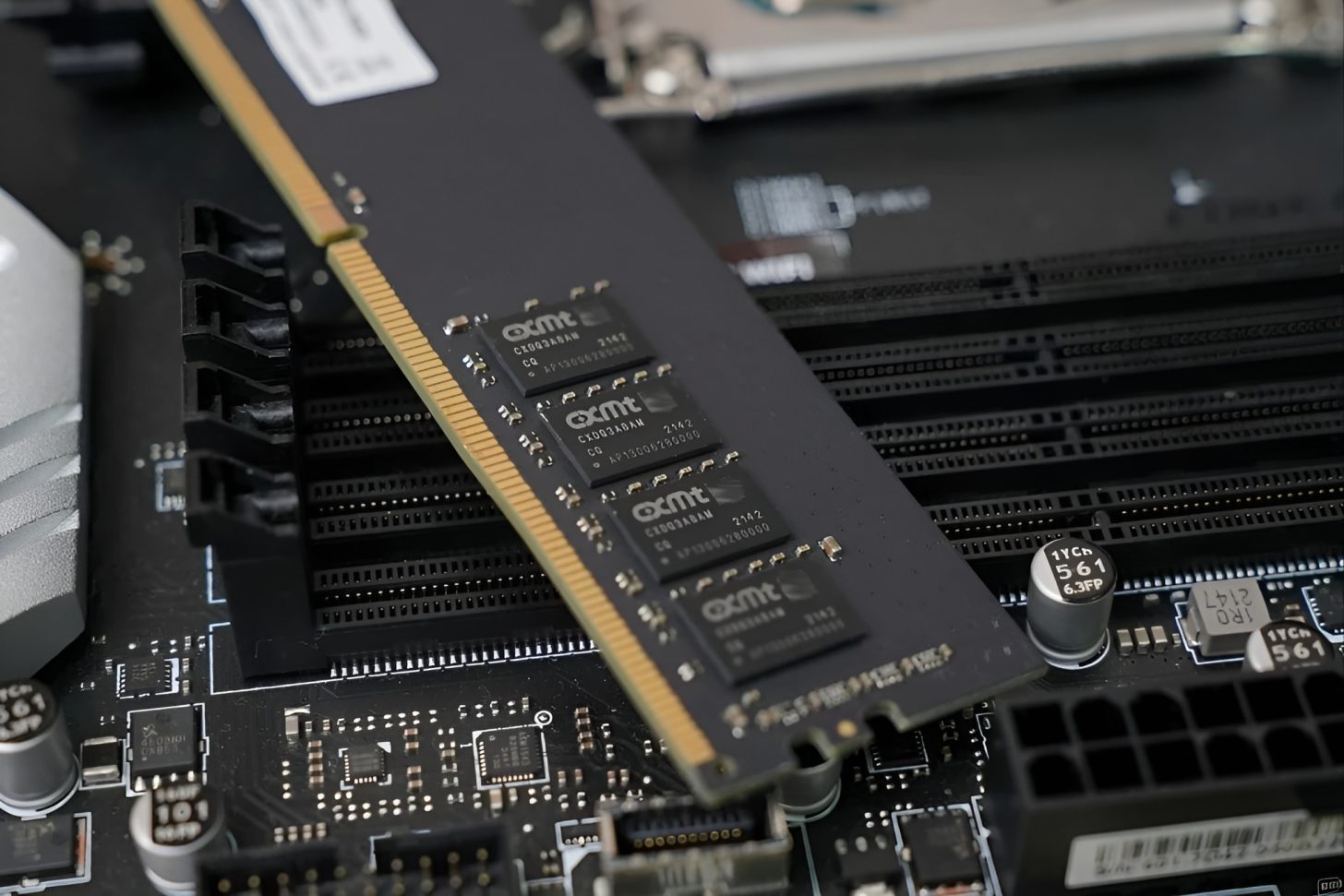
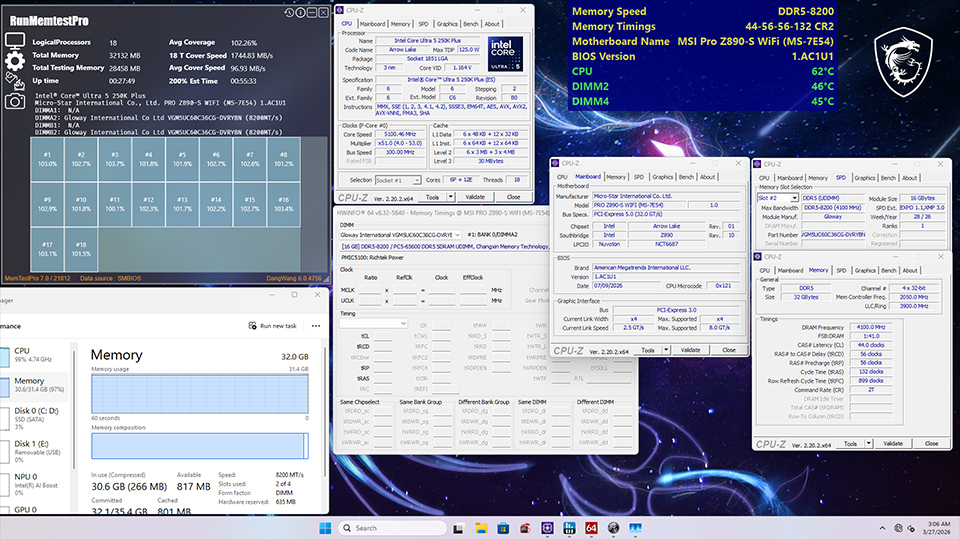
On Intel’s side, the MSI Z890 BIOS update is the turning point for DDR5‑8600 motherboard optimization with CXMT memory. MSI reworked its memory initialization and training routines specifically for CXMT ICs, allowing them to run at much higher frequencies than before. The headline result is clear: the MEG Z890 UNIFY‑X, a two‑DIMM overclocking board, hit DDR5‑8600 with an Intel Core Ultra 5 245K and two 24 GB CXMT‑based modules, passing MemTest beyond 100% coverage at 46‑56‑56‑134 timings. That is the kind of validation overclockers care about. More importantly, this isn’t limited to halo products. The PRO Z890‑S WIFI, a mainstream four‑DIMM board, was validated at DDR5‑8200 with dual 16 GB CXMT modules at 44‑56‑56‑132 timings, also MemTest‑stable. In other words, high-speed RAM compatibility for CXMT isn’t gated to expensive boards anymore; it is moving down the stack.
ASUS on AMD: Beta BIOS Pushes CXMT Beyond 8000 MT/s
AMD builders have historically faced lower ceilings with CXMT DDR5, but that story is changing fast. ASUS has released a new global Beta BIOS for multiple X670 and X870 motherboards, explicitly promising "enhanced memory performance, system stability, and compatibility with CXMT memory chips". That is not marketing fluff; CXMT modules that used to stall around 6000 MT/s are now demonstrated beyond 8000 MT/s on AM5 boards from several vendors. One notable achievement is CXMT‑based DDR5 running at 8400 MT/s on a B850 motherboard, proving that the platform can keep pace with aggressive memory clocks once the firmware understands these ICs. The important point for enthusiasts is philosophical as much as technical: AMD memory tuning is no longer reserved for big‑name DRAM brands. Motherboard makers are treating CXMT as a first‑class citizen, and that makes experimenting with affordable high-speed kits far less of a gamble.

From Barrier to Baseline: Why Vendor Support Matters for CXMT
Until these BIOS updates, the biggest weakness of CXMT DDR5 wasn’t the silicon; it was the firmware surrounding it. CXMT modules became popular largely thanks to their value, but their frequency headroom lagged because motherboard training algorithms were not tuned for their behavior. MSI’s revised BIOS directly addresses this by improving initialization and training, letting the memory operate stably at much higher speeds. ASUS is taking the same route, rolling out BIOS updates aimed at compatibility and stability with CXMT chips. The result is that motherboard manufacturer support removes previous compatibility barriers for enthusiasts adopting CXMT‑based memory: instead of hoping your board “sort of” works with a cheap kit, you can now expect validated DDR5‑8000+ performance on both Intel and AMD platforms when using the right BIOS. For builders, that changes CXMT from a risky experiment into an informed choice.
DDR5 Memory Overclocking Made Practical: What Builders Should Do Next
The most encouraging part of this story is that high-speed CXMT DDR5 is becoming accessible, not merely possible. MSI is folding its CXMT optimizations into MEMORY TRY IT, a one‑click DDR5 memory overclocking feature that exposes validated profiles right in the BIOS. Instead of manual tuning of frequencies, voltages, and dozens of timings, you select a tested profile and let the board handle the complex parameters. With fully optimized CXMT DDR5 memory support now announced for Intel 800‑series boards, and earlier AMD AM5 work already breaking the old 6800 MT/s barrier, builders on both platforms can target 8000 MT/s and beyond with far more confidence. The opinionated advice is simple: if you care about high-speed RAM compatibility but don’t want to pay flagship DRAM prices, start shortlisting motherboards that advertise CXMT DDR5 memory support and keep their BIOS updated. The firmware has finally caught up with the silicon; it is time your next build does too.