

MSI’s Gaming Spectrum: Same Brand, Two Very Different Missions
An MSI gaming laptop comparison between the Raider 18 HX and Cyborg 14 A2RV is a head-to-head look at how one brand covers both extreme performance needs and budget-conscious portable gaming performance in two very different machines that share the same gaming DNA but aim at opposite buyers.
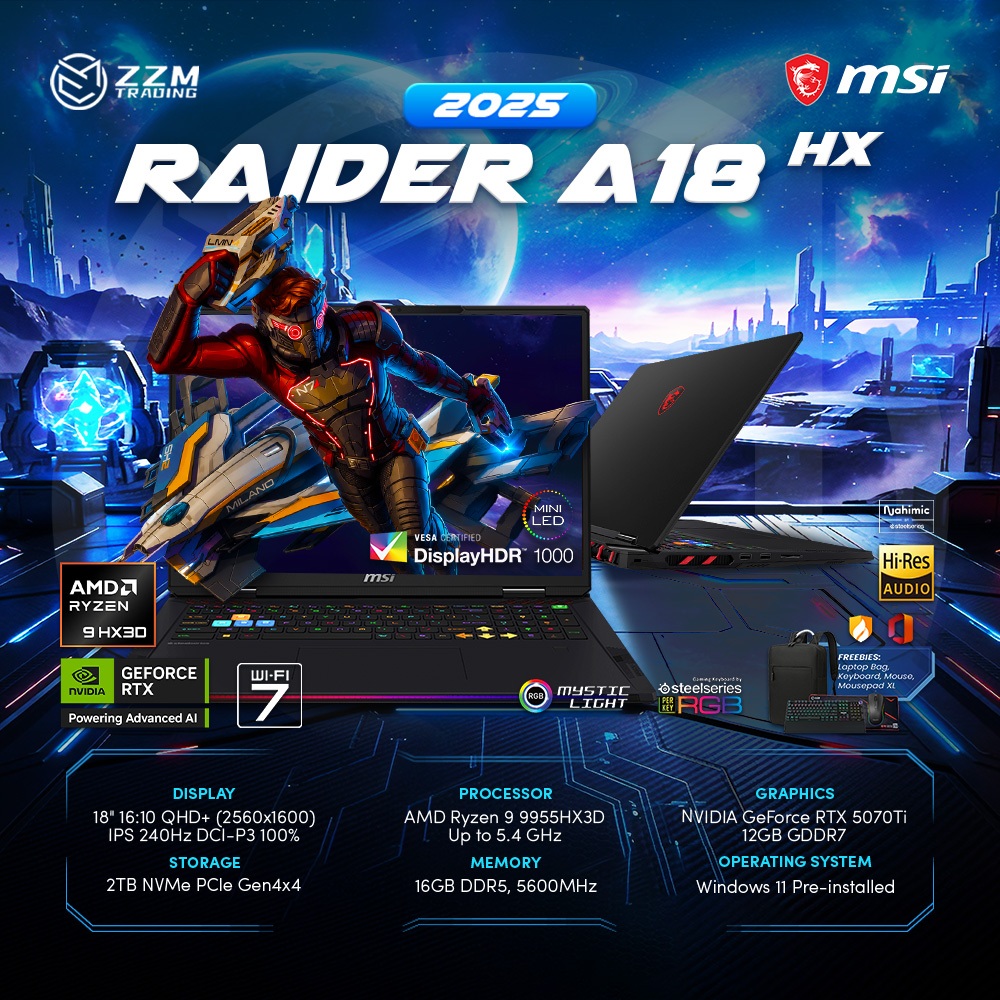
MSI is not offering a simple “big vs small” story here; it is selling two philosophies. The Raider 18 HX is a no-apologies flagship with an Intel Ultra 9-285HX, GeForce RTX 5080, 32 GB of DDR5 RAM, a 2 TB PCIe SSD, and an 18-inch QHD+ 2560×1600 display running at 240Hz. The Cyborg 14 A2RV responds with a much more grounded combo: Intel Core 7 240H, GeForce RTX 4050, 32 GB of memory, a 1 TB M.2 SSD, and a 14-inch WUXGA 1920×1200 144Hz panel. You are not choosing “better vs worse” so much as “overkill vs smart enough,” and that is the mindset buyers need to adopt from the start.
| Spec | MSI Raider 18 HX | MSI Cyborg 14 A2RV |
|---|---|---|
| CPU | Intel Ultra 9-285HX | Intel Core 7 240H |
| GPU | Nvidia Ge-Force RTX 5080 | NVIDIA GeForce RTX 4050 |
| RAM | 32 GB DDR5 | 32 GB memory |
| Storage | 2 TB PCIe SSD | 1 TB M.2 SSD |
| Display | 18" QHD+ 2560×1600 240Hz | 14" WUXGA 1920×1200 144Hz |
| OS | Windows 11 Pro | Windows 11 Pro |
| Price | USD 3,739.99 → 3,467.98 (approx. ₱209,200) | ¥209,800 (approx. USD 1,296 / ₱72,600) |
Raw Power vs Practical Value: RTX 5080 vs RTX 4050
If you care about peak frame rates and heavy workloads, the Raider 18 HX is unapologetically the performance king. The Ultra 9-285HX is described as “top-of-the-line” and pairs with an RTX 5080 that is built for 4K gaming, which means driving a QHD+ panel at 240Hz with high settings and upscaling is exactly the use case it was designed for. In other words, this machine is tuned for maxed-out visuals, high-refresh esports, and demanding tasks like 4K video editing and 3D rendering without breaking a sweat.
The Cyborg 14 A2RV, by contrast, is the definition of “good enough” done well. Its RTX 4050 belongs to a previous-generation GPU, but combined with a 1920×1200 WUXGA 144Hz display, it offers enough power to run the latest game titles comfortably at its native resolution. One quotable reality check: “MSI's ‘Cyborg 14 A2RV’ delivers an RTX 4050 and 32GB of memory in the ¥200,000 range, making its cost performance particularly striking.” The performance gap is undeniable, but so is the value gap—and many players will never exploit the Raider’s surplus power.
Screen Size and Portability: 18 Inches of Immersion vs 14 Inches of Freedom
The size difference between these two MSI gaming laptops is not cosmetic; it defines how you live with them. The Raider’s massive 18-inch 2560×1600 panel uses a 16:10 aspect ratio, delivering more vertical space for games, apps, and spreadsheets, and making both gaming and work more comfortable than a typical 16:9 panel. Combined with 240Hz and QHD+ resolution, immersion and clarity are clearly on the Raider’s side. This is the machine for sprawling RPG sessions, content creation timelines, and screen-heavy productivity—if you are willing to lug it around.
The Cyborg 14 A2RV plays the opposite card: portability. Its 14-inch WUXGA display and compact chassis are explicitly pitched to people who move their laptop around the house or bring it to LAN parties. This is where portable gaming performance matters more than raw numbers. You lose inches of screen real estate and some immersion, but you gain a system that is far easier to use on cramped desks, in backpacks, or in shared spaces. If your gaming life is mobile-first, the Cyborg’s size advantage is more meaningful than any benchmark delta.
Performance-Per-Dollar: When Is Flagship Overkill?
The Raider 18 HX is blunt about its cost: it dropped from USD 3,739.99 (approx. ₱225,700) to USD 3,467.98 (approx. ₱209,200), and even with that discount, it is described as “very heavy on the pocket” and a top-of-the-line gaming laptop. You pay for the privilege of over-spec hardware and future-proofing—RTX 5080, Ultra 9-285HX, 2 TB SSD, 32 GB RAM—and you should only do that if you will exploit these strengths for 4K content, demanding creative workloads, or if you insist on uncompromised settings and frame rates.
The Cyborg 14 A2RV lands at ¥209,800, approximately USD 1,296 (approx. ₱72,600), and stands out precisely because mid-range GPU laptops often exceed ¥300,000 (approximately USD 1,851). That gap is where its value proposition shines: RTX 4050, 32 GB memory, 1 TB SSD, and a capable 144Hz screen in the low ¥200,000 range. Another quotable takeaway is that this configuration is “more than sufficient as an entry point into gaming laptops,” offering clear value for those who want performance-per-dollar instead of bragging rights. The shared weakness between both machines is not technical; it is financial. MSI gaming laptops remain significant investments, and buyers must be honest about how much performance they will actually use.
Conclusion: Choose Philosophy, Not Just Specs
The real choice between the MSI Raider 18 HX and Cyborg 14 A2RV is philosophical. The Raider is for people who prefer a “no compromise” rig even if it costs more than many desktops, and who treat their gaming laptop as both a battle station and a workstation. The Cyborg is built for players who want a fair deal: an RTX 4050, modern Intel Core 7 240H processor, 32 GB of memory, and portable 14-inch chassis at a price that undercuts many mid-range competitors.
In a market flooded with near-identical gaming machines, MSI’s spread from nuclear-level power to clear value is refreshing. If you need the fastest hardware you can carry, the Raider 18 HX makes sense despite its cost. If you want a more grounded, portable gaming performance that respects your budget, the Cyborg 14 A2RV is the smarter, more disciplined pick. Either way, the worst mistake is to pay for performance you will never use.