
Palit’s RTX 3060 Infinity 2 OC: An Old GPU with a New Job
The Palit GeForce RTX 3060 Infinity 2 OC is a refreshed version of NVIDIA’s older Ampere-based RTX 3060 that keeps the original 3,584 CUDA cores and 12GB GDDR6 memory while adding a redesigned cooling solution and modernized board design to reposition the card for today’s AI and gaming workloads.
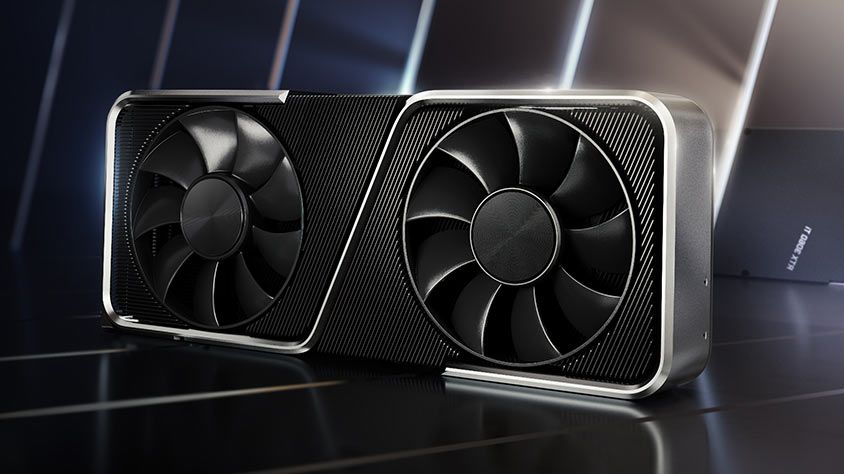
Palit has introduced the RTX 3060 Infinity 2 OC as a compact, dual-slot graphics card with a new Infinity 2 cooler, dual axial fans, and 0dB fan-stop behavior under light loads, while leaving the GA106 GPU architecture untouched. The chip runs at a 1,320 MHz base clock and a modest factory overclock to a 1,792 MHz boost clock, less than 1% above NVIDIA’s original 1,777 MHz specification. In practical terms, this is not a performance leap; it is a repackaging of a known quantity. But that is exactly the point: the RTX 3060 refresh is less about frames per second and more about putting a proven design back on shelves during a GPU supply shortage driven by AI workload demand.
AI Boom, GPU Supply Shortage, and Why Ampere Is Back
NVIDIA has relaunched its GeForce RTX 3060 to combat component scarcity caused by the AI boom, and Palit’s Infinity 2 OC is the clearest proof that this strategy is moving from idea to shipping hardware. Late last year, the PC hardware industry entered one of its most turbulent periods as AI models started devouring memory, storage, and compute capacity, pushing commodity silicon prices sharply upward with no sign of relief. GPUs, which briefly dodged the early shock, were eventually pulled into the same price spiral as capacity and materials shifted toward high-margin AI parts.
In this context, reviving a 2021-era architecture is less nostalgia and more triage. According to one analysis, rebooting the RTX 3060 makes sense for manufacturers because Samsung’s older 8nm process offers better yields than the expensive TSMC N5 node used for newer Ada and Blackwell GPUs. If the cutting-edge nodes are busy feeding data centers and HBM-equipped accelerators, consumer GPUs must come from somewhere else. Bringing back Ampere-based cards with refreshed coolers is a way to keep mainstream shelves stocked without competing with AI hardware for the most constrained process technology.
Why 12GB Still Matters for AI Workloads and Budget Gaming
The Infinity 2 OC’s biggest selling point is not its mild overclock; it is the 12GB GDDR6 framebuffer on a 192-bit bus. For years, the RTX 3060 has been one of the most widely used GPUs for Full HD gaming because it balances performance, price, and memory capacity well enough for 1080p and many 1440p titles. That same memory pool now gives it a second life in the age of AI workload demand. When you are buying a GPU like this, the looks and RGB are secondary; the main draw is that 12GB pool, which can host larger models and textures than the 8GB common on newer midrange cards.
For hobby AI users running inference locally and creators experimenting with smaller models, 12GB is a practical threshold: enough to load many finetuned LLMs or diffusion models without paging everything to system RAM, and still perfectly capable of modern gaming at 1080p with features like hardware ray tracing, DLSS, mesh shaders, and Variable Rate Shading. In other words, while flagship GPUs chase ever larger AI clusters, older architectures like Ampere maintain real value in the messy middle of the market—people who need a single card that can game, experiment with AI, and not destroy a mainstream power budget.
How the Refresh Stacks Up Against Modern Alternatives
Looked at purely as a gaming card in isolation, the RTX 3060 Infinity 2 OC can seem attractive: efficient 170W board power, compact 247.3 mm length, quiet 0dB operation at idle, and support for all the current rendering buzzwords. But compared to newer RTX 50-series GPUs, the story changes. Analyses note that cards like the RTX 5060 Ti deliver clearly higher performance, better efficiency, and newer DLSS 4.5 features, even if some of them ship with only 8GB of VRAM. Unless you are hitting VRAM limits with high resolutions and ray tracing, a modern midrange GPU will outperform the revived 3060 almost across the board.
That is why many reviewers advise consumers to prioritize the RTX 50-series or seek a good used RTX 40-series card instead of treating this graphics card relaunch as a first-choice upgrade. The Infinity 2 OC feels less like a value revelation and more like a pressure valve: a way to relieve GPU supply shortage pressure without sacrificing precious next-gen wafers to budget cards. For pure gaming builds with some flexibility in budget, the smarter move is still to buy newer silicon and live with 8GB VRAM, unless your workload is explicitly memory-bound.
What Palit’s Move Tells Us About the Future GPU Market
Palit’s RTX 3060 Infinity 2 OC is a clear signal of where the GPU market is heading: AI gets the cutting edge, while gamers and hobbyists increasingly share space with revived architectures. NVIDIA has relaunched a five-year-old graphics card to shore up supply in the face of AI-fueled component scarcity. Board partners like Palit are responding with refreshed coolers and quiet designs rather than radically new chips, because the limiting factor is silicon allocation, not imagination.
And yet, the move also highlights a more optimistic reality: older GPUs remain useful for a long time when their memory and feature sets align with real workloads. Demand for the RTX 3060 stays strong because it still offers a credible mix of performance, 12GB memory, and modern rendering features, even years after launch. In that sense, the Infinity 2 OC is both stopgap and strategy. It patches today’s AI-driven shortages while quietly redefining expectations: in the next phase of the GPU market, architectural age will matter less than whether a card’s capabilities match your specific mix of gaming, creation, and AI experiments.