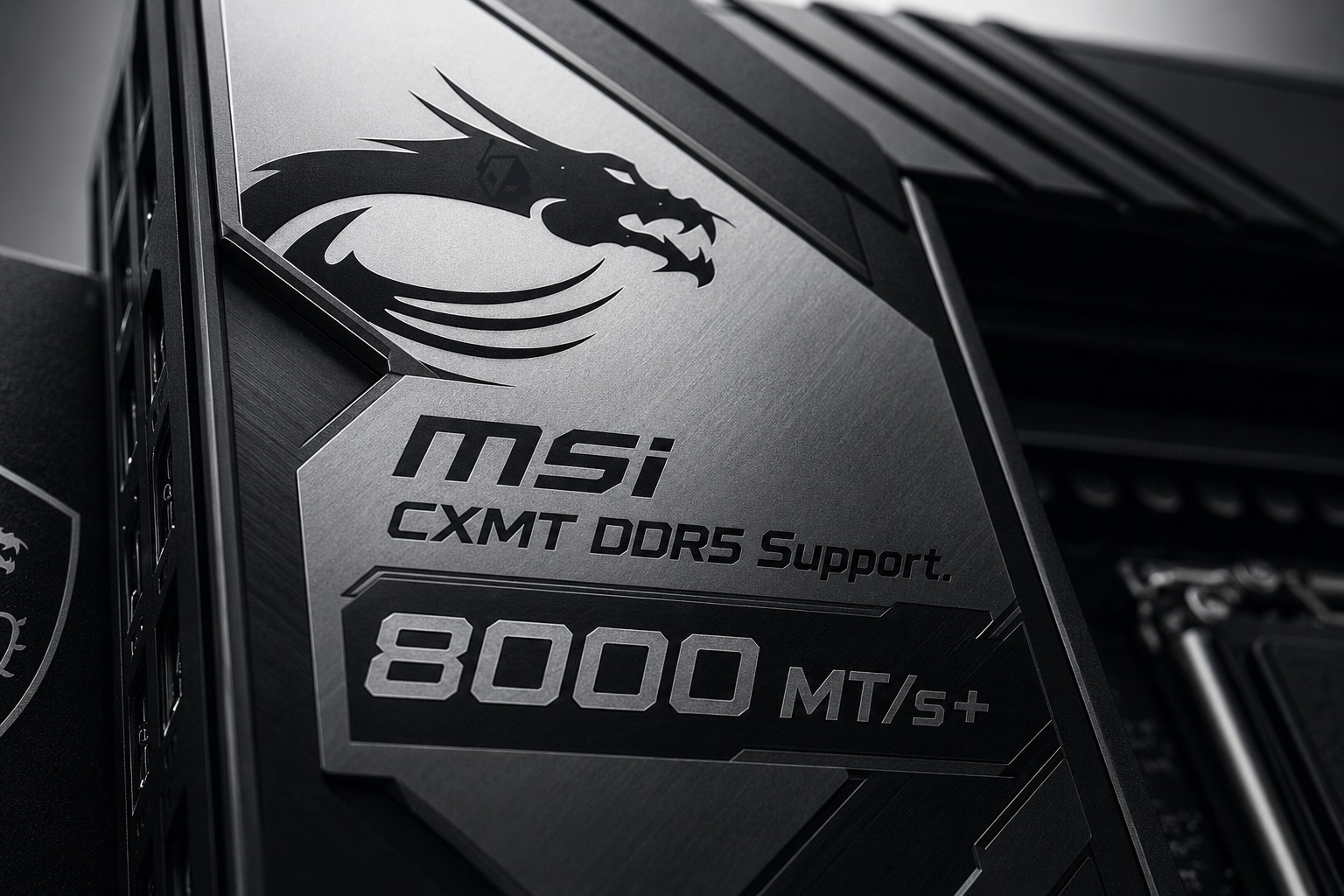

What MSI’s CXMT DDR5-8600 Push Really Means
MSI’s DDR5-8600 memory support for CXMT DDR5 RAM on Intel and AMD platforms is a set of BIOS-level optimizations and pre-tuned profiles that allow compatible motherboards to run CXMT-based DDR5 modules at over 8000 MT/s, targeting enthusiasts who want to squeeze extra performance out of high-speed memory tuning without fully manual overclocking. This is not a casual quality-of-life update; it’s MSI making a clear bet that DRAM from CXMT (ChangXin Memory Technologies) deserves a seat at the same table as long-dominant memory brands. For PC builders, the headline is simple: more choice at the bleeding edge, and potentially more performance per dollar, if you are willing to care about RAM speeds at this level.
Inside the MSI Motherboard BIOS Optimizations
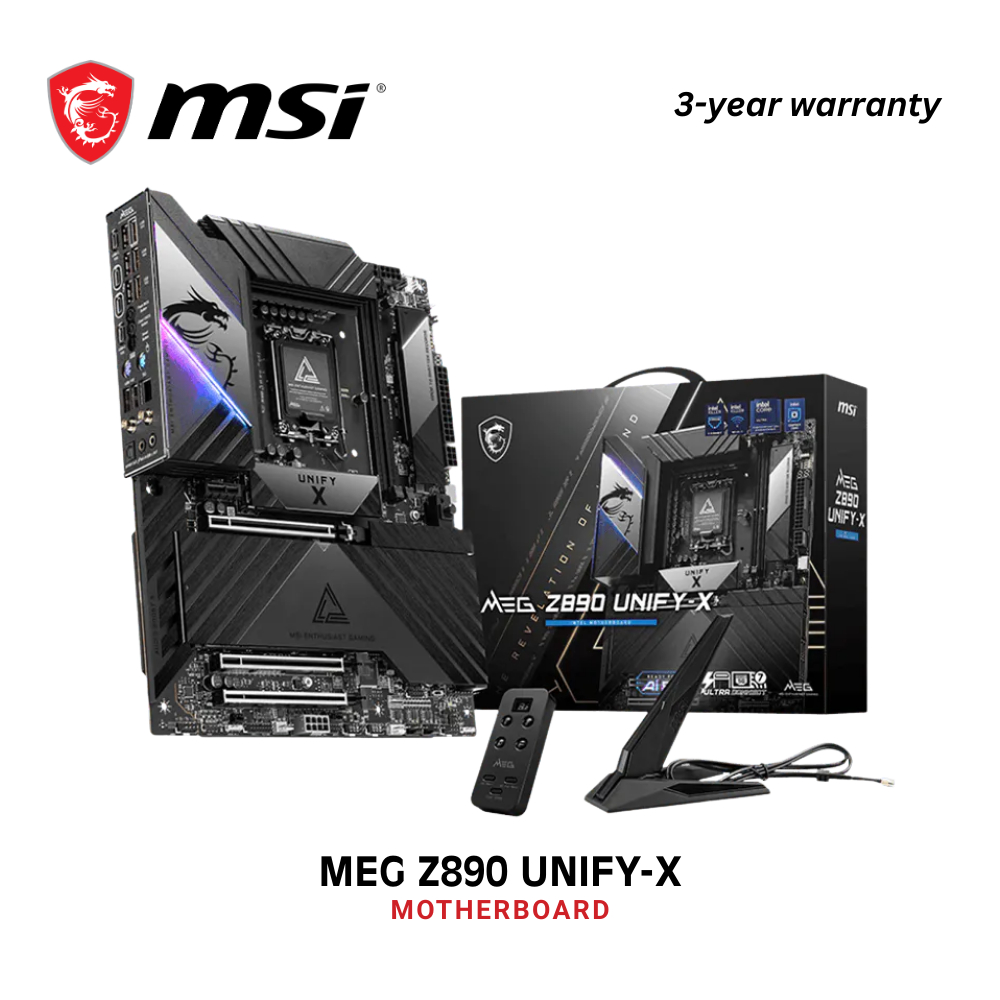
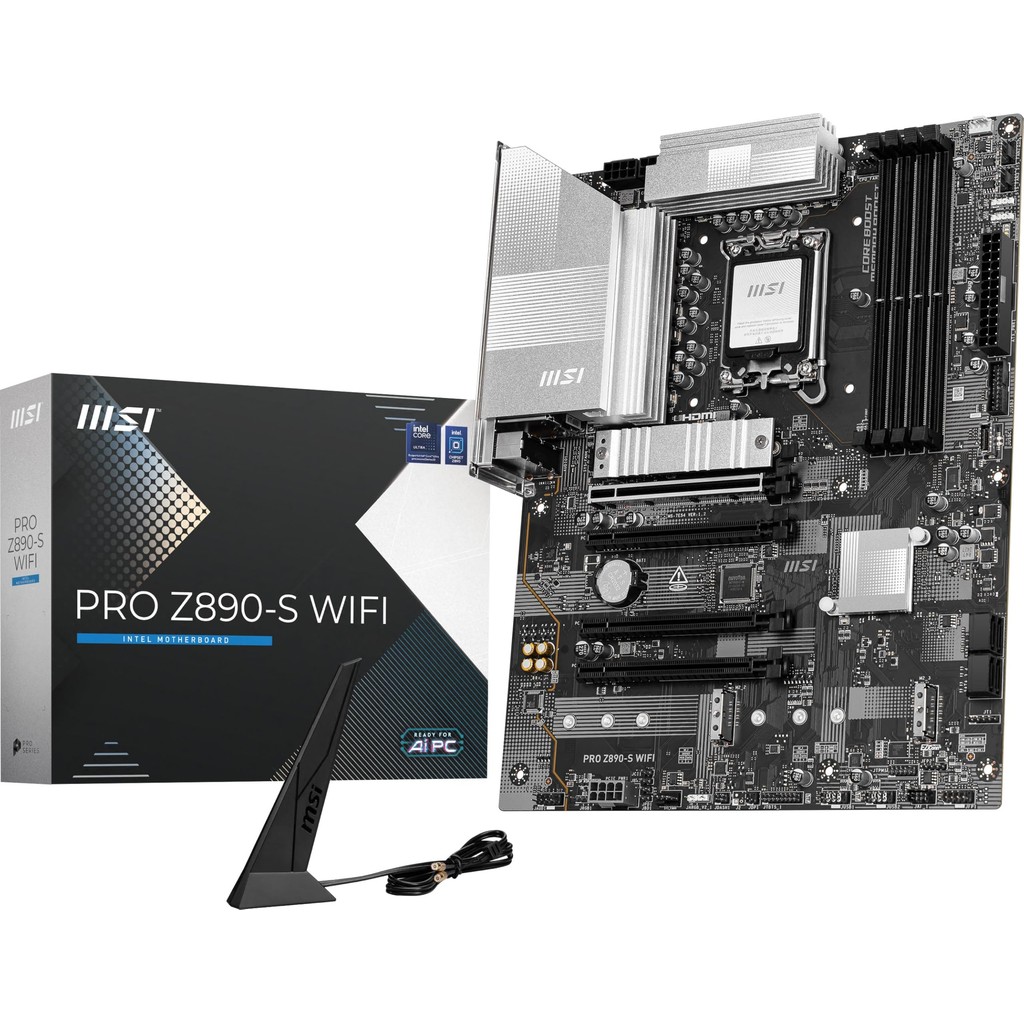
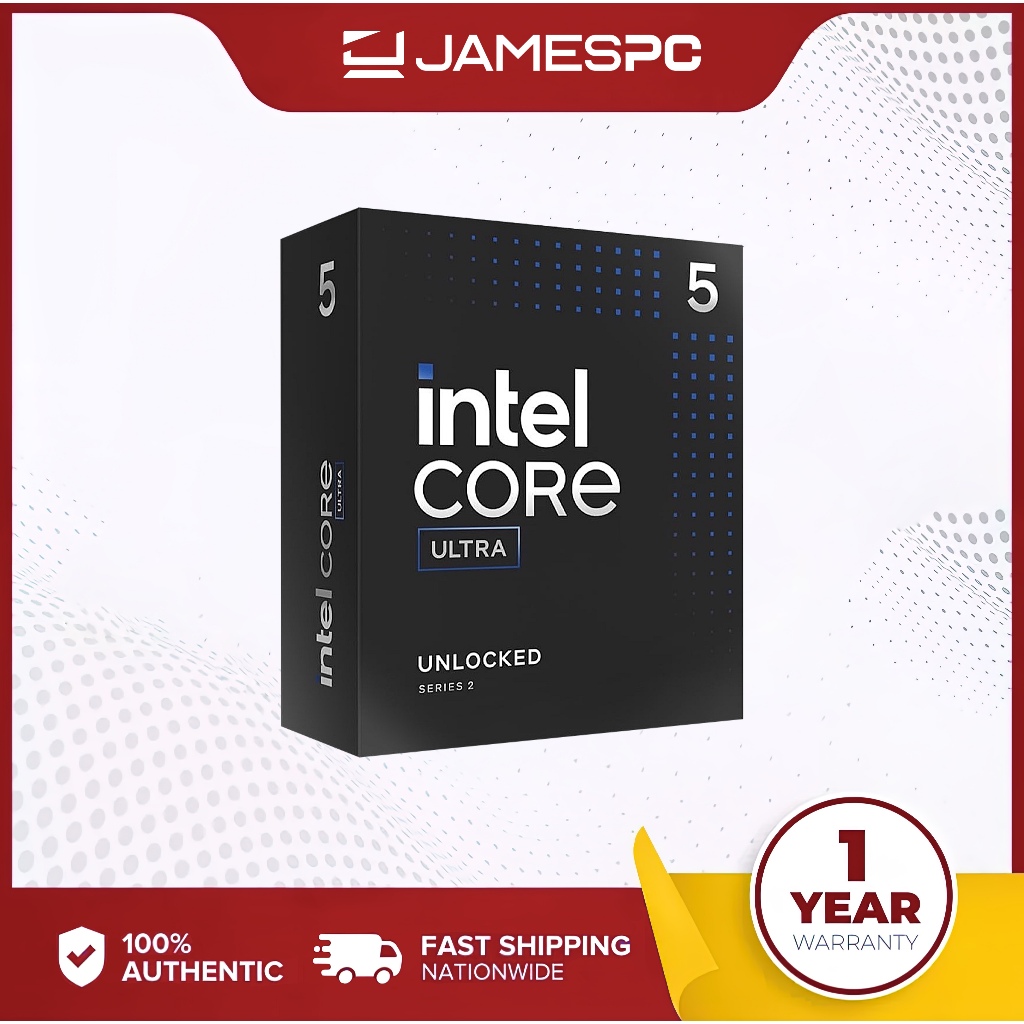
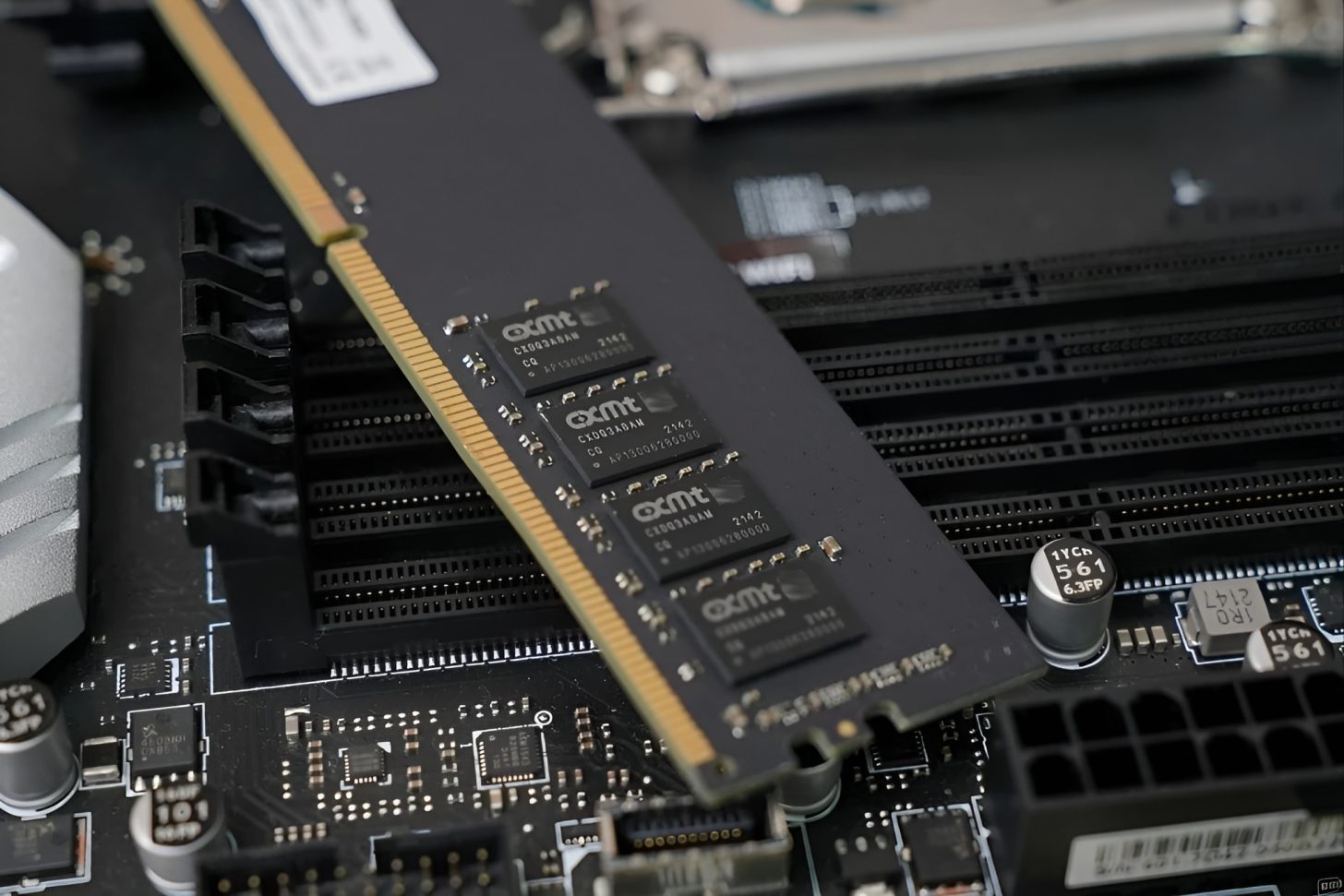
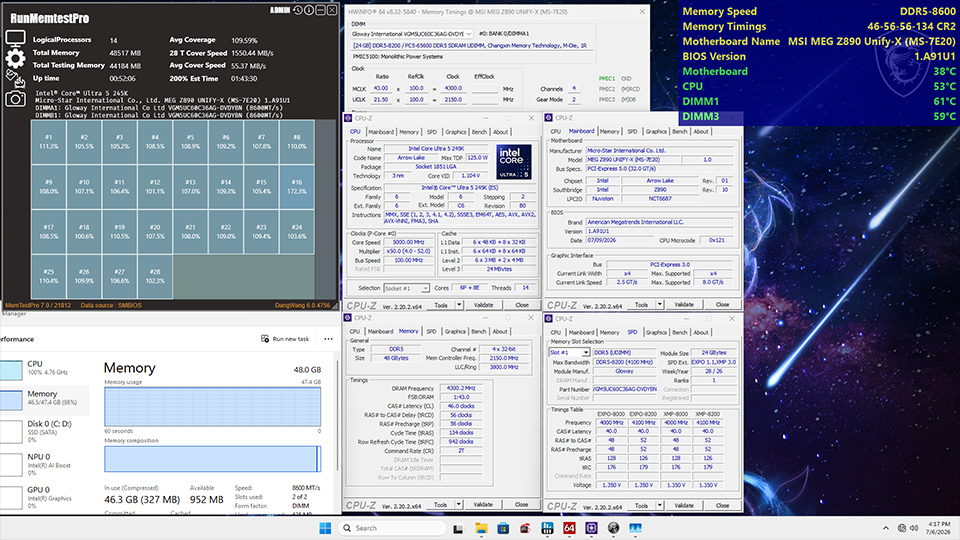
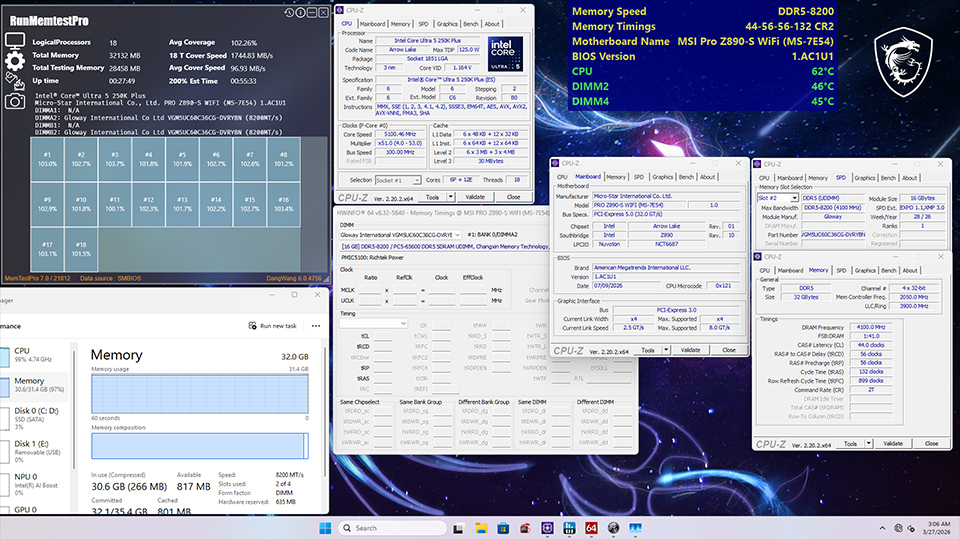
The real story is in the MSI motherboard BIOS. MSI has reworked memory training routines and timing optimization specifically for CXMT memory ICs, improving initialization and training behavior so these modules can run stably at far higher speeds than before. According to MSI, its Intel 800-series motherboards now offer “fully-optimized” DDR5 memory support, enabling over 8000 MT/s on high-end boards. On the MEG Z890 UNIFY-X, MSI validated DDR5-8600 operation using an Intel Core Ultra 5 245K and two 24 GB CXMT DDR5 modules at 46-56-56-134 timings, passing MemTest beyond 100% coverage. Even the more mainstream PRO Z890-S WIFI hit DDR5-8200 with two 16 GB CXMT modules and similar MemTest validation. Folding these results into the MEMORY TRY IT feature means users can pick pre-validated high-speed profiles instead of hand-tuning dozens of parameters.
CXMT DDR5 RAM: A New Contender in High-Speed Memory
CXMT DDR5 RAM has quietly shifted from a domestic alternative to an increasingly interesting choice for performance builds. CXMT has become a go-to DRAM manufacturer where domestically produced memory is preferred to reduce reliance on offshore brands that charge high prices for their solutions. CXMT-based DDR5 modules are already popular because of their competitive pricing, but until now they were often capped around DDR5-6800 in real-world systems. MSI was among the first to enable optimized CXMT DDR5 support on AM5 motherboards, then extended this work to Intel LGA 1851 platforms, unlocking over 8000 MT/s on its high-end 800-series boards. In effect, CXMT is moving from "budget-friendly but limited" to "viable high-speed rival" to established names like SK hynix, especially as motherboard vendors demonstrate that the speed ceiling is a firmware problem as much as a silicon one.
Who Actually Benefits from DDR5-8600 Memory Support?
There is a tempting narrative that more memory speed automatically means a faster PC, but DDR5-8600 support is a niche win. MSI’s validated results are impressive: DDR5-8600 on a two-DIMM MEG Z890 UNIFY-X and DDR5-8200 on a four-DIMM PRO Z890-S WIFI, both with MemTest coverage beyond 100%. However, these achievements depend on specific motherboard layouts, CPUs, and CXMT modules that play nicely with the tuned BIOS. High-speed CXMT memory support demands compatible boards and careful firmware, and while MemTest passes show strong stability in MSI’s test setups, they do not magically grant the same reliability to every random kit or configuration. If your workload is sensitive to memory bandwidth and latency—heavy multitasking, compile times, some simulation tasks—these tuned profiles can shave off seconds. If you are gaming at GPU limits or editing video where storage and CPU matter more, the difference may be hard to notice.
Ecosystem Maturation and Whether You Should Care
The most important takeaway is not that DDR5-8600 exists, but that the DDR5 ecosystem is maturing. CXMT-based DDR5 modules have gained traction partly because of competitive pricing, and now motherboard firmware is catching up to let them run at speeds once reserved for more premium-brand kits. Vendors such as MSI are unlocking more speeds from CXMT’s DDR5, improving compatibility and performance via BIOS updates rather than new hardware. With dedicated firmware now available on both Intel and AMD motherboards, MSI is clearly targeting a rapidly expanding segment of the DDR5 market. For builders, this means more competition and more realistic options at the top end. My view is straightforward: if you enjoy tuning and are buying a compatible MSI board anyway, CXMT DDR5 RAM with DDR5-8600 memory support is worth considering. If you value simple, certified stability over marginal gains, stick to proven XMP or EXPO kits and treat this as a sign of where the market is heading, not a must-have today.