
Budget Fujifilm Lenses: Native vs Third‑Party at a Glance
Budget third-party camera lenses for Fujifilm, such as compact pancakes and mid‑telephoto primes, offer affordable lens alternatives that trade a little optical polish and system integration for significant savings, smaller size, and focal lengths that native Fujifilm glass either prices higher or does not cover at all.
If you want the cleanest optics, fastest autofocus, and seamless handling, Fujifilm native glass still leads. But if your budget is tight or you need a specific focal length in a smaller, lighter package, third‑party options from SG Image and Viltrox can be smarter buys. The SG Image 25mm f/1.8 pancake aims to deliver much of the X100‑style shooting experience on Fujifilm X bodies for about USD 150 (approx. ₱8,400), while the Viltrox AF 90mm f/2.2 EVO targets portrait shooters who cannot justify the cost or bulk of Fujifilm’s legendary 90mm prime. For many cost‑conscious photographers, the real decision is not “third‑party vs native” in the abstract, but which compromises matter least for how they shoot.
SG Image 25mm f/1.8: The Near‑X100 Experience on a Budget
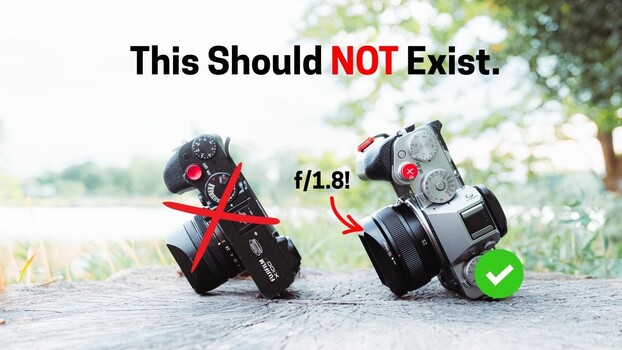
The SG Image 25mm f/1.8 pancake was tested on a Fujifilm X‑T5 specifically to see whether this USD 150 (approx. ₱8,400) lens on an interchangeable‑lens body could stand in for the sought‑after X100VI. It fills a real gap: Fujifilm’s own compact primes in this range, the 23mm f/2.8 and 27mm f/2.8, top out at f/2.8, so nothing native offers an X100‑like f/2‑ish aperture in a slim profile.
According to one reviewer, “build quality impressed him enough that he initially mistook it for an all‑metal construction,” though only the mount and focus ring are metal and the rest is dense plastic with a thin weather‑sealing gasket. In use, the center is sharp wide open, mid‑frame softens, and the corners stay weak until around f/8; stopping down to roughly f/5.6 cleans the frame for landscapes or street. Chromatic aberration is well controlled for the price, but flare is a clear weakness, especially at f/1.8. Autofocus is not the fastest, yet it is accurate enough that missed shots are rare on current Fujifilm bodies. This lens suits travel, casual street, and budget‑minded creators who value small size and speed over edge‑to‑edge perfection, creamy bokeh, or robust weather resistance.
Viltrox AF 90mm f/2.2 EVO vs Fujifilm’s 90mm Portrait Prime
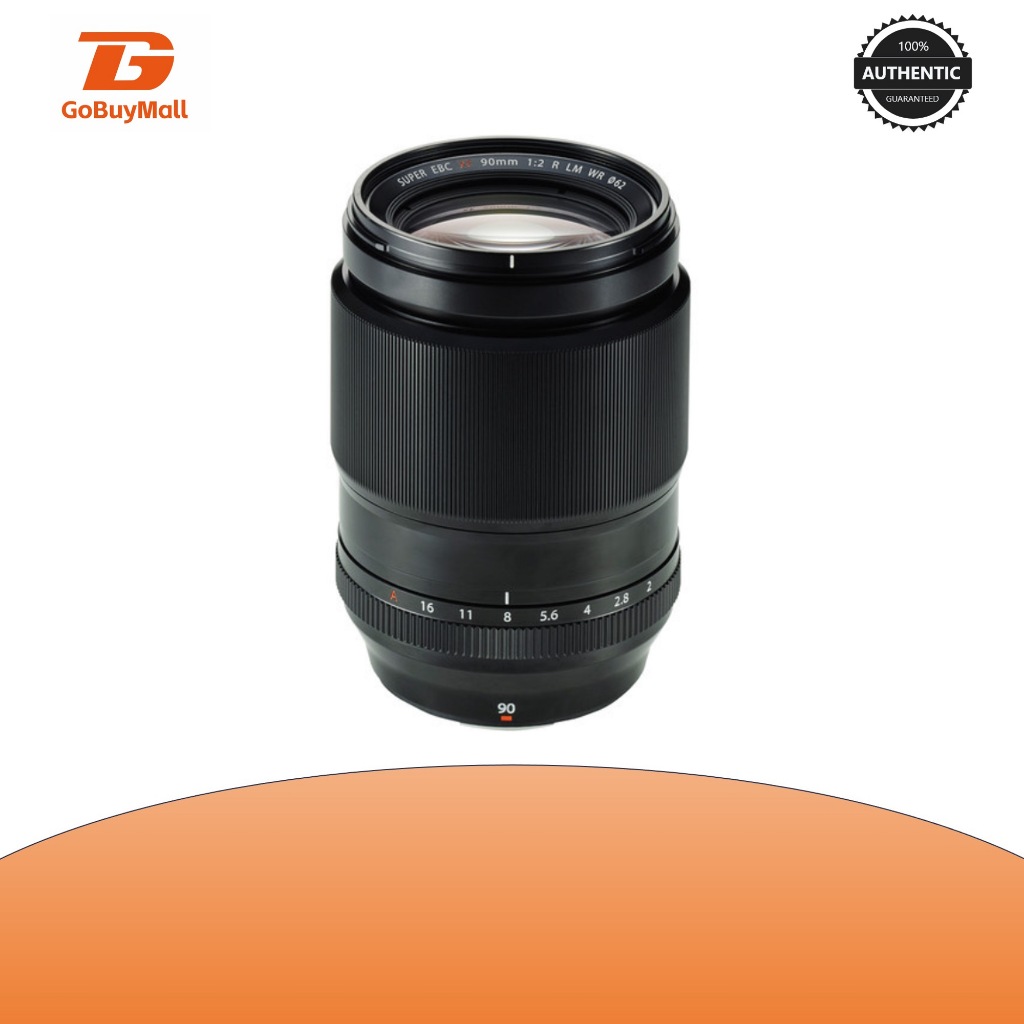
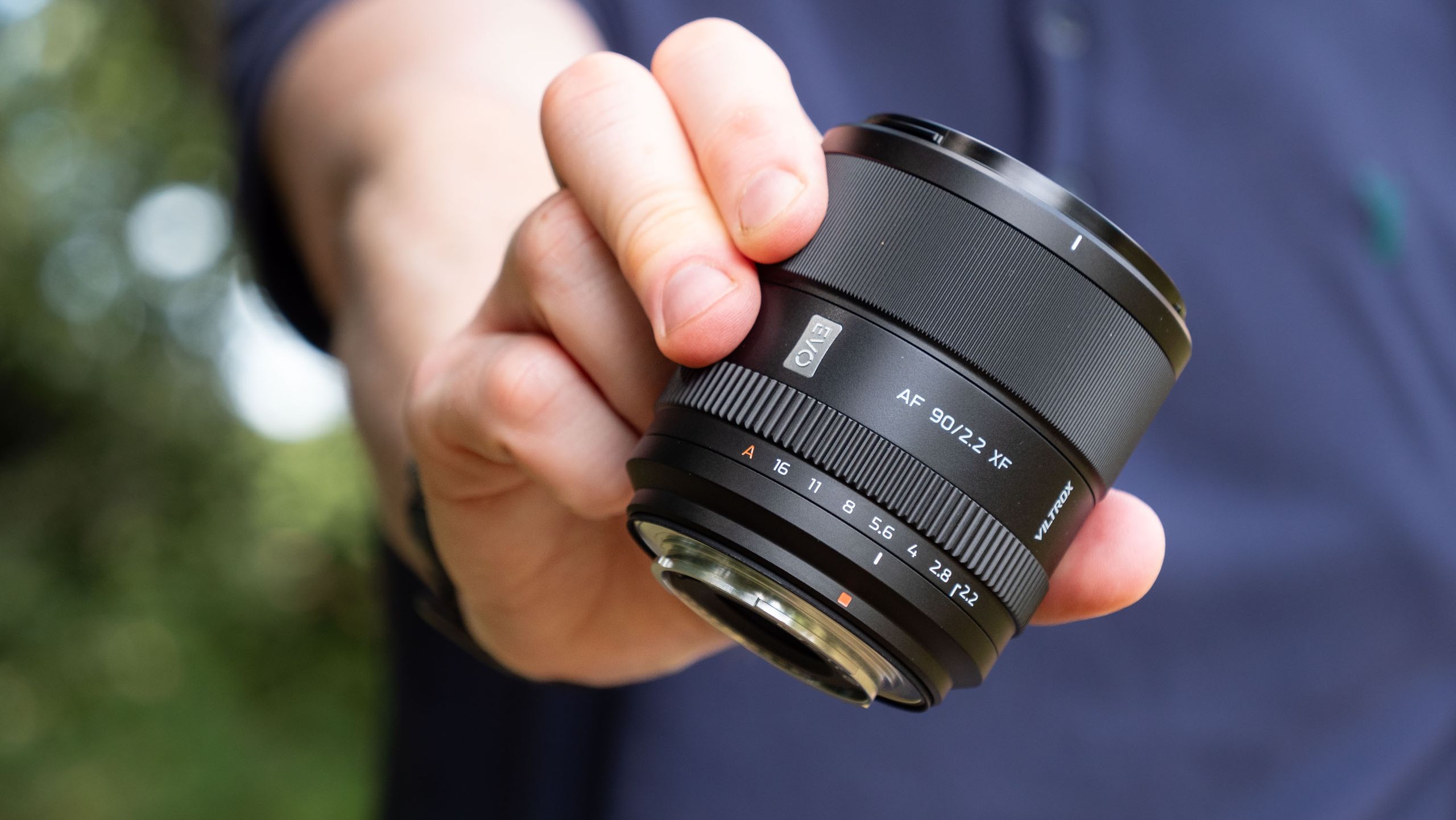
The Viltrox AF 90mm f/2.2 EVO is a mid‑telephoto APS‑C prime (135mm full‑frame equivalent) designed for portraits, available in X‑mount and priced at USD 369 (approx. ₱20,700). It was tested head‑to‑head against Fujifilm’s XF 90mm f/2 R LM WR, a well‑known native portrait lens. Where the Fujifilm wins is obvious: the reviewer notes that the “bulkier Fujifilm lens wins for the dreamiest bokeh and will be worth the extra outlay for portrait specialists,” and that, given unlimited choice, they would still pick the native lens.
However, the Viltrox fights back with size, weight, and value. It uses an all‑metal body, a rubber‑sealed mount, smooth focus ring, and a precise clicked aperture ring, yet weighs only 320 g, making it close to half the weight of Fujifilm’s own 90mm. As an APS‑C 90mm, it is notably the smallest and lightest lens of its type that the reviewer had used. Viltrox’s EVO series is also “almost always way more affordable when compared to the closest proprietary alternatives,” and this lens is no exception. For most people who want compressed portraits, background blur, and a lens that balances well on bodies like the X‑T5 without straining their budget, the Viltrox is described as a stellar alternative.
| Spec | Viltrox AF 90mm f/2.2 EVO | Fujifilm XF 90mm f/2 R LM WR |
|---|---|---|
| Type | Mid‑telephoto prime (APS‑C) | Mid‑telephoto prime (APS‑C) |
| Effective focal length | 135mm equivalent | 135mm equivalent |
| Max aperture | f/2.2 | f/2 |
| Minimum focus distance | 0.74 m | Not specified in sources |
| Max magnification | 0.14x | Not specified in sources |
| Filter size | 58 mm | Not specified in sources |
| Dimensions (approx.) | 69 × 76 mm | Bulkier; close to twice the weight of Viltrox |
| Weight | 320 g (bare lens) | Not far off double the Viltrox’s weight |
| Build | All‑metal barrel, rubber‑sealed mount | Weather‑resistant native design (exact build not detailed) |
| Price | USD 369 (approx. ₱20,700) | 2–3× the Viltrox price range |
Shared Trade‑offs: Where Third‑Party and Native Overlap
Third‑party lenses such as SG Image and Viltrox are not flawless, but many of their weaknesses echo what you see in more expensive glass. The SG Image 25mm shows clear mid‑frame softness and corners that only tighten up around f/8, which echoes the reality that even native pancakes often need stopping down for clean edges. It also struggles most with flare when shot wide open, especially with strong backlight or specular highlights.
The Viltrox AF 90mm f/2.2 EVO follows a similar pattern. Where absolute sharp detail is critical, stopping down from f/2.2 to around f/4 yields better sharpness while also reducing vignetting and chromatic aberration. Autofocus on third‑party lenses can lag slightly behind native Fujifilm options, but the SG Image example highlights that many photographers care more about accuracy than raw AF speed, and on Fujifilm bodies the lens performs well in that regard. Build quality is another nuanced trade‑off: SG Image uses dense plastic with metal in key areas, while Viltrox goes for a more premium all‑metal build, yet both still may fall short of the long‑term durability expectations of heavy professional use.
Buy if / Skip if
- Buy the SG Image 25mm f/1.8 if you want a compact, fast, and affordable lens that mimics much of the X100‑style experience on an X‑mount body while accepting softer corners and flare.
- Skip the SG Image 25mm f/1.8 if you demand strong flare resistance, flawless edge‑to‑edge sharpness at wide apertures, or premium all‑metal build quality.
- Buy the Viltrox AF 90mm f/2.2 EVO if you need a lightweight, mid‑telephoto portrait lens with good image quality at roughly a third to half the cost of Fujifilm’s 90mm, and you value size and price over the absolute smoothest bokeh.
- Skip the Viltrox AF 90mm f/2.2 EVO if you are a portrait specialist who prioritizes the dreamiest possible bokeh and are willing to pay 2–3× more for Fujifilm’s native 90mm f/2.
- Buy the Fujifilm 90mm f/2 if you want top‑tier native rendering and do not mind the added weight and higher price compared with Viltrox’s 90mm.
- Skip the Fujifilm 90mm f/2 if budget and portability are more important than marginal gains in bokeh and native build quality, and the Viltrox 90mm f/2.2 EVO meets your needs.