
What This Ryzen 7700X3D vs 7800X3D Battle Is Really About
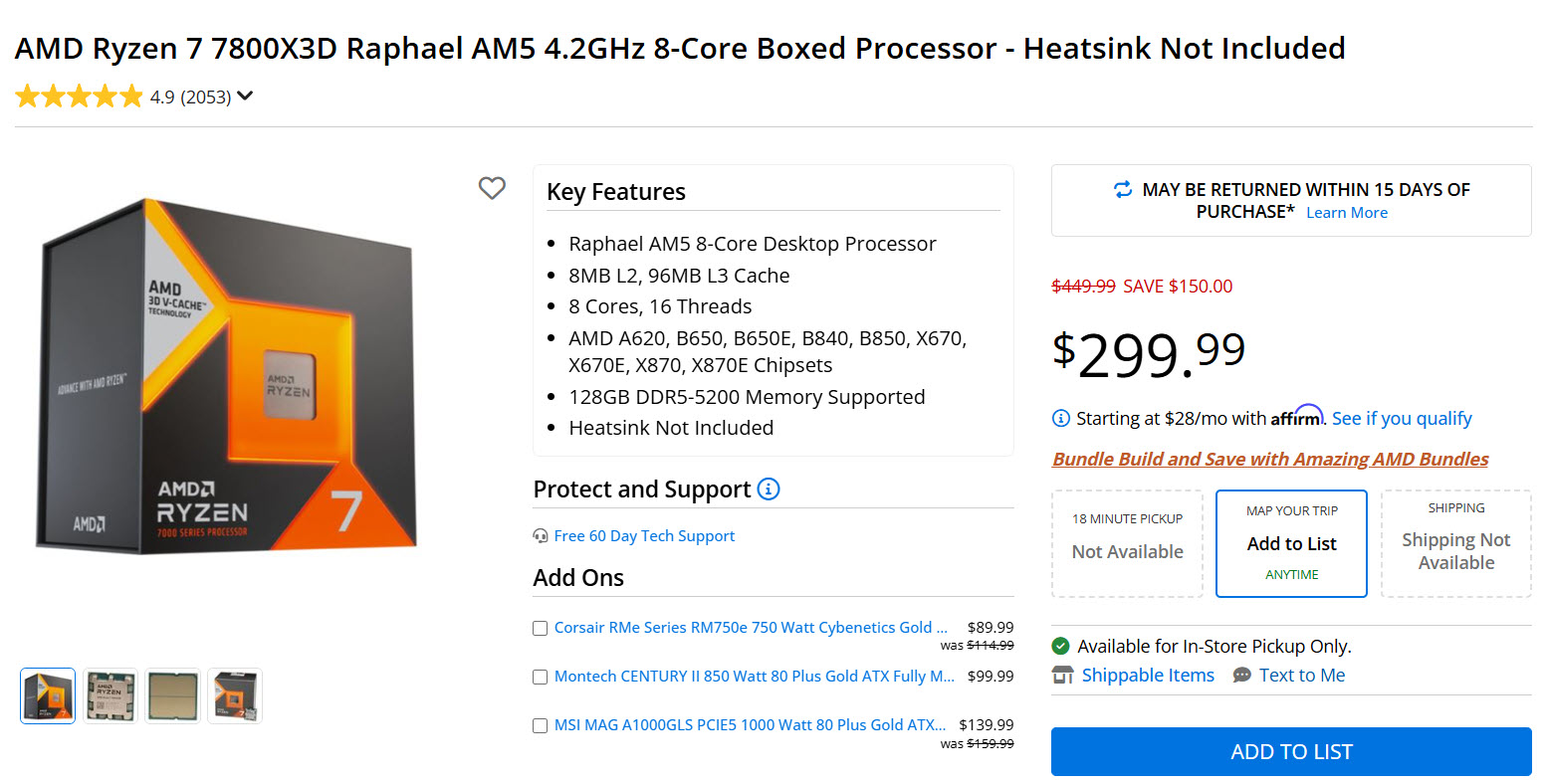
Ryzen 7700X3D vs 7800X3D is a budget gaming CPU comparison between two 8-core AMD X3D processors that share the same 96MB 3D V-Cache but differ in clock speeds and pricing, forcing AM5 builders to choose between slightly slower silicon at official launch price and a discounted flagship chip that undercuts its sibling while delivering marginally higher gaming performance. In plain terms: the 7700X3D exists to make 3D V-Cache more affordable, while aggressive AMD X3D processor pricing on the 7800X3D now blurs that value story. With the 7700X3D launching at USD 329 (approx. ₱19,000) and the 7800X3D dipping to USD 299 (approx. ₱17,300), the cheaper chip on paper is no longer the obvious budget pick. At today’s prices, the bottom line is straightforward: if the 7800X3D is within USD 10–20 (approx. ₱600–₱1,200) of the 7700X3D where you shop, it is the better gaming buy thanks to higher boost clocks and more mature second‑generation 3D V-Cache. The 7700X3D only makes sense when it is clearly cheaper or bundled in a deal that offsets the total AM5 platform cost, especially with DDR5 memory pricing now far higher than earlier in the AM5 lifecycle.
| Spec | Ryzen 7 7700X3D | Ryzen 7 7800X3D |
|---|---|---|
| Architecture | Zen 4 | Zen 4 |
| Cores / Threads | 8 / 16 | 8 / 16 |
| Base Clock | 4.0 GHz | 4.2 GHz |
| Boost Clock | 4.5 GHz (locked multiplier) | 5.0 GHz (locked multiplier) |
| L3 Cache | 96MB 3D V-Cache + 8MB L2 | 96MB 3D V-Cache + 8MB L2 |
| TDP | 120W | 120W |
| Integrated Graphics | 2 RDNA 2 CUs | 2 RDNA 2 CUs |
| Memory Support | DDR5-5200, AM5 only | DDR5-5200, AM5 only |
| MSRP | USD 329 (approx. ₱19,000) | USD 449 (approx. ₱25,900) |
| Current Notable Price | Around USD 329 (approx. ₱19,000) launch | USD 299 at one retailer (approx. ₱17,300) |
7700X3D: Lower-Binned Silicon, Same Cache, New Budget Pitch
The Ryzen 7 7700X3D is a lower-binned sibling of the 7800X3D: it uses the same 8-core, 16-thread Zen 4 die, the same 96MB stacked L3 cache, and the same 120W TDP, but runs at lower clocks. AMD picked compute dies that failed validation at 5.0 GHz and capped them at a 4.5 GHz boost, creating the 7700X3D as a cheaper X3D option. Its official USD 329 (approx. ₱19,000) price tag undercuts the 7800X3D’s original USD 449 (approx. ₱25,900) MSRP by USD 120 (approx. ₱6,900), positioning it as the most affordable eight‑core X3D entry point on AM5 worldwide. Technically, both chips share the first‑generation stack where a 64MB SRAM die sits on top of a standard 32MB L3 chiplet, unified into a single 96MB pool via high‑bandwidth hybrid bonding. This design keeps memory latency near 49 cycles for cache hits versus roughly 354 cycles for DDR5, so games spend far more time in fast on‑die memory. AMD has confirmed that X3D chips show “virtually no performance variation across common memory configurations,” which matters when DDR5-6000 kits now sell for USD 390–440 (approx. ₱22,500–₱25,400). Who is the 7700X3D for? Builders starting fresh on AM5 who care about frame rates more than chasing peak clocks, and who find it significantly cheaper than the 7800X3D once they factor motherboard and RAM. It is also attractive for value bundles on B650 or B850 boards, because X3D cache helps mask cuts in memory speed, letting you buy dependable but not premium DDR5 and still get high gaming performance.
7800X3D: Discounted Flagship With Second-Gen 3D V-Cache
The Ryzen 7 7800X3D started life as AMD’s flagship 8‑core 3D V-Cache gaming chip, using Zen 4 plus a refined second‑generation cache stack shared with newer 9000X3D CPUs. Its spec sheet is still stronger than the 7700X3D: a 4.2 GHz base clock and 5.0 GHz boost versus 4.0 / 4.5 GHz, a difference analysts estimate translates to roughly 5% more gaming performance on average. Originally priced at USD 449 (approx. ₱25,900) MSRP, it has spent most of its retail life around USD 349 (approx. ₱20,100). Now one major retailer has dropped it to USD 299 (approx. ₱17,300), making the flagship cheaper than the newcomer. That price cut signals saturation and strategic repositioning as AMD prepares faster Zen 5 X3D chips, and it reshapes 3D V-Cache value for gamers. All current AMD X3D processors are selling below MSRP, but the 7800X3D’s reduction is the most disruptive: at USD 299 (approx. ₱17,300) it brings top‑tier X3D gaming into true mainstream territory and directly undercuts the 7700X3D launch. Given third‑party data showing X3D chips 15–25% ahead of comparable Intel gaming CPUs, with up to 30% leads in simulation titles, the 7800X3D now offers a rare mix of flagship‑grade frame rates and midrange pricing for anyone already on AM5 or willing to absorb the higher DDR5 and motherboard costs.
Price Collision, Platform Costs, and 3D V-Cache Value
The confusing part of Ryzen 7700X3D vs 7800X3D is that the cheaper chip on the shelf is now the older flagship, not the new budget model. The 7700X3D debuts globally at USD 329 (approx. ₱19,000), USD 120 (approx. ₱6,900) below the 7800X3D’s original MSRP and above its historical street price floor of around USD 370 (approx. ₱21,300). Meanwhile, the 7800X3D is selling for USD 299 (approx. ₱17,300) at least at one retailer, undercutting the newcomer. If other stores land within USD 10–20 (approx. ₱600–₱1,200) of that, the 7800X3D becomes the clear value pick. For budget-conscious builders, CPU price is only half the story. Both chips require AM5 boards and DDR5 memory, and current DDR5-6000 32GB kits that used to be under USD 100 (approx. ₱5,800) now cost USD 390–440 (approx. ₱22,500–₱25,400) because AI data center demand is pulling DRAM production away from consumers. Gamers switching from older platforms must add a new motherboard and expensive RAM, making the total cost far higher than any single CPU. The upside is that 3D V-Cache’s huge latency advantage over DDR5—about 49 cycles for L3 vs 354 for memory—means you can pair either chip with more modest DDR5 speeds and still get near‑flagship frame rates. In other words, X3D cache helps offset memory inflation and keeps total system value reasonable for gaming workloads.
Buy if / Skip if
- Buy the Ryzen 7 7800X3D if it is priced within USD 10–20 (approx. ₱600–₱1,200) of the 7700X3D in your market; its higher 5.0 GHz boost delivers more gaming performance for similar money.
- Skip the Ryzen 7 7800X3D if local pricing remains closer to its USD 449 (approx. ₱25,900) MSRP and the 7700X3D is significantly cheaper, as the 5% average frame‑rate gap is not worth a large premium.
- Buy the Ryzen 7 7700X3D if you find a bundle or sale that makes it the lowest‑cost eight‑core X3D option on AM5, especially when combined with midrange B650 or B850 boards.
- Skip the Ryzen 7 7700X3D if overclocking matters to you; all first‑generation X3D chips use a stacked SRAM die that limits voltage headroom and ships with locked multipliers.
- Buy the Ryzen 7 7800X3D if you already own an AM5 system with DDR5 and want a drop‑in gaming upgrade; a USD 299 (approx. ₱17,300) X3D upgrade is strong value compared with replacing the whole platform.
- Skip the Ryzen 7 7700X3D if the total platform cost of AM5 plus DDR5—now hundreds of dollars for memory alone—pushes your build beyond budget; consider staying on your current platform or waiting for further price drops.