
The New Reality of GPU Prices: AI First, Gamers Second
GPU prices 2026 refers to the prevailing cost and availability of consumer and enterprise graphics cards across vendors, shaped by AI data center demand, gaming upgrade cycles, memory supply constraints, and regional export controls, and reflected in real-time deal tracking of discrete, integrated, and accelerator GPUs in the global market. This market is no longer a simple battle between NVIDIA, AMD, and Intel for gamer wallets; it is a tug-of-war between hyperscale AI budgets and everyone else. The uncomfortable truth is that AI workloads are now setting the tone for graphics card market trends, and gamers and workstation users are picking through what is left. Revenue growth is outpacing unit growth as average selling prices rise, driven by high-bandwidth memory, advanced packaging, and thermal solutions, so the days of cheap, powerful GPUs look increasingly distant.
According to a recent global GPU market forecast, total unit shipments are already estimated at over 80 million units annually, with a projected compound annual growth rate of about 9.5% through 2035, supported mainly by AI and compute demand. That 8–12% CAGR band people quote for GPUs is not a gaming story; it is an AI story with gaming hanging on as the largest volume segment but losing its pricing power. For PC enthusiasts, this means you can no longer think only in terms of product cycles. You have to think in terms of where AI training and inference deployments are heading, because they now dictate both pricing and availability across the stack.
Current Pricing: NVIDIA, AMD, and Intel in an AI-Skewed Landscape
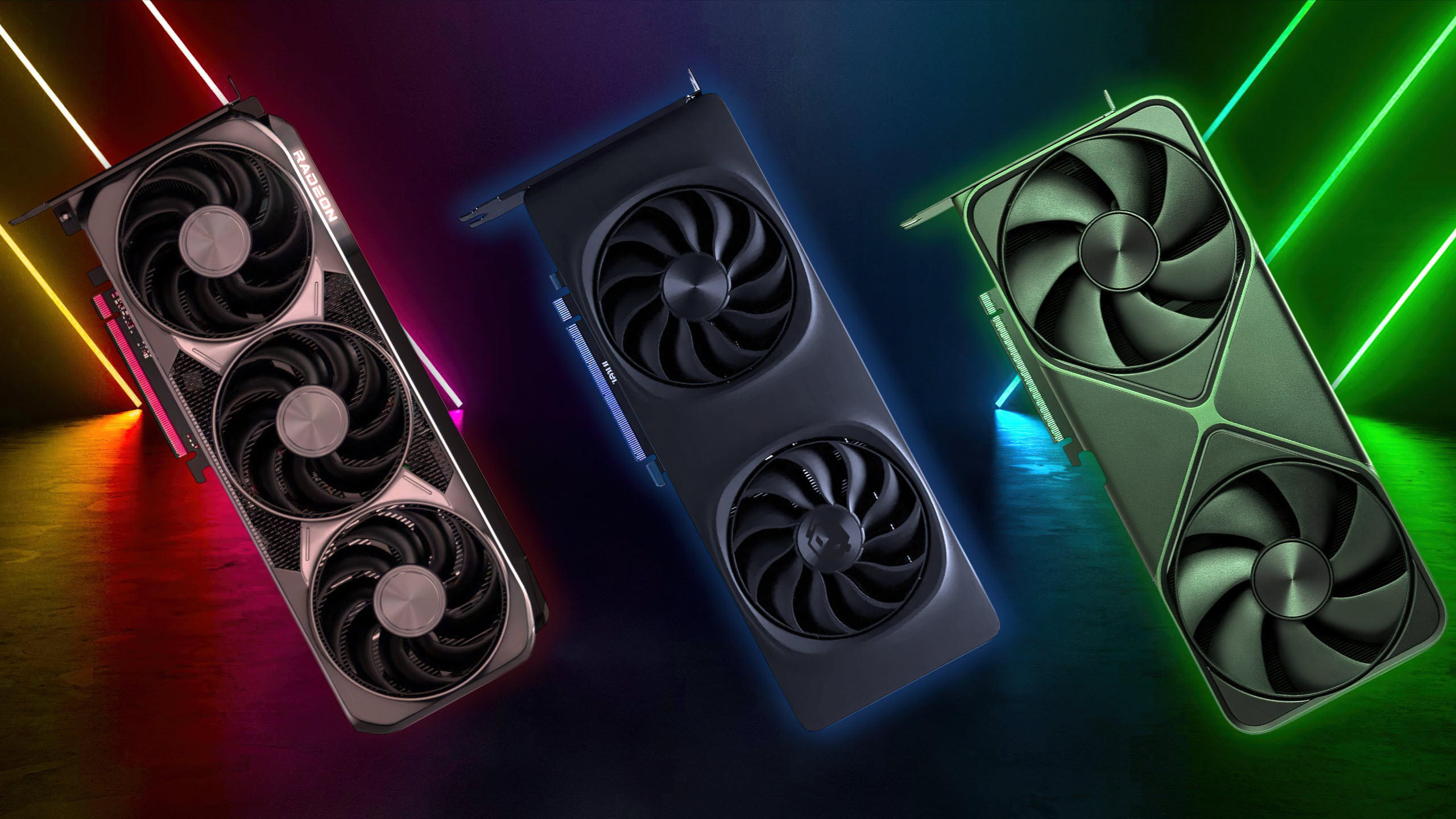
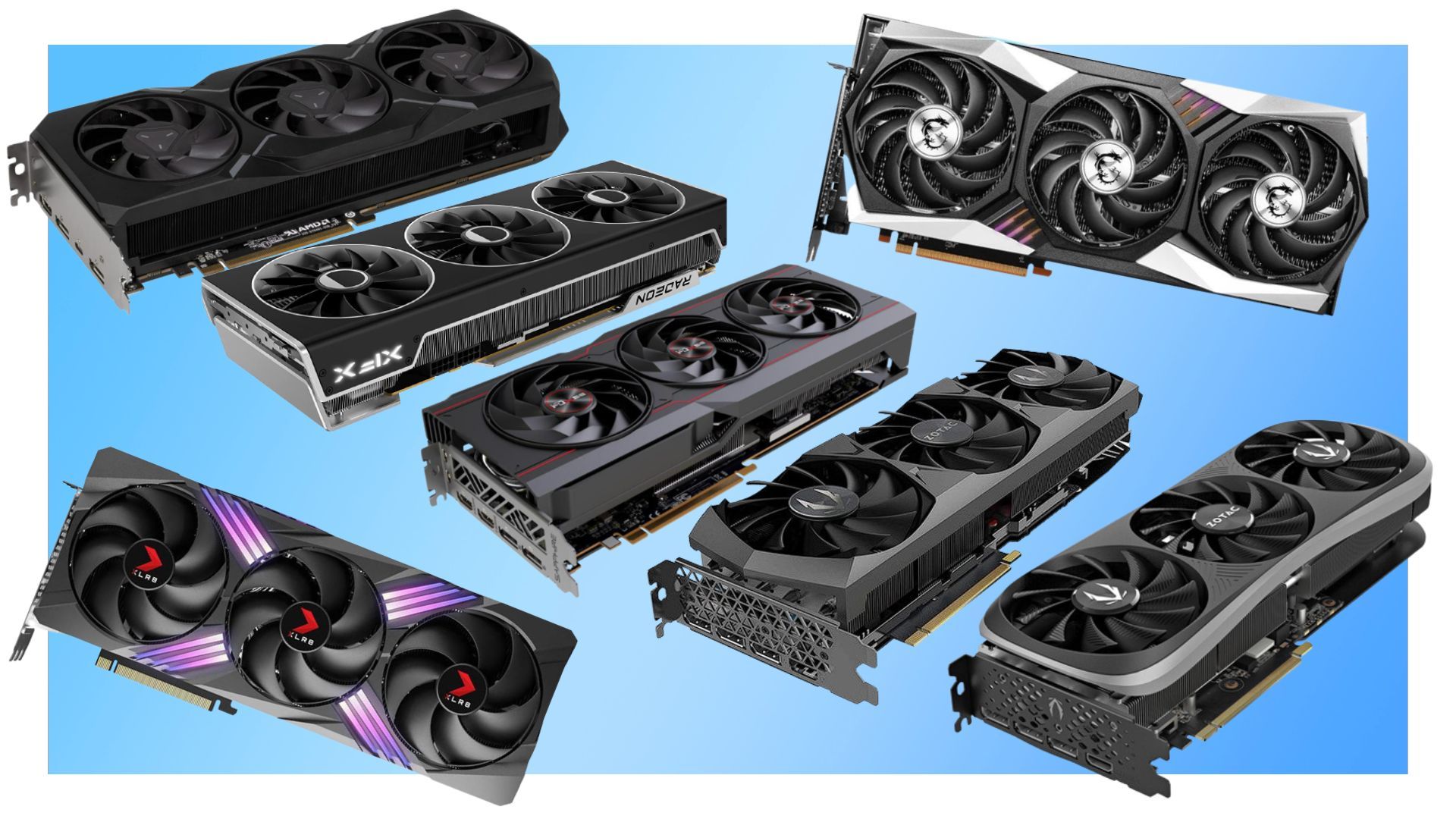
Look at the best GPU deals today and you see a clear pattern: flagship and upper-mid cards are being pulled upward by AI economics, while genuinely affordable options cluster in the lower tiers. On the NVIDIA side, the RTX 5090 sits at a best U.S. price of USD 3,979 (approx. ₱222,824), far above its USD 1,999 (approx. ₱111,944) launch MSRP. Below it, the RTX 5080 shows a best U.S. price of USD 1,256 (approx. ₱70,286) versus a USD 999 (approx. ₱55,912) launch price, and the RTX 5070 Ti is USD 919 (approx. ₱51,517) against a USD 749 (approx. ₱42,001) MSRP. Even the more accessible RTX 5070 and 5060 Ti 16GB display similar inflation over their launch prices.
AMD’s latest Radeon cards show a slightly kinder picture but still reflect elevated pricing. The Radeon RX 9070 XT currently hits a best U.S. price of USD 689 (approx. ₱38,623) versus a USD 599 (approx. ₱33,557) MSRP, with the RX 9070 at USD 579 (approx. ₱32,435) against USD 549 (approx. ₱30,730). Mid-range options like the RX 9060 XT 16GB sit at USD 448 (approx. ₱25,105), again above launch pricing. Intel’s role in graphics card market trends is interesting: Arc B580 shows a best U.S. price of USD 309 (approx. ₱17,330) compared with a USD 250 (approx. ₱14,000) launch price, while older Arc A770 16GB now has a best U.S. price of USD 432 (approx. ₱24,196) versus USD 349 (approx. ₱19,546). What deal trackers are exposing is not opportunistic gouging, but systemic price pressure across memory, substrates, and cooling that’s spilling into every segment.
| GPU | Best U.S. Price | Launch MSRP |
|---|---|---|
| GeForce RTX 5090 | USD 3,979 (approx. ₱222,824) | USD 1,999 (approx. ₱111,944) |
| GeForce RTX 5080 | USD 1,256 (approx. ₱70,286) | USD 999 (approx. ₱55,912) |
| Radeon RX 9070 XT | USD 689 (approx. ₱38,623) | USD 599 (approx. ₱33,557) |
| Intel Arc B580 | USD 309 (approx. ₱17,330) | USD 250 (approx. ₱14,000) |
AI GPU Demand Impact: Why Memory and Flagships Stay Expensive
The uncomfortable driver behind today’s GPU prices is the AI GPU demand impact on the broader ecosystem. The memory industry is "besieged by insanely large memory orders for AI data centers and AI GPUs," which has already led to increasing prices for gaming graphics cards. NVIDIA is reportedly allocating memory based on the amount of money it can make per GB of VRAM, making the situation dire for some models as it favors high-margin AI and high-end consumer SKUs over mainstream gaming cards. On top of that, revenue growth is outpacing volume growth because average selling prices are pushed up by demand for high-bandwidth memory, advanced packaging, and higher-end thermal solutions required for AI accelerators.
The data center segment—training and inference accelerators—is the fastest-growing vertical and is projected to account for over 30% of total market revenue by 2030, with a 14–16% CAGR. In practice, that means GPU vendors optimize their roadmaps and supply chains for AI and HPC expansion first, consumer gaming second. Gaming GPU shipments are forecast to grow at a slower 4–6% CAGR, with value growth outpacing volume thanks to premiumization rather than broader affordability. For enthusiasts, every extra GB of VRAM on a gaming card now competes with an AI accelerator slot in a data center rack. As long as that remains true, GPU pricing forecast models show flagship consumer cards staying elevated while mid-range SKUs suffer margin pressure and tighter memory configurations.
Supply Constraints and Regional Friction: Hidden Costs for PC Builders
High prices are only half the story; constrained and uneven supply is the other. One price index notes that RTX 40-series GPUs are no longer being produced, so stock levels have dried up on many card variants, pushing late adopters toward newer, more expensive generations or risky third-party resellers. Buyers are warned that retailers may quietly switch to third-party sellers, and that they must check seller legitimacy before committing to a purchase. On the industrial side, the world GPU supply chain is heavily concentrated in Taiwan and China, and export controls on advanced semiconductor nodes are already forcing a regional reconfiguration of assembly and packaging capacity. This kind of restructure rarely lowers prices in the short term; it tends to introduce delays, input cost volatility, and fragmented availability.
Key challenges include cost swings for substrates and power components, longer qualification timelines for industrial and automotive GPUs, and geopolitical trade restrictions that can split the market into parallel product lines. Trade policy uncertainty and export controls on advanced GPUs are expected to create bifurcated markets, with China-focused domestic alternatives gaining share rather than direct parity with international AI accelerators. For consumers, this background noise translates into unpredictable stock, region-dependent pricing, and occasional "ghost" MSRPs that have little to do with what you will pay at checkout. It reinforces why PC enthusiasts should rely on live deal tracking indexes and benchmark hierarchies to decide which SKU offers genuine value on any given day.
What PC Enthusiasts Should Expect: A Long AI-Dominated Cycle
The GPU market is entering a transformative decade shaped by AI workloads, high-performance computing expansion, and evolving gaming dynamics. The baseline scenario projects the global graphics cards market index reaching 245 by 2035 (2025=100), with about 9.5% CAGR supported by sustained investment in AI infrastructure, cloud gaming, industrial automation, and autonomous systems. Gaming and consumer entertainment still represent an estimated 38% of demand, but they no longer set the pace—they follow it. Pricing is expected to stay elevated for flagship models, while mid-range cards face margin pressure thanks to rising bills of materials and more expensive memory and cooling. This is not a temporary spike; it is the new equilibrium driven by enterprise AI priorities.
For enthusiasts and workstation users, the implication is clear: expect fewer "no-brainer" upgrades and more careful trade-offs between price, performance, and VRAM capacity. Best GPU deals today will continue to come from vigilant price tracking across NVIDIA, AMD, and Intel, checking against benchmark hierarchies rather than falling for nominal tier labels. Manufacturers, distributors, and investors are being told to plan around AI and compute workloads as the primary growth engine, which means consumer GPUs will remain downstream products in a supply chain optimized for data centers. The smart move for PC builders is to treat each purchase as a strategic decision in an AI-dominated market, not a routine step in a predictable generational cadence.