
A New Kind of Ultra-Wide: Why This 12-20mm Matters
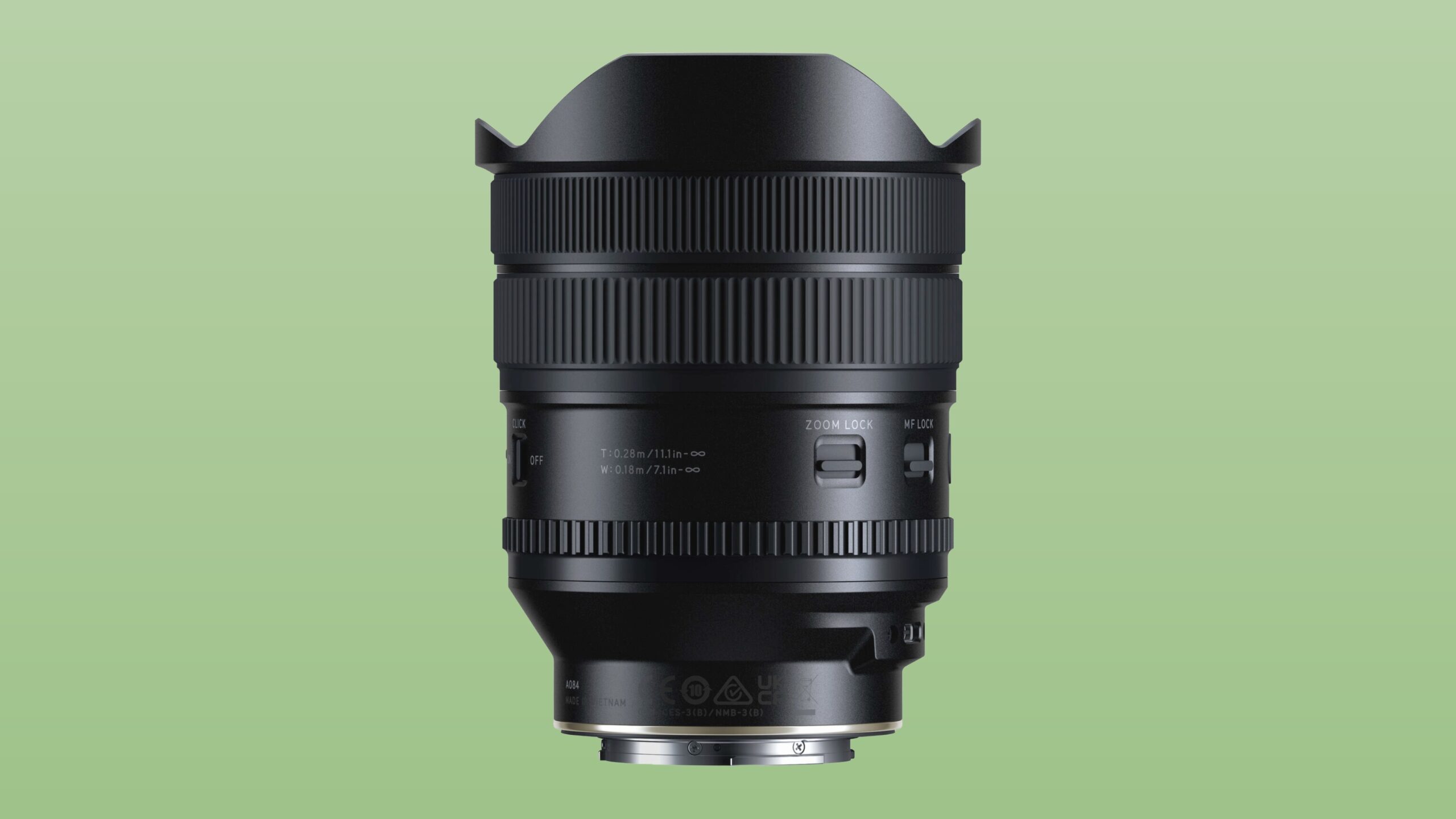
The Tamron 12-20mm f/2.8 is a full-frame ultra-wide zoom lens for Sony E-mount and Nikon Z-mount cameras that combines a constant f/2.8 fast aperture, compact dimensions, and advanced optics aimed at landscapes, interiors, astrophotography, and professional video work, positioning it as a serious alternative to native manufacturer ultra-wide lenses.
The key takeaway is simple: this is Tamron’s boldest play yet in the ultra-wide space, and it is aimed squarely at photographers who are tired of choosing between bulk and brightness. The 12-20mm f/2.8 (Model A084) is the widest full-frame lens the company has ever made and the first to debut its new Toned Profile Next design language. More importantly, it delivers a constant f/2.8 aperture from 12mm to 20mm while staying significantly smaller than the typical ultra-wide zoom that dominates your bag.
If you shoot landscapes, architecture, interiors, travel, astrophotography, or nightscapes, Tamron is clearly telling you this: you no longer need to accept a slower lens or a huge front-heavy monster to go truly wide.
Design, Size, and the Trade-Offs of a Specialist Zoom
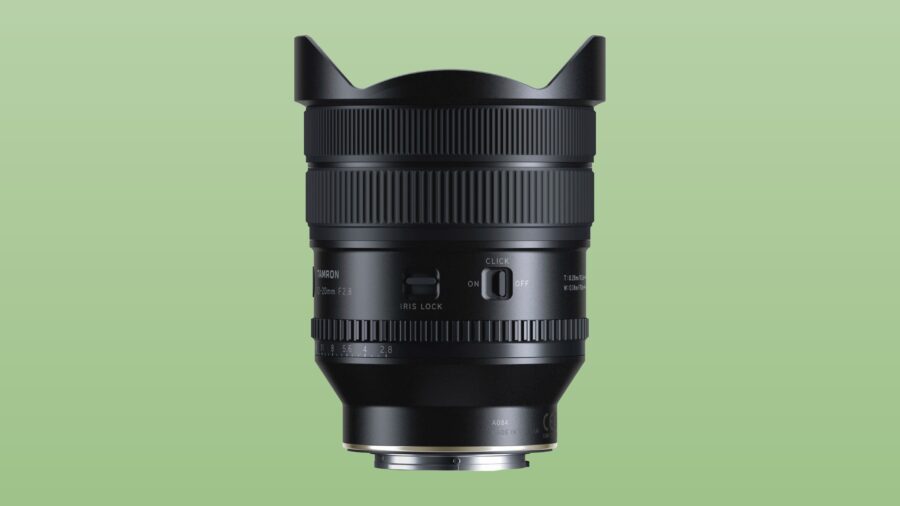
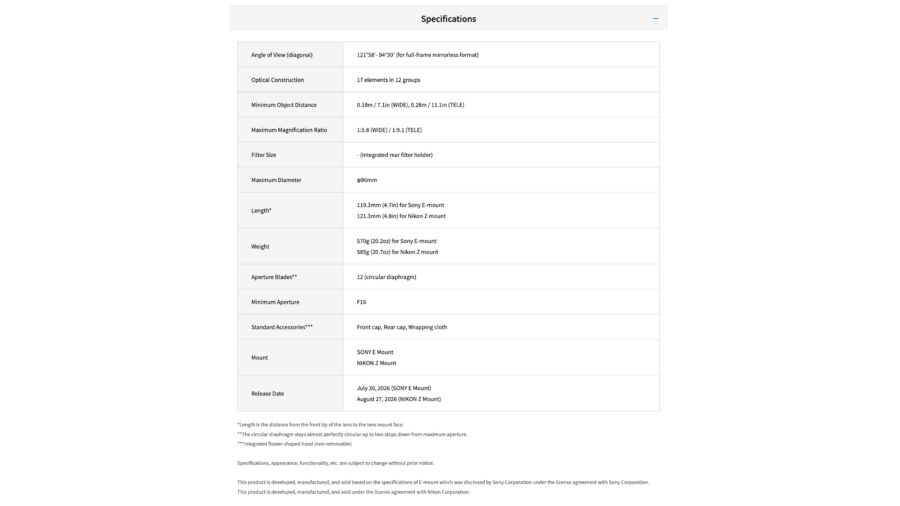
Tamron’s smartest decision here is prioritizing portability. Ultra-wide f/2.8 zooms are usually heavy, front-loaded beasts, yet this lens stays remarkably compact: the Sony E-mount version is 119.3mm long and 570g, while the Nikon Z version is 121.3mm and 585g, each with a 90mm maximum diameter. That is small enough that you do not have to redesign your entire kit around one lens.
The focal range gives a diagonal angle of view from 121°58′ at 12mm to 94°30′ at 20mm, delivering the exaggerated perspective that works for architecture, interiors, real estate, vehicle rigs, and establishing shots in tight locations. However, the short 1.7x zoom ratio means this is a specialist lens, not an all-purpose wide zoom. You gain extreme width, but you give up mid-wide flexibility.
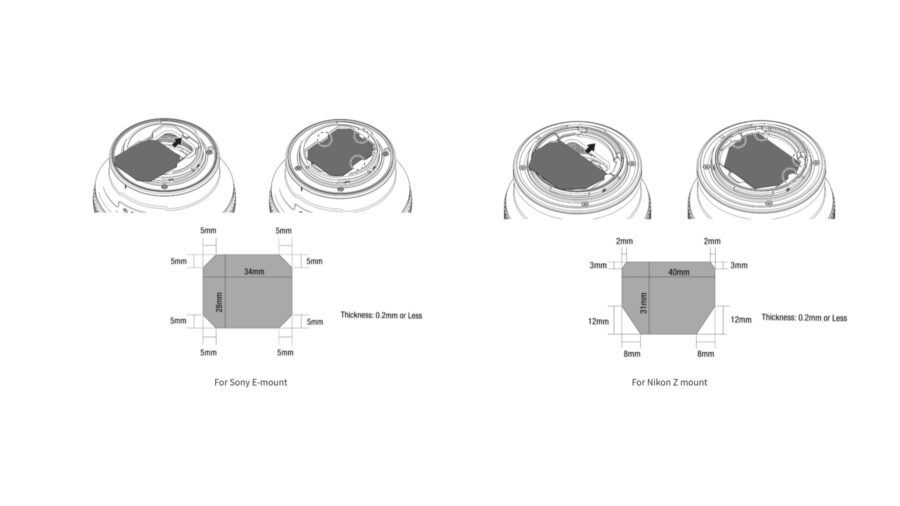
There is another compromise: like most fast ultra-wides, the bulbous front element rules out conventional screw-in filters, and Tamron lists no front filter thread. If your workflow depends on easy ND or polarizers, you will be relying on the rear filter holder or third-party solutions instead of simple front-mounted glass.
Optics Tuned for Stars, Interiors, and Edge-to-Edge Sharpness
Where Tamron is clearly gunning for native premium glass is in the optical design. The 12-20mm f/2.8 uses 17 elements in 12 groups, including one XGM aspherical element, three glass-molded aspherical elements, one XLD element, and three LD elements. This configuration is built to suppress peripheral blurring and color fringing while maintaining sharpness from center to edges.
Crucially for night shooters, Tamron says this lens specifically corrects sagittal coma flare, the aberration that stretches point light sources into wing-like or comet-like shapes near the frame edges. If that claim holds in the field, the 12-20mm f/2.8 becomes a serious contender for astrophotography and night timelapse work, where a constant fast aperture zoom is rare.
Coatings are equally ambitious. The lens debuts Tamron’s AX (Anti-reflection eXpand) Coating, which uses vapor deposition to apply a uniform layer over highly curved elements to reduce internal reflections and control flare when bright light sits in or near the frame. It also uses BBAR-G2 coating to further suppress flare and ghosting in high-contrast situations. Tamron even goes as far as claiming photographers can expect G Master-level image quality, a direct shot at one of the most respected native lineups.
Autofocus, Handling, and Real-World Use Cases
Autofocus is handled by Tamron’s VXD (Voice-coil eXtreme-torque Drive) linear motor, promising fast, quiet, and precise focusing for both stills and video. This is the same motor used in their recent 90mm f/2.8 macro lenses for Sony E and Nikon Z, which is a good sign for reliability in demanding work. For hybrid shooters, that quiet, decisive AF matters more than spec-sheet bragging rights.
Durability is handled with moisture-resistant construction and a fluorine-coated front element, designed to cope with the typical environments of landscapes and nightscapes. That aligns with the way Tamron positions the lens: for landscapes, architecture, interiors, travel, astrophotography, and nightscapes, where the 12mm end lets you capture the entire expanse of a scene.
Practically, the 0.18m minimum focus distance at 12mm and 0.28m at 20mm allow close-up foregrounds against sweeping backgrounds. At its closest, the front element sits about 50mm from the subject, creating that classic ultra-wide look that interior shooters, documentary filmmakers, and product-focused creators love. The trade-off is that this flexibility lives entirely at the very wide end; if you need 24–35mm coverage, you will still be swapping lenses.
Where It Fits: Who Should Buy It and Why It Challenges Native Lenses
This lens is not trying to be all things to all shooters, and that is its strength. It is aimed at photographers and filmmakers who live at the wide end: architecture and interiors specialists, real estate shooters, landscape and travel photographers, vehicle-rig cinematographers, and astro or nightscape enthusiasts. For them, the combination of 12mm coverage, constant f/2.8, compact size, and corrected sagittal coma addresses long-standing pain points better than many native zooms.
Tamron positions the 12-20mm f/2.8 as a competitive alternative to native Sony E-mount and Nikon Z-mount ultra-wide options by promising premium-level image quality and professional durability without the usual bulk. In other words, this is not a budget compromise; it is a direct challenge. If Tamron’s claim of G Master-level image quality proves true, native makers will need more than a badge on the barrel to justify their lenses.
There are limits. The short zoom range makes it a specialist tool, the lack of front filter threads complicates certain workflows, and some astro shooters will still ask whether f/2.8 is fast enough for their taste. But for many Sony and Nikon shooters, the calculation has changed: the Tamron 12-20mm f/2.8 now looks like the most compelling ultra-wide zoom lens for those who prize width, speed, and portability over everything else.