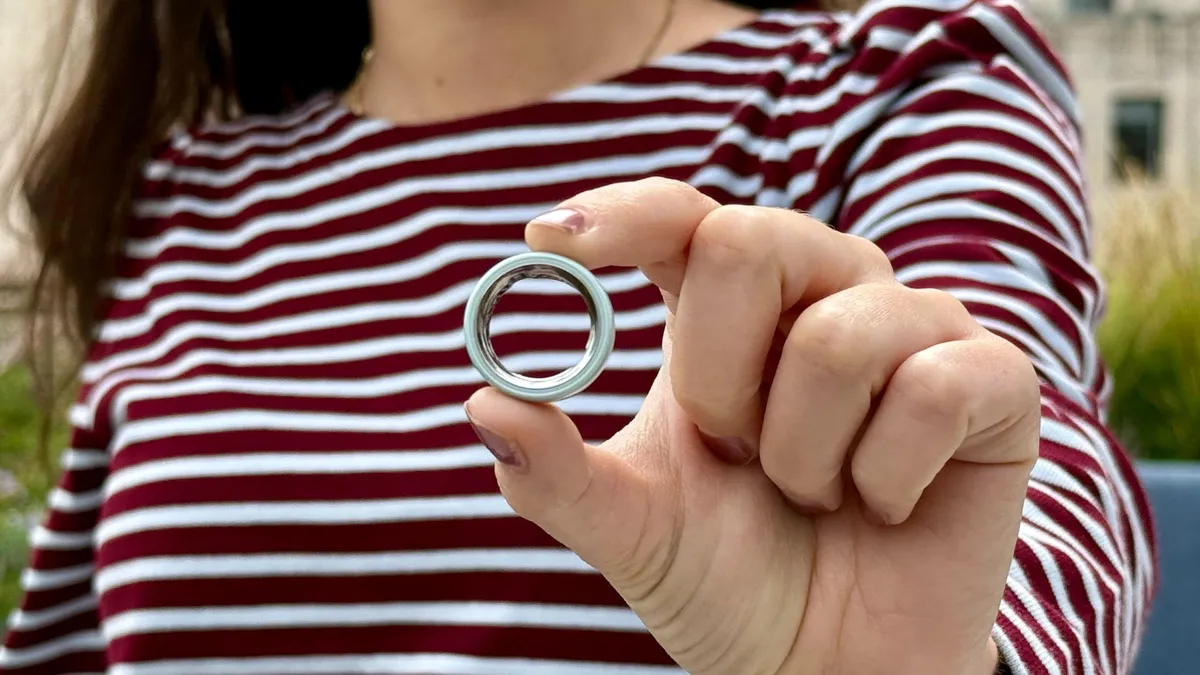

Smart rings vs fitness trackers: what this comparison is really about
Smart rings and fitness trackers are wearable devices that use optical sensors and algorithms to track everyday health metrics like heart rate, sleep, and activity, but they differ in sensor placement, comfort, and data accuracy, so understanding which numbers you can rely on versus which are rough estimates is essential before you use them to guide your health decisions.
If you care most about quiet, long-term wellness insights, a smart ring such as the Oura Ring 5 favours sleep quality, recovery, and early signs of strain over precise workout stats. If you want live heart rate and workout feedback on a budget, a wrist fitness tracker like Fitbit Air gives more in-the-moment coaching but with notable gaps in calorie and peak-intensity data. The bottom line: rings excel as wellness companions, trackers win for exercise feedback, and neither is a medical device. Your choice should hinge on which wearable health metrics matter most to you: recovery trends or training guidance.
Hard numbers: price and core health metrics compared
Both smart rings and fitness trackers promise similar wearable health metrics: heart rate, sleep, activity, and calorie burn estimates. Under the surface, though, they prioritise different strengths. Oura focuses on detailed night-time physiology, measuring heart rate, heart rate variability, blood oxygen, body temperature, and breathing rate to score how you slept and recovered. By contrast, Fitbit Air is built around day-to-day heart rate monitoring and workouts, offering solid average and minimum heart rate accuracy against a chest strap during treadmill and strength sessions, while struggling more with max heart rate spikes and calorie estimates. Price also reflects these different ambitions, with smart rings positioned as premium wellness jewellery and trackers as more affordable, fitness-first tools.
| Spec or feature | Smart ring (Oura Ring 5) | Fitness tracker (Fitbit Air) |
|---|---|---|
| Typical role | Wellness and sleep companion with recovery insights | Exercise and daily-activity tracker for general users |
| Price at launch | Starts at USD 399 (approx. ₱22,300); some finishes at USD 499 (approx. ₱27,900) | Around USD 99 (approx. ₱5,600) |
| Primary strength | Sleep tracking, long-term trends, early illness/strain detection via baseline changes | On-wrist heart rate monitoring with low average error vs. chest strap in steady cardio |
| Known weaknesses | Not the most accurate for step tracking or calorie counting | Underestimates calories burned and can miss short heart rate spikes |
| Best used for | Understanding recovery, readiness, and subtle health shifts over weeks and months | Tracking workouts, basic heart rate, and day-to-day movement for motivation |
From a fitness tracker comparison perspective, the key trade-off is simple: Oura charges a premium for deeper, long-view wellness analytics, while Fitbit Air offers screenless, lower-cost workout tracking with reasonably accurate average heart rate but looser estimates for calories and peak intensity. Choose the one whose strengths match your main goal, not the longest spec sheet.
Heart rate monitoring: where rings and trackers are reliable (and where they are not)
For heart rate monitoring, both device types use optical sensors on the skin, but placement changes how responsive they are. A chest strap like the Polar H10, worn close to the heart and using electrodes, remains closer to ECG-grade accuracy, capturing changes quickly. Wrist or finger wearables, including Fitbit Air and smart rings, read blood-volume changes further from the heart, so they lag slightly and miss the fastest spikes or drops. During steady treadmill running, Fitbit Air’s average heart rate was within about 2.5% of the chest strap, with very small differences in minimum and maximum heart rate.
In stop‑start strength training, however, the gaps widened. The tracker’s max heart rate differed by around 11%, suggesting it failed to capture brief spikes between sets. This pattern likely applies to rings as well: they are strong for resting, overnight, and average heart rate trends, but less trustworthy for split‑second peaks in high-intensity intervals. A quotable takeaway: “For example, wrist or finger-worn health trackers are not going to capture the quickest fluctuations in heart rate, because of their position on the body.” Use rings for recovery and resting trends, and trackers for live guidance in steady cardio, not for clinical-grade measurements.
Calories, steps, and sleep: which wearable health metrics actually matter?
Calorie counting is where smart ring accuracy and fitness tracker accuracy both fall down. These devices estimate calories using formulas that combine heart rate, weight, age, sex, and activity intensity. Because each brand uses its own model, small errors compound. In testing, Fitbit Air underestimated calories burned by nearly 12% on the treadmill and by about 31% in strength training compared with a chest strap-based estimate. According to one reviewer, “If you are using the device for diet or weight management, I’d recommend taking those datapoints as ballpark estimations rather than objective points.” Smart rings share a similar limitation; Oura’s own guidance treats calorie and step counts as supporting context, not hard facts.
Where smart rings shine is sleep and long-term baseline tracking. Oura measures heart rate, heart rate variability, blood oxygen, temperature, and breathing rate overnight to learn your personal baseline, then flags deviations that may signal strain or sickness before symptoms hit. That makes it a more reliable wellness companion than a precision exercise tool. By contrast, trackers emphasise daily step targets and workout metrics. You can exercise with an Oura Ring, but it is not the most accurate for step tracking or calorie counting, and a dedicated tracker or smartwatch is better if you care about running pace and workout details. Use calorie and step numbers for motivation and trends, but treat sleep quality, resting heart rate, and HRV trends as the more meaningful numbers for health decisions.
Buy if / Skip if
- Buy the smart ring (Oura Ring 5) if you want discreet, all-day wear and in-depth sleep and recovery insights with early-warning strain signals based on your personal baseline.
- Skip the smart ring (Oura Ring 5) if you mainly care about accurate step counting, tight calorie tracking, or detailed running pace metrics, where dedicated fitness trackers or watches do better.
- Buy the fitness tracker (Fitbit Air) if you want an affordable, screenless wearable at around USD 99 (approx. ₱5,600) that gives reasonably accurate average and minimum heart rate data during typical workouts.
- Skip the fitness tracker (Fitbit Air) if you plan to use its calorie numbers to drive strict dieting or weight-management decisions, because its calorie estimates can be off by 10–30% depending on activity type.
- Buy the smart ring (Oura Ring 5) if you care more about long-term wellness trends, readiness scores, and subtle changes in heart rate variability and temperature than about live gym stats.
- Skip the fitness tracker (Fitbit Air) if you demand highly accurate readings of brief heart rate spikes in high-intensity or strength sessions, which chest straps and clinical devices still handle better.