
Retro Space Sims Are Back – And They Mean It
Modern retro space sims are videogames that revive the open-ended, 2D and 2.5D space-trading and combat sandboxes of the 1990s, updating their physics, visuals, and progression systems for contemporary PC hardware and player expectations while staying faithful to the slower, more systemic pacing of classic spaceship RPG experiences.
The clearest proof is C-Beams, a forthcoming space action-RPG from Distant Light Games and indie publisher Hooded Horse that takes heavy inspiration from Ambrosia Software’s Escape Velocity. This is not a vague spiritual homage; the game’s jump point web of systems, faction-owned planets, and top-down dogfights read like a deliberate reclaiming of that 90s design language. For decades, sci-fi fans argued about what “C-beams” meant in Blade Runner’s famous monologue; soon, in PC circles, it will mean a very specific kind of Escape Velocity inspired sandbox where you live and die by your ship’s handling and your appetite for risk.
C-Beams: Escape Velocity Inspired, Not Entombed in Nostalgia
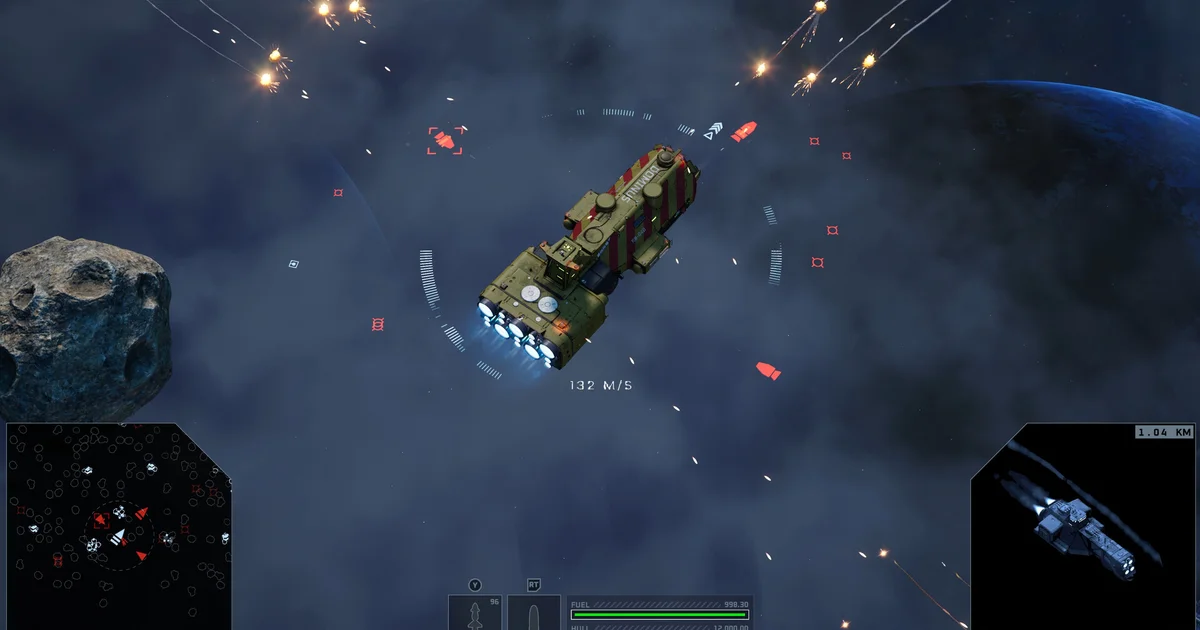
What keeps C-Beams from being a museum piece is how aggressively it modernizes those old ideas. It is a 2.5D game with lush expanses of space rock formations beneath the navigable plane, instantly more dramatic than the flat starfields of its predecessor. The developers promise "highly realistic handling characteristics" that ask you to master retro burns to slow down, cut engines to hide, and juggle limited boost fuel. That is classic Newtonian-flavored space sim logic, framed with contemporary responsiveness.
At the same time, the team is not ashamed of its roots: the HUD, camera, and overall feel are described as immediately familiar to veterans. According to one preview, C-Beams takes "heavy inspiration" from Escape Velocity, right down to its jump-linked cosmos and emphasis on outfitting and swapping ships in a hangar. This balance—retro systems with modern friction and clarity—is exactly what retro space sims need if they are going to matter to more than nostalgia hunters.
Indie PC Games Are Quietly Rebuilding the Space Sandbox
C-Beams is part of a wider pattern: small studios using retro frameworks to build focused spaceship RPG experiences instead of chasing blockbuster spectacle. The same preview that celebrates C-Beams points Escape Velocity fans toward Endless Sky and 3030 Deathwar as other options for that style of open-ended space adventuring. Each of these games treats the cockpit as both map and character sheet, trusting players to find their own stories in a network of star systems.
Look at the broader slate of new indie PC games and the trend becomes clearer. One weekly round-up highlights a cluster of tightly scoped experiments, from Ascend to Zero, a sci-fi action-roguelike with temporal manipulation layered over Hades-like combat rooms, to Soulforge Lost Path, which trims randomness by making you manage a cramped inventory and forge new gear from loot. These designs favor clear mechanical hooks over cinematic excess, and C-Beams sits squarely in that philosophy—complex in systems, restrained in presentation, and built for long-term tinkering rather than a single, explosive playthrough.
A Counterpoint to AAA: Slower, Stranger, More Player-Led
What makes these retro-influenced space sims stand out is how openly they run against dominant AAA trends. Instead of live-service battle passes or co-op horror built around jump scares—an entire week’s release list can skew toward "bring-some-friends" horror games with elaborate multiplayer hooks—they double down on solitary, simulation-heavy play. C-Beams focuses on mining rare elements in dangerous asteroid fields, hauling ore in heavier, clumsier ships, and choosing between close-range recoilless guns and long-range missiles and railguns in dogfights. That is a far cry from battle royale maps and seasonal cosmetics.
Even the Blade Runner reference signals a different priority. Rather than turning Roy Batty’s "C-beams" into shallow branding, Distant Light Games use the phrase as a doorway to a specific kind of game: quiet travel between jump points, faction politics, and the occasional chaotic skirmish. For players worn out on scripted bombast, that is not a downgrade. It is an escape route back to games where the most memorable stories come from a risky cargo run gone wrong, not a cutscene.
Why This Moment Matters for Space Sim Fans
The timing of C-Beams and its peers is telling. One weekly PC column notes that the outlet is marking its 19th birthday this week and is already looking ahead to a bigger 20th celebration next year, while promising to keep highlighting new games in the meantime. That kind of long memory is shared by players who grew up with Escape Velocity and its ilk, and who now want something that respects those memories without freezing them in amber. C-Beams, whose release is teased as arriving "soon," sits ready to answer that desire.
If there is a golden age returning, it will not look like a single monolithic hit. It will look like a cluster of determined indie PC games—Escape Velocity inspired sandboxes, bullet-heaven experiments, modest survival roguelikes—quietly offering an alternative to the loudest AAA trends. The smart move for players who care about the future of spaceship RPG design is to pay attention now, before this wave of retro space sims passes overhead like C-beams glittering in the dark, unnoticed.