
Mini PC Workstations: From Niche Curiosity to Serious Desktop Alternatives
A mini PC workstation is a compact high-performance PC that delivers multi-core desktop-class processing, modern memory and storage expansion, and advanced connectivity in a space-saving chassis designed for professional workloads and content creation. Today, machines like the Minisforum MS03 and Beelink ME Pro 370 prove that small boxes can no longer be dismissed as underpowered toys. They challenge the assumption that demanding work must live in either a bulky tower or an expensive mobile workstation, instead bridging the gap between ultraportable laptops and full-size desktops for content creators and professionals. If your work is bottlenecked by cores, memory, or storage rather than screen size, these systems are starting to look like the rational default rather than the exotic exception.
Intel Core Ultra 9: Compact Powerhouse for Creative and Mixed Workloads
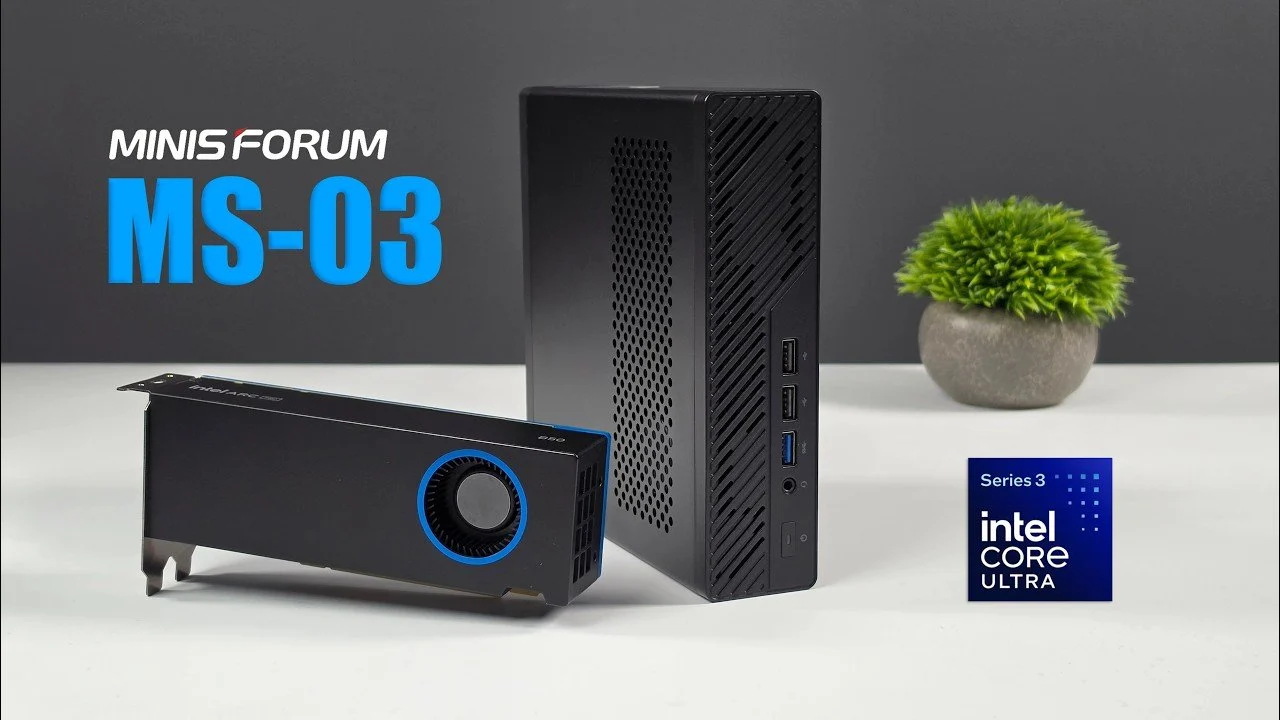
The Minisforum MS03 is the archetype of a compact high-performance PC: a mini PC workstation built around the Intel Core Ultra 9 386H, a 16-core chip designed for demanding multitasking. Its core layout is unapologetically workstation-like, with four performance cores up to 4.9 GHz for heavy tasks such as video editing and 3D rendering, eight efficiency cores at 3.7 GHz for everyday work, and four low‑power cores at 3.5 GHz for lighter jobs. This structure, backed by Geekbench 6 multi-core scores of 15,323, is a direct shot at traditional desktops. The MS03 supports up to 128 GB of DDR5 RAM and three M.2 PCIe 5.0 slots, plus an x8 PCIe 5.0 slot for low-profile GPUs, turning what looks like a small box into real workstation silicon with space to grow. Dual USB4 ports and 10 Gbps Ethernet round out a platform that feels built for modern creative workflows rather than casual browsing.
Ryzen AI Mini PC: Beelink ME Pro 370 as a Storage-Centric Workhorse
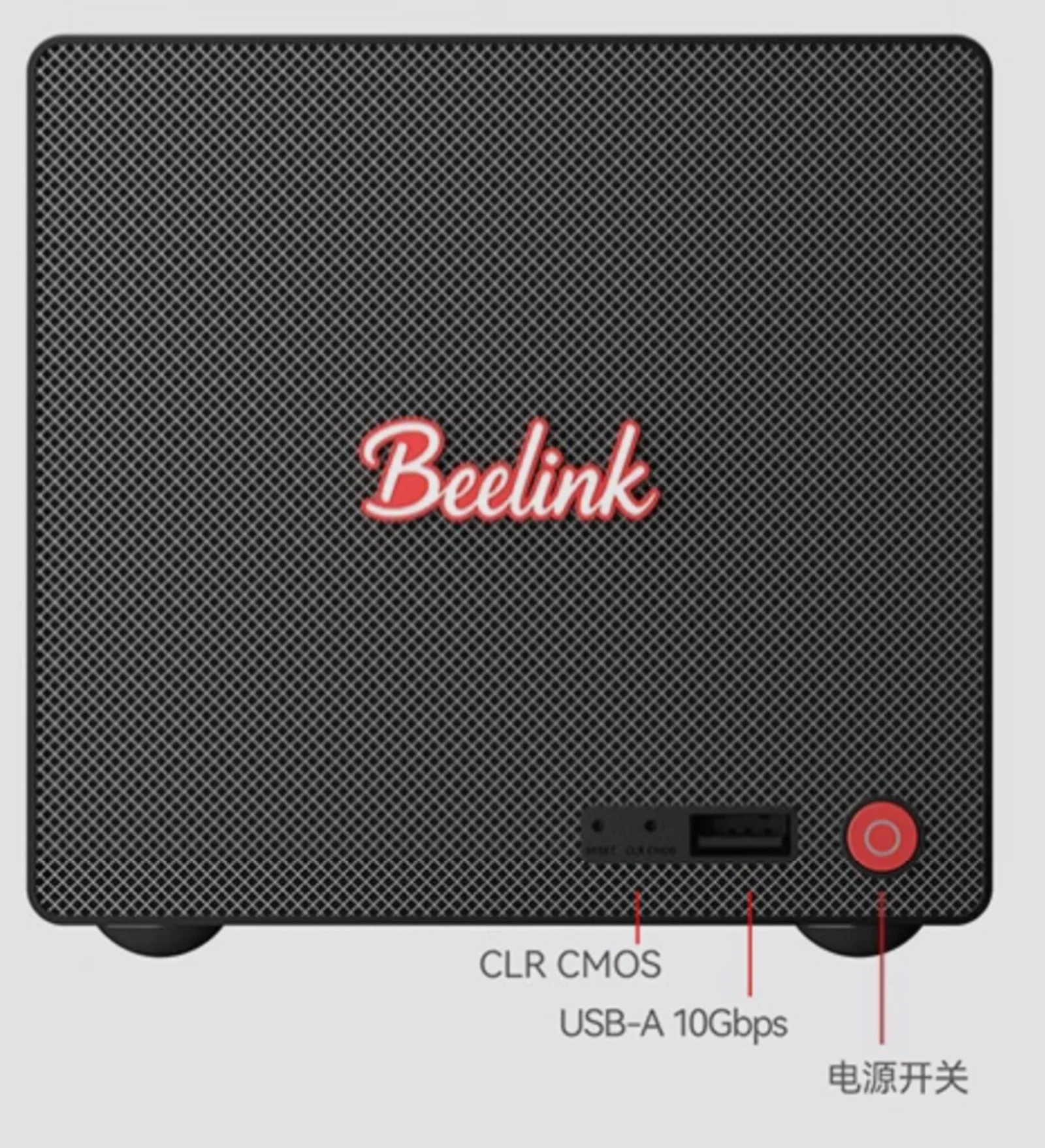
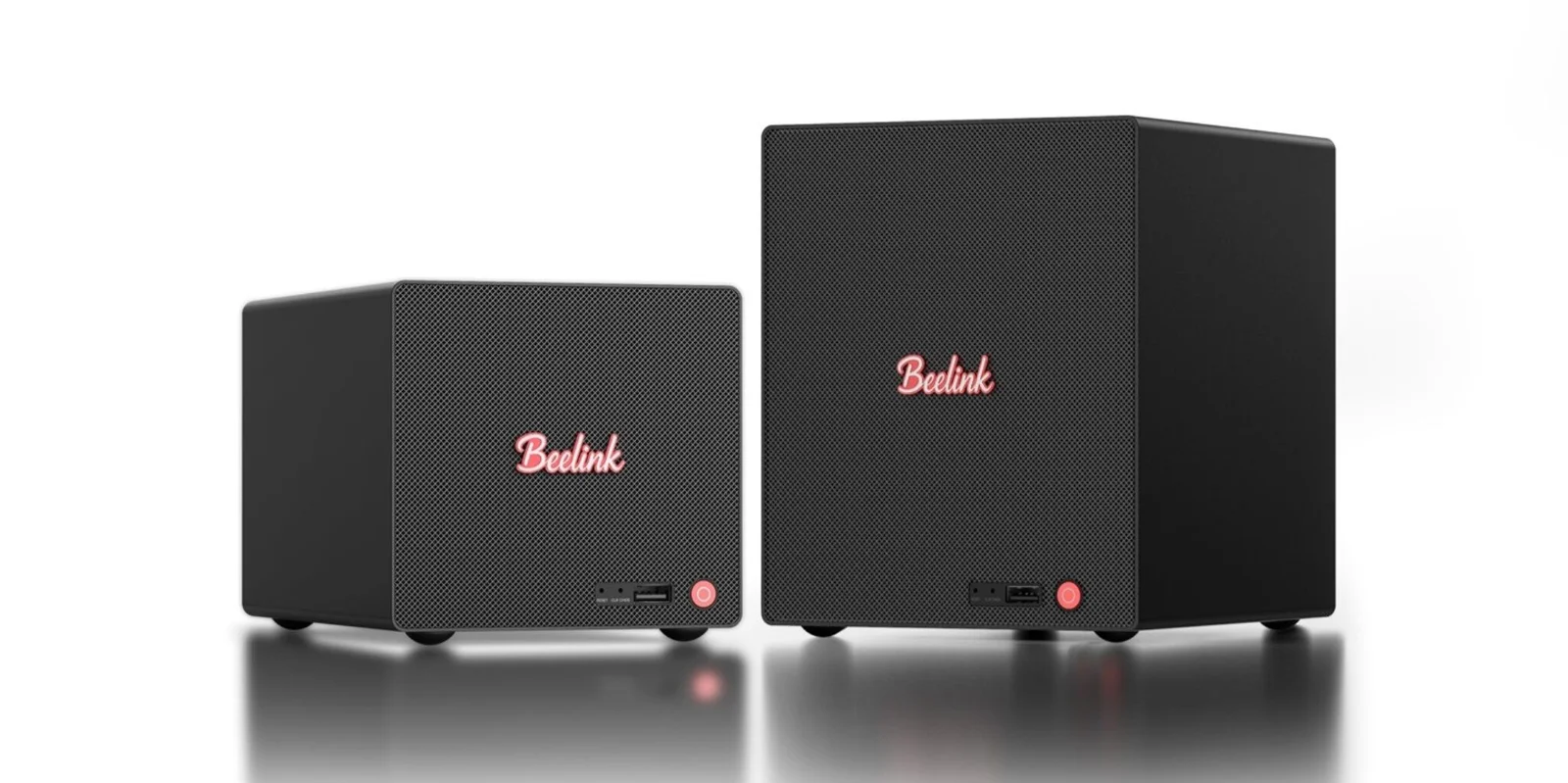
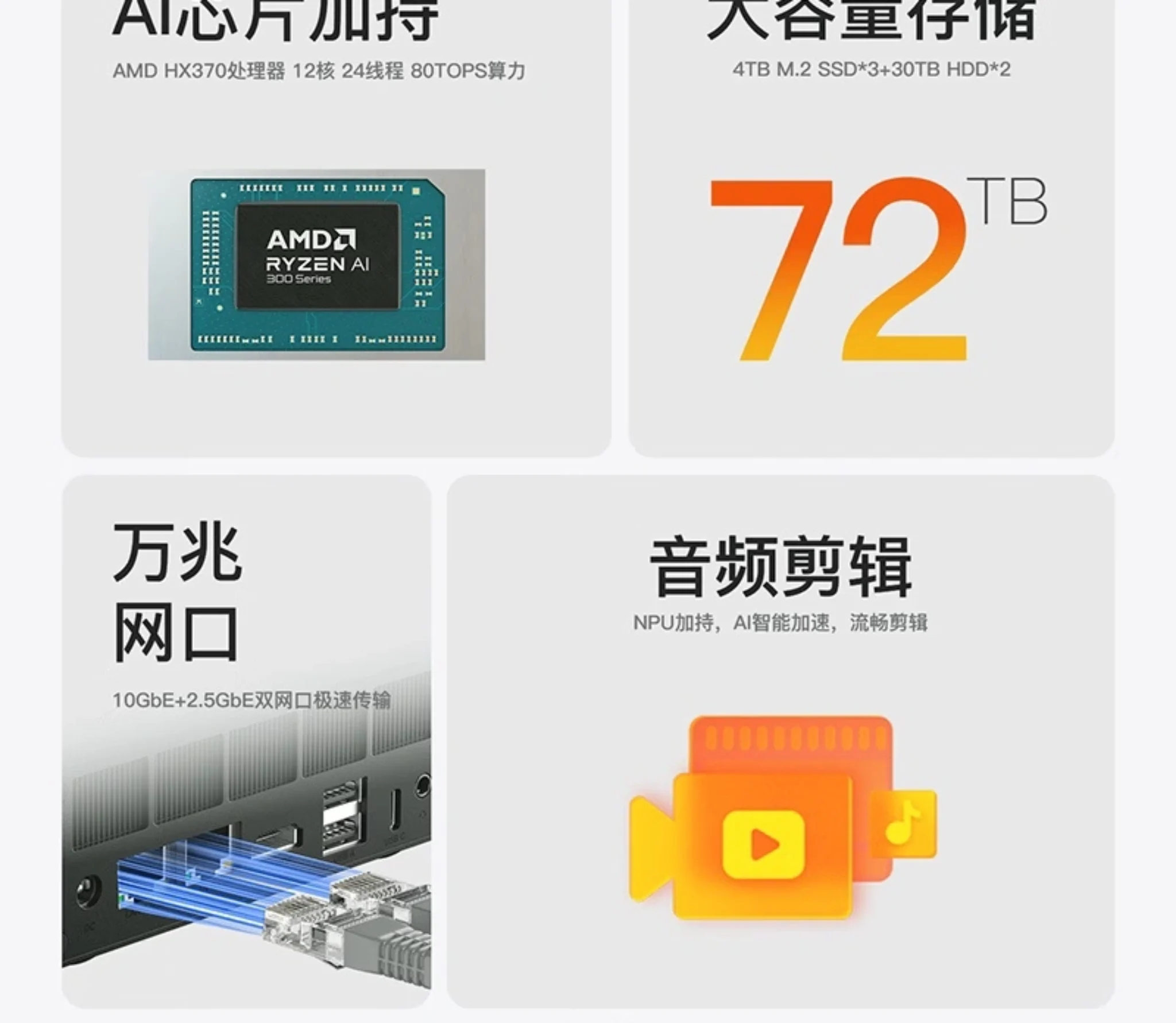
Where the MS03 chases pure compute density, the Beelink ME Pro 370 leans hard into being a Ryzen AI mini PC that behaves like a compact NAS appliance with workstation chops. It is powered by the Ryzen AI 9 HX 370 processor, offering 12 CPU cores and 24 threads for demanding workloads. Instead of squeezing in a discrete GPU slot, Beelink builds around storage: three M.2 SSD slots (up to 4 TB each) plus either two or four 3.5‑inch HDD bays, with each bay supporting up to 30 TB drives. That is not hobbyist territory; it is aimed squarely at media servers, backups, and storage‑intensive business workflows. Dual‑channel DDR5 memory supports up to 256 GB of RAM, and networking is equally serious with 10GbE and 2.5GbE RJ45 ports for high-speed transfers and NAS deployments. As a quotable summary, "With AMD’s latest Ryzen AI processor, large memory capacity, high-speed networking, and extensive storage expansion, the Beelink ME Pro 370 offers a balanced solution for users looking to combine the capabilities of a mini PC with the functionality of a NAS device".
| Spec | Minisforum MS03 (Intel Core Ultra 9 386H) | Beelink ME Pro 370 (Ryzen AI 9 HX 370) |
|---|---|---|
| CPU cores | 16 cores (4 performance, 8 efficiency, 4 low-power) | 12 cores, 24 threads |
| Max RAM | 128 GB DDR5 | 256 GB DDR5 |
| Storage slots | Three M.2 PCIe 5.0 slots | Three M.2 SSD slots plus 2‑bay or 4‑bay 3.5" HDD options |
| Key connectivity | Dual USB4, 10 Gbps and 2.5 Gbps Ethernet, dual 10 Gbps SFP+ | One USB4, three USB‑A 10 Gbps, 10GbE and 2.5GbE RJ45, HDMI 2.1 TMDS |
Performance vs Practicality: Where Each Mini PC Workstation Makes Sense
The interesting story here is not that these machines are fast; it is how differently they apply that power. The MS03 treats its Intel Core Ultra 9 as the anchor for a modular compact high-performance PC aimed at mixed workloads: content creation, AI tasks, gaming with a low-profile GPU, and advanced networking via dual USB4 and 10 Gbps ports. It feels like a desktop tower shrunk down for people who care about CPU and PCIe lanes more than raw storage capacity. The ME Pro 370, by contrast, behaves like a storage‑first workstation. Its Ryzen AI 9 HX 370 CPU, enormous DDR5 ceiling, and multi‑bay HDD design are unapologetically tuned for file storage, media serving, virtualization, and local sharing over 10GbE. Both platforms prove that mini PCs can bridge the gap between ultraportable laptops and full-size desktops, but one leans toward compute‑heavy creative workflows while the other clearly targets NAS and storage‑intensive scenarios.
Pricing and the New Logic of Choosing a Compact High-Performance PC
If there is a surprise anywhere, it is the pricing of the NAS‑focused Ryzen AI mini PC. The ME Pro 370’s two‑bay barebone configuration starts at about USD 560 (approx. ₱32,480), while the same chassis with 32 GB DDR5 and a 500 GB SSD is listed at around USD 1,045 (approx. ₱60,520). The four‑bay barebone model is about USD 600 (approx. ₱34,800), and the version with 32 GB DDR5 plus 500 GB SSD lands near USD 1,060 (approx. ₱61,480). These figures matter because they show that high‑core CPUs, USB4, DDR5, and 10GbE are no longer exclusive to expensive, sprawling rigs. We do not have equivalent public pricing for the MS03 in this material, but the direction is clear: professionals can now build a mini PC workstation tailored to their priorities—compute density, storage, or networking—without being forced into oversized hardware that mostly wastes space and power.