
Beyond Bigger Monitors: Why Immersion Now Lives in Audio and AR
ASUS ROG’s new desktop ecosystem, built around the ROG Gjallar Gaming Soundbar and ROG Xreal R1 AR glasses, is a paired audio‑visual solution designed to move immersive PC gaming setups beyond traditional monitors by combining positional surround sound, integrated voice chat, and high‑refresh virtual displays for multi‑platform gamers. This is not another incremental GPU or CPU spec bump; it is a deliberate attempt to change how you experience the hardware you already own. If your desk is dominated by a single screen and a tired pair of speakers, this combo argues that true immersion now comes from sensory layering: deep, room‑filling audio plus a responsive AR display that follows you instead of sitting still on a stand. In other words, ROG wants you to stop obsessing over frame times and start caring about how those frames feel.
ROG Gjallar: A Gaming Soundbar That Finally Treats Audio as a First-Class Upgrade
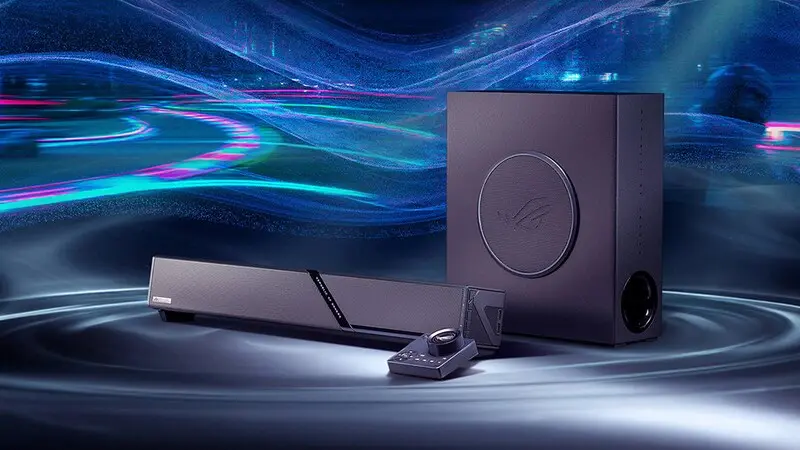
Anyone still gaming on stock monitor speakers is leaving half the experience on the table, and ASUS ROG’s Gjallar Gaming Soundbar exists to fix that. Instead of a single bar, you get a compact soundbar, a dedicated audio control hub, and a 6.5‑inch, 65W wireless subwoofer for full low‑end impact. Inside the bar, left and right full‑range drivers, dual high‑fidelity tweeters, and two upward‑firing speakers deliver a 2.1.2‑channel Dolby Atmos setup aimed squarely at immersive positional audio rather than background noise. Connectivity reads like a checklist of every sensible port a modern battlestation should have: 3.5mm, optical, USB‑C, HDMI 2.1 (eARC) with 4K 120Hz passthrough, plus Bluetooth 5.3. Two USB‑A ports even let it double as a desktop hub. Crucially, integrated Acoustic Echo Cancellation microphones and a dedicated signal processor keep your voice chat clear while filtering out the chaos coming from the speakers. This is the kind of gaming audio peripheral that makes headsets optional instead of mandatory.
ROG Xreal R1: AR Glasses Built for Competitive Frames, Not Casual Video
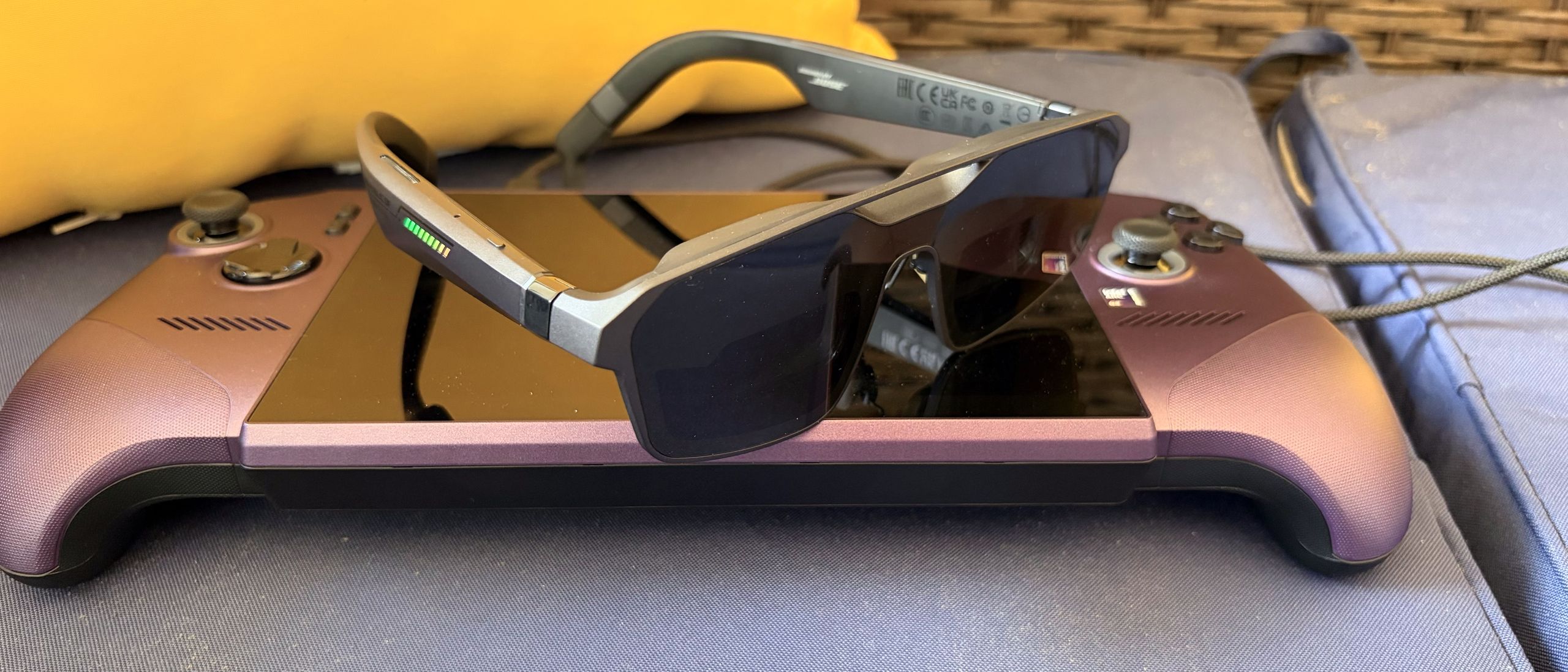
Most AR glasses are glorified travel screens for Netflix; the ROG Xreal R1 is built to survive ranked matches. It uses a flat‑prism lens design for less bulk near your eyes and a 57‑degree field of view, with content projected by dual 0.55‑inch Sony Micro‑OLED panels. With Frame Rate Boost enabled, those displays hit a 0.01 ms response time and a 240 Hz refresh rate, double what many competing AR glasses offer. According to one early review, “they’ve created an impressive product with a 240 Hz refresh mode, customizable RGB lighting effects, and support for the existing Xreal accessory ecosystem.” Open‑air speakers along the temples handle lightweight audio, while RGB LEDs along both sides give the glasses the kind of visual identity ROG hardware lives for. Specs are unapologetically gamer‑centric: 1920×1080 per eye, up to 171‑inch virtual screen size at 4 meters, 700‑nit brightness, 3 DoF tracking, and single‑cable USB‑C connectivity at 87 grams.
The Upside and Cost of Turning Your PC into an Audio–AR Battlestation
When you pair the ASUS ROG gaming soundbar with the ROG Xreal R1 AR glasses, you stop treating immersion as an afterthought and start treating it as the upgrade path. The Gjallar’s Dolby Atmos soundstage and wireless subwoofer give explosions and footsteps physical presence, while its voice‑focused AEC microphones keep comms intelligible without forcing you into a headset. The Xreal R1 adds a 240 Hz, 171‑inch‑equivalent virtual display with electrochromic dimming to cut ambient light, plus an included ROG Control Box that accepts HDMI and DisplayPort from PCs and consoles. The catch is cost and trade‑offs. ASUS has not yet announced pricing or a release date for the soundbar, clearly positioning it as a premium desktop audio upgrade. The R1, on the other hand, arrives at USD 849.99 (approx. ₱48,000), a steep jump over the Xreal One Pro at USD 599 (approx. ₱33,900), the One S at USD 449 (approx. ₱25,400), and the RayNeo Air 4 Pro at USD 239 (approx. ₱13,500). Frame Rate Boost can also introduce blur and jitter around the edges, leading to eye strain if you chase maximum Hertz without regard for visual comfort.
Who This Setup Is For—and Why It Beats Yet Another GPU Upgrade
This combo is unapologetically aimed at people who already own capable PCs, consoles, or mobile devices and want their desk to feel like a cockpit, not an office. The ROG Gjallar Gaming Soundbar works with PC, Mac, PlayStation, Xbox, Nintendo consoles, and mobile hardware, while the ROG Xreal R1 connects via a single USB‑C cable and presents those sources on a huge virtual display. Together, they speak to gamers who care more about sensory impact than chasing single‑digit frame‑time gains. If your rig is already strong, the smarter spend might be on audio and AR: positional Dolby Atmos instead of flat stereo, a 240 Hz virtual screen that goes where you go instead of staying glued to the desk, and integrated chat that keeps the room open and the experience intense. The conclusion is blunt: for enthusiasts, the next big upgrade is not another graphics card—it is hearing and seeing your current system in ways a monitor never allowed.