
Ryzen AI Halo: A Compact AI Workstation That Refuses to Be Niche
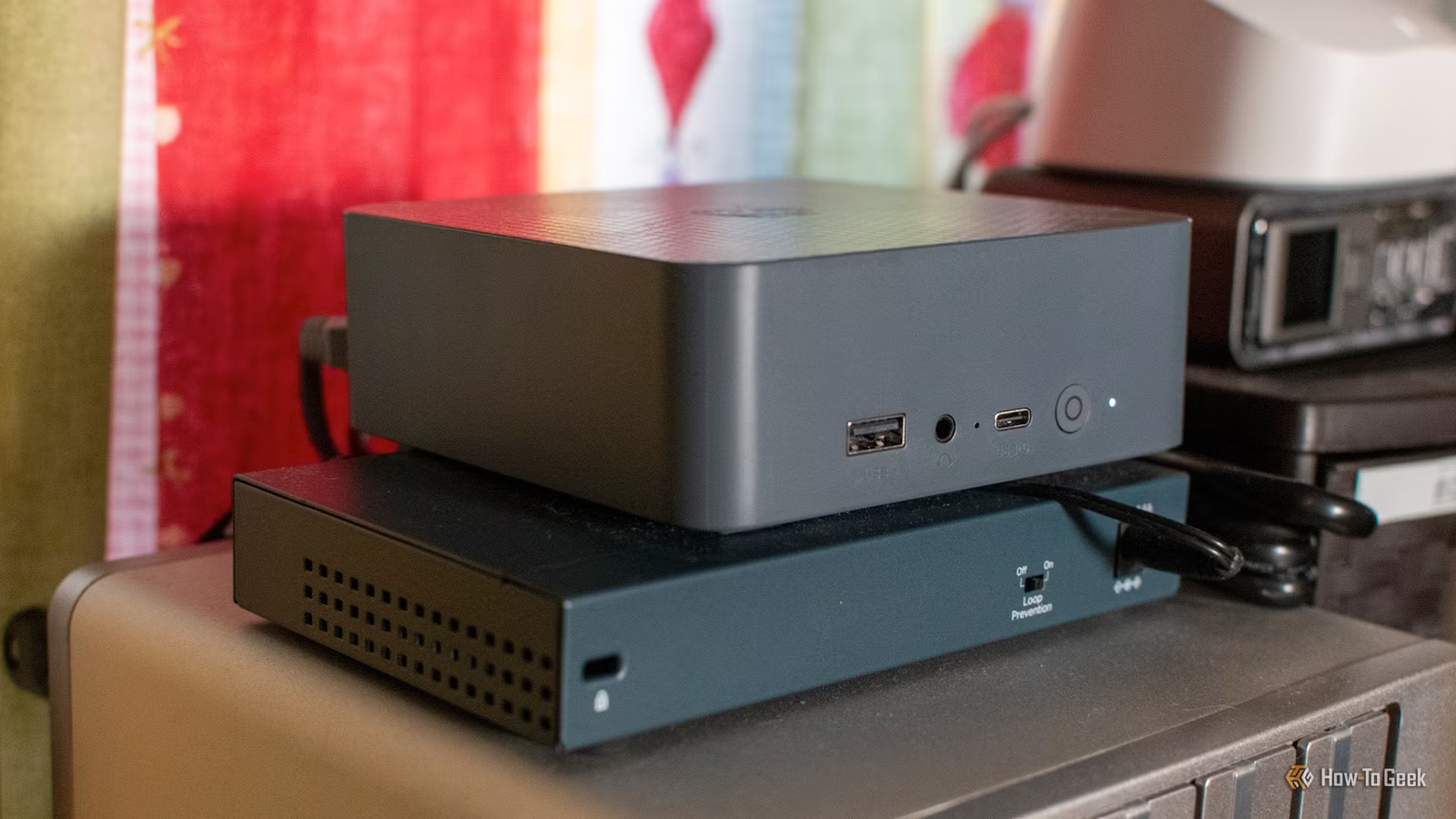
AMD Ryzen AI Halo is a compact AI mini desktop built around the Ryzen AI Max+ 395 processor to deliver desktop-class local AI performance with 128GB of unified memory, dual Windows and Linux support, and a footprint small enough to sit beside a laptop while still behaving like a full AI workstation.
AMD is not chasing NVIDIA’s DGX Spark on raw AI serving throughput; it is attacking the idea that a capable AI desktop must be a pricey, Linux-only science project. The Ryzen AI Halo arrives as AMD’s first AI developer platform, designed to give developers a fast, low-friction way to build and run AI models on their desks instead of in the cloud. That stance matters. It turns local AI from an elite experiment into something a Windows-first developer, data analyst, or creative can plug in and use with familiar tools. In this sense, AMD Ryzen AI Halo is less a response to hardware specs and more a rebuttal to the way NVIDIA defined the category.
| Spec | Ryzen AI Halo | DGX Spark Founders Edition |
|---|---|---|
| Price | USD 3,999 (approx. ₱224,000) | USD 4,699 (approx. ₱263,000) |
| Unified memory | 128GB LPDDR5x | Comparable class, Spark category baseline |
| OS support | Windows 11 & Linux | Linux-only DGX OS |
Ryzen AI Max+ 395: Desktop-Class AI Power in a One-Liter Box
The real story of AMD Ryzen AI Halo is the Ryzen AI Max+ 395, a 16-core, 32-thread Zen 5 processor, paired with Radeon 8060S integrated graphics and an XDNA 2 NPU rated at 50 TOPS, for up to 126 TOPS of combined AI throughput. AMD did not design a toy; it built a compact AI workstation. The Halo topped other Ryzen AI Max+ 395 systems in nearly every Windows workload, including scoring 37,316 in Cinebench R23 multi-core and 184.2 GIPS in 7-Zip, while leading Procyon benchmarks for text and image generation.
Though it loses to DGX Spark on high-concurrency vLLM serving, often by 2x to 4x and up to 8.8x in demanding GPT OSS 120B prefill scenarios, that misses the point for many users. Most developers and teams want a box that can run workstation applications, local LLM inference, and AI development tools without being tied to GPU-centric inference servers. AMD’s 128GB of LPDDR5x at 8000 MT/s delivers 256GB/s of bandwidth and is rated to hold models up to 200 billion parameters fully in device memory, which is exactly the kind of spec that shifts AI from “remote cluster” to “personal lab.”
Dual-OS and 128GB Memory: Flexibility NVIDIA Won’t Give You
Where AMD Ryzen AI Halo lands a direct hit on NVIDIA’s DGX Spark is not silicon, but software. NVIDIA locked Spark into its Linux-based DGX OS; the Halo boots Windows 11 or AMD’s Linux developer image on the same x86 hardware, making it the only box in this category that treats Windows as a first-class citizen. Native Windows support was described as the single most common ask from people interested in Spark, and AMD responded by turning that request into a defining feature.
That flexibility pairs with memory that is clearly specced for serious AI work. The Halo’s 128GB LPDDR5x unified memory at 256GB/s bandwidth is enough to keep models with up to 200 billion parameters in device memory. Variable Graphics Memory is also pre-set to its maximum allocation out of the box, so large models load without manual tuning on either OS. For developers who switch between Windows IDEs and Linux toolchains, or teams that need to validate AI workflows across both environments, this dual-OS, big-memory combination is more important than peak benchmark charts.
GMKtec’s EVO-X2: Budget-Friendly Strix Halo Joins the Fight
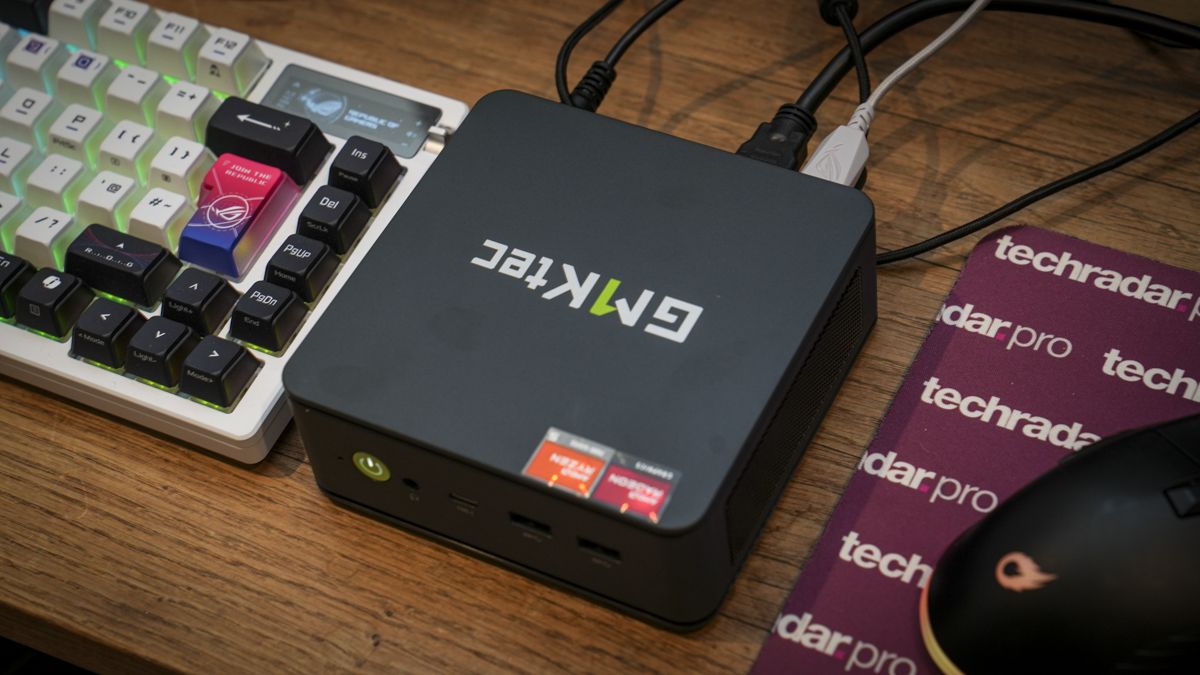
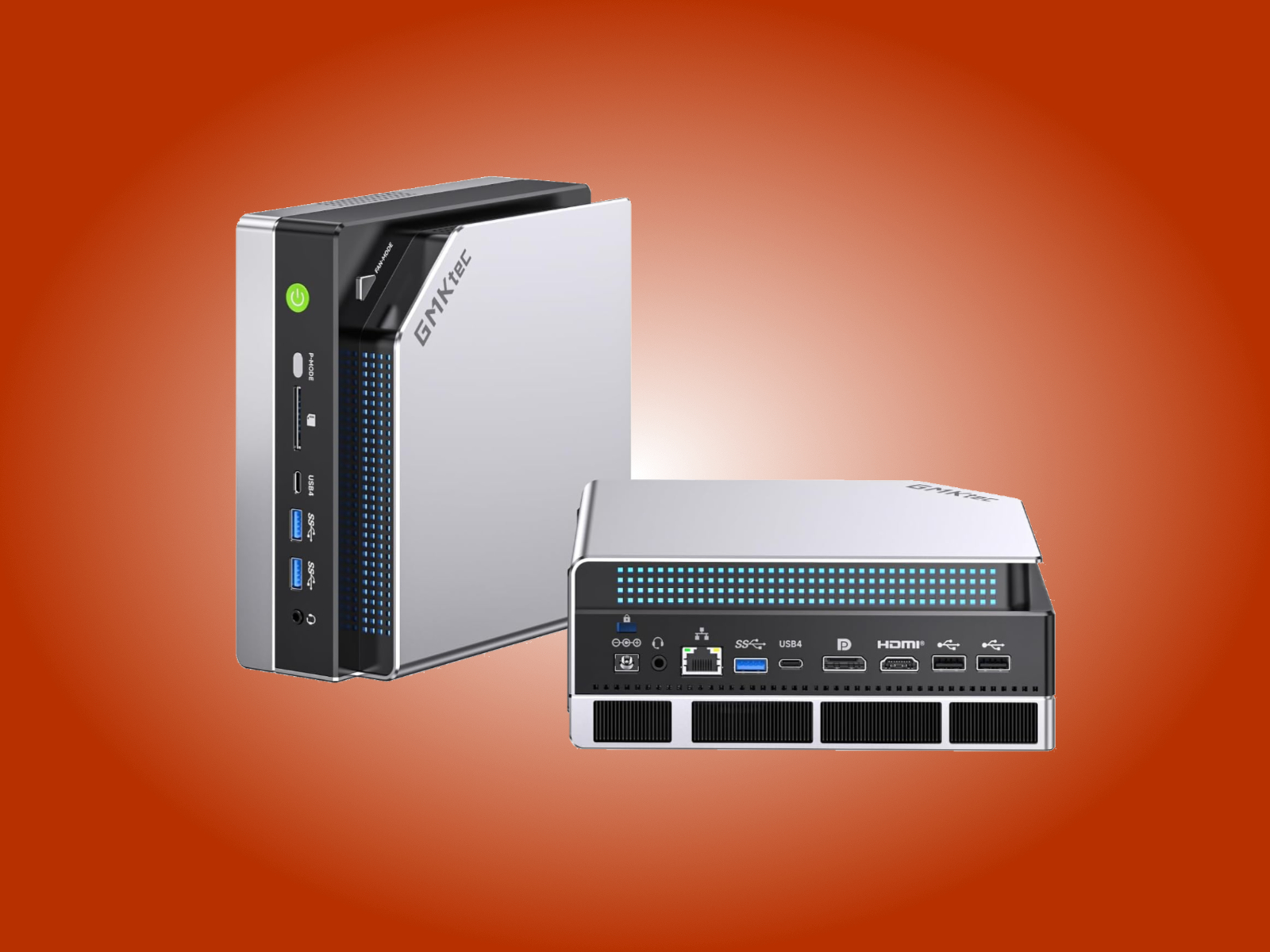
AMD’s strategy would be far less convincing if Ryzen AI Halo remained the only compact AI workstation option. It is not. GMKtec is now selling the EVO-X2 mini-PC with 128GB of RAM and 1TB of storage, bringing the same Strix Halo class of hardware into a lower-priced configuration. This new release is USD 150 (approx. ₱8,400) cheaper than GMKtec’s prior 128GB RAM and 2TB SSD option, which currently lists at USD 3,649 (approx. ₱204,000) on Amazon. GMKtec also offers a small coupon discount on top.
This is where NVIDIA should start to worry. GMKtec does charge USD 1,500 (approx. ₱84,000) more for the EVO-X2 128GB configuration than its 64GB option, but that premium unlocks the ability to assign up to 96GB of VRAM to the Radeon 8060S integrated GPU. In practice, that means more room for larger models, richer image generation, and heavier multitasking without jumping to a full DGX Spark bill. GMKtec’s EVO-X2 keeps high-end specs and trims entry cost, which strengthens AMD’s wider ecosystem of Ryzen AI Max+ 395 systems rather than leaving the Halo as a one-off flagship.
Conclusion: AMD Turns Local AI into a Desktop Habit, Not a Luxury
NVIDIA may have created the local-AI desktop category when it put a Grace Blackwell superchip in a one-liter box and named it DGX Spark, but AMD Ryzen AI Halo is rewriting what that category means. Instead of an expensive, Linux-only appliance, AMD offers a dual-OS, x86 compact AI workstation that sits at price parity with base Spark systems and undercuts NVIDIA’s own Founders Edition. GMKtec’s EVO-X2 pushes that transformation further by making 128GB Strix Halo hardware available in a cheaper configuration while still enabling up to 96GB of VRAM on the same Radeon 8060S iGPU.
The verdict is clear: if your priority is flexible development, big local models, and familiar Windows tools, AMD’s Ryzen AI Halo and its Strix Halo siblings look more like everyday AI desktops and less like boutique workstations. NVIDIA still owns the top of the Linux-only inference chart, but AMD is turning local AI into something you can buy, plug in, and make part of your daily workflow. That shift—from niche hardware to practical tool—is where the real competition in AI desktops is now being fought.