
C-Beams: A New Space Sim Built on Old-Star Magic
C-Beams is an indie space RPG that blends 2.5D dogfights, realistic ship handling, and open-ended exploration to recapture the feel of classic space sim games while adding modern progression systems. That matters because today’s PC players are starved for focused, expressive sandboxes instead of yet another cinematic treadmill. In this game, you start as a budding ship captain in a black hole system dense with asteroids, anomalies, and rare elements, turning a place that should be lethal into a playground for mining, ambushes, and escape routes. This is not a throwaway genre experiment. It is a clear argument that the design philosophy behind Escape Velocity—the childhood favourite that taught many of us what a space sim could be—still has teeth when rebuilt for modern hardware and tastes.
An Escape Velocity Spiritual Successor For Nostalgic PC Players
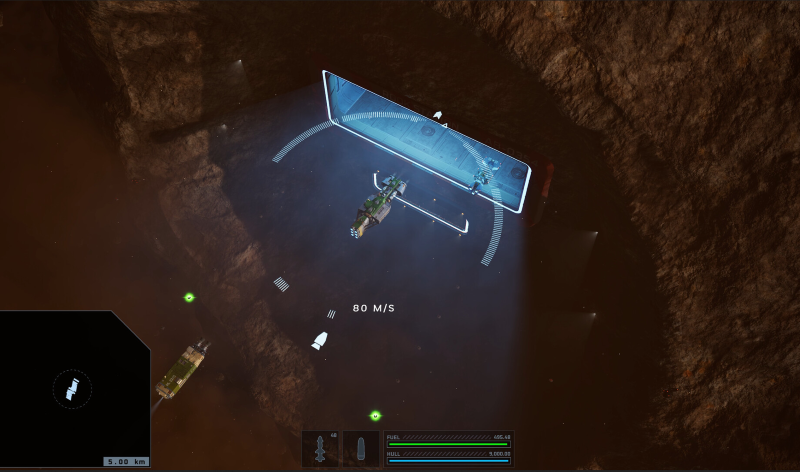
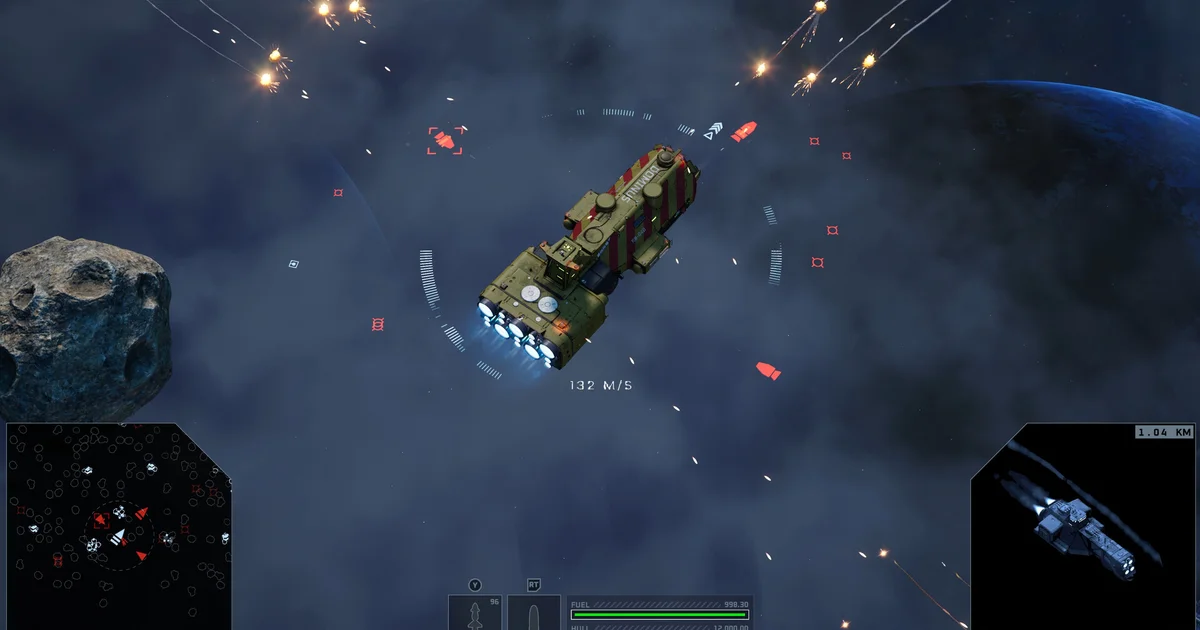
The beating heart of C-Beams is its open-structure tribute to Ambrosia Software’s Escape Velocity, a formative space sim that shaped how a generation saw the genre. The new game lifts more than vibes: its web of jump points linking settled planets, stations, and uncharted sectors echoes the freeform trading, mission-running, and faction-juggling that made those nostalgic PC games so sticky. The HUD, camera, and overall flow are designed so that veterans can glance at the screen and instantly feel at home, even as the visuals leap far beyond what that classic could show. Mining has a bigger role this time, and the addition of a hangar for swapping ships plus unlockable skills nudges the design toward modern progression without smothering its old-school core. This is an Escape Velocity spiritual successor that understands that memory is about structure and feel, not copy-pasted assets.
Newtonian Combat, 2.5D Space, and the Joy of Mastery
C-Beams stakes its identity on how ships move as much as on where they go. It is a 2.5D space game where realistic handling and newtonian physics make every dogfight a problem to solve rather than a QTE to survive. You learn retro burns to slow your ship, cut engines to hide, and ration boost fuel as you weave through asteroid fields. Heavier, ore-laden vessels become sluggish targets, so your economic choices bleed directly into tactical risk. Weapons push you toward thoughtful engagement: recoilless guns for brutal close passes, missiles and railguns for measured long-range strikes, and, of course, the titular C-Beams themselves for those who want to turn a Blade Runner reference into a functional loadout. This kind of mechanical depth is what modern space sim games often sidestep in favour of spectacle—and exactly what many players miss.
Hooded Horse and the Quiet Rebellion Against AAA Formula
C-Beams does not appear in a vacuum; it slots into a catalogue from publisher Hooded Horse that has become a safe harbour for strategy and space fans avoiding big-budget fatigue. Their line-up ranges from fantasy series like Endless Legend 2 and Heroes of Might and Magic successors to city builders such as Manor Lords and Against The Storm, and extends into heavy-duty space titles like Nebulous Fleet Command and Capital Command. That track record shows deep comfort with complex, niche-first design rather than mass-market flattening. For players who are “looking for games that aren’t part of the AAA group of developers, either because of the quality of the games lately or perhaps in solidarity”, this kind of focused catalogue is the alternative they have been hunting for. C-Beams fits that philosophy: dense, demanding, and uninterested in chasing the usual trends.
A Small Game Pointing to a Bigger Space Sim Revival
What comes next is simple: C-Beams is announced as “forthcoming” with its release listed only as “soon”, and trailers already circulating among space sim enthusiasts. You can watch it now and feel how pointed its pitch is. This is an indie space RPG for people tired of scripted rollercoasters, who want to chart trade routes, pick fights, and learn a flight model until it feels like an instrument. That mood—seeking smaller, sharper projects over safe blockbusters—is growing fast among PC players. Nostalgic PC games like Escape Velocity are no longer dusty memories; they are design blueprints for a new wave of space sims that prefer simulation and choice over spectacle. C-Beams will not fix the genre on its own, but it signals where the most interesting work is happening: on the fringes, among teams brave enough to mine the past without being trapped by it.