
From Fitness Gadgets to Clinical Wearables: A Market Crossing the $26.8 Billion Threshold
Medical wearable devices and the broader wearable IoMT market refer to connected clinical wearables and smart health sensors that continuously track physiological metrics, transmit real-time data, and enable remote patient management, shifting health monitoring technology from occasional clinic visits to ongoing, data-driven care. The key takeaway is blunt: health monitoring is leaving the clinic and moving onto the skin. According to The Business Research Company, the wearable and IoMT medical devices market is projected to grow from $13.92 billion in 2025 to $15.84 billion in 2026, at a 13.8% CAGR, and then surge to $26.8 billion by 2030 at 14.1%. This is not a niche wellness trend; it is infrastructure for a new model of medicine built on continuous signals from clinical wearables rather than sporadic vital signs taken in waiting rooms.
Why Chronic Disease, Telemedicine and Sensor Tech Are Driving the Boom
The explosive growth of health monitoring technology is less about hype and more about hard pressures on healthcare: chronic disease, aging populations, and overloaded clinics. The Business Research Company links market expansion directly to the rising incidence of chronic diseases, greater adoption of wearable technologies, digital transformation in healthcare, telemedicine growth, and advances in sensor technology. These forces make continuous data not a luxury, but a necessity. Clinicians can no longer rely on a handful of measurements each year to manage conditions like diabetes or kidney disease when smart health sensors can stream real-time biometrics around the clock. Wearable medical devices are transforming care by enabling continuous monitoring and data-driven patient management, which makes personalized care more accessible and moves medicine toward proactive intervention instead of reactive crisis management.
Kidney and Glucose Wearables: Specialized Sensors Become New Care Platforms
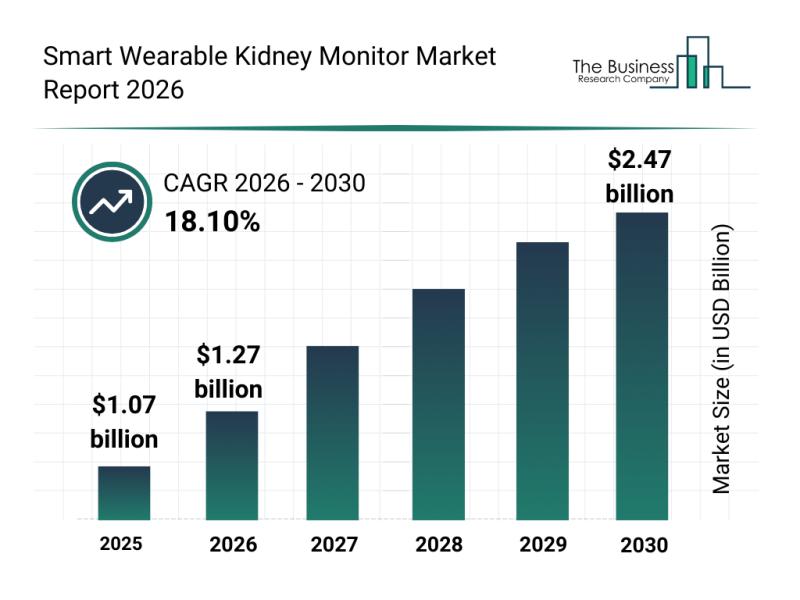
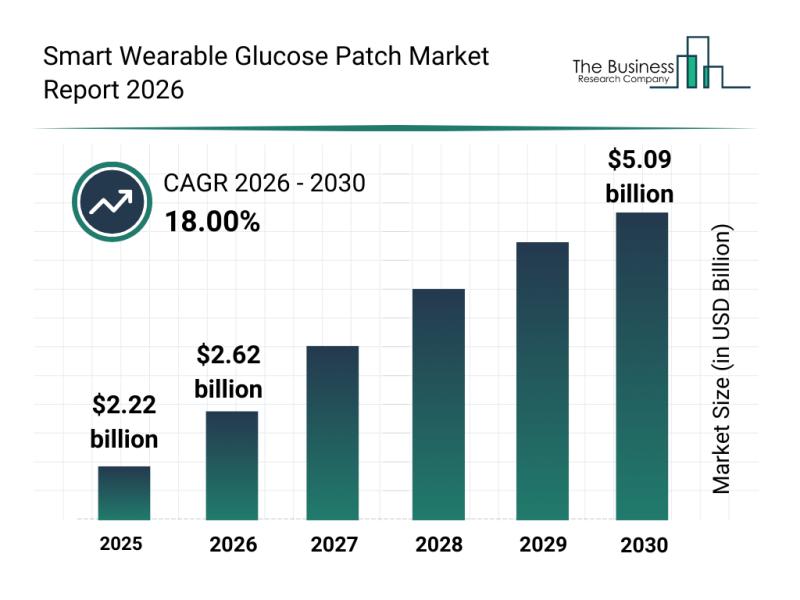
The most revealing sign that clinical wearables are maturing is the emergence of highly specialized categories like smart wearable kidney monitors and smart wearable glucose patches. The smart wearable kidney monitor market is described as a rapidly evolving sector with promising opportunities and is forecasted to reach $2.47 billion by 2030, growing at an 18.1% CAGR. These devices focus on chronic kidney disease, using biowearable sensors, advanced nanotechnology, and AI-powered analytics to monitor biomarkers continuously and support early detection, reducing reliance on frequent blood tests and hospital visits. In diabetes care, the smart wearable glucose patch market is on track for significant expansion, expected to reach about $5.09 billion by 2030 with an 18.0% CAGR. Non-invasive, continuous glucose monitoring, long-duration patches, and AI-driven analytics are turning glucose patches into full-fledged remote diabetes management platforms, improving outcomes and patient empowerment.
These specialized clinical wearables show why the broader wearable IoMT market matters: they take the logic of consumer trackers—always-on data—and apply it to diseases where every small fluctuation can alter prognosis. Patients and providers both benefit from more accessible and accurate tracking without invasive procedures, strengthening self-management and enabling faster responses to dangerous trends.
AI-Powered Interpretation: Turning Continuous Data Into Preventive Medicine
Continuous data is only valuable if it can be interpreted, and this is where AI is quietly remaking medical wearable devices. In kidney wearables, the rise of AI-driven predictive analytics is singled out as a key growth driver, enabling real-time data analytics for early detection and more personalized, continuous monitoring for chronic kidney disease. Smart glucose patches follow the same logic: AI-powered glucose analytics provide predictive insights and personalized diabetes management plans, helping users maintain optimal levels with less trial and error and fewer crises. This AI layer is the real disruption. It tilts health monitoring technology toward preventive care and longevity tracking by detecting patterns long before they become emergencies. Instead of occasional lab results, clinicians and patients gain a dynamic, interpreted stream of risk signals. That shift will likely matter more for long-term health outcomes than any single hardware innovation in clinical wearables.
The New Healthcare Contract: Continuous, Connected, and Patient-Centered
The projected $26.8 billion size of the wearable IoMT market by 2030 is not just a financial headline; it is a sign that healthcare is renegotiating its contract with patients around continuous, connected monitoring. Smart health sensors for kidneys and glucose show how quickly niche diseases are gaining dedicated wearable ecosystems, with data streaming into mobile apps, telehealth platforms, and AI models for early warning and tailored interventions. Ordinary users feel this shift as fewer invasive tests, more home-based care, and increased control over their own data. The risk is clear: data overload, privacy concerns, and the possibility of widening gaps for those without access. But the direction is set. As clinical wearables become central to managing chronic conditions and preventive care, the healthcare systems that embrace them will move toward more patient-centered, insight-rich medicine—while those that do not will keep treating crises after they happen.